Solar Panel Cleaning Insurance Guide: Essential Tips 2026
The UK solar energy sector is booming, with more homes and businesses than ever relying on clean, renewable power. As demand for professional panel maintenance rises, so does the need for robust protection.
Having the right solar panel cleaning insurance in 2026 is not just a smart move, it is essential for safeguarding your business, clients, and team. This guide demystifies the essentials of solar panel cleaning insurance, giving you the tools to make confident decisions.
In this guide, you will discover:
The unique risks involved in solar panel cleaning
Types of insurance cover every business should consider
How to choose the right policy for your needs
Key cost factors and ways to save
Compliance tips and best practices for 2026
Stay informed, stay protected, and ensure your solar panel cleaning business thrives in a fast-changing industry.
The Unique Risks of Solar Panel Cleaning
Cleaning solar panels may appear straightforward, but it comes with a unique set of challenges that make it far riskier than standard cleaning jobs. For business owners, understanding these risks is crucial when seeking effective solar panel cleaning insurance. The complexity of working with high-value equipment, electrical systems, and variable weather means that the potential for costly claims is significantly increased.

Why Solar Panel Cleaning is Riskier Than Standard Cleaning
Solar panel cleaning often involves working at significant heights, handling electrical components, and using specialised chemicals. Each element adds a layer of risk that must be addressed with the right solar panel cleaning insurance.
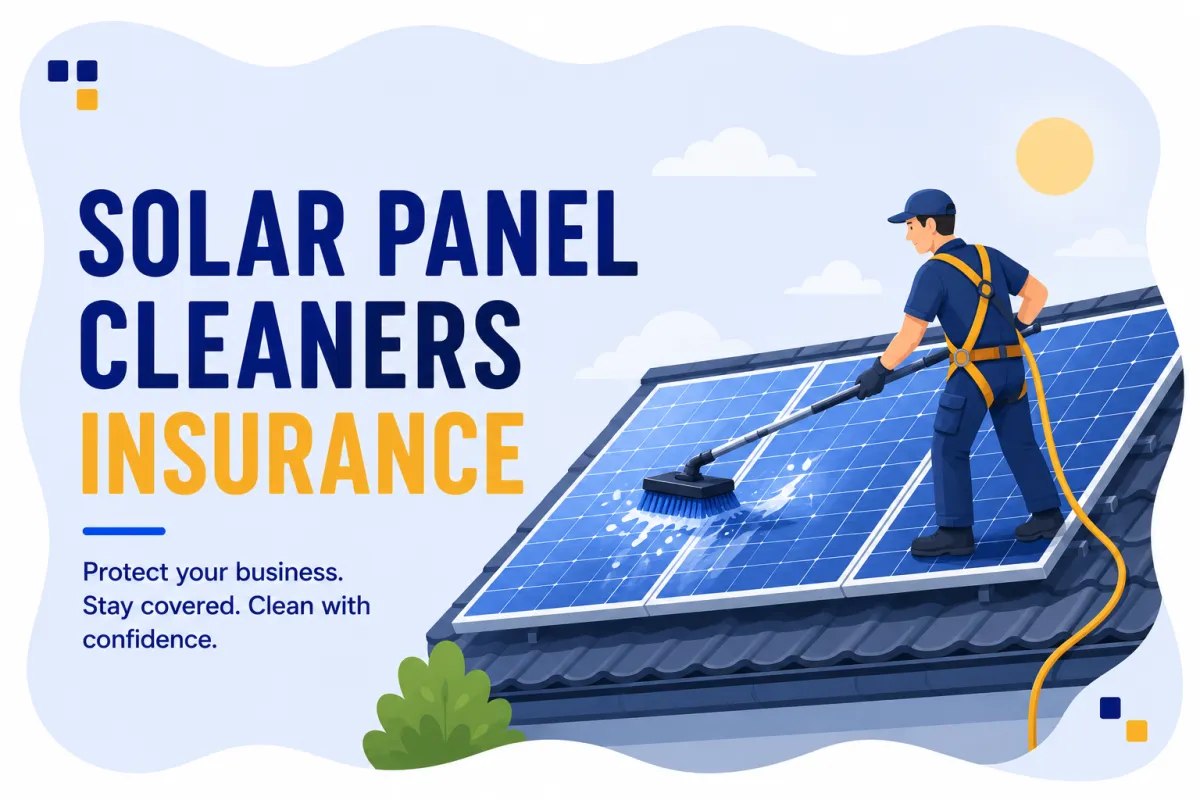
Working at Height: Most solar panels are installed on rooftops, meaning technicians must operate on ladders, scaffolds, or elevated platforms. According to the Health and Safety Executive, falls from height remain the leading cause of fatal injuries in the UK cleaning sector. Even a minor slip can result in severe injury or death, leading to substantial claims and business disruption.
Electrical Hazards: Solar panels are live systems that can generate dangerous voltages even when disconnected from the grid. Cleaners face the risk of electric shock or arc flash, particularly if protective measures are overlooked. This is a critical consideration for any solar panel cleaning insurance policy, as standard liability cover may exclude injuries caused by electrical systems.
Delicate and High-Value Equipment: Solar panels are sensitive and expensive. Accidental breakage can cost thousands of pounds in repairs or replacement, especially for commercial installations. Insurance claims for cracked panels or scratched glass are not uncommon, so robust cover is essential.
Environmental and Weather-Related Risks
The unpredictable British weather amplifies the risks associated with solar panel cleaning. Wind, rain, and slippery surfaces can turn a routine job into a hazardous operation.
Slippery Surfaces: Wet rooftops and soapy water increase the likelihood of slips and falls.
Wind Hazards: Gusts can destabilise ladders or workers, heightening the risk of accidents.
Sudden Weather Changes: Rapid shifts in weather may force an abrupt halt to work, increasing the chance of incomplete cleaning and business interruption.
Use of Specialised Cleaning Chemicals
Many solar panel cleaning companies rely on proprietary detergents and chemicals to remove grime and lichen without damaging panel surfaces. However, misuse or accidental spillage can pose health risks to technicians and harm surrounding property or vegetation. Comprehensive solar panel cleaning insurance should account for chemical-related incidents, ensuring that both staff and clients are protected.
Third-Party Liability and Real-World Claims
Accidents do not only affect your business—they can also impact clients, passers-by, or neighbouring properties. For example, a dropped tool could shatter a skylight, or a chemical spill could damage a client’s garden. There have been cases where businesses faced claims exceeding £30,000 for property damage alone.
It is important to note that standard home insurance or warranties rarely provide adequate protection for professional cleaning activities. According to the solar panel cleaning insurance coverage, many policies specifically exclude commercial cleaning-related damage, underscoring the need for dedicated solar panel cleaning insurance.
Summary of Key Risks
Falls from height leading to injury or fatality
Electrical shocks or burns from live panels
Accidental damage to delicate panels and rooftop fixtures
Environmental hazards: slips, trips, gusts, and sudden rain
Chemical exposure and related health issues
Third-party property damage and liability claims
For solar panel cleaning companies in the UK, these risks are not hypothetical—they are daily realities. The right solar panel cleaning insurance is not just a box-ticking exercise, but a vital safety net that ensures your business can weather any storm, keep staff safe, and satisfy client demands.
Types of Insurance Cover for Solar Panel Cleaning
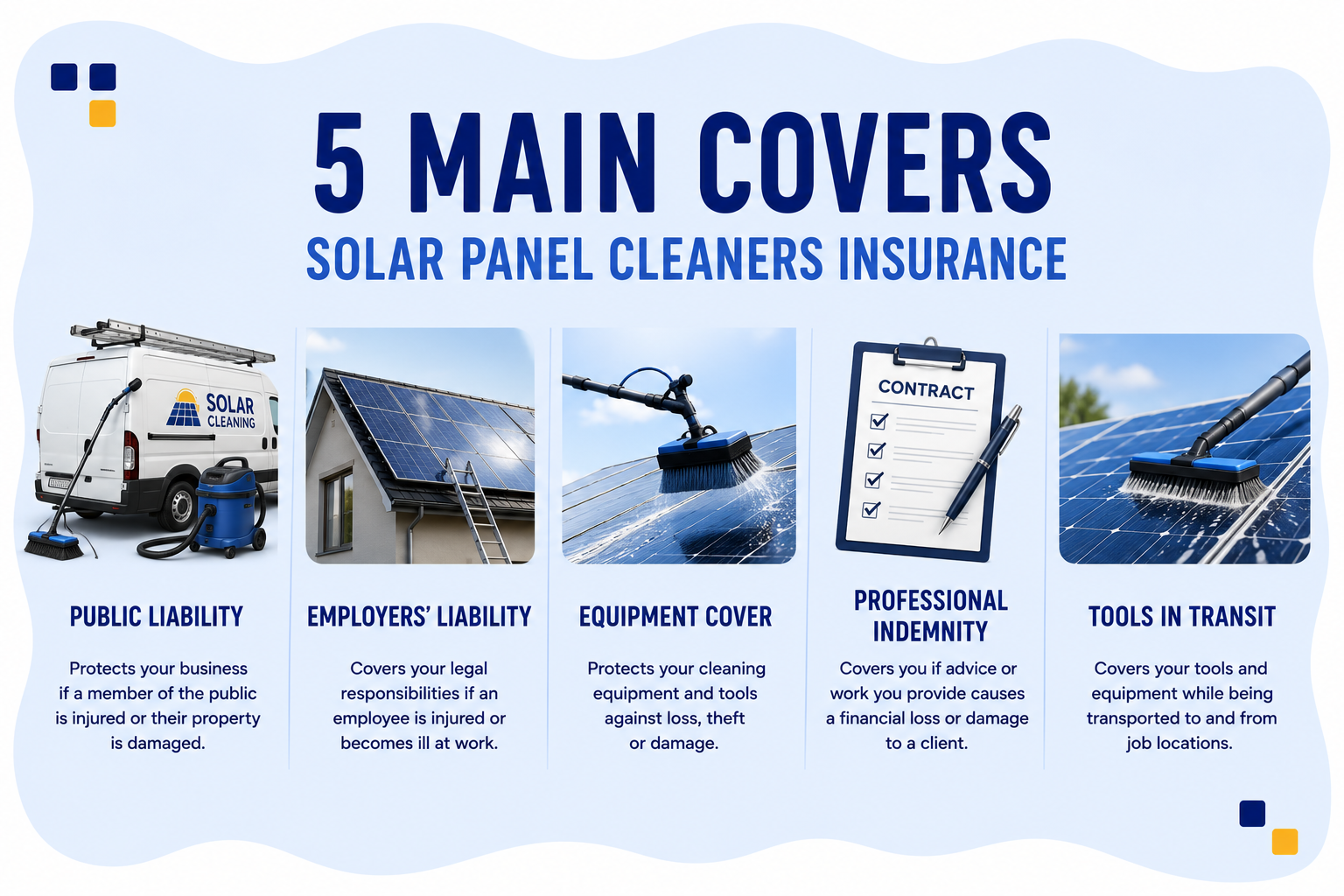
Choosing the right solar panel cleaning insurance is essential for protecting your business from financial risks and legal liabilities. The solar panel cleaning sector faces distinct challenges, so understanding each insurance type is key to building a robust protection plan.

Public Liability Insurance
Public liability cover is the backbone of any solar panel cleaning insurance policy. It protects your business if a third party is injured or their property is damaged due to your work.
Typical cover levels range from £1 million to £10 million, depending on contract requirements.
This cover is vital for both residential and commercial cleaning contracts.
Claims can arise from accidental panel damage or slips and trips on site.
For a deeper dive into risk management and coverage, see the Solar Power Business Insurance Guide.
Employers’ Liability Insurance
If your solar panel cleaning business employs staff, even on a temporary or part-time basis, you are legally required to hold employers’ liability insurance.
This insurance covers employee injuries or illnesses that occur as a result of their work.
The minimum legal limit in the UK is £5 million.
Non-compliance can result in significant fines and reputational damage.
Employers’ liability is a non-negotiable foundation of comprehensive solar panel cleaning insurance.
Tools and Equipment Insurance
Solar panel cleaning often requires specialist equipment that can be expensive to replace.
Tools and equipment insurance covers loss, theft, or accidental damage.
Examples include water-fed poles, safety harnesses, and cleaning systems.
Policies may also cover portable tools left on site or in vehicles.
Ensuring your solar panel cleaning insurance includes this cover can prevent costly interruptions to your service.
Product Liability Insurance
If your business uses or supplies cleaning products, product liability insurance is essential.
This policy protects against claims if a cleaning agent damages a client’s property or causes harm.
It is especially important when working with new or specialist solutions.
Product liability is often bundled with public liability in many solar panel cleaning insurance packages.
Financial Loss Insurance
Some claims do not involve physical damage but can still be costly.
Financial loss insurance covers client claims for reduced solar panel efficiency or loss of output following a cleaning job.
This is increasingly relevant as clients become more aware of performance metrics.
Cover limits vary, so discuss your needs with your broker to tailor your solar panel cleaning insurance.
Personal Accident Insurance
Injuries can happen, even with the best safety protocols in place.
Personal accident insurance provides income protection if you or your staff cannot work due to an accident.
Benefits may include weekly payments, lump sums, and assistance with medical costs.
This cover is particularly valuable for owner-operators and small teams.
Legal Expenses Insurance
Disputes over contracts, employment, or liability can be expensive to resolve.
Legal expenses insurance covers the cost of legal advice and representation.
It can help defend against claims or pursue unpaid invoices.
This is a cost-effective way to add peace of mind to your solar panel cleaning insurance.
Optional Covers: Contractors All Risks, Business Contents, Professional Indemnity
Depending on your business activities, you may need to add optional covers.
Contractors All Risks insurance is suitable for larger projects or those involving structural work.
Business contents insurance protects office equipment and stock.
Professional indemnity insurance is important if you offer consultancy or advice as part of your solar panel cleaning service.
These options provide flexibility, ensuring your solar panel cleaning insurance evolves with your business.
What’s Typically Included and Excluded
Understanding what is and is not covered is crucial for effective risk management.
Standard inclusions:
Public liability
Product liability
Legal expenses
Accidental death benefits
Common exclusions:
Deliberate or criminal damage
Unqualified or untrained staff
Work in restricted areas, such as nuclear or hazardous sites
Always read your solar panel cleaning insurance documents carefully and consult your broker about specific terms. This ensures your policy matches your business activities and avoids surprises if you need to make a claim.
How to Choose the Right Solar Panel Cleaning Insurance in 2026
Selecting the right solar panel cleaning insurance in 2026 is crucial for protecting your business against unique industry risks. The process can seem complex, but breaking it down into manageable steps will help you secure comprehensive cover that meets your needs and contractual obligations.

The first step is to evaluate your business’s size, annual turnover, and the specific risks you face. Are you operating solo, or do you employ a team? Do you specialise in domestic, commercial, or industrial contracts? Each factor influences the scope and scale of solar panel cleaning insurance required.
Next, consider the types of contracts you service. Larger commercial and industrial projects often demand higher cover limits, sometimes specified by clients in contracts. Residential work may require less, but still exposes you to liability. Review past projects and upcoming opportunities to estimate what level of protection you need.
Comparing insurers is essential. Look for providers with strong financial ratings, a proven track record in handling claims, and a positive reputation among similar businesses. It is wise to use resources like Commercial Insurance Solutions for an overview of options tailored to solar panel cleaning insurance requirements. Check for clear policy wording and transparent claims processes to avoid surprises in the event of a loss.
Flexibility is another important factor. As your business evolves, your insurance should adapt. Choose policies that allow you to add or remove cover types, such as tools and equipment, professional indemnity, or personal accident insurance, as your services expand or change. This ensures you are neither underinsured nor paying for unnecessary extras.
Specialist brokers and advisors can add significant value. They understand the nuances of solar panel cleaning insurance, can negotiate better rates, and ensure your cover matches your risk profile. Brokers often have access to specialist markets not available directly to the public, increasing your chances of finding the right fit.
Your claims history and risk management practices will impact your premiums. Businesses with robust health and safety protocols, regular staff training, and up-to-date equipment maintenance tend to benefit from lower rates. Insurers look favourably on those who can demonstrate a proactive approach to minimising risk.
Modern solar panel cleaning insurance policies increasingly offer instant cover, online policy management, and the option to pay monthly. These features make it easier to stay compliant and manage cash flow, especially for growing businesses.
To summarise, choosing the right solar panel cleaning insurance in 2026 involves:
Assessing your business operations and risk exposure
Determining appropriate cover levels for your contract types
Comparing insurers for reliability and transparency
Seeking flexible policies that grow with your business
Consulting specialist brokers for tailored advice
Maintaining strong risk management to reduce costs
Prioritising digital management and payment options
By following these steps, you’ll protect your business, meet legal and contractual obligations, and position yourself for sustainable growth in the fast-evolving solar sector.
Cost Factors and Ways to Save on Solar Panel Cleaning Insurance
Understanding the cost factors behind solar panel cleaning insurance is crucial for every business owner in this sector. Premiums are influenced by a mix of risk-related and operational elements, and knowing what impacts your price can help you stay competitive and protected.

What Drives the Cost of Solar Panel Cleaning Insurance?
Several variables shape the cost of solar panel cleaning insurance for your business. Insurers evaluate your annual turnover, as higher revenue often reflects a greater workload and increased exposure to risk. The number of employees is another consideration, since more staff means a greater chance of accidents or claims arising from work activities.
The specific nature of your cleaning jobs matters significantly. Working at height, using specialist chemicals, or operating in challenging weather conditions will typically raise your premium, because these factors increase the likelihood of incidents. Your claims history also plays a key role; businesses with previous claims may face higher costs or stricter policy terms.
Key cost drivers:
Annual turnover and business size
Number of staff (including temporary or subcontracted workers)
Type and complexity of cleaning work (height, chemicals, electrical exposure)
Claims record and incident frequency
Location and travel requirements for your contracts
Insurers may also consider the quality of your risk management procedures, such as documented staff training and equipment maintenance logs, when calculating your solar panel cleaning insurance premium.
Typical Premium Ranges and What to Expect
Premiums for solar panel cleaning insurance vary widely, reflecting the diversity of business models in the industry. For sole traders or very small operations, policies can start from as little as £54 per year, especially if you cover only basic public liability and have a clean claims record.
For medium-sized businesses with several employees and a broader range of services, premiums often range between £250 and £600 annually. Larger firms, or those taking on high-risk contracts (such as commercial or industrial sites), may see premiums exceeding £1,000 per year, particularly if they require higher cover limits or add optional extras.
Typical premium examples:
Small business (sole trader): from £54/year
Medium operation: £250–£600/year
Larger company or high-risk work: £1,000+/year
Monthly payments are available for policies over £125, making budgeting easier and helping with cash flow. Increasing your cover limits or adding options like tools, equipment, or legal expenses protection will raise your premium, but provides broader protection for your solar panel cleaning insurance.
How to Save on Solar Panel Cleaning Insurance
There are several practical steps you can take to reduce the cost of your solar panel cleaning insurance without compromising on essential cover. Bundling different types of insurance under a single policy can lead to significant discounts. For example, choosing a contractors combined policy can be more cost-effective than purchasing separate covers for liability, equipment, and legal expenses. For more details on how combined policies work, see the Contractors Combined Insurance Overview.
Cost-saving tips:
Invest in regular staff training and maintain up-to-date safety certifications
Carry out frequent risk assessments and keep equipment well maintained
Choose a higher excess to lower your premium, if your cash reserves allow
Review your policy each year to ensure your cover matches your current business needs
Shop around, or use a broker, to compare quotes and negotiate better rates
Switching insurers or using a specialist broker can sometimes result in substantial savings, particularly if your business has a strong safety record. By actively managing risk and staying informed, you can keep your solar panel cleaning insurance affordable and fit for purpose.
Compliance, Legal Requirements, and Best Practices
Meeting compliance obligations is not just about ticking boxes. For solar panel cleaning insurance, staying on the right side of UK law and industry standards is essential for protecting your business, clients, and workforce. Effective compliance also reduces the risk of claims and ensures your insurance responds when you need it most.
Legal Requirements for Solar Panel Cleaning Businesses
If you employ staff, even on a temporary or casual basis, UK law requires you to have Employers’ Liability Insurance. Without this, you risk substantial fines and invalidating your solar panel cleaning insurance.
Health & Safety Executive (HSE) guidelines set strict standards for work at height and with electrical systems. You must ensure:
All staff receive appropriate training for working at height and using specialist equipment.
Risk assessments are completed for each job, identifying hazards like slippery roofs, strong winds, and live electrical parts.
PPE (personal protective equipment) is supplied and properly maintained.
Contractual obligations are also common. Many commercial clients will only hire companies with a minimum level of public liability cover. Make sure your solar panel cleaning insurance meets or exceeds these requirements for every contract.
Documentation and Best Practice Essentials
Accurate documentation is the backbone of compliance. Keep the following up to date:
Insurance certificates for all required covers.
Risk assessments and method statements for each site.
Staff training records, including refresher courses and safety certifications.
Maintenance logs for equipment and PPE.
Following best practices, such as those outlined in solar panel maintenance best practices, not only helps ensure safety but also boosts your credibility with insurers and clients. Demonstrating a strong safety culture can favourably influence your solar panel cleaning insurance premiums and claims outcomes.
Handling Claims and Minimising Risk
Should an incident occur, report it to your insurer as soon as possible. Provide:
A clear account of what happened, including photos and witness statements.
Copies of risk assessments and relevant training records.
Evidence of compliance with safety procedures.
This organised approach helps ensure your solar panel cleaning insurance responds quickly, reducing delays and disputes.
Mitigating risk is ongoing. Invest in regular staff training, enforce safety policies, and conduct frequent equipment checks. Encourage a proactive attitude towards health and safety throughout your team.
Staying Informed and Adapting to Change
Regulations and risks in the solar panel industry continue to evolve. Stay updated by:
Monitoring HSE updates and industry news.
Reviewing your solar panel cleaning insurance annually, adjusting cover as your business grows or changes.
Seeking advice from specialist brokers or industry bodies.
By prioritising compliance, robust documentation, and best practices, you safeguard your business and make the most of your solar panel cleaning insurance in a rapidly changing landscape.
Essential Tips for Managing Solar Panel Cleaning Insurance
Staying on top of your solar panel cleaning insurance is vital for long-term business stability and peace of mind. With the industry’s growing complexity, a proactive approach can make all the difference in protecting your company and ensuring claims are handled smoothly.
Practical Steps for Managing Your Solar Panel Cleaning Insurance
Review and Update Regularly:As your business grows, review your solar panel cleaning insurance at least annually. Add or adjust cover types and limits to match new contracts, staff levels, or expansions.
Keep Detailed Records:Document every job, incident, and communication with clients. This ensures that, if a claim arises, you have clear evidence to support your case.
Invest in Training and Certification:Regular staff training on safety and specialist cleaning methods reduces accidents and strengthens your insurance position. Keeping certifications up to date demonstrates professionalism and commitment to risk management.
Inventory Tools and Equipment:Maintain a current inventory of all tools and specialist equipment. This helps you confirm the right level of cover and speeds up claims for lost or damaged items.
Create a Culture of Safety:Promote a safety-first mindset among your team. Encourage incident reporting, use of PPE, and adherence to health and safety protocols.
Build Strong Broker Relationships:Stay in regular contact with your insurer or broker. Their advice can help you adapt your solar panel cleaning insurance to changing risks and regulations, and they can advocate for you during claims.
Leveraging Technology and Staying Informed
Use digital tools for risk assessments, incident logging, and policy management. This streamlines compliance and keeps your solar panel cleaning insurance records up to date.
Stay informed about evolving risks and insurance trends. Reading industry insights, such as the Solar Panel Installer Insurance Insights, can help you anticipate potential issues and best practices.
Review your policy documents carefully, paying attention to exclusions and claims procedures. Being aware of the fine print prevents unpleasant surprises.
Final Thoughts
Managing solar panel cleaning insurance is not a one-time task but an ongoing process. By following these essential tips, you reduce risk, support business continuity, and put your company in the strongest possible position should the unexpected occur.
Frequently Asked Questions (FAQs)
Solar panel cleaning insurance can seem complex, especially with evolving industry standards. Here are answers to the most common queries from cleaning business owners.
What is the minimum insurance required for solar panel cleaning in the UK?
Employers’ liability insurance is a legal requirement if you have staff, including temporary workers.
Public liability cover is strongly recommended for all solar panel cleaning insurance policies.
Some commercial clients may require higher cover limits in contracts.
How quickly can I get cover for my cleaning business?
Many insurers offer instant quotes online, with policies activated within minutes.
Documentation for solar panel cleaning insurance is often available immediately after purchase.
Are subcontractors covered under my policy?
Most solar panel cleaning insurance policies require you to specifically name subcontractors for them to be covered.
Always check your policy wording and speak with your broker to avoid gaps in protection.
Does insurance cover damage to solar panels during cleaning?
Accidental damage to panels is typically included under public liability in solar panel cleaning insurance.
Repair or replacement costs can be substantial, especially for high-value systems.
For more on the financial impact, see solar panel cleaning costs in the UK.
Can I pay for my insurance monthly?
Many providers of solar panel cleaning insurance offer flexible payment options.
Monthly instalments are commonly available, especially for policies over £125.
How can I reduce my insurance premiums?
Maintain a clean claims record and invest in health and safety training.
Bundle different covers within your solar panel cleaning insurance and consider a higher excess.
What should I do if I need to make a claim?
Notify your insurer as soon as possible, providing detailed information and supporting documents.
Keep records of incidents, photos, and communication related to the claim.
Are there specialist insurers for solar panel cleaning businesses?
Yes, specialist brokers and insurers understand the unique risks associated with solar panel cleaning insurance.
They offer tailored policies that cover the specific needs of your business.
Does insurance cover work abroad or only in the UK?
Most standard solar panel cleaning insurance policies provide cover within the UK only.
If you plan to work abroad, discuss international cover options with your insurer beforehand.
What documents do I need to provide when applying for insurance?
Typical requirements include proof of business registration, previous claims history, risk assessments, and details of staff training.
Having these documents ready can speed up the solar panel cleaning insurance process.
As you’ve seen, having the right insurance for your solar panel cleaning business in 2026 is about more than just ticking a box—it’s about protecting your team, your clients, and the future of your company. With unique risks like working at height and handling specialist equipment, the right cover gives you peace of mind and helps you meet legal obligations and client requirements. If you’re ready to match your business with tailored protection and expert advice, take the next step and Get A Quote Now!