FS Register FRN 1029698
54 Five Star Google Reviews
13+ years specialist broking experience
Pub & Restaurant Insurance UK — Specialist Cover for Hospitality Operators
Pub, bar, restaurant and café insurance arranged by a specialist UK hospitality broker. Cover built for the 2026 framework — Martyn's Law preparedness, Natasha's Law allergen labelling, alcohol licensing duties, and the everyday risks of running a busy hospitality venue.
UK hospitality faces three big regulatory shifts in 2026
Martyn's Law preparation is the dominant 2026 story. Natasha's Law remains the everyday allergen risk. Alcohol licensing scrutiny is tightening. Your insurance should reflect all three.
Standard tier or Enhanced tier — which one applies to your venue?
The Terrorism (Protection of Premises) Act 2025 received Royal Assent on 3 April 2025. The implementation period of at least 24 months means the new duties are not expected to come into force before April 2027. The Security Industry Authority (SIA) is the regulator. Capacity drives which tier applies — and which insurance scope you need.
- Most independent pubs, restaurants, bars, and cafés sit here
- Procedures: evacuation, invacuation, lockdown, communication
- Staff training on response procedures
- Notify the SIA that you are responsible for the premises
- No requirement to install physical security measures
- Put appropriate public protection measures in place, such as monitoring and controlling entry and movement
- Prepare and keep a security document and provide it to the SIA
- Appoint a designated senior individual (where the operator is a company)
- Measures such as CCTV or bag searches are examples, not legal requirements
What UK pub & restaurant insurance covers
A modular package — built around the actual operational risks of running a hospitality venue. Generic small business cover misses food poisoning scope, alcohol liability nuances, and Martyn's Law-related exposures.
Buildings & Contents
Cover for premises (if owned), fixtures, fittings, furniture, kitchen equipment, and stock at full reinstatement value.
Public & Products Liability
£5m–£10m cover for customer injury, food poisoning, allergen reactions, and product-related claims. Increasingly required by suppliers.
Employers' Liability
£10m cover (£5m legal minimum) required by law for staff (including casual, agency, and apprentice workers). Hospitality is a high-injury sector.
Business Interruption
Loss of profit and ongoing costs if you're forced to close after fire, flood, or other insured damage. Critical for hospitality cash flow.
Money Cover
Cash on premises, in transit to bank, in safe, and personal accident assault cover for staff handling cash.
Stock & Deterioration
Refrigerated stock cover for fridge/freezer breakdown, power failure, and accidental deterioration of perishables.
Terrorism (Pool Re)
Pool Re-backed terrorism cover increasingly relevant under Martyn's Law. Standard property policies often exclude terrorism by default.
Legal Expenses
Cover for licensing reviews, health and safety and food safety prosecutions, employment tribunals, and contract disputes.
Cyber & Booking Data
Cover for booking systems, EPOS, card processing, and customer data — UK GDPR exposure on card-storing systems.
What pub & restaurant cover does my venue need?
Select your venue type for a tailored cover recommendation
Café / Coffee Shop Cover
- Legal Employers' Liability £10m (if staff)
- Core Public & Products Liability £5m with allergen scope (Natasha's Law)
- Core Buildings (if owned) and contents
- Core Business Interruption matched to revenue
- Core Stock and deterioration cover
- Core Money cover (cash and card processing exposure)
- Add Cyber for booking and EPOS systems
- Add Goods in transit if you do delivery
Restaurant Cover
- Legal Employers' Liability £10m
- Core Public & Products Liability £5m–£10m with Natasha's Law scope
- Core Buildings and contents at full reinstatement
- Core Business Interruption (typically 12–24 months)
- Core Stock and deterioration with extended scope
- Core Money cover comprehensive
- Core Legal Expenses with food safety prosecution scope
- Check Martyn's Law applicability if capacity 200+
- Add Pool Re terrorism cover
Traditional Pub Cover
- Legal Employers' Liability £10m
- Core Public & Products Liability £5m–£10m
- Core Buildings (if owned) — listed buildings premium considerations
- Core Contents, fixtures, fittings
- Core Business Interruption with seasonal scope
- Core Stock — alcohol stock at peak value
- Core Glass and signs cover
- Core Money cover for high cash turnover
- Check Alcohol licensing review legal expenses scope
- Check Martyn's Law applicability if capacity 200+
Gastropub / Pub with Rooms Cover
- Legal Employers' Liability £10m
- Core Public & Products Liability £10m
- Core Buildings comprehensive including accommodation rooms
- Core Guest belongings cover (for rooms)
- Core Business Interruption — food and accommodation revenue
- Core Stock including alcohol and food
- Core Cyber for booking systems and card processing
- Core Legal Expenses with food safety, licensing, and tribunal scope
- Check Martyn's Law applicability if function rooms or gardens take capacity to 200+
Bar / Cocktail Bar Cover
- Legal Employers' Liability £10m
- Core Public & Products Liability £5m–£10m
- Core Alcohol-related incident scope (over-service, ejection injuries)
- Core Late-night premium considerations
- Core Glass and signs cover
- Core Money cover for high cash and tip turnover
- Core Stock — premium spirits and wine inventory
- Check Martyn's Law if capacity 200+ — especially live music venues
- Add Door security / SIA-registered staff documented
Large Venue (800+ capacity) Cover
- Critical Martyn's Law Enhanced tier — security document and public protection measures
- Legal Employers' Liability £10m
- Core Public & Products Liability £10m–£25m
- Core Pool Re terrorism cover
- Core Crisis management cover
- Core Buildings and contents comprehensive
- Core Business Interruption 24+ months
- Core Cyber comprehensive
- Core D&O for venue directors
- Core Legal Expenses comprehensive
Why choose Miller & Partner for hospitality insurance?
Generic small business cover from comparison sites doesn't contemplate food poisoning scope, alcohol liability nuances, listed building considerations, or Martyn's Law. Specialist placement matters in this sector.
Specialist Broker
Miller & Partner Limited is an Appointed Representative of Gauntlet Risk Management Ltd, which is authorised and regulated by the Financial Conduct Authority. FS Register FRN 1029698.
Lloyd's Access
Specialist hospitality MGAs and Lloyd's markets for difficult risks and large venues.
Hospitality Expertise
Martyn's Law, Natasha's Law, alcohol licensing — we know the regulatory framework.
Claims Support
When a food poisoning, fire, or licensing review hits, we coordinate the response.
Indicative UK pub & restaurant insurance premium
Pricing varies significantly by venue type, capacity, and revenue. The estimator gives an indicative starting range — your exact quote depends on declared activities, claims history, premises type, and limits.
Hospitality Insurance Premium Estimator
Indicative annual UK pub & restaurant insurance premium range
Indicative range only. Final premium depends on capacity, premises type (listed buildings premium), claims history, alcohol licensing scope, late-night trading, and limits. Get an exact quote →
Frequently asked questions
Pub and restaurant insurance is a specialist commercial package built for UK hospitality venues. The core covers: Public & Products Liability (with food poisoning and allergen scope), Employers' Liability for staff, buildings and contents, business interruption, money cover, stock and deterioration cover, glass cover, and legal expenses. Optional add-ons include Pool Re terrorism cover (increasingly relevant under Martyn's Law), cyber for booking systems, and accommodation cover for pubs with rooms. The cover differs fundamentally from generic small business insurance — hospitality has high injury rates, allergen exposure, and licensing scrutiny that generic packages don't contemplate. Our pub insurance guide goes through each section in more depth.
Martyn's Law is the popular name for the Terrorism (Protection of Premises) Act 2025, named after Martyn Hett who died in the 2017 Manchester Arena attack. It received Royal Assent on 3 April 2025 with an implementation period of at least 24 months — so the duties are not expected to come into force before April 2027. The law applies to venues with capacity of 200 or more people. Standard tier (200–799) requires public protection procedures (evacuation, invacuation, lockdown and communication), staff training, and notifying the SIA. Enhanced tier (800+) requires appropriate public protection measures to reduce vulnerability to terrorism. The Security Industry Authority (SIA) is the regulator.
Natasha's Law refers to the Food Information (Amendment) (England) Regulations 2019 (with equivalents in Wales, Scotland, and Northern Ireland), named after Natasha Ednan-Laperouse who died of an allergic reaction in 2016. The regulations require full ingredients lists with the 14 mandatory allergens emphasised on Prepacked for Direct Sale (PPDS) food — items packaged at the same premises they're sold from. This affects most cafés, sandwich shops, and takeaways. Restaurants serving from a kitchen to a table have separate but related allergen disclosure duties under broader food information regulations. Insurance impact: failure to comply leaves you exposed on the Products Liability side for any allergen-related claim.
Standard property insurance typically excludes terrorism by default in the UK. Pool Re-backed terrorism cover can be added — and is increasingly relevant under Martyn's Law. For Standard tier venues (200–799 capacity), terrorism cover is good practice but not legally required. For Enhanced tier venues (800+), terrorism cover is functionally essential and often a contractual requirement from landlords, brewery operators, or lenders. The cost depends on location (Pool Re zones price central London and major cities higher than rural areas), property value and the business interruption sum insured, and is usually modest for a smaller venue. Worth speaking to a specialist broker if your capacity is near or above 800.
Yes, where the policy has appropriate Products Liability scope. Food poisoning is typically covered under the Products Liability section of a hospitality policy — separate from general Public Liability for slips and trips. Key things to check: explicit food poisoning scope (not all generic policies include it); allergen reactions explicitly covered; cover responds to single-incident claims as well as outbreak scenarios; sub-limits aren't unreasonably low. A single serious food poisoning or allergen claim can run well into six figures once medical costs, loss of earnings and legal costs are added, and an outbreak affecting several diners multiplies that. Specialist hospitality cover gets the right limits and scope; generic small business cover often doesn't.
Indicative 2026 annual premiums (for £150k–£300k turnover venues): cafés / coffee shops £550–£1,300; restaurants £900–£2,400; traditional pubs £1,500–£3,800; gastropubs / pubs with rooms £2,200–£5,500; cocktail bars £1,800–£4,500; large venues (800+ capacity) £4,500–£12,000+. Pricing scales with turnover, capacity, premises type (listed buildings premium considerations), late-night trading, alcohol scope, claims history, and limits. Premium reduction levers include: documented allergen management, SIA-registered door staff, monitored alarms, sprinkler systems, and a claims-free record.
Most specialist hospitality Public Liability cover responds to alcohol-related incidents — slips and falls by intoxicated customers, ejection injuries, fights between customers — provided you can demonstrate you operated within your Licensing Act 2003 duties. Critical points: serving people who are visibly drunk, or breaching your licence conditions, gives insurers grounds to dispute a claim; your mandatory age verification policy (usually Challenge 25) should be documented and followed; door supervisors must hold an SIA licence; and CCTV should meet any licence conditions on recording and retention. Generic small business cover may exclude or heavily restrict alcohol-related liability. Specialist hospitality placement is essential for any wet-led venue. For wine, cocktail and late-night bars, see our bar insurance page.
Pubs with rooms need a hospitality programme plus accommodation cover. Key extensions: buildings cover including accommodation rooms; guest belongings cover (loss and theft from rooms); separate Public Liability scope for guest-related incidents in rooms; Cyber cover for booking systems and card processing (especially important for accommodation revenue); Legal Expenses with both food safety / licensing and accommodation-specific scope. Larger pubs, particularly those with function rooms or big beer gardens, can reach the 200-person capacity threshold for Martyn's Law and should plan for Standard tier compliance. If you also list on Airbnb or Booking.com, see our specialist Airbnb and short let insurance page.
Yes, where the closure arises from an insured event. Business Interruption (BI) typically covers loss of gross profit and ongoing costs (rent, salaries, utilities) for the time it takes to reopen, after fire, flood, escape of water, theft, or other insured damage. Indemnity periods are typically 12, 18, or 24 months — choose based on how long it would realistically take you to rebuild and re-establish trade. BI generally does NOT cover voluntary closure, pandemic-related closure (most policies now exclude this following COVID), or closure due to licensing review or HSE intervention (Legal Expenses covers the latter). For hospitality, BI is typically the highest-value cover after PL — don't underinsure it.
Increasingly yes. Modern hospitality venues hold significant customer data: booking systems with names, email, phone, dietary requirements; EPOS systems with card transaction data; loyalty programmes; CCTV footage. UK GDPR fines can reach £17.5m or 4% of global annual turnover, whichever is higher, for the most serious breaches. Cyber cover for hospitality typically includes: breach notification costs, ICO investigation defence, ransomware response (a growing threat against hospitality EPOS systems), business interruption from system failure, and PCI DSS compliance support. For a small venue, cyber cover is usually one of the cheaper sections of the programme. See our Cyber Insurance page for full detail.
Legal Expenses cover with hospitality-specific scope responds to licensing reviews, food safety prosecutions, health and safety investigations, employment tribunal defence, and contract disputes. This is separate from your Public Liability cover. Important: Legal Expenses typically has a "reasonable prospects of success" requirement — meaning the cover responds to defendable cases, not certain losses. If you're facing a licensing review, engage your Legal Expenses insurer at the earliest stage (typically when you first receive notice from the licensing authority). Late notification is the most common reason for cover dispute.
Key levers: documented allergen management procedure with staff training records; SIA-registered door staff for capacity venues; monitored intruder alarm with police response; sprinkler systems and fire suppression; CCTV with adequate retention; Challenge 25 procedure documented for wet-led venues; a clean claims record and continuity with the same insurer; annual payment rather than monthly; specialist broker placement vs comparison sites. Avoid the trap of buying the cheapest generic small business cover — at claim stage, the £200 saving creates uninsured exposure on every alcohol or allergen-related incident.
Related guides from Miller & Partner
General information, not advice. This page describes the types of cover we arrange. It is not personalised advice, a personal recommendation or an offer of cover, and it does not take account of your own circumstances. Cover is subject to insurer acceptance, underwriting criteria and the full terms, conditions, limits and exclusions of the policy issued. Any figures shown are illustrative and are not quotations. Our full regulatory status and complaints information are set out in the footer of every page.
Check out our Pubs and Bars Insights and Articles Hub
Check out our blog post on this subject
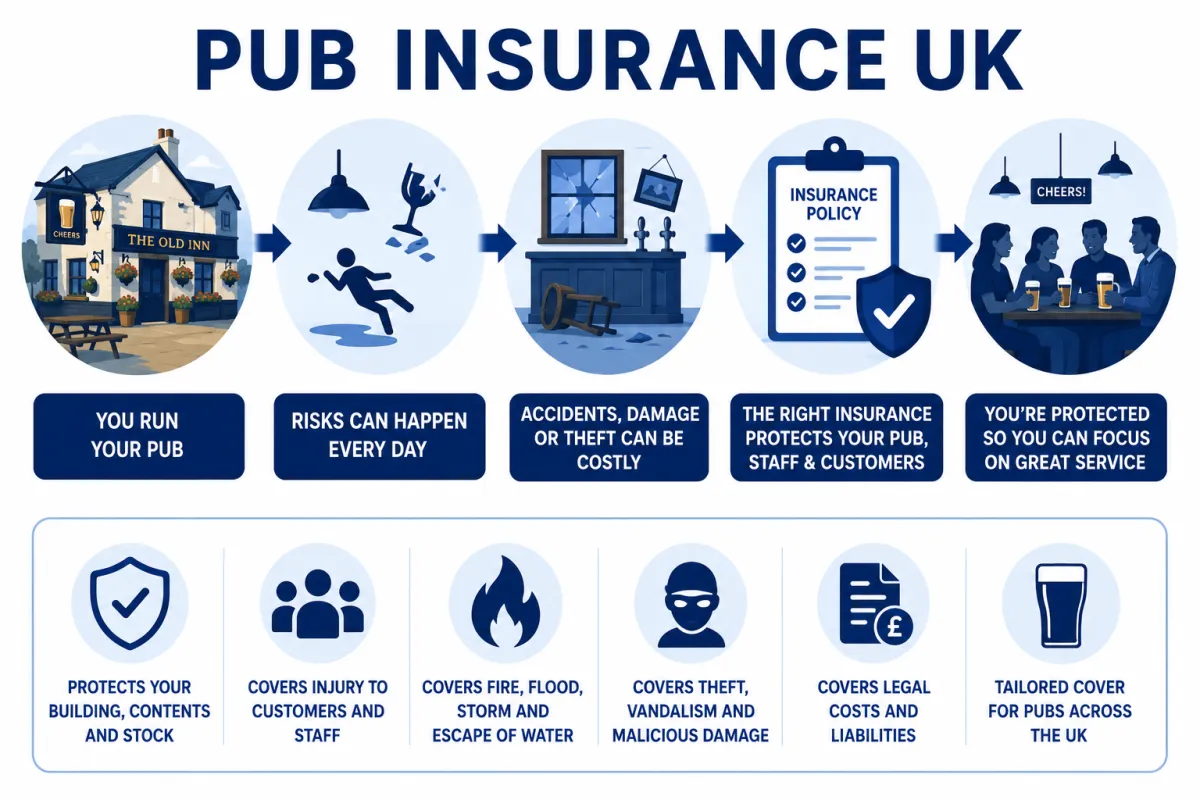
Pub Insurance UK: What Licensees Need in 2026 | Miller & Partner
John was very helpful in an area where other brokers could not find policies that met the needs of my business. Quick responses and always friendly!

I’ve been dealing with John for our specialist crime scene and biohazard cleaning insurance, and the service has been excellent. He took the time to understand the nature of our work and ensured we had the right level of cover in place. Responsive, knowledgeable, and easy to deal with throughout. Would recommend 100%
John M provided excellent support in arranging a policy suited to our needs. Despite our niche requirements, he communicated everything clearly and made the process simple. Highly recommended!
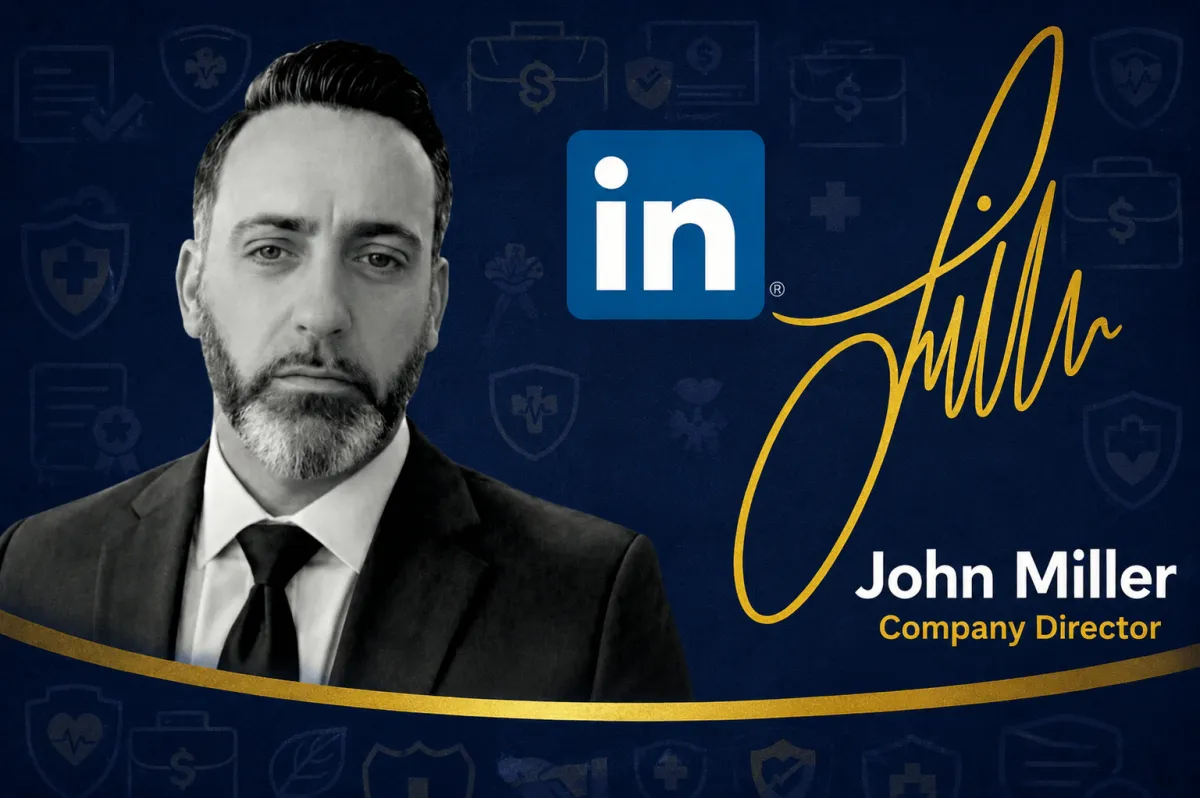
MEET THE Director
Hey, I'm John!
I started Miller & Partner with the aim to bring back personable, approachable broking to UK businesses who were tired of large corporate brokers and feeling like they were just another number.
I have built this brokerage up with no pushy sales techniques or big business tactics, just honest, approachable and professional relationships with my clients.
Over 13 years experience in business insurance
Client first approach
5* rated broker on Google


Office: Vivian House, Roman Bridge Close, Mumbles, Swansea, SA3 5BG
Call 01792 001350
Email: [email protected]
Instagram
LinkedIn