



Specialist Broker for Adverse Risk Insurance UK: 2026 Guide
Why does adverse risk insurance need specialist broker placement in 2026?
Most UK business insurance gets bought online, through aggregators, or via mainstream brokers placing standard-appetite business with mainstream insurers. The system works well for the majority. But for a meaningful minority of UK businesses — those with claims history, voided policies, non-standard trades, high-risk locations, CCJs, criminal convictions, or directors with regulatory history — the mainstream system produces the same outcome every time: declined. Get a quote on a comparison site, fail. Approach a high-street broker, fail. Try a different aggregator, fail. The pattern leaves business owners under the impression that they are uninsurable, when the reality is they're simply not insurable through that channel. For a fuller treatment of the dynamics behind multiple stacked refusals, see our sister guide on insurance for businesses refused cover.
The role of a specialist broker for adverse risk insurance is to bridge the gap between the business that's been declined and the underwriting capacity that genuinely exists for it — in Lloyd's syndicates, in specialist Managing General Agents (MGAs), and in non-standard markets that don't appear on comparison sites and don't accept business through retail channels. The work involves three things mainstream channels cannot do: properly understanding the risk and its mitigations, presenting that risk to underwriters in a way that meets the Insurance Act 2015 fair presentation standard, and accessing the markets that have appetite for it. Done well, businesses that have been declined four or five times can be placed in days — and at premiums far lower than the "uninsurable" assumption would suggest.
The market environment in 2026 makes this work both more necessary and more accessible than at any point in the last decade. The London market has doubled in the past 10 years and remains the world's largest commercial and specialty (re)insurance market, with Lloyd's syndicates and specialist MGAs continuing to expand capacity into UK adverse risk segments. At the same time, mainstream insurer appetite has tightened on segments that mainstream channels won't touch — flood-exposed property, businesses with weather-related claims history, contractors with HSE incident history, hospitality with theft and fire claims, and any business whose previous insurer voided cover under the Insurance Act 2015. The gap between mainstream appetite and total market capacity is filled by specialist brokers with direct Lloyd's and MGA access. Miller & Partner places adverse risk across virtually every UK commercial sector via that route.
This guide is the definitive 2026 article on the role of a specialist broker for adverse risk insurance — built around what actually causes declines, what the Insurance Act 2015 requires of business owners, how specialist placement actually works, and what success looks like. It sits alongside our broader specialist guides including insurance after insolvency or liquidation, insurance for businesses with CCJs, insurance for businesses refused cover, and fire and safety insurance, and complements our commercial insurance hub as the entry point for any UK business that has been declined, voided, or quoted prohibitively.
Key facts at a glance
- Being declined does not mean a business is uninsurable — it means the risk doesn't fit a specific underwriting model. Specialist brokers access Lloyd's syndicates and MGAs whose appetite is built precisely for risks mainstream insurers won't quote.
- The Insurance Act 2015 fair presentation duty is the single biggest cause of avoidable declines and policy voidances — insurers must be given every material circumstance the insured knows or ought to know, presented in a manner reasonably clear and accessible to a prudent insurer.
- Most insurers ask about declines, refusals, cancellations, and voidances in the past 5 years — though some ask about "any time". The disclosure remains material regardless and must be made proactively at proposal.
- The London market has doubled in the past 10 years and remains the world's largest commercial and specialty insurance market, providing the capacity that absorbs UK adverse risk through Lloyd's syndicates and specialist MGAs.
- UK commercial insurance rates fell roughly 6% in Q3 2025 — the seventh consecutive quarter of decline — but the softening is concentrated in clean-record mainstream business; adverse risk segments remain firmly priced and require specialist placement.
- Specialist broker placement typically takes 1–4 weeks from instruction to cover bound, depending on risk complexity, completeness of documentation, and the number of markets approached. Faster turnarounds are achievable where the broker has a pre-existing relationship with the target underwriter.
- Adverse risk insurance is not automatically more expensive than mainstream cover — premiums depend on the underlying risk and the mitigations evidenced, not the existence of decline history. Many placements come in at or below the prospect's prior premium when the risk is properly presented.
1. The 8 most common reasons UK commercial cover gets declined: summary table
The reasons below are ranked by frequency of occurrence in actual specialist placement enquiries we receive in 2026. Some — claims history, location-based declines — are everyday mainstream-channel rejections that specialist placement resolves routinely. Others — non-disclosure history, criminal convictions — are more material and require careful presentation. None of them make a business uninsurable. All of them require specialist broker handling.
| Decline Reason | Frequency | Placement Difficulty | Primary Specialist Route |
|---|---|---|---|
| Claims history (frequency or severity) | Very common — top decline reason | Routine for specialist broker | Lloyd's syndicate or specialist MGA |
| Previous policy voided or cancelled | Common — high stigma in mainstream | Moderate | Specialist MGA with adverse risk appetite |
| Trade outside mainstream appetite | Common for specialist sectors | Routine for specialist broker | Niche MGA scheme for the trade |
| High-risk location (flood, subsidence) | Very common and rising | Routine for specialist broker | Flood-specialist or Lloyd's |
| CCJs, insolvency, financial standing | Common | Moderate | Specialist MGA; insolvency-specific market |
| Criminal convictions / regulatory investigations | Less common but high stigma | High — full disclosure essential | Lloyd's specialist syndicate |
| Non-disclosure history (Insurance Act 2015) | Rising — most preventable | High — requires full re-presentation | Specialist broker re-presentation |
| Mid-term cancellation / unrated activities | Common where business has changed | Moderate | Re-broking with full activity disclosure |
2. Reason 1: Claims history — frequency, severity, and the 5-year window
Claims History — The Most Common Decline Reason
Claims history is the single most common reason UK commercial insurance is declined. Mainstream insurers run automated underwriting decisions where claims frequency and severity over the past 3–5 years drive the accept/decline decision. Three small claims in three years; two claims in five years above £5,000; any single claim above £25,000; any claim involving allegations of negligence or breach of duty — any of these can trigger mainstream decline regardless of the underlying business quality. The 2025 weather year — UK property insurance claims expected to reach £6.1 billion, with weather-related claims at £1.6 billion — has tightened mainstream property appetite significantly, with storms generating £244 million in residential payouts (32% year-on-year increase) and domestic flood claims rising 38% to £312 million.
Specialist placement starts with claims forensics — exactly what happened, who paid out, what the root cause was, what mitigations have been implemented since. The presentation to the target underwriter then addresses each historical claim with the same rigour: dates, amounts, causes, remedial actions. A flood claim three years ago plus subsequent installation of flood resilience measures (raised electrics, flood gates, sump pumps) tells a different underwriting story than the same claim with no documented response. Specialist underwriters at Lloyd's syndicates and specialist MGAs read this context properly; mainstream automated underwriting does not see it.
Claims-loaded risks place into specialist MGAs and Lloyd's syndicates with appetite for the specific claim pattern. Premiums typically run 15–40% above clean-record equivalent — but routinely below the "uninsurable" assumption the prospect arrives with. Multi-year placement commitment often produces material premium reductions in years 2 and 3 as the loss-free record builds. Specialist brokers with strong Lloyd's relationships can negotiate "no-claims rebate" structures explicitly priced for claims-loaded business.
3. Reason 2: Previous policy voided or cancelled by insurer
Voided or Cancelled Policy — High Mainstream Stigma, Routine Specialist Placement
Having a previous insurance policy voided or cancelled by an insurer is one of the highest-impact decline triggers in mainstream UK commercial insurance. Voidance typically follows the insurer's finding that the insured failed in the duty of fair presentation under the Insurance Act 2015 — either by failing to disclose a material circumstance (claims history, prior business, criminal history, premises change) or by misrepresenting facts at proposal. Once a policy has been voided, the question "has any insurer ever cancelled or voided your cover?" must be answered yes for the rest of the business's life — though most insurers limit the question to a 5-year window. Mainstream automated underwriting reads any voidance as a decline trigger regardless of the underlying cause, and the cascade of subsequent refusals can stack quickly — see our guide on insurance for businesses refused cover for the dynamics of how each accumulated decline compounds the next.
Full disclosure of the voidance with the underlying cause is essential. The specialist broker investigates exactly what was alleged to have been misrepresented, why the insurer voided, and what corrective action has been taken — typically improved disclosure processes, broker-mediated proposal completion, and clean operations since. Specialist MGAs with adverse risk appetite understand that voidances arise from a wide range of causes, many of them innocent or technical, and underwrite the risk now in front of them rather than the historical incident. The placement is routine for a specialist broker with adverse risk experience.
Voidance history places into specialist MGAs with explicit adverse risk appetite — these markets exist precisely for this scenario. Premium loading typically 20–50% above mainstream equivalent in year 1, reducing materially in years 2 and 3 as clean placement record builds. The single most important factor is broker presentation: a poorly presented voided history attracts further decline; a properly contextualised one places routinely. This is the area where the broker's relationship with the target underwriter has the largest impact.
4. Reason 3: Trade or activity outside mainstream appetite
Non-Standard Trade — The SIC Code Decline
Mainstream commercial insurance is built around standard industry classifications and standardised underwriting matrices. Trades and activities that fall outside these matrices — biohazard cleaning, trauma cleaning, specialist tradespeople working at height or with hazardous materials, aesthetics practitioners, recreational drone operators, vape retailers, cannabis dispensary operators, certain alternative therapies, escape room operators, esports event managers, certain manufacturing sectors handling regulated substances — face automatic decline through comparison sites and mainstream channels not because the trade is uninsurable, but because it doesn't fit the underwriting matrix. This is the most operationally straightforward decline reason to resolve through specialist placement.
Specialist brokers maintain relationships with niche MGA schemes designed specifically for these trades. Where Miller & Partner places work includes biohazard cleaning, mould removal, aesthetics and beauty, drone operators, vape shops, esports professionals, alternative therapies, CNC machining and precision engineering, and many other specialist sectors. The presentation work is straightforward: declare the activity correctly, evidence the operational competence, provide professional certifications, and place into the appropriate niche scheme.
Niche MGA schemes typically offer competitive pricing for the trade — often better than mainstream channels would offer if they did accept the risk, because the specialist underwriter understands the actual risk profile rather than applying generic loadings. The placement is routine. The cover is also typically more tailored — specialist schemes include cover for activities mainstream policies exclude, so the overall protection is materially better.
5. Reason 4: High-risk location — flood, subsidence, postcode loadings
High-Risk Location — The Postcode Decline
Location-based declines have risen sharply across 2024–2026 as UK weather patterns intensify and mainstream insurer appetite tightens. There are currently 6.3 million UK properties in flood-risk areas, a figure projected to grow significantly. The 2025 weather year produced £1.6 billion in weather-related insurance claims — 25% of total property payouts. The Climate Change Committee has flagged uncertainty around Flood Re's planned 2039 wind-down as starting to affect property market decisions. Mainstream insurers now decline cover at higher rates in EA flood zones 2 and 3, in subsidence-prone postcodes, in coastal erosion zones, and in postcodes with elevated crime statistics. Commercial property in central London, Greater Manchester, and certain other dense urban areas faces postcode loadings that often trigger decline through comparison channels. Where premises are also vacant or held by an administrator with no day-to-day activity, the position is doubly difficult — see our guide on unoccupied property insurance UK for the specific issues those situations create.
Flood, subsidence, and high-risk location placements depend on detailed risk presentation: actual flood history of the specific property (which often differs from the postcode-level data mainstream insurers rely on); installed mitigations (flood gates, raised electrics, sump pumps, building elevation, flood resilience measures); subsidence history including tree management, soil reports, monitoring data where applicable; site security measures for urban property; CCTV, alarms, and fire suppression for elevated theft and fire postcodes. Specialist underwriters at Lloyd's and flood-specialist MGAs read this property-specific data; mainstream automated underwriting cannot.
Flood-exposed risks place into Lloyd's flood-specialist syndicates and MGAs with explicit flood appetite — many of which take the view that well-managed risks in flood zones are better business than poorly managed risks in low-risk areas. Premium loading is typically meaningful but rarely the catastrophe prospects fear; £350,000 commercial property in a flood-risk postcode might pay £4,500 mainstream-declined and £5,800–£7,200 placed via Lloyd's, not the £15,000+ many assume. Subsidence-affected property follows similar logic — specialist appetite exists where mainstream does not. For more on commercial property specifically see our commercial property insurance.
6. Reason 5: CCJs, insolvency history, and director financial standing
Financial Standing — CCJs and Insolvency History
Mainstream UK commercial insurers increasingly screen for adverse financial indicators including County Court Judgments (CCJs), prior insolvencies (the business or its directors), recent winding-up petitions, and adverse credit history. The underwriting concern is moral hazard — concern that financial distress correlates with claims fraud, abandoned premises, deferred maintenance, and ultimately higher claim costs. The screening is increasingly automated and increasingly strict. A single CCJ above £1,000 or any director with a prior insolvency within the past 6 years can trigger mainstream decline regardless of the operational quality of the current business. For the specific disclosure issues created by CCJ history see our dedicated guide on insurance for businesses with CCJs UK. For the placement routes themselves, business insurance with a CCJ covers how satisfied, unsatisfied and director-level judgments are presented, and business insurance after insolvency deals with liquidation, administration, CVAs and phoenix companies.
Full disclosure of the financial history is essential — CCJs, insolvencies, current financial position with up-to-date management accounts. Where the adverse history relates to a prior business or a director's previous role, the broker presents the current business position cleanly: time elapsed since the adverse event, current financial discipline, current trading position, current credit position. Specialist MGAs with adverse financial risk appetite exist precisely for this scenario. The Insolvency Act 1986 framework around prior insolvent companies is well-understood by specialist underwriters; mainstream channels simply trigger decline.
Financial adverse history places via specialist MGAs and Lloyd's with appetite for the segment. Premium loading typically 15–35% in year 1, reducing as clean placement history accumulates. The placement also benefits from monthly direct debit being offered (where mainstream may insist on annual upfront for financial adverse) — managing cash flow during the rehabilitation period. For more on insolvency-specific placement see our insurance after insolvency or liquidation guide.
7. Reason 6: Criminal convictions and regulatory investigations
Criminal Convictions and Regulatory History — Highest Disclosure Care
Criminal convictions of business owners or directors — whether spent or unspent under the Rehabilitation of Offenders Act 1974 — and regulatory investigations (FCA, HSE, Information Commissioner, professional bodies) are material to a prudent insurer's assessment of moral hazard and are therefore disclosable under the Insurance Act 2015 duty of fair presentation. UK case law including the much-cited Berkshire Assets v AXIS line of authority is clear that criminal charges, convictions, and regulatory investigations involving directors must be disclosed even where the insured personally believes them irrelevant — the test is what a prudent insurer would consider material, not what the insured considered material. Non-disclosure entitles the insurer to avoid the policy from inception under section 8 of the Act.
Full, proactive disclosure with full context is essential. This is the area where broker craft matters most. The presentation must include: exact nature of the conviction or investigation, date and outcome, sentence and rehabilitation, relevance (or lack of relevance) to the business activity being insured, current management controls. Lloyd's specialist syndicates with adverse risk appetite price this risk based on the full picture; mainstream channels apply automatic decline. The Insurance Act 2015 has not changed this disclosure duty — what it has changed is the insurer's remedies for non-disclosure, with proportionate remedies replacing automatic avoidance for innocent non-disclosure.
Convictions and regulatory history place via Lloyd's specialist syndicates and a small number of specialist MGAs with explicit adverse risk appetite. Premium loading is typically substantial in year 1 (40–80%) and reduces materially with clean placement years. The single most important variable is the nature of the conviction and its relevance to the business: a conviction for an offence unrelated to the business activity (e.g. a historic motoring offence for a retail business) typically attracts moderate loading; convictions directly relevant to the business (e.g. fraud, dishonesty, regulatory offences for a financial advisor) attract substantial loading or outright decline regardless of broker.
8. Adverse risk situation profile checker
Select the situation that most closely matches yours below to see the typical specialist placement route and cover architecture. For Miller & Partner's broader adverse risk advice see our adverse risk insights hub.
Adverse Risk Situation Profile Checker
Select your situation to see the typical specialist placement route, target market, and cover architecture
Claims History — Declined Mainstream
- ESSENTIAL Full claims forensic review — every claim past 5 years documented with cause and outcome
- ESSENTIAL Evidence of mitigations implemented since each claim (procedural, physical, training)
- ESSENTIAL Specialist broker presentation to Lloyd's syndicate or claims-loaded MGA
- ESSENTIAL Realistic premium loading expectation — typically 15–40% above clean equivalent year 1
- RECOMMENDED Multi-year placement commitment for premium step-down structure
- RECOMMENDED Higher excess strategically used to reduce premium where small claims have driven decline
- CONSIDER Self-insurance of frequency layer where claims are small/frequent rather than large/rare
Policy Voided or Cancelled by Previous Insurer
- CRITICAL Full understanding of what was alleged to have been misrepresented and why
- ESSENTIAL Documentation of corrective process — improved proposal procedures, broker-mediated completion
- ESSENTIAL Full disclosure must be made at proposal to every subsequent insurer (5 years minimum)
- ESSENTIAL Specialist MGA placement — these markets exist precisely for voidance scenarios
- ESSENTIAL Broker presentation contextualising the voidance — innocent technical vs deliberate
- RECOMMENDED 2–3 year programme commitment to rebuild clean placement history
- CONSIDER Higher premium loading in year 1 (20–50%) reducing materially in years 2–3
Trade Outside Mainstream Appetite
- ESSENTIAL Accurate trade declaration — exact activities, not generic categories
- ESSENTIAL Specialist niche MGA scheme designed for the trade
- ESSENTIAL Professional certifications, training records, and competence evidence
- ESSENTIAL Cover tailored to actual activities including specialist exclusions removed
- RECOMMENDED Most niche schemes price competitively — not punitively — for the specific trade
- RECOMMENDED Programme structure tailored to seasonality / project pipeline of the trade
- CONSIDER Multi-product placement (PL/EL/PI/Cyber) within the niche scheme where available
High-Risk Location — Flood, Subsidence, Postcode Loadings
- ESSENTIAL Property-specific flood history (not postcode-level data alone)
- ESSENTIAL Documented flood mitigations — gates, raised electrics, sump pumps, resilience measures
- ESSENTIAL Subsidence — soil reports, tree management records, monitoring data where applicable
- ESSENTIAL Lloyd's flood-specialist syndicate or MGA with explicit appetite
- ESSENTIAL Realistic premium loading — meaningful but typically less catastrophic than feared
- RECOMMENDED Strategic excess and limit structure to optimise premium
- CONSIDER Climate resilience improvement programme to support renewal pricing
CCJ, Insolvency History, Adverse Financial Standing
- ESSENTIAL Full disclosure of financial history at director and entity level
- ESSENTIAL Current management accounts and updated credit position
- ESSENTIAL Documentation of time elapsed and current financial discipline
- ESSENTIAL Specialist MGA placement with adverse financial risk appetite
- ESSENTIAL Monthly direct debit availability where mainstream insists on annual
- RECOMMENDED 2–3 year placement commitment for premium step-down
- RECOMMENDED Insolvency-specific market route where prior insolvency is involved
Criminal Conviction or Regulatory Investigation History
- CRITICAL Full, proactive disclosure — even where the insured believes irrelevant
- CRITICAL Insurance Act 2015 fair presentation applies — failure to disclose voids cover
- ESSENTIAL Exact nature of conviction/investigation, date, outcome, sentence, rehabilitation
- ESSENTIAL Relevance (or lack of) to the business activity being insured
- ESSENTIAL Current management controls and operational discipline documented
- ESSENTIAL Lloyd's specialist syndicate placement — adverse risk appetite essential
- RECOMMENDED Realistic premium loading expectation 40–80% year 1, reducing with clean record
9. Insurance Act 2015 fair presentation readiness self-check
The Insurance Act 2015 imposes a "duty of fair presentation" on commercial insurance buyers — every material circumstance the insured knows or ought to know must be disclosed. Failure is the single biggest cause of voided policies and declined claims. Tick each disclosure discipline your business has in place. The unchecked items are your priority risk areas before approaching any new insurer.
Insurance Act 2015 Fair Presentation Readiness Self-Check
Click each discipline your business has in place. The more ticked, the lower your non-disclosure risk and the cleaner your specialist placement.
- Complete 5-year claims history documented — every claim past 5 years with date, cause, settlement amount, and current status
- Previous policy refusal, cancellation, or voidance history declared — even where the underlying cause was minor or technical
- Director-level CCJs, bankruptcies, and insolvencies declared — within the standard 6-year window, regardless of how unrelated they seem
- Director-level criminal convictions declared — including spent convictions where the proposal form asks, and any unspent regardless
- Regulatory investigations and enforcement history declared — HSE notices, FCA actions, Information Commissioner, professional body investigations
- Full and accurate activity declaration — every activity actually undertaken, not just primary trade or SIC code
- Premises and location facts current — flood history, security, occupancy, neighbouring activities
- Mid-term changes disclosed within reasonable time — new activities, expansion, acquisition, premises changes notified to broker as they occur
- Reasonable search completed — proposal information gathered from senior management responsible for insurance, not just one person's recollection
- Information presented clearly and accessibly — no "data dumping"; key material facts signposted, not buried
- Broker correspondence retained — proposal forms, broker emails, and confirmation of disclosures kept as audit trail
- Annual renewal review with broker — full re-presentation discipline at each renewal, not auto-renewal of stale proposal data
10. Adverse risk placement difficulty assessor
Two factors drive specialist placement difficulty above all others: the nature of the adverse risk factor and the maturity of the documentation supporting re-presentation. Use the tool below for your specific scenario.
Adverse Risk Placement Difficulty Assessor
Select your primary adverse factor and your documentation maturity to see your specific placement profile and the route through

11. Reason 7: Non-disclosure history under the Insurance Act 2015
Non-Disclosure — The Most Preventable Decline Category
The Insurance Act 2015 requires every UK commercial insurance buyer to make a "fair presentation of the risk" — disclosing every material circumstance the insured knows or ought to know, in a manner reasonably clear and accessible to a prudent insurer. The Act applies to all commercial (non-consumer) insurance contracts. Where the duty is breached and the breach is deliberate or reckless, the insurer may avoid the contract from inception, refuse all claims, and retain the premium. Where the breach is inadvertent, the insurer applies proportionate remedies — adjusting terms or reducing claim payouts in proportion to what the insurer would have done with full information. The case law including Berkshire Assets v AXIS has established that the test for materiality is what a prudent insurer would want to know, not what the insured considered important.
Where a previous policy has been voided for non-disclosure, every subsequent insurer must be told. The specialist broker re-presents the risk with complete disclosure and full context — exactly what was alleged to be misrepresented, why, what the impact was, and what corrective process has been put in place since. The corrective process typically includes broker-mediated proposal completion, senior management sign-off on disclosures, and annual renewal re-presentation discipline. Specialist MGAs and Lloyd's syndicates with adverse risk appetite read this corrective discipline favourably; mainstream channels see only the voidance and decline.
There is no insurance market response to non-disclosure itself — that's the whole point of the Act. The cover that should have responded doesn't. The only remediation is at re-placement: full disclosure to the new insurer, documented corrective process, and specialist broker placement with explicit adverse risk appetite. Year 1 premium loading typically 25–50%; year 2 step-down material as clean disclosure record builds. The most important factor in success is the quality of the broker's presentation — the right broker turns a voided history from a decline trigger into a manageable risk factor.
12. Reason 8: Mid-term cancellation and unrated activities
Mid-Term Cancellation and Unrated Activities — The Drift Problem
UK commercial insurance policies are priced for the activities declared at proposal. Where the business undertakes new activities mid-term that weren't declared — a builder taking on solar PV installation, a café introducing live music, a cleaner adding biohazard remediation, a tradesman starting to work at height — the policy may not respond to claims arising from the new activities, and the insurer may cancel mid-term once the unrated activity is discovered. Cancellation by insurer is a material disclosure for the rest of the business's insurance life, equivalent to voidance in mainstream automated underwriting. The pattern is particularly common in growing businesses where commercial expansion outpaces broker communication. Once a mid-term cancellation has occurred, the business often finds itself stacking further declines on top — the route back through specialist placement is covered in detail in our insurance for businesses refused cover guide.
Re-broking with full activity disclosure to a specialist MGA or Lloyd's syndicate with appetite for the actual current business — not the historic narrow activity. The broker discipline is to capture every activity now undertaken, including seasonal or occasional ones, and present the risk based on the full current business profile. Many mid-term cancellation cases place into specialist programmes at lower total cost than the original under-declared mainstream policy plus the consequential exposure.
Specialist MGA placement with appetite for the now-declared business mix. The placement is routine where the broker properly understands and presents the new activity portfolio. Premium loading is modest where the cancellation was for unrated activities (rather than non-disclosure of material facts). The most important post-placement discipline is mid-term notification — any new activity, premises change, or material business development should go to the broker within reasonable time, not held back to renewal.
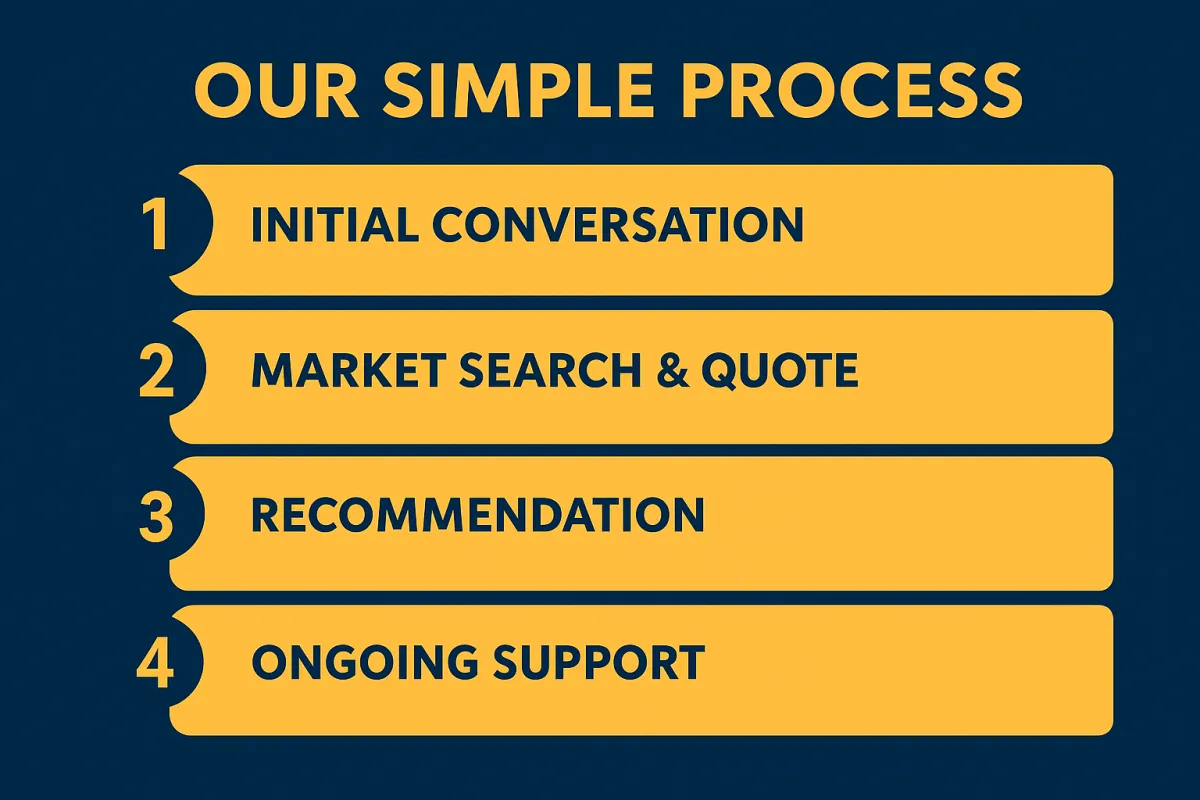
13. How does a specialist broker actually place an adverse risk?
The placement work behind adverse risk insurance follows a structured process — understanding the actual risk, identifying which Lloyd's syndicate or MGA has appetite for it, presenting the risk in a way that meets fair presentation standards, and negotiating terms. The steps below describe what a specialist broker actually does between instruction and bound cover.
Stage 1: Risk discovery and forensic review
The first conversation establishes what's actually being insured — business activities, turnover, staff, premises, contract pipeline. The forensic review then examines claims history (every claim past 5 years with cause, settlement, current status), prior policy history (refusals, cancellations, voidances), director-level adverse history (CCJs, insolvencies, convictions, regulatory investigations), and any other material circumstances. This stage is where most placements succeed or fail — the broker who skips this stage is the broker who produces a poorly presented submission and a decline.
Stage 2: Market identification
Specialist brokers maintain working knowledge of which Lloyd's syndicates and MGAs have appetite for which adverse risk segments — flood-exposed property, voided policy history, claims-loaded contractors, non-standard trade. The identification is not from a published list (no such list exists publicly); it's from broker-to-underwriter relationships built over years. Miller & Partner's direct access to Lloyd's Market and specialist MGAs covers the great majority of UK commercial adverse risk segments.
Stage 3: Fair presentation and submission
The submission to the target underwriter presents the risk in line with the Insurance Act 2015 standard — every material circumstance disclosed, presented clearly and accessibly, with proper context. The submission typically includes proposal information, business profile, full claims history with mitigations, financial information, and any relevant adverse disclosures with context. The Insurance Act 2015 specifically bans "data dumping" — providing volume of disclosure without signposting the material facts — so the broker's role includes structuring the presentation so material information is clearly visible.
Stage 4: Underwriter dialogue and quote
Underwriter dialogue typically follows submission — clarification of risk factors, additional information requests, mitigation evidence. This stage often takes 5–14 days depending on underwriter caseload and complexity. Where the broker has a strong working relationship with the underwriter, the dialogue is faster and the terms typically stronger. Multiple market submissions for the same risk are common and produce competitive quotes.
Stage 5: Terms negotiation and binding
Terms negotiation covers premium, excess, sub-limits, conditions, warranties, and exclusions. Specialist brokers negotiate these actively rather than accepting first-quoted terms — particularly on excess structure, sub-limit removal, and warranty wording. Once terms are acceptable to the insured, cover is bound (the formal insurance contract is entered into). Lloyd's market binding follows the Market Reform Contract (MRC) process — the broker submits the slip, the lead syndicate signs, follower syndicates subscribe.
Stage 6: Ongoing placement management
Post-binding, the broker manages mid-term changes, additional disclosure, and renewal preparation. Year 2 renewal is typically the inflection point where adverse risk placements step down materially in price as a clean placement year is added to the record. The broker who places adverse risk well also manages it through renewal — the same broker discipline that achieves placement achieves the step-down.
14. What drives the cost of adverse risk insurance in 2026?
Adverse risk insurance pricing in 2026 reflects a softening mainstream market for clean-record business (UK commercial rates down ~6% in Q3 2025 per Marsh) and a firmer specialist market for adverse risk — the spread between the two has widened. Indicative pricing ranges below are illustrative; actual pricing depends entirely on the underlying business and the specific adverse factors.
| Adverse Factor | Typical Year 1 Loading | Year 2/3 Step-Down Potential |
|---|---|---|
| Single claim, well-documented mitigation | 10–25% above clean equivalent | To 5–15% above clean by year 3 |
| Multiple claims, mixed mitigations | 25–45% above clean equivalent | To 10–25% above clean by year 3 |
| Voided policy, full corrective process | 20–50% above clean equivalent | To 5–20% above clean by year 3 |
| Non-standard trade — niche scheme placement | Often at or below mainstream | Stable across renewals |
| Flood-exposed property | 30–80% above non-flood equivalent | Limited step-down (location-driven) |
| Subsidence history (resolved) | 20–40% above clean equivalent | Modest step-down with stability evidence |
| CCJ or director insolvency history | 15–35% above clean equivalent | To 5–15% above clean by year 3 |
| Conviction (unrelated to business) | 20–50% above clean equivalent | To 10–25% above clean by year 3 |
| Conviction (relevant to business) | 40–100%+ where placeable | Limited step-down |
| Multiple adverse factors | 30–80% above clean equivalent | Step-down depends on factor mix |
The factors below drive the overall placement and pricing outcome more than the specific premium calculation. Many of these factors are within the business's control — and properly addressed at the broker discovery stage, they materially affect the final outcome.
| Driver | Impact | What You Can Do |
|---|---|---|
| Documentation maturity | Mature documentation reduces premium 15–25% across placement | Full claims history, mitigations, current accounts, certifications |
| Time elapsed since adverse event | Each clean year reduces loading materially | Strategic placement timing where adverse event is recent |
| Quality of broker presentation | Single biggest non-business factor — decline vs placement | Specialist adverse risk broker selection |
| Mitigation evidence | Tangible mitigations (physical, procedural) reduce loading | Implement and document before market approach |
| Disclosure completeness | Incomplete disclosure → decline or voidance risk | Full disclosure including items insured believes irrelevant |
| Programme commitment (years) | 2–3 year commitments often secure step-down structure | Discuss multi-year strategy at submission |
| Excess strategy | Higher excess on frequency layer can offset premium loading | Strategic excess use particularly where small claims drove decline |
| Limit structure | Match limits to actual contractual needs, not maximum available | Right-size rather than over-buy at specialist pricing |
| Lloyd's market timing | Market conditions vary; placement timing affects terms | Specialist broker advises optimum submission window |
| Geographic operating area | UK operations only typically prices better than UK + overseas | Declare accurately; consider operational scope |
| Broker / underwriter relationship | Strong existing relationship typically secures better terms | Specialist broker selection with proven market access |
| Renewal continuity | Same insurer year-on-year reduces premium 5–10% in step-down | Strategic continuity rather than annual re-broking |
15. Real placement case studies — declined to placed
Placement — Construction Contractor with Three Claims, Five Mainstream Declines
A mid-sized UK construction contractor with £2.1m turnover approached Miller & Partner after being declined by five mainstream insurers through their previous broker. The claims history: one EL claim £18,500 (operative slip, settled clean); one PL claim £22,000 (property damage during groundworks, settled clean); one CAR claim £41,000 (theft of plant from site, settled clean). All three claims were within a 4-year window across a £1.5m–£2.1m turnover business. The previous broker had submitted to five mainstream markets without distinct presentation — automated underwriting at each market read the claims pattern and declined.
The specialist re-presentation took three working days. The broker discovery established that the operative slip claim had triggered implementation of a documented site induction protocol; the PL property damage claim had triggered pre-work property condition survey discipline; the theft claim had triggered upgraded site security including overnight CCTV and lockable plant cages. Each mitigation was evidenced with photos, policies, and operational records. The presentation to a Lloyd's syndicate with construction adverse risk appetite produced a quote within 8 working days.
Outcome: Combined liability and CAR programme placed at £14,800 (previous mainstream renewal pre-claims £8,200; mainstream quote post-claims declined). Year 1 loading vs clean-record equivalent ~30%. Year 2 renewal (no further claims) reduced to £11,600 — 12% loading vs clean equivalent. Year 3 (no claims) reduced to £9,400 — effectively at clean-equivalent pricing. Total programme cost over 3 years: £35,800 vs total uninsured exposure of approximately £180,000+ in EL/PL/CAR claims across the period.
The lesson: claims history is a routine specialist placement; the difference between "uninsurable" and "placed at competitive rates" is broker craft. The mitigations were already in place; the previous broker simply hadn't presented them.
Placement — Hospitality Operator with Voided Policy and Flood Postcode
An independent hospitality operator (restaurant with first-floor private dining) had a buildings and contents claim partially declined and the policy subsequently voided by their previous insurer in 2024, citing non-disclosure of a prior escape-of-water claim at a different premises 4 years earlier. The voidance was disputed but not pursued through the Financial Ombudsman. The business then approached comparison sites and high-street brokers for replacement cover and was declined by seven markets — partly for the voidance, partly because the premises sat in an EA flood zone 3 postcode with one recent surface water flood event on the street.
The specialist re-presentation involved: full forensic review of the original voidance including disputed disclosure points; documentation of the corrective process (broker-mediated proposal completion adopted, annual disclosure review discipline implemented); flood-specific risk assessment for the actual premises (which had not flooded itself — surface water on the street had not penetrated the property); installed flood mitigations (flood gates on ground floor entries, raised electrical sockets, flood-resistant flooring on ground floor). Premises-specific data differentiated the property from postcode-level flood risk data.
Outcome: Buildings + contents + business interruption programme placed via a Lloyd's flood-specialist syndicate at £11,400. Previous mainstream renewal pre-voidance £6,800; previous mainstream quotes post-voidance all declined. Year 1 loading vs clean equivalent ~50%. Year 2 renewal (clean) reduced to £9,200 — 22% loading. The placement included full flood cover with no flood sub-limit reductions. The broker work that produced the placement took six working days from instruction to bound cover.
The lesson: voided history plus flood exposure is the textbook "uninsurable" combination in mainstream channels — yet both are routinely placeable in Lloyd's. The broker presentation that established the voidance context and differentiated the property from postcode-level flood data did the placement work; the mainstream approach failed because mainstream automated underwriting cannot read either context.
Placement — Technology Director with Historic Conviction and New Business
A technology consultancy director establishing a new business approached Miller & Partner after being declined for combined PI and Cyber cover by six markets following disclosure of a non-violent conviction from 11 years earlier (fraud-related, spent under the Rehabilitation of Offenders Act 1974 but disclosable where the proposal form asked specifically). The conviction was unrelated to the new business activity (technology consulting); the director had served sentence, completed rehabilitation, and traded clean for the subsequent 8 years through prior employment. The mainstream broker had submitted disclosure correctly but mainstream automated underwriting declined automatically on the conviction flag.
The specialist re-presentation took 12 working days due to underwriter dialogue complexity. The presentation included: full conviction details including offence, sentence, completion, rehabilitation evidence; clear documentation that the conviction was unrelated to the technology consulting activity; 8 years of clean employment history including professional references; current business plan and financial discipline; client base profile and contract types. The submission went to a Lloyd's specialist syndicate with adverse risk appetite for director-level conviction history.
Outcome: Combined PI £1m + Cyber £500k programme placed at £4,200 (mainstream equivalent for clean director would be approximately £2,100–£2,400; conviction loading ~80%). Year 2 renewal (clean) reduced to £3,400 — ~50% loading. Year 3 reduced to £2,950 — ~25% loading. The director was able to win contracts requiring PI cover that had been blocked by the inability to obtain insurance.
The lesson: convictions place via Lloyd's specialist syndicates where mainstream automated underwriting will not engage. The variables that determine placement success are conviction nature, time elapsed, relevance to activity, and broker presentation discipline. Each material variable here favoured placement — the broker work was to present them effectively.
Adverse Risk Placement Steps
How to engage specialist broker placement for previously declined commercial cover — the steps below describe what to prepare and what to expect when approaching a specialist adverse risk broker:
- Gather complete claims history. Every claim past 5 years — date, type, cause, settlement amount, current status. If your previous broker holds this, request the loss runs. Without complete claims data, no specialist broker can submit a credible adverse risk placement.
- Document the specific decline reasons given. Every decline letter, every quote refusal, every voidance notice. The decline pattern tells the specialist broker which markets to approach and which to avoid.
- Prepare director-level disclosures. CCJs (any), bankruptcies (within 6 years), prior insolvencies, criminal convictions (spent and unspent where asked), regulatory investigations or actions. Better to over-disclose at proposal than to have an insurer find something later.
- Document mitigations implemented since adverse events. Physical (security, fire suppression, flood gates), procedural (induction, training, sign-off), management (board reviews, audits, claims response). Mitigations are what convert "uninsurable" to "placed" in specialist underwriting.
- Engage a specialist broker — not your existing one. If your existing broker has been declined multiple times in the same submission round, they don't have the specialist markets you now need. Specialist adverse risk broker selection is the most important variable in the placement outcome.
- Allow the broker time for proper presentation. A rushed submission produces a rushed decline. Specialist placements typically take 1–4 weeks from instruction to bound cover; the broker who promises "quote within hours" for a complex adverse risk is usually not actually accessing specialist markets.
- Engage actively with underwriter dialogue. Specialist underwriters often request additional information; respond fully and quickly. The broker manages the dialogue but needs information from you to do so effectively.
- Plan for multi-year placement strategy. Adverse risk pricing steps down meaningfully in years 2 and 3 as a clean placement record builds. Multi-year planning produces better outcomes than annual re-broking.

Glossary of adverse risk insurance terms
- Adverse Risk
- A risk that mainstream insurers have declined, refused to quote, voided, cancelled, or quoted at terms the insured cannot accept. The risk is not uninsurable — it requires specialist broker placement via Lloyd's Market or specialist MGAs with appetite for the specific adverse factor.
- Insurance Act 2015
- UK statute reforming commercial insurance contract law. Imposes a "duty of fair presentation" on commercial insurance buyers, requiring disclosure of every material circumstance the insured knows or ought to know, presented clearly and accessibly. The most important UK insurance statute affecting adverse risk placement.
- Fair Presentation
- The Insurance Act 2015 duty owed by commercial insurance buyers to disclose every material circumstance to the insurer in a manner reasonably clear and accessible. Failure entitles the insurer to proportionate remedies (innocent breach) or avoidance from inception (deliberate or reckless breach).
- Material Circumstance
- Information that would influence the judgement of a prudent insurer in determining whether to take the risk and on what terms. Includes past claims, prior insurance refusals, director-level adverse history, criminal convictions, and any other factor a prudent insurer would want to know.
- Voidance / Avoidance
- An insurer's remedy where the insured has breached the duty of fair presentation. The policy is treated as never having existed; the insurer refuses all claims and may retain or return premium depending on the nature of the breach.
- Lloyd's Market
- The London-based marketplace where Lloyd's syndicates (underwriting groups) write specialty and adverse risk insurance through accredited Lloyd's brokers. The largest commercial and specialty (re)insurance market globally, doubled in size over the past decade. Primary capacity source for UK adverse risk placement.
- Lloyd's Syndicate
- An underwriting group within Lloyd's that writes risks on behalf of its capital providers (Names and corporate members). Syndicates have different appetites for different risk classes; specialist adverse risk capacity sits in particular syndicates accessed via specialist brokers.
- MGA (Managing General Agent)
- A specialist underwriting business authorised by an insurer to underwrite specific risk categories on the insurer's behalf. MGAs typically have deep expertise in specific sectors (cleaning, drone operators, esports, aesthetics, adverse risk segments) and quote competitively for their niche.
- Coverholder
- An entity authorised by Lloyd's managing agents to enter into insurance contracts on behalf of Lloyd's syndicates under a binding authority. Functionally similar to an MGA within the Lloyd's market structure.
- Market Reform Contract (MRC)
- The standardised contract document used in the Lloyd's market for binding insurance contracts. Sometimes called the "slip". Contains all material terms, premiums, deductibles, and policy wording.
- Declined Risk
- A risk an insurer refuses to cover due to high loss potential, adverse factors, or simply being outside the insurer's appetite. A decline indicates the risk doesn't fit the specific insurer's underwriting model — not that the risk is uninsurable in the market generally.
- Loss Runs
- Documentation from a current or previous insurer detailing claims history for a specific insured — date, type, cause, amount paid, status. Essential evidence for adverse risk placement; specialist brokers typically request loss runs from the previous insurer at the start of the placement process.
- Rehabilitation of Offenders Act 1974
- UK statute under which most criminal convictions become "spent" after a defined rehabilitation period. Some insurance proposal forms ask about spent convictions; where they do, disclosure is required. Where the proposal asks only about unspent convictions, spent convictions need not be disclosed (subject to other Insurance Act material disclosure considerations).
- CCJ (County Court Judgment)
- A court order recording a debt that has not been paid. Recorded on the public register for 6 years. Material to most commercial insurance proposals at director and entity level; non-disclosure where asked is a fair presentation breach.
- Berkshire Assets v AXIS
- UK case law authority (2021) confirming that under the Insurance Act 2015, criminal charges, convictions, and regulatory investigations involving directors are material to a prudent insurer's risk assessment and must be disclosed even where the insured personally believes them irrelevant.
- Proportionate Remedy
- Under the Insurance Act 2015, the insurer's remedy where the insured has breached the duty of fair presentation innocently (not deliberately or recklessly). Rather than voiding the policy, the insurer applies the terms or premium it would have applied with full disclosure — potentially reducing claim payouts proportionately.
- Flood Re
- UK government-backed reinsurance scheme established 2016 to support flood insurance affordability for high-risk residential properties. Scheduled to wind down by 2039. Does not cover commercial property. Commercial flood-exposed property places via Lloyd's flood-specialist syndicates and specialist MGAs.
Frequently asked questions
A specialist broker for adverse risk insurance UK is an FCA Authorised broker with direct access to Lloyd's Market and specialist MGAs whose appetite covers risks mainstream insurers decline — claims history, voided policies, non-standard trades, high-risk locations, CCJ and insolvency history, criminal convictions, and other adverse factors. The broker's role is to understand the specific adverse factors properly, identify which Lloyd's syndicates or MGAs have appetite, present the risk to meet Insurance Act 2015 fair presentation standards, and negotiate terms. Specialist placement typically takes 1–4 weeks from instruction to bound cover.
Almost certainly not. Being declined by mainstream insurers (aggregators, high-street brokers, comparison sites) means the risk doesn't fit those specific underwriting models — not that no insurer will cover the risk. The London market has doubled in size over the past decade and continues to expand capacity into UK adverse risk segments. Specialist brokers with direct Lloyd's and MGA access routinely place risks that have been declined 4–7 times through mainstream channels. The work involves understanding the specific decline reasons, identifying appropriate markets, and presenting the risk properly. For the full mechanics of how each accumulated decline compounds the next, see our dedicated guide on insurance for businesses refused cover. Most adverse risks place within 1–4 weeks of specialist engagement.
It depends entirely on the underlying adverse factors. Some adverse risks (non-standard trade in a niche MGA scheme) price at or below mainstream equivalent. Others (multiple claims plus voided history) may price 30–60% above clean equivalent in year 1, stepping down materially in years 2 and 3. Convictions directly relevant to the business activity may price 40–100%+ above clean equivalent. The key insight is that specialist pricing reflects the actual risk, not the "uninsurable" assumption many prospects arrive with — many adverse risks place at competitive rates once properly presented. See the cost driver table earlier in the article for indicative ranges.
It depends on the specific question asked in the proposal form. Most UK commercial insurance proposals ask about declines, refusals, cancellations, and voidances within a 5-year window — meaning a voidance 6 years ago typically does not need to be disclosed in answer to that specific question. However, the Insurance Act 2015 fair presentation duty extends beyond proposal form questions to every material circumstance the insured knows or ought to know. Where the underlying cause of the voidance (e.g. a director's criminal history, a major claims pattern) remains material to a prudent insurer's risk assessment, that underlying cause may still need to be disclosed. The safer approach is to discuss the historical voidance with your specialist broker before completing any proposal — broker-mediated disclosure is the most defensible position.
Under the Insurance Act 2015, the consequences depend on whether the breach was deliberate or reckless versus innocent. Deliberate or reckless breach: the insurer may avoid the contract from inception (treating it as never having existed), refuse all claims, and retain the premium. Innocent breach: the insurer applies proportionate remedies — if it would have declined the risk entirely with full disclosure, it can avoid the policy and return the premium; if it would have charged a higher premium, claims are reduced proportionately; if it would have applied different terms, those terms are applied to claims retrospectively. The practical outcome is the same in most cases — a meaningful non-disclosure creates a real risk of uninsured claim exposure. The Insurance Act 2015 framework makes specialist broker presentation discipline materially more important than under the prior law.
Typical timeline is 1–4 weeks from specialist broker instruction to bound cover, depending on complexity. Straightforward placements (single adverse factor, mature documentation, established broker-underwriter relationship) often complete within 5–10 working days. Complex placements (multiple adverse factors, basic documentation, conviction or regulatory history) may take 3–4 weeks including underwriter dialogue and documentation. The single biggest factor affecting timeline is documentation completeness at instruction — brokers cannot submit credibly without full claims history, mitigation evidence, and adverse history documentation. Time spent gathering documentation before broker instruction reduces total elapsed time to bound cover.
Yes — CCJs are a routine specialist placement scenario. Mainstream insurers screen for CCJs and typically decline above modest thresholds (often £1,000+); specialist MGAs and Lloyd's syndicates with adverse risk appetite underwrite CCJ-affected risks on a case-by-case basis. The placement requires full disclosure (CCJ amount, date, current status — paid/unpaid), current management accounts showing financial discipline, and broker presentation contextualising the CCJ. Premium loading is typically 15–35% above clean-record equivalent in year 1 with material step-down in years 2–3 as clean placement record builds. For the specific disclosure issues created by CCJ history see our dedicated guide on insurance for businesses with CCJs UK; for related insolvency-affected placement see our insurance after insolvency guide.
It depends on the specific question asked. Most UK commercial insurance proposals ask only about unspent convictions under the Rehabilitation of Offenders Act 1974 — where the proposal asks this way, spent convictions need not be disclosed in answer to that specific question. Some proposals (typically specialist or higher-disclosure markets) ask about both spent and unspent convictions; where the proposal asks specifically, full disclosure is required. The Insurance Act 2015 fair presentation duty may extend beyond the specific questions where the underlying conviction remains material to a prudent insurer's risk assessment — e.g. a fraud conviction for a financial advice business. Discuss historical convictions with your specialist broker before completing any proposal; broker-mediated disclosure is the most defensible position both legally and commercially.
The terms are sometimes used interchangeably but mean different things in the UK market. Specialty insurance typically refers to non-mainstream classes of insurance (aviation, marine, transactional risk, political risk, parametric) — risks that don't fit standard property/casualty categories regardless of the underlying business quality. Specialist insurance typically refers to non-mainstream placement of standard risk classes (property, liability, motor) where the specific business has adverse factors (claims history, voidance, location) that prevent mainstream placement. Both routes commonly use the Lloyd's Market and specialist MGAs; both require broker access these prospects cannot reach directly. Specialist adverse risk broking is the focus of this article; for broader specialty insurance discussion see our commercial insurance hub.
Yes, in most cases. Director prosecution history (HSE prosecutions, FCA enforcement, financial offences) is a specialist placement scenario rather than an absolute decline trigger. The relevant variables: nature of the prosecution and outcome; time elapsed since the prosecution; relevance to the current business activity; remediation undertaken (training, governance reforms, board changes); current operational discipline evidenced. Specialist Lloyd's syndicates with adverse risk appetite read this context properly; mainstream channels apply automatic decline. Premium loading is meaningful — typically 30–80% in year 1 — but the placement is achievable for the great majority of prosecutorial histories where the broker presentation is competent. For related guidance on HSE and regulatory engagement see our fire and safety insurance guide.
There is no formal appeals process for underwriting decisions — insurers' decisions to decline cover are commercial decisions and are not appealable in the way that claim decisions are. However, decline decisions can be effectively reversed by re-presenting the risk to the same insurer (with additional information or mitigation evidence) or to a different insurer altogether. The most productive route is specialist broker re-presentation rather than appeal — a properly re-presented risk to a market with appetite for the adverse factors typically produces placement within 1–4 weeks. Where you believe a decline was based on incorrect or incomplete information (e.g. wrong claims history attributed to your business), provide corrected information promptly; some insurers will reconsider where the original basis was factually wrong.
Look for FCA Authorised brokers with explicit specialist adverse risk experience evidenced by: published articles on adverse risk placement, voidance handling, and Insurance Act 2015 disclosure; willingness to discuss specific adverse factors (claims history, voidance, conviction, flood, financial standing) in detail at first contact; direct access to Lloyd's Market and specialist MGAs rather than mainstream commercial markets only; documented track record placing adverse risks across sectors. Avoid brokers offering quick comparison-site-style quotes for adverse risks; brokers who cannot articulate which Lloyd's syndicates or MGAs they would approach for your specific scenario; brokers who don't ask detailed questions about the decline history at first contact. Miller & Partner specialise in UK adverse risk placement — see our commercial insurance hub and broader adverse risk insights.






Instagram
LinkedIn