Commercial Property Insurance

Commercial Property Insurance UK Guide 2025: Essential Insights

November 11, 202518 min read

A major flood, a burst pipe, or a fire can disrupt business in moments, costing thousands or even millions. As 2025 brings new risks and tighter regulations, having the right commercial property insurance uk policy is more vital than ever for UK businesses.

This guide is designed to demystify commercial property insurance, giving business owners and property investors clear, actionable insights. You will discover what’s covered, legal obligations, how to choose the best policy, and the main factors influencing costs.

We will also explore risk management strategies, tips for making claims, and the latest industry trends. Protect your assets, ensure compliance, and make confident decisions for your business’s future.

Get A Quote Now!

Understanding Commercial Property Insurance in the UK

Navigating the world of commercial property insurance uk can feel complex, yet it is a cornerstone of risk management for any business premises. Whether you own, rent, or invest in commercial property, having the right cover safeguards your assets and ensures business continuity in the face of unexpected events.

Commercial property insurance

What is Commercial Property Insurance?

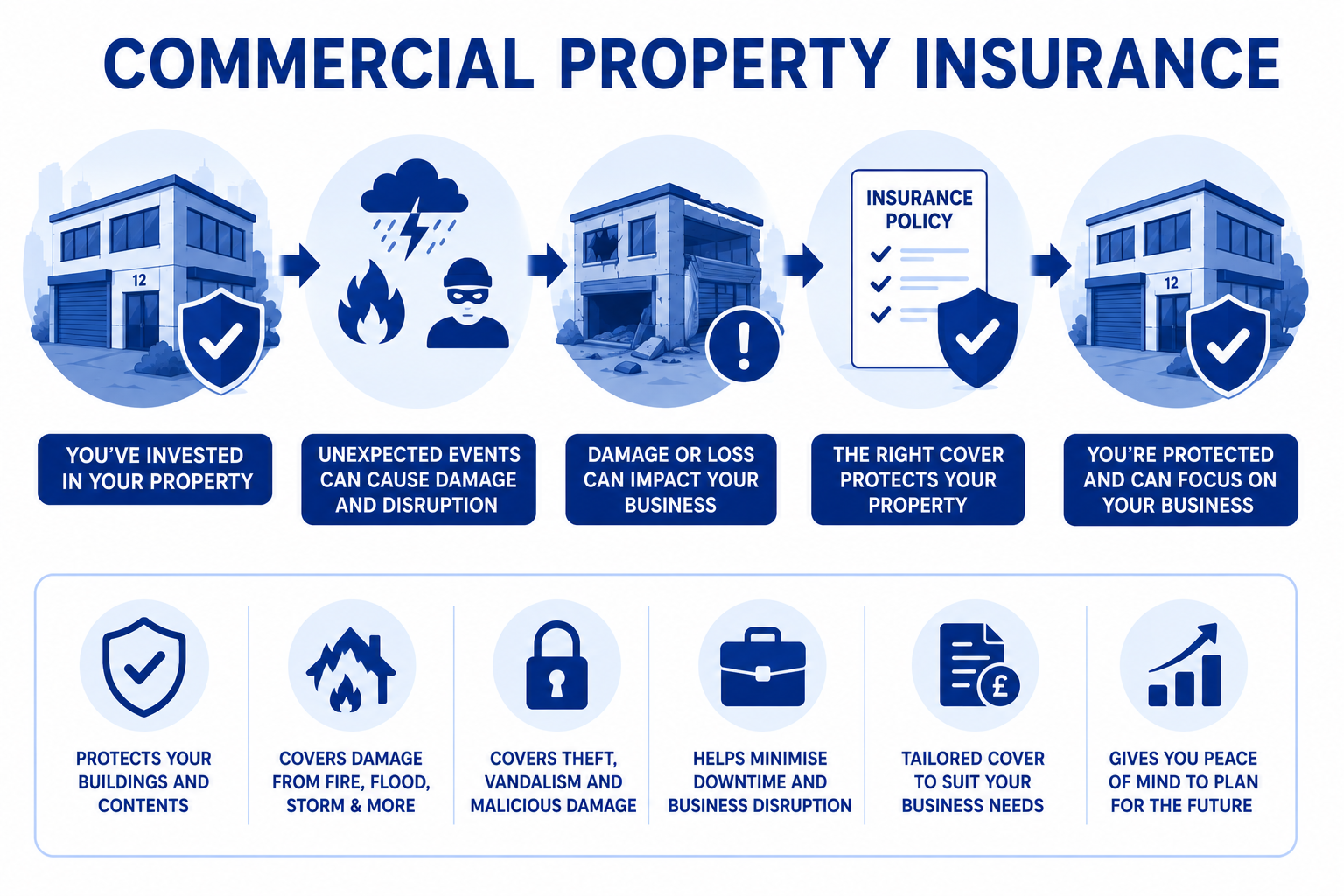
Commercial property insurance uk is designed to protect the physical assets of a business, including buildings, fixtures, fittings, and stock, against risks such as fire, flood, theft, and accidental damage. Unlike residential cover, it accounts for the unique exposures faced by businesses, such as higher footfall or specialist equipment.

Typical insured events include fire, storm, escape of water, and malicious damage. However, gradual wear and tear or faulty workmanship are often excluded. For example, a fire caused by an electrical fault would be covered, but damp from poor maintenance might not be.

This insurance is crucial for landlords, tenants, and owner-occupiers alike. In 2023, UK insurers paid out £1.3 billion in commercial property claims (AXA), highlighting the scale of potential risk. Understanding what is and is not covered is essential for effective protection.

Who Needs Commercial Property Insurance?

Anyone responsible for a commercial premises in the UK should consider commercial property insurance uk essential. This includes business owners, whether they own or lease their premises, and commercial landlords or property investors seeking to protect their assets.

Certain sectors, such as retail, hospitality, manufacturing, and offices, rely heavily on property cover due to the value of their physical assets. Mixed-use and multi-occupancy buildings often require tailored policies to address complex occupancy risks.

For instance, a small café without insurance faced closure after a kitchen fire, unable to recover from uninsured losses. Legal obligations also play a role, as lenders typically require cover for mortgaged properties, and many leases mandate specific insurance levels for both landlords and tenants. For a detailed breakdown, see Commercial property insurance explained.

Types of Commercial Property Insurance Policies

Commercial property insurance uk comes in several forms to suit different needs. The main types include:

Buildings Insurance

Structure, permanent fixtures, outbuildings

Owners, landlords

Contents Insurance

Equipment, stock, furnishings

Tenants, business operators

Combined Property & Contents

Both building and contents

Owner-occupiers, landlords

Optional add-ons, such as accidental damage, subsidence, or terrorism cover, provide extra protection. Specialist policies may be required for unoccupied properties, listed buildings, or premises with high-value assets.

For example, a standard policy might exclude terrorism, while a city-centre business could benefit from this add-on. Always compare features like day-one reinstatement, index-linked sums insured, and tailored options to ensure the policy fits your unique risks.

Key Exclusions and Limitations

While commercial property insurance uk covers a wide range of perils, there are notable exclusions and limitations. Common exclusions include wear and tear, gradual deterioration, and losses due to faulty workmanship or design. Underinsurance is a significant risk, as policies often apply an average clause, reducing payouts if sums insured are too low.

Policy limits, excesses, and indemnity periods can also affect claim outcomes. Unoccupied properties may face stricter terms, such as reduced cover after a set vacancy period. Accurate rebuild cost assessments are vital to avoid underinsurance, which could result in a refused or reduced claim.

For example, a business that underestimated its rebuild value faced a partial settlement when disaster struck, highlighting the importance of regular professional valuations. To avoid these pitfalls, review policy terms carefully, maintain up-to-date valuations, and declare all material facts to your insurer.

Legal and Regulatory Requirements in 2025

Understanding the legal and regulatory landscape is essential for anyone arranging commercial property insurance uk. As 2025 brings new compliance challenges, business owners and landlords must stay informed to avoid costly mistakes and ensure robust protection.

Legal and Regulatory Requirements in 2025

Statutory Insurance Obligations

Legal obligations around commercial property insurance uk are strict and ever-present. For property owners with a mortgage, buildings insurance is typically mandatory under lender terms. Landlords must also comply with lease agreements, which often specify the minimum required cover and responsibility for arranging or paying for insurance.

Certain sectors, such as hospitality and healthcare, face additional regulatory requirements. For example, pubs and restaurants often need tailored insurance to meet licensing or public liability standards. Compliance with Financial Conduct Authority (FCA) regulations is also vital, ensuring policies are fair, transparent, and suitable for the property use.

A typical commercial lease will outline:

  • The party responsible for buildings and contents insurance.

  • Minimum sums insured and specific perils covered.

  • Procedures for providing proof of cover to stakeholders.

Failure to meet statutory insurance obligations can result in legal disputes, financial penalties, or loss of lender support. Staying proactive with these requirements is essential for anyone holding commercial property insurance uk.

Changes in Legislation and Industry Standards for 2025

The commercial property insurance uk market is evolving rapidly in response to new legislation and shifting industry standards. Recent updates to the Building Safety Act have introduced stricter rules for fire safety, particularly in multi-occupancy buildings and high-rise premises. Enhanced requirements for cladding, flood resilience, and risk disclosures are now standard, especially in light of lessons learned from the Grenfell Tower tragedy.

The FCA has rolled out reforms focused on fair value and transparency, with insurers now required to clearly demonstrate that their products meet client needs. These changes are reinforced by industry-wide calls for improved disclosure and risk management, which are shaping the future of cover options and pricing. For a deeper look at these trends and their impact on policyholders, see the UK commercial property insurance market trends.

Staying compliant in 2025 means keeping up with:

  • Annual regulatory updates.

  • Enhanced documentation for safety and building standards.

  • Regular reviews of policy wording to match legislative shifts.

This proactive approach ensures your commercial property insurance uk remains valid and effective.

Insurance and Risk Assessments

Risk assessments are now a cornerstone of securing commercial property insurance uk. Professional evaluations for fire, flood, and security risks are often required by insurers before a policy is issued or renewed. These assessments not only support eligibility for cover but also influence premium levels and available policy features.

Regulators expect comprehensive, documented risk controls. Businesses should maintain records of:

  • Fire risk assessments.

  • Flood risk evaluations.

  • Security system checks and improvement plans.

For example, a completed fire risk assessment can be the deciding factor in whether an insurer will offer terms, especially for older or complex buildings. Failure to provide up-to-date risk documentation can lead to higher costs or declined cover. A robust risk management process is essential for maintaining reliable commercial property insurance uk.

Claims, Disputes, and Compliance

The claims process for commercial property insurance uk is governed by strict statutory procedures. Policyholders must notify their insurer of a loss promptly, usually within a set timeframe stated in the policy. The FCA oversees fair claims handling, ensuring insurers act transparently and without unnecessary delay.

Disputes may arise over policy wording, exclusions, or settlement values. In such cases, resolution routes include:

  • The Financial Ombudsman Service.

  • Mediation and negotiation.

  • Legal action if required.

Non-compliance or misrepresentation can trigger financial penalties and, in severe cases, regulatory action. For instance, failing to disclose material facts or providing inaccurate rebuild costs may lead to a denied claim. To avoid such pitfalls:

  • Review policy documents regularly.

  • Disclose all relevant information.

  • Maintain clear communication with insurers and brokers.

Following these steps ensures smooth claims handling and ongoing compliance with commercial property insurance uk requirements.

Choosing the Right Commercial Property Insurance Policy

Selecting the right commercial property insurance uk policy is vital for protecting your business assets and ensuring long-term resilience. With so many options available, a careful approach helps you match your cover to the unique risks and requirements of your property or business.

Choosing the Right Commercial Property Insurance Policy

Assessing Your Insurance Needs

Start by accurately assessing the value of your property and contents. For commercial property insurance uk, it is essential to calculate the rebuild cost, not just the market value. This ensures you have enough cover to fully restore the premises after a loss.

Consider the value of business equipment, stock, and any specialist machinery. Do you need business interruption cover to protect your income if trading stops after an incident? Factor in local risks like flood or crime rates.

Using professional valuers, such as RICS surveyors, can help you determine the right sums insured. Create a checklist covering:

  • Rebuild cost assessment

  • Contents and equipment valuation

  • Stock levels

  • Security and fire protection

  • Location-specific risks

A thorough assessment forms the foundation of robust commercial property insurance uk.

Comparing Providers and Policies

The UK market offers a wide range of insurers and brokers for commercial property insurance uk, each with different strengths. Leading providers include AXA, Aviva, Zurich, and brokers such as Gallagher and Miller & Partner.

Policies vary in wording, exclusions, and additional benefits. Some may offer enhanced risk management support or specialist sector expertise. Independent brokers can help you compare options and clarify coverage differences.

AXA

Comprehensive cover, online tools

All sectors

Gallagher

Tailored solutions, claims support

SMEs, large businesses

Miller & Partner

Independent advice, niche risks

Landlords, investors

Use comparison tools for an overview, but always review the policy details. The best commercial property insurance uk policy is the one aligned with your specific needs.

Miller & Partner: Independent Broker Support

Miller & Partner is an independent commercial insurance broker based in Swansea, serving clients throughout the UK. Their team specialises in sourcing tailored commercial property insurance uk solutions for business owners, landlords, and investors.

By working with Miller & Partner, clients receive impartial advice, access to top insurers, and support with complex or unusual risks. The broker’s personalised approach ensures continuity and cost-effective cover, even for high-value or non-standard properties.

As a firm regulated by the FCA, Miller & Partner is committed to client-first service. This includes support with claims, risk management guidance, and ongoing policy reviews. For those seeking expert advice and hands-on support in the commercial property insurance uk market, an independent broker can be invaluable.

Policy Features and Optional Add-Ons

Key features to look for in commercial property insurance uk policies include day-one reinstatement cover, index-linked sums insured, and options for non-standard construction. These features help ensure your cover keeps pace with inflation and unique building materials.

Optional add-ons can further protect your business, such as:

  • Accidental damage

  • Loss of rent

  • Legal expenses

  • Terrorism cover

  • Engineering breakdown

For example, terrorism insurance may be crucial for city-centre premises or properties in high-profile locations. By tailoring your policy with the right add-ons, you can address the specific risks facing your business and maximise the value of your commercial property insurance uk.

Reading the Small Print: Terms and Conditions

Before finalising your commercial property insurance uk policy, carefully review the terms and conditions. Pay close attention to exclusions, excess levels, claim limits, and the average clause, which can penalise underinsurance.

Underinsurance is a significant issue, with research revealing that 46% of UK commercial properties are underinsured, often by as much as 40%. You can read more about underinsurance in UK commercial properties and its impact on claims outcomes.

Always check renewal and cancellation terms, and ensure all material facts are disclosed. Clear understanding and open communication with your insurer or broker help avoid disputes and ensure your commercial property insurance uk policy provides genuine peace of mind.

Cost Factors and Ways to Save on Commercial Property Insurance

Understanding what drives the cost of commercial property insurance uk is crucial for business owners and landlords looking to protect their assets efficiently. By identifying the main premium factors, implementing effective risk management, and making informed policy choices, you can secure robust protection without overspending.

Cost Factors and Ways to Save on Commercial Property Insurance

What Influences Your Premium?

Several core factors determine the premium for commercial property insurance uk. Location plays a significant role, with city centre properties often commanding higher premiums due to increased risk of crime or flooding. The construction type, such as whether a building is listed or uses non-standard materials, also impacts costs. Security measures, including CCTV, alarms, and robust locks, can reduce premiums.

Other considerations include occupancy type and business activities. Properties used for hospitality or manufacturing may face higher premiums than offices. Claims history and overall risk profile are critical, as insurers weigh past losses and maintenance records. For a detailed breakdown, see Factors affecting landlord insurance costs, which explores how property characteristics and tenant types influence rates. In 2024, the average UK commercial property premium was £1,200, reflecting these diverse cost drivers.

Risk Management and Premium Reduction Strategies

Proactive risk management is essential for reducing the cost of commercial property insurance uk. Insurers favour properties with strong fire and security systems, such as NSI-approved alarms and regularly maintained sprinkler systems. Routine inspections and prompt repairs help demonstrate a commitment to safety.

Implementing clear health and safety policies, staff training, and incident reporting procedures can further lower your risk profile. Documented evidence of these measures often results in premium discounts. For example, installing a high-grade alarm system could yield a significant reduction on your annual premium. Keeping maintenance logs and risk assessments up to date not only satisfies insurer requirements but also strengthens your position in the event of a claim.

Increasing Excess and Policy Adjustments

Adjusting your policy excess is a straightforward way to manage the premium for commercial property insurance uk. Opting for a higher voluntary excess typically results in a lower annual premium, though it means accepting more financial responsibility per claim. For example, choosing a £1,000 excess instead of £250 could provide notable cost savings.

Regularly reviewing your cover limits and optional add-ons ensures you are not over-insured or paying for unnecessary extras. Consider the value of specialist cover, such as accidental damage or loss of rent, and remove features that no longer align with your risk profile. Annual policy reviews help ensure your insurance remains both relevant and cost-effective.

Working with Brokers for Better Deals

Partnering with an independent broker can unlock better deals on commercial property insurance uk. Brokers have access to a wide range of insurers and can negotiate bespoke cover tailored to your needs. Their expertise in risk assessment and claims support often leads to more favourable terms and premiums.

A broker may identify overlooked discounts or recommend policy adjustments that enhance value. For instance, broker intervention has saved clients up to 20 percent at renewal by leveraging market competition. If your circumstances change or your current provider no longer offers the best value, brokers can guide you through switching insurers, ensuring continuous and compliant cover.

Making a Claim: Step-by-Step Guide for 2025

Navigating a claim under your commercial property insurance uk policy can seem daunting, especially after a stressful incident. Understanding each stage of the process will help you act quickly and maximise your chance of a successful settlement. Here is a step-by-step guide to help you prepare, submit, and manage your claim in 2025.

Preparing for a Claim

When an incident occurs, immediate action is crucial. Start by notifying your insurer or broker as soon as possible, ideally within 24 hours, as many commercial property insurance uk policies require prompt notification. Secure your premises to prevent further damage, and gather key evidence such as:

  • Photographs of the damage or loss

  • Receipts for damaged items and repairs

  • Police or fire reports (if applicable)

  • Maintenance and risk assessment records

Create a checklist to ensure you have all documentation ready. For overseas landlords or investors, consider reviewing the Insurance for overseas property investors resource for guidance on handling claims from abroad. Proper preparation streamlines the process and reduces the risk of delays.

Claims Process Explained

Once you have notified your insurer, you will be asked to complete a claim form and submit supporting evidence. Your commercial property insurance uk provider may arrange a site inspection or appoint a loss adjuster to assess the damage. Stay in touch with your insurer throughout, responding promptly to any requests for further information.

Most claims are settled within 30 days, with 85% of UK commercial property insurance claims resolved in this timeframe according to AXA. Keep a record of all correspondence and follow up regularly to track progress. Timely and accurate responses help ensure your claim is processed efficiently.

Common Pitfalls and How to Avoid Them

Delays and disputes are common pitfalls when making a claim on your commercial property insurance uk policy. The most frequent issues include late notification, incomplete documentation, or underinsurance leading to reduced payouts. For example, claims may be refused if you lack regular maintenance records or if the sum insured is too low.

To avoid these problems:

  • Notify your insurer immediately after an incident

  • Keep records of maintenance and risk assessments

  • Review your policy wording to understand exclusions and conditions

  • Ensure your sums insured are up to date

Taking these steps will help you avoid unnecessary setbacks and improve your claims experience.

Support During the Claims Journey

You do not have to face the claims process alone. Brokers and claims advocates can offer support, from liaising with your commercial property insurance uk provider to assisting with documentation and negotiation. They can also help arrange emergency repairs and interim payments if needed.

If a dispute arises, options such as mediation, ombudsman services, or legal support are available. For businesses or landlords with complex claims, broker assistance can be invaluable in achieving a fair settlement. Keeping communication open with all parties ensures your claim moves forward smoothly.

Key Trends and Emerging Risks in Commercial Property Insurance (2025)

The landscape for commercial property insurance uk is rapidly evolving in 2025. New risks and industry trends are shaping how insurers, landlords, and business owners approach property protection. Staying ahead of these shifts is essential for safeguarding your assets and ensuring policy relevance.

Impact of Climate Change and Extreme Weather

Climate change is causing more frequent and severe floods, storms, and heatwaves across the UK. As a result, commercial property insurance uk providers are reassessing cover for high-risk zones, with some areas facing higher premiums or stricter terms.

For example, the extension of the Flood Re scheme to commercial properties is under discussion, aiming to make flood cover more accessible. According to the Environment Agency, 1 in 6 UK properties is at risk of flooding. Businesses can mitigate these risks by investing in flood defences and resilient construction.

A recent buildings insurance statistics 2024 report highlights growing market value and the need for accurate risk assessments. Proactive risk management is now a necessity, not a luxury, for maintaining robust cover.

Digital Transformation and Cyber Risks

Digitalisation is transforming commercial property insurance uk, with smart building technology and IoT devices becoming standard. While these innovations improve efficiency and security, they also introduce new cyber risks.

Ransomware attacks targeting building management systems are a growing concern. Insurers increasingly require proof of cyber resilience, such as regular software updates and employee training, before offering comprehensive policies.

Businesses that invest in digital risk management could benefit from premium savings. Cyber cover is now an essential add-on, protecting both physical and digital assets in a connected world.

Evolving Regulatory Landscape

The regulatory environment for commercial property insurance uk continues to shift. Ongoing reforms by the Financial Conduct Authority (FCA) focus on fair value, transparency, and consumer protection.

Post-Grenfell, stricter building safety and fire regulations are being enforced. Multi-occupancy buildings must meet new requirements, including enhanced fire detection and regular safety audits.

The hospitality sector, for example, must adapt quickly to legislative changes. Sector-specific solutions such as affordable pub and restaurant insurance help businesses stay compliant while managing unique risks. Staying informed and maintaining compliance is vital for uninterrupted cover.

Sustainability and ESG Considerations

Sustainability is now a key focus for commercial property insurance uk providers. Insurers offer incentives for energy-efficient and climate-resilient buildings, rewarding BREEAM-certified properties with premium discounts.

Green rebuilding clauses are becoming standard, supporting environmentally friendly reinstatement after a claim. Businesses are also expected to provide ESG (Environmental, Social, Governance) reporting, reflecting their commitment to responsible practices.

As the market evolves, future trends point towards increased integration of sustainability into both underwriting and claims processes. Forward-thinking businesses that prioritise ESG are likely to benefit from improved terms and lower long-term costs.

As you’ve seen, navigating commercial property insurance in the UK requires more than just understanding policy features—you need the right cover tailored to your unique risks, whether you’re a business owner, landlord, or investor. With evolving regulations and new threats emerging each year, it’s never been more crucial to make informed decisions that protect your property and livelihood. If you want guidance that’s specific to your circumstances and access to the best solutions on the market, we’re here to help.

Contact us now for a quote and let’s ensure your business is covered with confidence for 2025 and beyond.

Working in the insurance industry for 15 years, I finally decided to go it alone and set up my own brokerage.

John Miller

Working in the insurance industry for 15 years, I finally decided to go it alone and set up my own brokerage.

LinkedIn logo icon
Back to Blog

Office: Vivian House, Roman Bridge Close, Mumbles, Swansea, SA3 5BG

Miller & Partner is an Authorised Representative of Gauntlet Risk Management Ltd and are authorised and regulated by the Financial Conduct Authority (FCA) under firm reference number 1029698. You may check this on the Financial Services Register by visiting the FCA website, https://www.fca.org.uk/register/ or by contacting the FCA on 0800 111 6768 Privacy Policy