Aesthetics Business Insurance Specialist

Aesthetics Business Insurance Specialist - A Guide 2026

December 27, 202517 min read

The UK aesthetics industry is expanding rapidly, bringing both exciting opportunities and new, complex risks. With more advanced treatments and higher client expectations, robust aesthetics business insurance is now vital for safeguarding your reputation and financial security in 2026.

This guide explains everything you need to know about protecting your aesthetics business. You will discover the essential insurance types, understand legal and regulatory requirements, explore risk management strategies, learn how to choose the right policy, and get a glimpse of future trends.

Stay informed, compliant, and confident as you navigate the world of aesthetics business insurance.

Understanding Aesthetics Business Insurance

The aesthetics industry in the UK is experiencing rapid evolution, with businesses offering an expanding range of cosmetic and non-surgical treatments. As this field grows, so too does the complexity of the risks involved. Aesthetics business insurance is designed to address these unique challenges, providing tailored protection that goes well beyond what standard beauty insurance can offer.

Understanding Aesthetics Business Insurance

What is Aesthetics Business Insurance?

Aesthetics business insurance is a specialised suite of policies that protect businesses and practitioners performing cosmetic treatments. Unlike general beauty insurance, which may only cover low-risk services, aesthetics business insurance is specifically crafted to cover high-risk procedures such as Botox, dermal fillers, and laser therapies.

This insurance typically includes cover for treatment risks, equipment, professional liability, and data protection. Its unique structure reflects the higher stakes and regulatory scrutiny found in the aesthetics sector.

Core Risks in the Aesthetics Sector

The sector faces several core risks that set it apart:

  • Medical malpractice: Errors in procedures can cause physical harm, leading to costly claims.

  • Injury: Clients may experience complications, burns, or allergic reactions.

  • Product liability: Faulty or contaminated products can result in legal action.

  • Cyber threats: Client data is a target for hackers and ransomware.

  • Equipment loss: High-value devices are vulnerable to theft, damage, or malfunction.

These risks require tailored aesthetics business insurance, which can respond to claims and protect the business’s financial stability.

Coverage Needs by Business Model

Not all aesthetics businesses are the same, and their insurance needs vary:

  • Self-employed practitioners often work from rented rooms or travel to clients, needing portable equipment cover and robust public liability insurance.

  • Clinics, with multiple staff and a broader service menu, require comprehensive aesthetics business insurance, including employer’s liability and protection against regulatory investigations.

  • Mobile providers face unique risks such as equipment theft from vehicles and data breaches when handling client records remotely.

Matching the right level of aesthetics business insurance to the business model is crucial for effective risk management.

Advanced Procedures and Insurance Complexity

The rise of advanced non-surgical treatments has increased the complexity of aesthetics business insurance. Procedures like Botox, chemical peels, and cutting-edge laser therapies carry higher risks and stricter legal requirements.

Insurers now assess practitioners’ qualifications, consent processes, and aftercare protocols in greater detail. For example, a business offering only facials and waxing needs less complex cover than one performing injectable treatments or energy-based device procedures.

Market Data, Claims, and Why Comprehensive Cover Matters

Recent data highlights the importance of robust cover. The UK aesthetics market is projected to grow at a compound annual growth rate of 6.75%, with a noticeable increase in claims linked to non-surgical procedures. According to UK aesthetics market growth projections, this upward trend shows no sign of slowing.

For aesthetics businesses, comprehensive insurance is not just a safety net. It is vital for business continuity, reputation management, and meeting strict legal obligations. Without the right cover, a single incident can threaten the future of the business.

Core Types of Insurance for Aesthetics Businesses

Aesthetics business insurance is the foundation of a safe and resilient practice in the modern sector. As the industry evolves, so do the risks faced by practitioners, clinics, and mobile providers. Understanding the core types of cover available is vital for ensuring your business remains compliant, protected, and able to thrive—no matter what challenges arise.

This section breaks down the essential covers, highlighting their unique roles in safeguarding your aesthetics business insurance needs. Whether you operate a clinic, salon, or mobile service, these insurance types form the backbone of a comprehensive risk management strategy.

Core Types of Insurance for Aesthetics Businesses

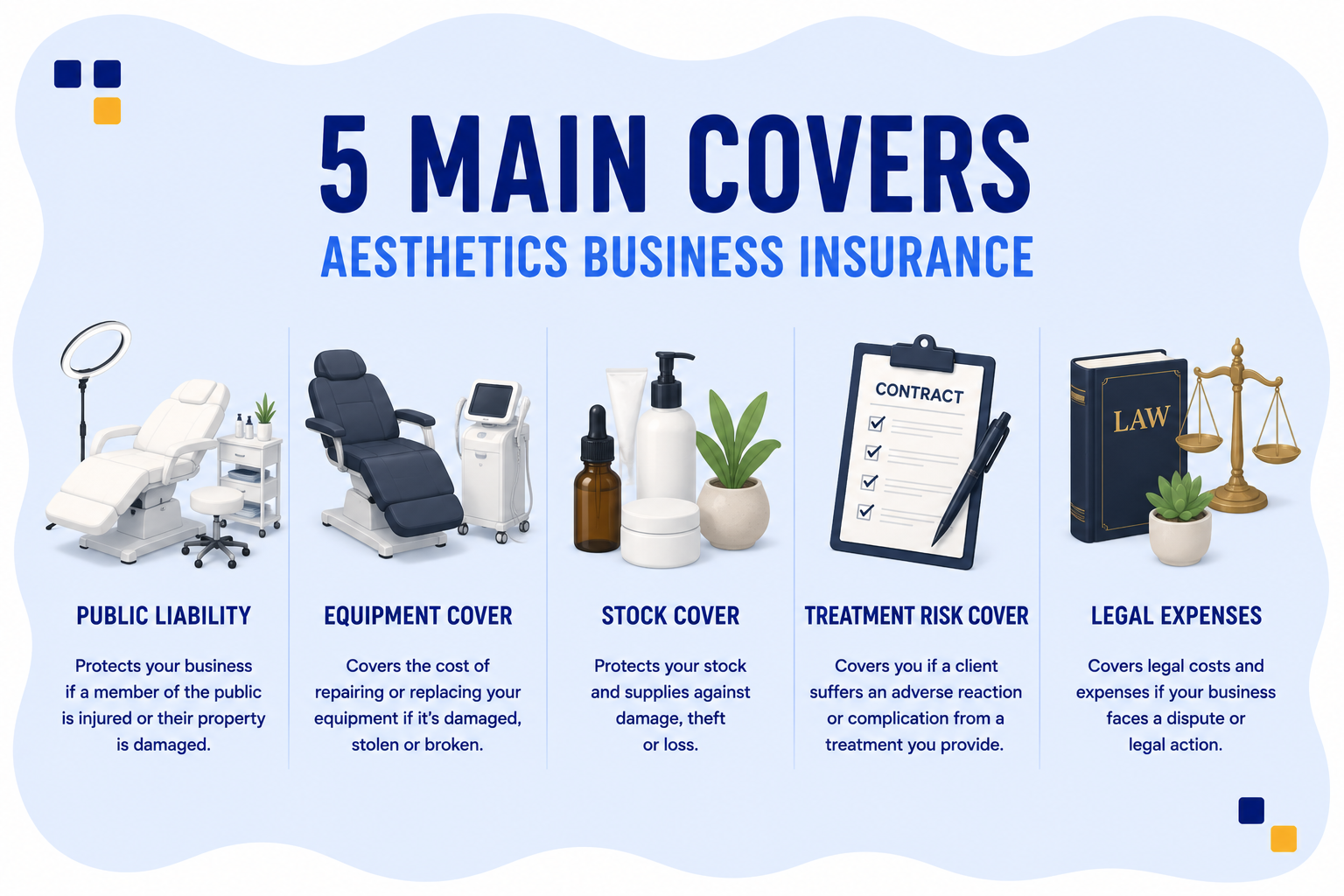
Public Liability Insurance

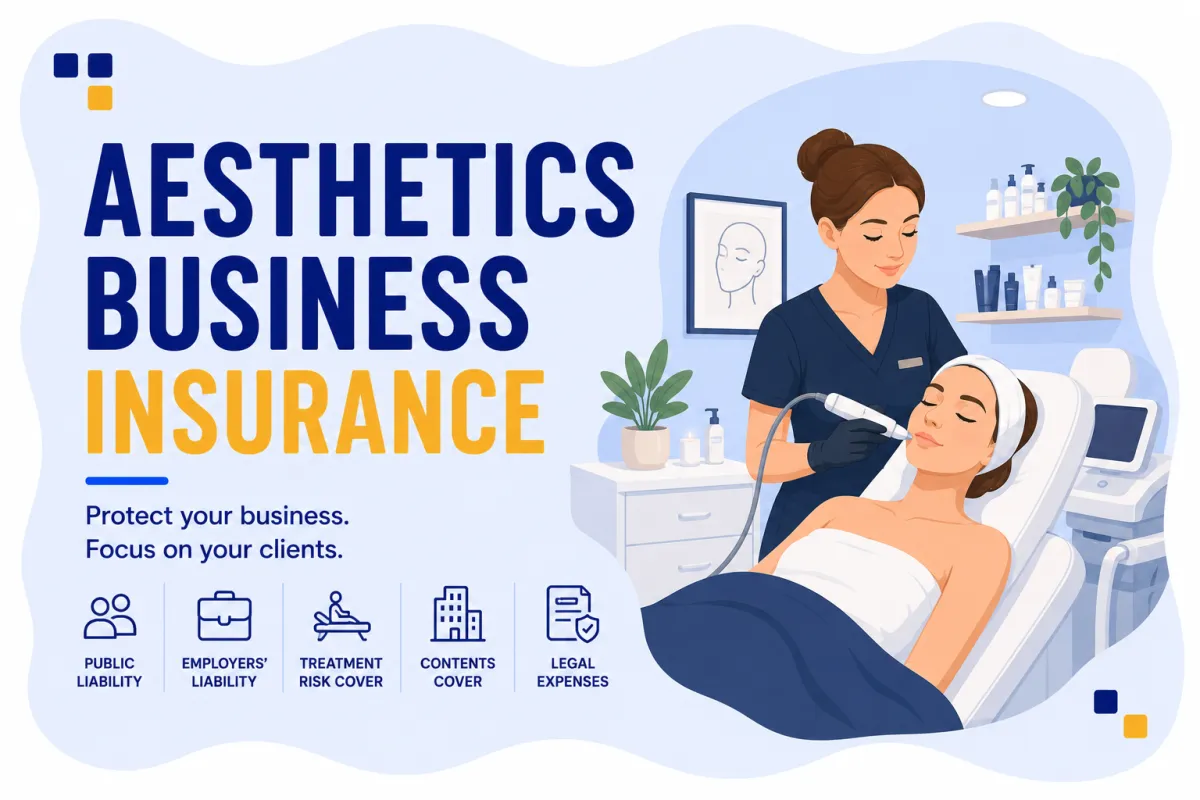
Public liability insurance is a cornerstone of aesthetics business insurance. It protects your business against claims from third parties who suffer injury or property damage during treatments or while on your premises.

  • Covers legal costs and compensation if a client is injured, for example, tripping over a treatment chair.

  • Protects against accidental damage to client property, such as spilled products on personal belongings.

  • Often required by landlords or event organisers if you operate in shared spaces.

Without this cover, a single incident could have significant financial consequences for your aesthetics business insurance strategy.

Professional Indemnity & Medical Malpractice Insurance

Professional indemnity and medical malpractice are critical elements of aesthetics business insurance. They cover claims relating to professional negligence, errors, or omissions during treatments.

  • Protects against allegations of harm caused by incorrect procedures, such as an adverse reaction to a chemical peel or misapplied Botox.

  • Covers legal defence costs and compensation awards resulting from treatment failures.

  • Required for practitioners performing advanced cosmetic procedures.

For a deeper understanding, see this Professional indemnity insurance guide, which explains why this cover is essential for aesthetics business insurance providers.

Employer’s Liability Insurance

If your aesthetics business insurance policy needs to cover staff, apprentices, or trainees, employer’s liability insurance is a legal requirement in the UK.

  • Protects against claims from staff who suffer illness or injury at work.

  • Covers legal fees and compensation if an employee is hurt due to workplace hazards.

  • Required even for part-time or temporary workers.

Without this cover, you risk fines and legal action, as well as invalidating other aspects of your aesthetics business insurance.

Products Liability Insurance

Products liability insurance is a vital component of aesthetics business insurance for those who sell or use products as part of their treatments.

  • Covers claims if a product causes harm, such as an allergic reaction to skincare.

  • Protects against legal costs and damages for faulty or contaminated products.

  • Relevant for both retail sales and products used in treatments.

Including this cover in your aesthetics business insurance policy helps safeguard your reputation and finances.

Cyber Liability Insurance

Cyber liability insurance is increasingly important in aesthetics business insurance, as client data protection becomes a major concern.

  • Protects your business if sensitive client data is compromised due to hacking or phishing attacks.

  • Covers costs related to data breaches, including legal fees, notifications, and crisis management.

  • Essential for businesses storing digital client records or booking systems.

A robust cyber liability policy is now a non-negotiable part of modern aesthetics business insurance.

Personal Accident and Equipment Insurance

Personal accident and equipment insurance provides a safety net for practitioners and businesses reliant on specialist devices.

  • Covers income loss if you or key staff are unable to work due to injury from a workplace accident.

  • Protects against theft, loss, or damage to essential equipment like laser machines or dermal fillers.

  • Offers support for business interruption, helping maintain cash flow during unexpected events.

This cover ensures your aesthetics business insurance plan can absorb shocks and maintain continuity.

Workplace Contents Insurance

Workplace contents insurance is a practical element of aesthetics business insurance, protecting the physical assets that keep your business running.

  • Covers computers, furniture, treatment beds, and other fixtures against fire, theft, or accidental damage.

  • Supports rapid recovery after property loss, minimising downtime.

  • Suitable for clinics, salons, and home-based aesthetics businesses.

A well-rounded aesthetics business insurance policy will always include contents cover to protect your investment.

Legal and Regulatory Considerations in 2026

Staying compliant in the rapidly evolving aesthetics sector goes beyond offering safe treatments. The legal landscape is tightening in response to sector growth, making it essential for every practitioner and clinic to prioritise regulatory awareness and robust aesthetics business insurance.

Legal and Regulatory Considerations in 2026

UK Legal Requirements for Aesthetics Businesses

Operating an aesthetics business in the UK demands strict adherence to several legal obligations. These include:

  • CQC Registration: Clinics offering certain procedures, such as Botox, must register with the Care Quality Commission (CQC).

  • Insurance Obligations: Carrying valid aesthetics business insurance is a legal requirement for most practitioners, covering public liability, professional indemnity, and employer’s liability if staff are employed.

  • Data Protection (GDPR): All personal client data must be stored securely and handled in line with UK GDPR to avoid fines.

The precise cover needed will depend on your business model. For a comprehensive breakdown of coverage options and regulatory expectations, see business liability insurance options.

Regulatory Changes for 2026

In 2026, the UK government will introduce updated licensing for a wider range of aesthetic procedures. This means:

  • Practitioner Qualifications: Only those with accredited training can provide advanced treatments like fillers and laser therapies.

  • Treatment Restrictions: New rules will limit who can receive certain procedures, for example, age restrictions for injectables.

  • Mandatory Consent: Standardised, written consent forms will be required before every treatment.

These changes aim to increase safety, reduce complications, and ensure that aesthetics business insurance policies reflect the higher standards expected of practitioners.

Impact on Aesthetics Business Insurance

As regulations tighten, insurers are updating policy terms. Businesses offering advanced treatments will need higher coverage limits and stricter documentation. Insurance providers may request proof of qualifications and CQC registration before issuing or renewing policies.

Failure to comply with new licensing or consent requirements could result in policy exclusions, leaving your business exposed if a claim arises. It is vital to review your aesthetics business insurance annually to ensure it meets current legal standards.

Real-World Examples

  • A clinic offers Botox without updated CQC registration and faces enforcement action.

  • A practitioner skips the new consent process, leading to a disputed insurance claim after a complication.

  • Poor infection control breaches new protocols, resulting in client harm and invalidated cover.

Each scenario highlights the direct link between compliance and successful insurance protection for aesthetics businesses.

Consequences of Non-Compliance

Ignoring legal and regulatory changes carries serious risks:

  • Heavy fines for operating without proper registration or insurance

  • Business closure orders from regulators

  • Insurance policies declared void, leaving you unprotected

Staying proactive and informed is the only way to protect your reputation and financial security.

Statistics and Key Argument

Recent data shows a 30% increase in regulatory enforcement actions within the UK aesthetics sector, often linked to poor documentation and outdated insurance. Keeping your aesthetics business insurance aligned with legal updates is not just recommended, it is essential for business survival and customer trust.

Risk Management for Aesthetics Businesses

Effective risk management is essential for any aesthetics business insurance strategy. By proactively identifying and addressing potential hazards, you can protect your reputation, reduce claims, and keep your premiums affordable. The right approach safeguards your clients, your staff, and the future of your business.

Risk Management for Aesthetics Businesses

Proactive Risk Management Strategies

Successful aesthetics business insurance starts with a culture of safety. Proactive risk management is the foundation.

  • Staff Training: Regular, accredited training ensures all practitioners follow the latest safety protocols. This reduces the likelihood of treatment errors and claims.

  • Infection Control: Strict hygiene standards are vital. Use disposable tools where possible, maintain sanitisation logs, and audit procedures regularly.

  • Equipment Maintenance: Schedule routine checks and servicing for all machines, especially lasers and injectables. Proper care minimises breakdowns and accidents.

  • Client Screening: Detailed consultations help identify allergies, medical conditions, or risk factors before treatments.

Every step you take to prevent incidents directly impacts your aesthetics business insurance profile, making your business more resilient.

Real-World Case Studies: Learning from Claims

Examining real incidents helps illustrate why robust risk management is non-negotiable.

  • Case 1: Poor Hygiene
    A clinic faced a legal claim after a client developed an infection following a dermal filler procedure. Investigation revealed staff had skipped sterilisation steps. The insurer paid out, but the business reputation suffered.

  • Case 2: Inadequate Aftercare
    A mobile practitioner was sued when a client experienced an adverse reaction after a chemical peel. The aftercare instructions had not been explained clearly, resulting in complications and a costly claim.

  • Case 3: Equipment Failure
    A laser device malfunctioned mid-treatment, causing a minor burn. The clinic had not completed regular maintenance checks, which led to both a claim and a temporary closure.

These examples highlight how lapses in process can lead to claims and higher aesthetics business insurance costs.

Best Practices to Minimise Risk

Adopting industry best practices helps you stay ahead of risks and demonstrates to insurers that you are a responsible operator.

  • Document Everything: Keep comprehensive treatment records, signed consent forms, and incident logs.

  • Update Policies: Review your aesthetics business insurance annually, especially if you add new treatments or expand services.

  • Regular Audits: Periodically audit infection control, equipment, and staff competencies.

  • Clear Communication: Always explain procedures, risks, and aftercare in detail to clients.

  • Cyber Security: Secure client records with strong passwords, encryption, and regular backups. For more insight, see this guide on Small business cyber insurance.

Common Causes of Claims and How to Prevent Them

Understanding frequent risks allows you to target your risk management efforts.

  • Treatment Reactions: Prevented by thorough screening and clear aftercare guidance.

  • Infections: Mitigated through strict hygiene and sterilisation routines.

  • Equipment Damage: Reduced by regular maintenance and secure storage.

  • Data Breaches: Avoided with up-to-date cyber security measures and staff training.

By focusing on these areas, you can reduce the likelihood of claims, keep your aesthetics business insurance affordable, and maintain your professional reputation.

How to Choose the Right Insurance Policy

Choosing the right aesthetics business insurance is a crucial step in safeguarding your reputation, clients, and financial stability. With so many risks and legal requirements in the aesthetics sector, a one size fits all approach rarely offers adequate protection. Each business model, from high street clinics to mobile practitioners, faces its own unique exposures.

Assessing Your Risks

Start by mapping out the specific risks your business faces. No two aesthetics businesses are identical, so your insurance should reflect your services, size, and operating model.

  • Do you offer advanced procedures like Botox or laser treatments?

  • Are you mobile, clinic-based, or working from home?

  • Do you employ staff or apprentices?

  • Do you store sensitive client data digitally?

  • What high-value equipment do you own or lease?

By honestly assessing these factors, you can match your cover to your exposures. This approach ensures your aesthetics business insurance truly protects you if the unexpected happens.

Direct Insurers vs. Specialist Brokers

When considering where to buy your policy, you will find both direct insurers and specialist brokers. Direct insurers may offer standard packages, but these might not account for the unique risks in the aesthetics sector.

Specialist brokers, on the other hand, understand the intricacies of aesthetics business insurance and can tailor cover to your exact needs. They are also invaluable for keeping you updated on regulatory changes and new risks as your services evolve.

For an overview of commercial insurance types and how they apply to clinics and practitioners, visit this Commercial insurance overview.

Key Questions to Ask

Choosing the right insurer is about more than price. Ask these questions to ensure your aesthetics business insurance is robust and responsive:

  • What treatments and services are covered or excluded?

  • Are there limits on claims per year or per incident?

  • How does the claims process work, and how quickly are claims settled?

  • Will my policy flex as I add new treatments or technologies?

  • Is cyber liability included for digital risks?

  • Are staff, apprentices, and mobile operations all covered?

A specialist broker can help clarify these details and ensure there are no hidden gaps in your cover.

Regular Policy Review

Aesthetics is a rapidly evolving industry, with new treatments and regulations emerging each year. Annual policy reviews are essential. Update your aesthetics business insurance if you:

  • Expand your treatment menu

  • Invest in new equipment or technology

  • Hire new staff or change your business model

  • Notice changes in regulatory requirements

Regular reviews prevent underinsurance and keep your policy aligned with your business growth.

Selecting the right aesthetics business insurance is not just a legal formality. It is an investment in your business’s future resilience, allowing you to focus on client care and innovation with confidence.

The Future of Aesthetics Business Insurance

The future of aesthetics business insurance is being shaped by rapid technological advancement, evolving client expectations, and a dynamic regulatory landscape. As the aesthetics sector continues to expand, businesses face a unique set of emerging risks and opportunities that demand forward-thinking cover.

Trends Shaping the Industry

New cosmetic procedures and digital tools are driving significant change. Treatments like injectables, non-invasive body contouring, and AI-assisted consultations are expected to surge, introducing new complexities to aesthetics business insurance. According to upcoming UK aesthetics trends 2026, trends such as personalised tweakments and hybrid treatments will become mainstream, requiring insurance policies to adapt to novel risks.

Businesses offering remote consultations or digital aftercare must consider additional exposures, including telehealth liabilities and virtual consent management. As services evolve, insurers will need to keep pace, ensuring policies reflect these advances.

Technology and Insurance Innovation

The adoption of sophisticated devices and digital platforms is transforming risk profiles. The expanding UK energy-based aesthetic devices market highlights the growing reliance on high-value equipment, making equipment and cyber insurance more critical than ever. Risks such as device malfunction, data breaches, and ransomware attacks are prompting insurers to offer comprehensive cyber liability and product recall cover.

Innovative insurers are now leveraging AI for faster claims handling, predictive risk assessment, and flexible policy updates. This enables aesthetics business insurance to respond rapidly to shifts in technology and regulation, providing tailored protection for new services.

Predictions for 2026 and Beyond

Looking ahead, aesthetics business insurance will need to address increasing regulatory demands, such as stricter licensing, enhanced practitioner qualifications, and mandatory consent protocols. The sector is forecast to grow steadily, with rising demand for specialist insurance that can accommodate advanced treatments and digital service delivery.

Cyber liability and product recall insurance will become essential as businesses digitise their operations and introduce new products. Insurers will continue to develop dynamic, customisable policies, helping businesses remain compliant and resilient in a fast-changing environment.

Aesthetics businesses that proactively review their insurance and adapt to emerging trends will be best placed to thrive. By partnering with insurers who understand the sector, business owners can ensure robust cover for the challenges and opportunities ahead.

Frequently Asked Questions (FAQs)

Navigating aesthetics business insurance can feel overwhelming, especially with new treatments and regulations emerging each year. Below, we answer the most common questions asked by aesthetics professionals in the UK.

What insurance is legally required for aesthetics businesses in the UK?
You must have employer’s liability insurance if you employ staff, even part-time or trainees. Professional indemnity and public liability are strongly advised for any aesthetics business insurance policy, and some advanced procedures may require additional cover.

How do I know if I need medical malpractice or professional indemnity cover?
If you provide treatments with any risk of harm, such as injectables or chemical peels, you need these covers. They protect against claims of negligence or mistakes in your work, which are not included in standard business insurance.

Can I get insurance if I offer advanced procedures like Botox or fillers?
Yes, but insurers may request proof of qualifications and training. Some treatments, like fillers or laser therapy, require specialist aesthetics business insurance with higher coverage limits.

How does cyber liability insurance protect my aesthetics business?
It covers the costs of data breaches, hacking, and cyberattacks. With sensitive client data at risk, cyber liability is now a vital part of aesthetics business insurance for most clinics and practitioners.

What should I do if a client makes a claim against my business?
Notify your insurer immediately, provide all documentation (such as consent forms and treatment records), and follow your insurer’s claims process. Timely, accurate records help resolve claims quickly.

How often should I review and update my insurance policy?
Review your aesthetics business insurance at least annually, or whenever you add new treatments or services. Regulations and risks change, so regular reviews keep your cover up to date.

Are mobile and home-based practitioners covered differently from salons and clinics?
Yes, their risks vary. Mobile practitioners may need extra cover for equipment in transit, while home-based businesses should check if their home insurance excludes business activities.

What are the most common reasons for insurance claims in the aesthetics sector?
Claims most often arise from treatment complications, allergic reactions, infection, or accidental injury. Data breaches and equipment theft are also increasingly common, reflecting the sector’s growth and complexity.

After exploring the key insurance options, legal obligations, and risk management strategies for aesthetics businesses in 2026, you now have a clearer understanding of how crucial the right cover is for protecting your clients, your reputation, and your livelihood. Whether you’re running a clinic, working as a mobile practitioner, or expanding your services, having tailored insurance can make all the difference if the unexpected happens. If you’re ready to take the next step towards safeguarding your business with expert support, you can easily Get A Quote Now! and ensure you’re matched with the cover that truly fits your needs.

Working in the insurance industry for 15 years, I finally decided to go it alone and set up my own brokerage.

John Miller

Working in the insurance industry for 15 years, I finally decided to go it alone and set up my own brokerage.

LinkedIn logo icon
Back to Blog

Office: Vivian House, Roman Bridge Close, Mumbles, Swansea, SA3 5BG

Miller & Partner is an Authorised Representative of Gauntlet Risk Management Ltd and are authorised and regulated by the Financial Conduct Authority (FCA) under firm reference number 1029698. You may check this on the Financial Services Register by visiting the FCA website, https://www.fca.org.uk/register/ or by contacting the FCA on 0800 111 6768 Privacy Policy