




Contractors Insurance for Small Builders UK Checklist
Looking for a quote? Click here!
Running a small building business in the UK comes with significant responsibility. Whether you're managing refurbishments, extensions, or new builds, protecting your operation with the right insurance cover isn't just sensible-it's often a legal requirement. This contractors insurance for small builders uk checklist will help you understand exactly what cover you need, why you need it, and how to ensure you're properly protected in 2026.
Understanding Core Insurance Requirements for Small Builders
Every small building contractor faces unique risks on a daily basis. From accidents on site to damage caused during work, the financial implications of getting it wrong can destroy a business overnight.
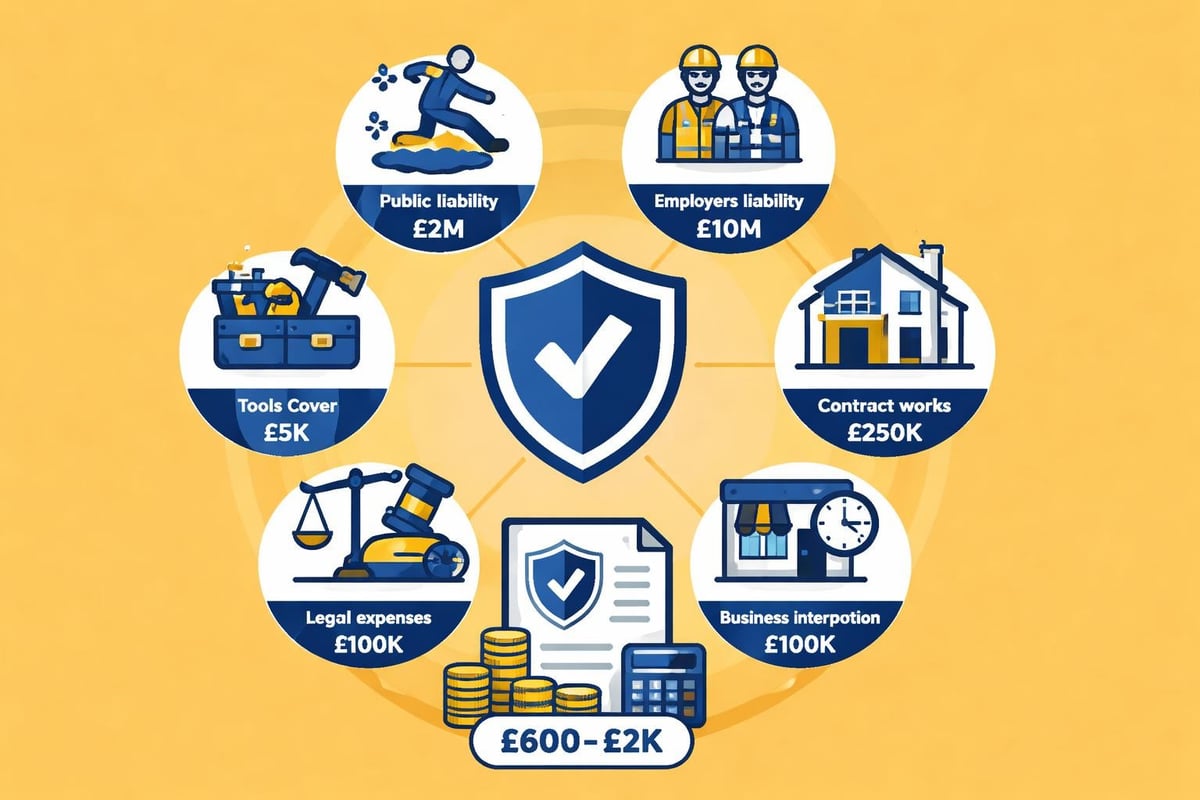
Public liability insurance stands as the foundation of any contractors insurance for small builders uk checklist. This cover protects you when your work causes injury to third parties or damage to their property. Most building projects require a minimum of £2 million cover, though many contractors opt for £5 million or even £10 million to meet client requirements.

Employers Liability Coverage
If you employ anyone-even part-time labourers or apprentices-employers liability insurance becomes a legal requirement. The minimum cover by law is £5 million, and you must display your certificate at each work site. Failure to maintain this cover can result in fines of up to £2,500 per day.
This protection covers compensation claims from employees who suffer injuries or illnesses because of their work. Given the physical nature of building work, this isn't optional-it's absolutely essential. Understanding commercial insurance requirements helps ensure you're meeting all legal obligations.
Professional Indemnity and Contract Works Insurance
Beyond the basics, a comprehensive contractors insurance for small builders uk checklist must include professional indemnity cover. This protects you against claims of professional negligence, faulty workmanship, or design errors that lead to financial loss for your clients.
Many building contractors overlook professional indemnity, assuming their work is purely manual. However, if you provide any advice, design input, or project management services, this cover becomes crucial. Claims can arise years after project completion, particularly as building regulations evolve.
Contract works insurance (also called works in progress insurance) protects the project itself during construction. This cover includes:
Materials stored on site
Work completed to date
Temporary structures and scaffolding
Site equipment and machinery
Protection against fire, theft, and weather damage
The policy typically covers the full contract value and should remain in place until practical completion. According to Southwark Council's contractor checklist, demonstrating adequate contract works insurance is often mandatory for public sector projects.
Tools and Equipment Protection
Your tools represent a significant investment. Tools and equipment insurance protects against theft, damage, and loss, whether items are stored in your van, workshop, or on site. Mobile tool cover extends protection to equipment used at different locations which is essential for contractors insurance for small builders.
Small builders should specifically check:
Individual item limits (high-value tools may need listing separately)
Coverage during transit
Protection in unattended vehicles
Replacement cost basis versus indemnity basis
Security requirements (alarms, immobilisers, approved locks)
Motor Fleet and Commercial Vehicle Insurance
A thorough contractors insurance for small builders uk checklist cannot ignore vehicle requirements. Commercial vehicle insurance differs significantly from standard motor policies.
Your building business likely requires goods-carrying vehicle insurance that covers the vehicle, tools, materials, and business use. Standard personal car insurance won't cover you for business purposes, and using the wrong policy could invalidate any claim entirely.
For businesses operating multiple vehicles, fleet insurance can prove more cost-effective than individual policies. Fleet cover typically starts at two vehicles and offers centralised management, potentially better rates, and simplified administration.
Vehicle Loading and Materials Transit
Don't overlook materials in transit coverage. When transporting building materials, timber, or fixtures between suppliers and sites, goods in transit insurance protects against damage, theft, or loss during transportation.
Checking Your Contractors Combined Policy
Many insurers offer contractors combined insurance packages that bundle multiple covers into one policy. This approach often provides better value and eliminates coverage gaps that can occur between separate policies.
A quality contractors combined policy should include:
Public liability (minimum £5 million)
Employers liability (£5-10 million)
Tools and equipment
Contract works
Personal accident cover
Legal expenses insurance
Business interruption cover
Miller & Partner Limited specialises in matching small building contractors with appropriate combined packages. Rather than piecing together multiple policies from different insurers, getting a quick quote for a comprehensive package ensures you're properly protected without overpaying.
Client and Contract-Specific Requirements
Your contractors insurance for small builders uk checklist must adapt to different client requirements. Larger contractors, developers, and public sector clients often demand higher coverage limits or additional policy features.
Joint names and waivers of subrogation may be required on larger projects. This adds the client or principal contractor as a named party on your policy, providing them direct protection. Some contracts require cross-liability coverage, which treats each insured party as separate entities for liability purposes.
Before signing any contract, carefully review the insurance requirements section. Common requirements include:
Specific liability limits (often £10 million for commercial projects)
Professional indemnity with extended run-off periods
Performance bonds or guarantees
Proof of no-claims history
Annual policy reviews and automatic renewal confirmations
Howden Insurance's building contractors guide provides detailed information on meeting these varying requirements.
Assessing Your Risk Profile and Coverage Gaps
Not all building work carries the same risk. A small builder specialising in domestic extensions faces different exposures than one undertaking commercial fit-outs or working on listed buildings.
High-Risk Activities Requiring Additional Cover
Certain building activities trigger higher premiums or require specialist extensions:
Working at height beyond standard two-storey residential buildings
Structural alterations to load-bearing walls
Listed building work with heritage considerations
Basement conversions with underpinning requirements
Flat roof work with increased leak risks
Asbestos removal or disturbance (requires specialist licensing and cover)
Your insurer needs full disclosure of all activities you undertake. Failing to declare high-risk work can void your entire policy, leaving you exposed when you most need protection.
Documentation and Certificate Management
Proper documentation forms a critical part of any contractors insurance for small builders uk checklist. You must maintain current certificates and provide them promptly when requested by clients or during tender processes.
Certificate requirements include:
Employers liability certificate (displayed at each workplace)
Public liability confirmation with current limits
Professional indemnity certificates for applicable projects
Policy schedules showing all covers in force
Claims history declarations for tender submissions
Keep digital and physical copies readily accessible. Many contractors lose valuable work opportunities simply because they cannot produce insurance certificates quickly during the tender process. Taylor Wimpey's contractor requirements demonstrate how major developers verify insurance compliance through systematic documentation checks.
Understanding Policy Exclusions and Restrictions
Every contractors insurance for small builders policy contains exclusions-situations or circumstances where cover doesn't apply. Understanding these exclusions prevents nasty surprises when making claims.
Common exclusions in builders insurance include:
Work performed outside your stated trade descriptions
Damage to property you're working on (covered separately under contract works)
Faulty workmanship itself (though consequential damage may be covered)
Deliberate acts or criminal behaviour
Pollution and contamination (unless specified)
Asbestos-related claims (requires specialist cover)
Claims arising from work performed whilst uninsured
Geographic limits matter too. Standard UK policies typically cover work within Great Britain and Northern Ireland. If you occasionally work in the Channel Islands, Isle of Man, or European Union, notify your insurer and request appropriate extensions.
Annual Reviews and Mid-Term Adjustments
Your business evolves, and your contractors insurance for small builders uk checklist should too. Annual policy reviews ensure your cover keeps pace with business growth, new services, and changing regulations.
Schedule reviews to assess:
Turnover changes affecting premium calculations
Staff increases requiring updated employers liability
New services needing additional cover
Higher-value contracts requiring increased limits
Equipment purchases needing declared values updated
Claims experience potentially affecting renewals
Don't wait until renewal if circumstances change significantly mid-term. Adding a new employee, purchasing expensive machinery, or taking on a major contract all warrant immediate policy updates. Most insurers allow mid-term adjustments, though additional premiums may apply.
Legal and Regulatory Compliance
Building regulations, health and safety legislation, and insurance requirements constantly evolve. The Building Safety Act 2022 introduced significant changes affecting contractor obligations, particularly for higher-risk buildings.
Staying compliant requires:
Regular training on health and safety requirements
Understanding CDM (Construction Design and Management) Regulations 2015
Maintaining competency records and certifications
Implementing quality assurance procedures
Documenting risk assessments for each project
Following proper notification procedures for incidents
This consumer checklist emphasises how proper insurance demonstrates competency and professionalism to potential clients. Insurance companies assess your compliance measures when calculating premiums, so good practice directly benefits your bottom line.
Managing Claims and Incident Reporting
Even with comprehensive insurance, understanding the claims process proves essential. When incidents occur, swift and proper reporting can mean the difference between a smooth settlement and a rejected claim.
Immediate steps following an incident:
Ensure everyone's safety and call emergency services if needed
Document everything with photographs and written notes
Collect witness statements and contact details
Report to your insurer within the timescales specified (usually 24-48 hours for serious incidents)
Don't admit liability or make promises about compensation
Preserve evidence and damaged materials where possible
The Herlihy Group's contractors checklist provides detailed guidance on maintaining proper incident records, which supports claims and demonstrates due diligence.
Cost Optimisation Without Compromising Cover
Small builders understandably seek competitive insurance costs, but cutting corners on coverage creates false economy. Your contractors insurance for small builders uk checklist should focus on value, not just price.
Legitimate ways to reduce premiums include:
Implementing robust health and safety procedures
Installing security measures (alarms, immobilisers, secure storage)
Maintaining a clean claims history
Paying annually rather than monthly (avoiding interest charges)
Increasing voluntary excess levels (only if affordable in claim scenarios)
Bundling covers into combined packages
Joining trade associations offering group schemes
Conversely, underinsuring creates significant risks. Inadequate liability limits can leave you personally liable for shortfalls. Undervaluing tools or contract works triggers average clauses, where insurers reduce claim payments proportionally.

Specialist Cover for Growing Building Businesses
As your building business grows, additional insurance considerations emerge. Contractors combined coverage becomes increasingly important as you take on more complex projects and larger teams.
Business Interruption Insurance
What happens if fire damages your workshop, thieves steal all your tools, or serious illness prevents you working for months? Business interruption insurance provides financial support to maintain overheads and replace lost profits during enforced closure periods.
This cover typically reimburses:
Ongoing fixed costs (rent, utilities, loan repayments)
Employee wages during shutdown
Lost profits based on financial records
Additional costs incurred working from temporary premises
Legal Expenses Cover
Construction disputes happen. Whether it's a client refusing final payment, a supplier providing defective materials, or an employee raising a grievance, legal costs escalate quickly.
Legal expenses insurance covers professional fees for contract disputes, employment tribunals, tax investigations, and debt recovery. Policies typically provide £100,000 cover per claim, with access to 24/7 legal helplines for initial advice.
Kingsbridge's contractor insurance guide explores how comprehensive packages protect against scenarios beyond immediate physical risks.
Frequently Asked Questions
What insurance do I legally need as a small builder in the UK?
Employers liability insurance is legally mandatory if you employ anyone, even casually or part-time, with a minimum cover of £5 million. Whilst public liability isn't legally required, it's essentially mandatory in practice as most clients won't hire builders without it. Many contracts and sites require proof of public liability insurance before allowing work to commence.
How much does contractors insurance cost for small builders?
Costs vary significantly based on turnover, number of employees, claims history, and types of work undertaken. A sole trader with no employees might pay £300-600 annually for basic public liability, whilst a small firm with several employees could pay £1,500-3,000 for a comprehensive package. Specialist work, previous claims, and higher coverage limits increase premiums. Marsh Commercial's builders insurance information provides detailed pricing factors.
Can I use one policy for multiple types of building work?
Generally yes, provided you declare all activities to your insurer. Most contractors combined policies cover various building trades under one package. However, certain high-risk activities (like asbestos removal, demolition, or work above certain heights) may require specialist extensions or separate policies. Always disclose every type of work you undertake-even occasionally-when arranging cover.
Do I need professional indemnity insurance as a builder?
If you provide any design input, project management, surveying advice, or recommendations beyond pure manual labour, professional indemnity insurance becomes important. Many builders assume they don't need it, but claims can arise from advice given about materials, methods, or compliance with regulations. It's particularly important for builders undertaking design-and-build contracts.
What happens if I work without proper insurance?
Working without adequate insurance exposes you to catastrophic financial risk. You'd be personally liable for any injury compensation, property damage, or legal costs, potentially leading to bankruptcy. Clients can sue for breach of contract, you may face Health and Safety Executive prosecution, and you cannot legally employ anyone without employers liability cover. Tradesman Saver's builders insurance guide details the serious consequences of inadequate coverage.
How quickly can I get insurance cover in place?
Many insurers can provide immediate cover, sometimes within hours of application. However, thorough applications requiring underwriter review may take 2-5 working days. Never start work before insurance is confirmed in force-even one day's gap could prove disastrous if an incident occurs. For urgent requirements, contact specialist commercial insurance brokers who can expedite the process.
Getting your contractors insurance right protects not just your business, but your personal assets, reputation, and future opportunities. This contractors insurance for small builders uk checklist provides the foundation for comprehensive protection, but every building business has unique requirements that deserve individual assessment. Miller & Partner Limited specialises in matching small building contractors with precisely the right insurance coverage at competitive rates. Whether you're just starting out or ready to grow your established building business, Miller & Partner Limited can help you navigate the complexities of contractors insurance and ensure you're properly protected in 2026.