Cold Plunge Therapy Insurance Specialist: Your Essential Guide 2026
Cold plunge therapy is rapidly gaining momentum across the UK, with more people turning to it for enhanced wellness, faster sports recovery, and improved mental health. As its popularity grows, so do the unique risks, liabilities, and uncertainties faced by both individuals and businesses involved in this practice.
Whether you are a practitioner, business owner, or user, having the right cold plunge therapy insurance is no longer optional—it is essential protection. Without it, unexpected incidents could lead to financial loss or legal challenges.
This comprehensive 2026 guide will walk you through everything you need to know about cold plunge therapy insurance. We will cover industry trends, insurance needs, coverage types, cost factors, legal considerations, and step-by-step advice for securing the best policy. Prepare to make informed decisions and safeguard your cold plunge journey.
The Rise of Cold Plunge Therapy in the UK
Cold plunge therapy has become a headline trend across the UK, moving from niche practice to a mainstream wellness solution. At its core, cold plunge therapy involves immersing the body in chilled water for short periods, promoting recovery, resilience, and wellbeing. This method, once reserved for elite athletes, is now a staple in spas, boutique gyms, and even private homes.

UK Market Growth and Trends
The UK has seen a remarkable surge in commercial cold plunge facilities and spa installations. More gyms and wellness centres now offer cold plunge sessions as part of their recovery suites. At home, high spec cold tubs are increasingly popular among health enthusiasts.
Market data reveals impressive growth. According to UK cold plunge tub market growth statistics, installations in health clubs and sports centres are projected to rise sharply from 2024 to 2026. The sector is set to outpace many other wellness trends, reflecting growing public interest and investment. This expansion underscores the urgent need for cold plunge therapy insurance as the sector matures.
Who is Using Cold Plunge Therapy?
The cold plunge movement attracts a wide range of users. Athletes and sports professionals rely on cold immersion to speed up muscle recovery and reduce inflammation. Biohackers and wellness seekers use cold therapy to boost energy, improve mood, and support mental health. Rehabilitation clinics prescribe it for injury recovery, while corporate wellness programmes now include cold plunges as employee perks.
This broad demographic shift, from professional sports to everyday wellness, has significantly increased the number of people exposed to the risks associated with cold plunge therapy insurance. Understanding these user groups helps providers tailor their offerings and safety protocols.
Risks in Cold Plunge Therapy
With growth comes risk. Cold plunge therapy presents several hazards that both individual users and businesses must manage. The most common incidents include:
Slips and falls on wet surfaces surrounding plunge pools
Hypothermia or cold shock, especially for first time users
Cardiac events in those with underlying health conditions
Equipment malfunction, such as faulty temperature controls
Each of these risks can result in injury, property damage, or legal liability. As a result, cold plunge therapy insurance is no longer optional but a critical safeguard for businesses and practitioners.
Incidents and the Call for Insurance
Real world incidents have highlighted the importance of specialist cover. In recent years, UK clinics have reported claims involving client injuries due to slippery floors and equipment failures. Some businesses faced costly legal action after clients experienced adverse reactions during sessions.
Without appropriate cold plunge therapy insurance, providers may find themselves exposed to significant financial and reputational harm. The increase in claims and regulatory scrutiny has pushed insurance to the forefront of responsible business practice in this sector.
The rise of cold plunge therapy in the UK is a story of rapid growth, diverse adoption, and evolving risk. As the industry matures, securing suitable cold plunge therapy insurance is more crucial than ever for both providers and users.
Why Cold Plunge Therapy Insurance is Essential
The growth of cold plunge therapy in the UK brings new wellness opportunities, but it also introduces specific risks that cannot be overlooked. Whether you are a business owner, therapist, or private user, understanding the importance of cold plunge therapy insurance is vital for safeguarding your interests.

Unique Risks for Providers and Users
Cold plunge therapy involves immersion in extremely cold water, which can create health and safety hazards for both clients and staff. Key risks include:
Slips and falls on wet surfaces
Hypothermia or adverse reactions in vulnerable individuals
Cardiac events, especially for those with pre-existing conditions
Equipment malfunction, leading to injury or property damage
Because these risks are inherent to the activity, they cannot be fully eliminated by careful management alone. Cold plunge therapy insurance is designed to address these uncertainties and provide peace of mind for everyone involved.
Potential Liabilities and Gaps in Standard Cover
Operating a cold plunge therapy business exposes you to several liability issues:
Personal injury claims from clients or visitors
Property damage resulting from water leaks or equipment faults
Equipment failure causing operational losses
Allegations of professional negligence, such as improper advice or inadequate supervision
Standard business or home insurance policies rarely cover incidents related specifically to cold plunge activities. Without dedicated cold plunge therapy insurance, you may find claims rejected due to policy exclusions or lack of specialist wording.
Real-World Claims, Denials, and Expert Views
There have been cases in the UK where businesses faced significant financial losses because their conventional insurance did not recognise cold plunge therapy as a covered activity. For example, a spa operator faced a costly legal battle after a customer suffered hypothermia, only to discover their general liability policy excluded such events.
Legal professionals and insurance experts consistently warn about the dangers of being underinsured. Inadequate cover can leave you exposed not only to direct costs but also to reputational harm if clients lose trust in your safety standards.
Financial and Reputational Consequences
Being uninsured or underinsured can have severe consequences:
Paying legal fees and compensation out of pocket
Loss of business reputation following publicised incidents
Difficulty securing future insurance or business licences
Recent news reports have highlighted the risks of operating without proper cold plunge therapy insurance, with some businesses forced to close after denied claims. Regulatory bodies increasingly recommend specialist insurance for all providers.
Regulatory and Industry Recommendations
Industry associations and local authorities in the UK now advise cold plunge businesses to secure tailored cover. This is especially important as the sector grows and more claims are reported. Specialist providers, such as those offering commercial insurance for wellness businesses, understand the unique exposures faced by cold plunge operators and can help ensure you meet regulatory standards.
Securing comprehensive cold plunge therapy insurance is not just a legal formality; it is a critical part of responsible business management in 2026. By investing in the right policy, you protect your clients, your assets, and your reputation.
What Does Cold Plunge Therapy Insurance Cover?
Navigating the details of cold plunge therapy insurance can feel overwhelming, especially as the industry grows in the UK. Understanding the specific protections available is essential for practitioners, business owners, and anyone involved in delivering or hosting cold plunge sessions.
This section breaks down the core inclusions, specialist add-ons, and key exclusions you need to be aware of when considering cold plunge therapy insurance.

Core Policy Inclusions
At the heart of any robust cold plunge therapy insurance policy are the following core covers:
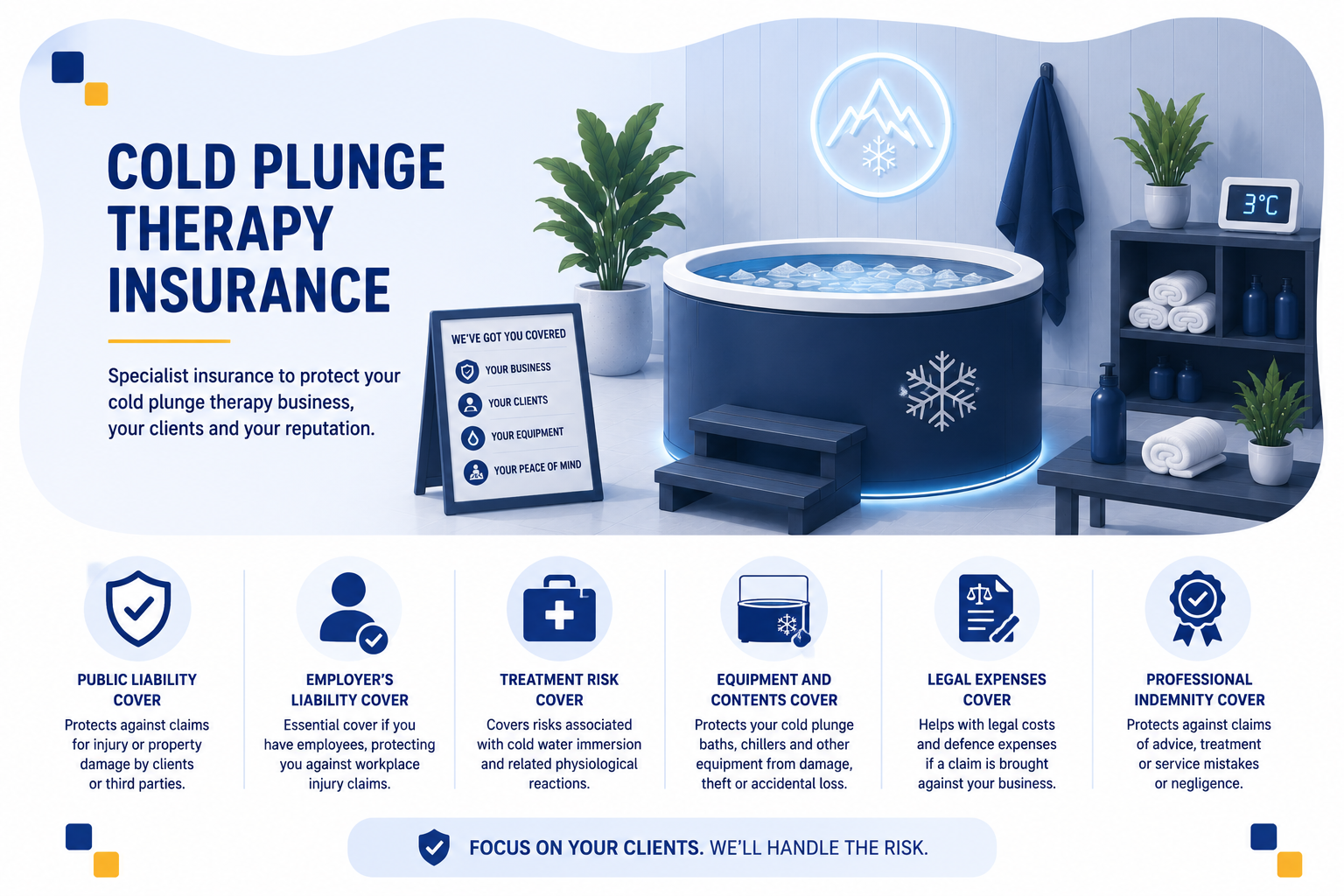
Public liability insurance: Protects against claims if a client or visitor is injured or their property is damaged on your premises. For example, if a customer slips on a wet floor after a session and sustains an injury, this cover can help with legal and compensation costs. For further details, see this guide on public liability insurance for businesses.
Professional indemnity: Covers claims of negligence, such as inadequate advice or improper therapy technique. If a client alleges that your guidance caused harm or failed to meet professional standards, this element of cold plunge therapy insurance steps in.
Product liability: Essential for those who manufacture, supply, or sell cold plunge equipment. If a malfunctioning tub causes injury, this protection is critical.
Employers’ liability: A legal requirement for businesses with staff. It covers injury or illness claims from employees resulting from their work environment.
Equipment and property cover: Provides financial protection if your cold plunge pools, refrigeration units, or related property are damaged, stolen, or vandalised.
Imagine a scenario where a power failure damages your cold plunge pool, or a client has a health emergency during a session. In both cases, cold plunge therapy insurance helps safeguard your business assets and reputation.
Optional and Specialist Add-ons
Depending on your operations, you may need to bolster your cold plunge therapy insurance with additional protections:
Business interruption insurance: Covers loss of income if your facility must close temporarily due to equipment breakdown or unforeseen events.
Legal expenses cover: Supports you during disputes, regulatory investigations, or legal claims.
Cyber insurance: If you take online bookings or store client data digitally, this add-on can protect against data breaches and cybercrime.
Personal accident insurance: Offers financial support if you or your staff are injured while working.
Enhanced cover for mobile or pop-up services: If you operate at events or provide off-site sessions, this ensures your activities are protected wherever you are.
For example, if a cyberattack compromises your client booking system, or a power outage forces you to close for repairs, these add-ons can make the difference between a manageable setback and a major financial loss. Cold plunge therapy insurance tailored with these extras means you are better prepared for unexpected challenges.
Exclusions and Limitations
No insurance policy covers everything. With cold plunge therapy insurance, it’s crucial to understand what may be excluded:
Common exclusions: Pre-existing medical conditions not disclosed by clients, intentional acts of harm, or use of unapproved equipment.
Policy limits and sub-limits: Each cover type has a maximum payout amount. For instance, there may be a cap on equipment claims or public liability compensation.
Domestic vs commercial policies: Home-based setups often have different, sometimes more restrictive, cover than commercial premises.
Disclosure and compliance: Failure to disclose all relevant information, such as staff qualifications or risk assessments, can result in denied claims.
If, for example, an incident occurs due to a client’s undisclosed health condition, or you use equipment not certified for commercial use, your claim may be rejected. Regularly review your cold plunge therapy insurance terms, and always provide full disclosure to avoid costly surprises.
Cost Factors and How to Save on Cold Plunge Therapy Insurance
Understanding the price of cold plunge therapy insurance is crucial for every provider, whether you operate a luxury spa, a gym, or a mobile wellness setup. Costs are shaped by many factors, and knowing what drives your premium can help you take control of your outgoings.

What Drives the Cost of Cold Plunge Therapy Insurance?
Several aspects influence the cost of cold plunge therapy insurance. Insurers will assess your business profile in detail before providing a quote.
Business type and services: Are you running a dedicated cold plunge studio, a health club, a mobile unit, or offering at-home installations? Each comes with unique risk levels.
Turnover and client volume: Higher annual turnover or more clients means greater potential exposure and likely higher premiums.
Location: Urban facilities, especially in London and major cities, often face higher rates due to increased footfall and property costs.
Claims history: A track record of previous claims can raise your premium, while a clean history can help reduce costs.
Staff qualifications and training: Well-trained, certified staff lower your risk profile and can lead to discounts.
Specialist equipment and installation standards also matter. Using CE-marked tubs, regular maintenance, and up-to-date safety protocols all play a part in lowering perceived risks.
According to recent UK fitness market projections 2026, the demand for cold plunge therapy is expected to grow, which may influence future insurance pricing as more providers enter the market.
Average Premium Ranges for 2026
While every policy is tailored, most UK businesses can expect cold plunge therapy insurance premiums to fall within these ranges:
Small independent providers: £450–£750 per year
Mid-sized clinics or gyms: £850–£1,600 per year
Larger commercial premises: £2,000+ per year, depending on turnover and facilities
These figures include core covers like public liability and professional indemnity, but additional protections such as business interruption or cyber insurance may increase the total.
How to Save on Cold Plunge Therapy Insurance
There are several proven ways to keep your cold plunge therapy insurance costs manageable.
Invest in staff training: Accredited courses and first aid certificates can lower premiums.
Implement risk management: Regularly inspect and maintain equipment, keep detailed records, and follow strict hygiene protocols.
Bundle policies: Combine your cold plunge therapy insurance with other business covers for multi-policy discounts.
Increase your excess: Opting for a higher excess can bring down annual costs, though you'll pay more if you need to claim.
Maintain a claims-free record: Some insurers reward businesses that avoid claims with lower renewal rates.
Shop around: Always compare like-for-like quotes across multiple specialist brokers.
Case Study: Cost Breakdown for a Typical UK Cold Plunge Therapy Business
Consider a mid-sized urban clinic offering cold plunge therapy alongside other wellness services. Their annual cold plunge therapy insurance premium is £1,200, broken down as follows:
Public liability: £400
Professional indemnity: £350
Equipment cover: £180
Employers’ liability: £170
Additional cyber insurance: £100
By investing in staff training and maintaining a spotless claims record, this business has secured claims-free discounts and avoided unnecessary add-ons.
In summary, the cost of cold plunge therapy insurance hinges on your approach to risk, staff expertise, and operational standards. Staying proactive with training, maintenance, and regular policy reviews will help you secure robust cover at the best possible price.
Legal and Regulatory Considerations in 2026
Navigating the legal landscape for cold plunge therapy insurance in the UK requires a careful understanding of evolving regulations. As the sector grows, businesses and individuals must ensure their services align with the latest requirements in 2026.
Regulatory Framework for Cold Plunge Therapy
The UK government has tightened oversight of wellness and sports recovery services. Providers must comply with:
Health & Safety Regulations: Employers must carry out risk assessments, maintain safe premises, and ensure cold plunge equipment meets British safety standards.
Water Quality Standards: Regular testing for bacteria and chemical balance is mandatory, especially for commercial installations.
Staff Qualifications: Staff overseeing cold plunge sessions should hold accredited first aid and therapy-specific certifications.
Premises Licensing: Local authorities may require specific licences for facilities offering cold water immersion.
Meeting these requirements is essential not only for operations, but also for securing cold plunge therapy insurance. Failure to comply could result in denied claims or legal action.
Insurance Requirements and Legal Obligations
Both commercial and mobile cold plunge businesses are expected to hold appropriate cover. By 2026, key requirements include:
Employers’ Liability Insurance: Legally required for any business with staff.
Public Liability and Professional Indemnity: Strongly recommended, especially as claims for injury or professional negligence are rising.
Equipment and Property Insurance: Required by many local authorities and landlords.
Standard policies may not cover all risks, so specialist cold plunge therapy insurance is crucial. Regulatory bodies such as the CQC and HSE have updated guidance, urging providers to review and update policies annually.
Data Protection and Cyber Risks
Collecting client data for bookings or health assessments brings extra legal duties. Under the UK GDPR, providers must:
Securely store personal information.
Inform clients about data handling practices.
Report breaches promptly.
With more businesses using digital waivers and online bookings, cyber insurance has become vital. Learn more about cyber insurance for booking systems to ensure your business is fully protected against emerging threats.
Penalties and Enforcement in 2026
Operating without suitable cold plunge therapy insurance or breaching regulations can have severe consequences:
Fines: Authorities may issue substantial penalties for uninsured operations or non-compliance.
Closure Orders: Serious breaches can lead to temporary or permanent closure of facilities.
Legal Claims: Injured clients may pursue compensation, with courts scrutinising insurance status and compliance history.
Reputational Damage: News of enforcement actions can impact business viability and client trust.
Recent years have seen several UK cold plunge providers fined for inadequate staff training, water quality failures, or lack of proper insurance. Staying ahead of legal and regulatory developments is essential for every operator.
Step-by-Step Guide: Securing the Right Cold Plunge Therapy Insurance
Securing adequate cold plunge therapy insurance is a critical step for any business or practitioner in this sector. The right policy protects your operations, reputation, and financial future. Follow this step-by-step guide to ensure you have comprehensive cover tailored to your needs.
Assessing Your Insurance Needs
Begin by thoroughly evaluating your business activities and risk profile. Cold plunge therapy insurance requirements will vary depending on the scale and nature of your services.
List all cold plunge equipment, including tubs, chillers, and safety features.
Identify all staff roles and qualifications.
Consider the number of clients you serve, the layout of your premises, and whether you offer mobile or pop-up services.
Assess unique risks, such as water hygiene, temperature control, and client health screening.
Document all services, from single sessions to group classes or wellness packages.
This detailed assessment ensures you select cold plunge therapy insurance that aligns with your exposure and operational realities.
Comparing Policies and Providers
Once your needs are defined, gather multiple quotes from specialist brokers and insurers who understand the nuances of cold plunge therapy insurance.
Review policy wordings carefully, comparing inclusions, exclusions, and limits.
Prioritise providers with experience in wellness, sports recovery, or hydrotherapy sectors.
Seek recommendations from industry peers or associations.
Pay close attention to cover for public liability, product liability, and professional indemnity. For an in-depth explanation, see Professional indemnity cover explained.
Confirm that your chosen policy reflects all your activities, including any mobile operations.
Choosing the right cold plunge therapy insurance provider is as important as the cover itself.
Application and Underwriting Process
Prepare all required documentation before starting your application for cold plunge therapy insurance.
Gather business details, proof of staff training, and risk assessments.
Complete application forms accurately and honestly, disclosing all relevant information.
Be ready to answer queries from the insurer about your safety protocols, equipment maintenance, and claims history.
Provide supporting documents, such as health and safety certificates or water quality logs.
A transparent and thorough application process helps secure the most appropriate cold plunge therapy insurance and reduces the risk of future claim disputes.
Ongoing Management and Claims
Once your cold plunge therapy insurance is active, ongoing management is essential for continued protection.
Schedule annual policy reviews, updating details as your business grows or changes.
Implement robust risk management practices, including regular equipment maintenance and staff training.
Keep clear records of any incidents, improvements, or client feedback.
Understand the claims process, ensuring you know which documents and evidence are required.
Proactive management of your cold plunge therapy insurance not only reduces risk but also supports smoother claims handling when needed.
Frequently Asked Questions (FAQ)
Considering cold plunge therapy insurance for your business or personal use? Here we answer the most common questions to help you make informed decisions and protect your interests.
What is cold plunge therapy insurance and who needs it?
Cold plunge therapy insurance is specialist cover designed for businesses, practitioners, or individuals involved in cold plunge activities. It protects against claims arising from injuries, equipment failure, property damage, or professional negligence. Anyone operating a commercial cold plunge service, offering therapy, or manufacturing/supplying equipment should consider this cover. Even private users hosting sessions at home may benefit if they invite guests.
Is cold plunge therapy covered by standard business or home insurance?
In most cases, standard business or home insurance policies do not cover cold plunge therapy risks. Most providers exclude injuries or incidents linked to specialist wellness activities unless declared and underwritten specifically. Without dedicated cold plunge therapy insurance, claims for accidents, equipment failure, or legal liability are often denied.
How much does specialist cover typically cost in the UK?
The cost of cold plunge therapy insurance varies based on turnover, business type, location, and claims history. In 2026, typical premiums for small facilities may range from several hundred to a few thousand pounds per year. Market trends and increased adoption are also influencing prices, as seen in recent cold plunge tub market size and share reports covering the UK sector.
What are the most common claims and risks?
Common claims include:
Slips, trips, or falls around wet areas.
Hypothermia or cardiac events from improper use.
Equipment malfunction or electrical faults.
Property damage due to water leaks or flooding. Frequent risks involve both physical injury and property damage, so comprehensive cover is essential.
How can I reduce my insurance premiums?
You can lower premiums for cold plunge therapy insurance by:
Implementing robust health and safety protocols.
Ensuring all staff are qualified and trained.
Maintaining and inspecting equipment regularly.
Keeping a clean claims history.
Bundling multiple policies with one provider for discounts.
Are there legal requirements for cold plunge therapy insurance in 2026?
Yes, certain covers are legally required, such as employers’ liability insurance if you hire staff. Regulatory bodies and local authorities may mandate specific insurance for commercial premises or mobile operations. Always check current regulations to ensure compliance and avoid penalties.
What should I do if my claim is denied?
If your cold plunge therapy insurance claim is denied:
Review the policy wording and reasons for denial.
Gather supporting evidence and documentation.
Contact your broker or insurer for clarification.
Escalate the complaint to the Financial Ombudsman Service if unresolved.
How do I find a reputable insurer or broker for cold plunge therapy insurance?
Look for brokers or insurers with experience in wellness, spa, or sports therapy sectors. Ask for recommendations from industry associations or peers. Compare policy wordings, exclusions, and customer reviews before making a decision.
Have more questions? Reach out to a specialist broker for tailored advice on cold plunge therapy insurance or visit official industry resources for up-to-date guidance.
After exploring the ins and outs of cold plunge therapy insurance—from understanding the risks to navigating the latest legal requirements—it’s clear that the right cover is essential for protecting your business and your clients. Whether you’re just starting out or growing an established operation, having tailored insurance can make all the difference in safeguarding your reputation and finances. If you’re ready to take the next step or simply want to see what bespoke cover could look like for you, you can Get A Quote Now! and move forward with confidence.