Guide To Insurance For Demolition Contractors UK 2026
Demolition work stands out as one of the most hazardous trades in the UK construction sector. Every project brings its own set of high-risk challenges, from structural instability to exposure to dangerous materials.
If you run a demolition business, understanding insurance for demolition contractors uk is essential. The right cover protects your team, your finances, and your reputation in an industry where risks are part of everyday operations.
This guide walks you through everything you need to know for 2026. You’ll discover the main types of insurance, legal obligations, risk factors, practical steps to secure the right cover, and expert answers to common questions. Let’s help you build a safer, more resilient demolition business.
The Unique Risks Faced by Demolition Contractors
Demolition work sits at the extreme end of construction risk in the UK. Each project brings a unique set of hazards that demand tailored protection. Understanding these risks is vital for anyone seeking insurance for demolition contractors uk, as it shapes the type and level of cover required.

Demolition contractors face a much higher risk profile than those in general building trades. Unlike standard construction, demolition involves the controlled deconstruction of unstable, often unpredictable structures. This means even the best plans carry significant uncertainty, making insurance for demolition contractors uk a cornerstone of business protection.
Key risk factors include:
Structural instability: Demolition sites are inherently unstable. Unforeseen weaknesses can cause partial or total building collapse, putting workers, machinery, and the public at risk.
Hazardous materials: Many older buildings contain asbestos, lead, or other hazardous substances. Accidental disturbance can expose workers and trigger costly environmental claims, making specialist insurance for demolition contractors uk essential.
Heavy machinery accidents: Operating large plant and specialist equipment, such as high-reach excavators, increases the likelihood of accidents. Equipment malfunction or operator error can result in injury, asset loss, or third-party damage.
Exposure to the public and third parties is another major concern. Demolition sites are often located in busy urban areas, where falling debris or vibration can injure passers-by or damage neighbouring property. A single incident can lead to substantial liability claims, underscoring the need for comprehensive insurance for demolition contractors uk that covers public liability.
Environmental hazards are ever-present. Dust, debris, and pollutants generated during demolition can contaminate local air, soil, or water. If hazardous materials like asbestos or fuel are released, contractors may be responsible for expensive clean-up operations, regulatory fines, and third-party claims.
Regulatory scrutiny in the UK is intense. Contractors must comply with a wide range of health and safety regulations, including the Construction (Design and Management) Regulations. The HSE Demolition Safety Guidelines set out strict protocols for safe methods, debris control, and site management. Failure to follow these standards can result in legal action, business closure, or loss of reputation. This makes regulatory-compliant insurance for demolition contractors uk not just advisable, but critical.
The complexity of heavy plant and specialist equipment adds further risk. High-value machinery is not only expensive to replace if damaged or stolen, but may also cause major incidents if not properly maintained or operated. Insurance for demolition contractors uk must address both asset protection and liability arising from machinery use.
Uninsured losses can be financially devastating. Without adequate cover, contractors may face claims for injury, property damage, environmental harm, or business interruption. Legal costs alone can cripple a business, while delays in project completion can erode client trust and future opportunities.
Recent industry reports highlight the severity of these risks. The demolition sector has a claim frequency significantly above the construction average, with major claims often exceeding £100,000. The average public liability claim in demolition is also notably higher, reflecting the potential for catastrophic events. These figures reinforce why tailored insurance for demolition contractors uk is a non-negotiable business requirement.
In summary, the unique risks of demolition demand more than generic construction insurance. Only by recognising these challenges and securing specialist insurance for demolition contractors uk can businesses protect their employees, finances, and reputation.
Essential Types of Insurance for Demolition Contractors
Insurance for demolition contractors uk is never a one-size-fits-all solution. Demolition projects present hazards that go far beyond those seen in general construction. From unstable structures to hazardous materials, the risks are unique and require tailored protection.
Standard construction policies often leave crucial gaps for demolition firms. To safeguard your business, staff, and reputation, it is vital to understand which covers are essential, how they work, and what they protect against.
Below, we break down the main types of insurance for demolition contractors uk, with practical examples and guidance for building a robust insurance portfolio.

Public Liability Insurance
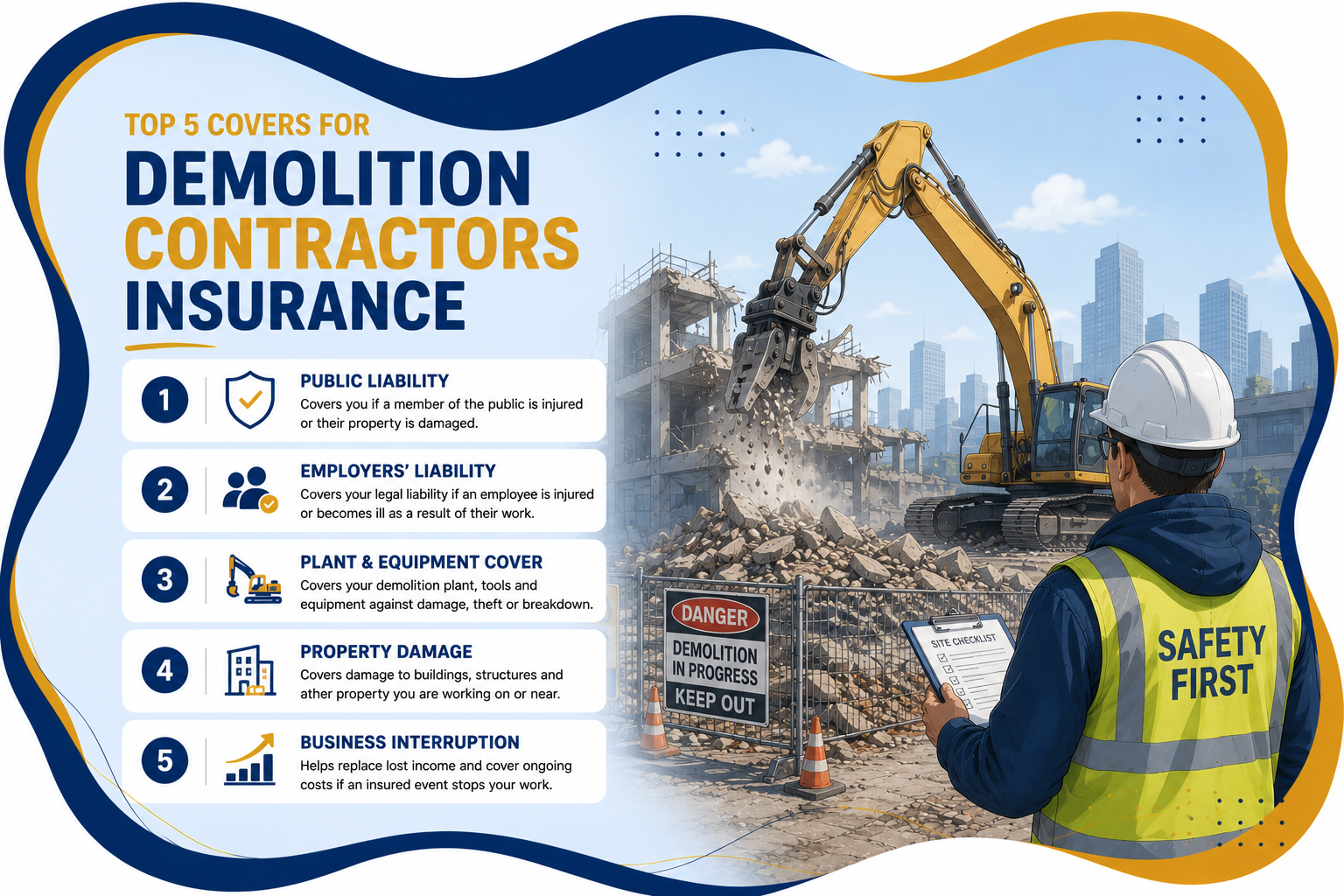
Public liability insurance for demolition contractors uk is a cornerstone of risk management. It protects your business if someone is injured or property is damaged as a result of your activities.
Covers claims from third parties, such as members of the public or neighbouring property owners.
High indemnity limits are recommended due to the potential for catastrophic incidents.
Example claims include falling debris injuring a passer-by, or structural damage to adjacent buildings during demolition.
Typical exclusions might involve fines, deliberate acts, or some forms of pollution.
The average public liability claim in the demolition sector can run into six figures, underscoring the importance of robust cover. For more on liability protection, visit Business Liability Insurance for Companies.
Employers’ Liability Insurance
Employers’ liability insurance for demolition contractors uk is a legal requirement if you employ staff, whether full-time, part-time, or subcontracted. This cover is designed to protect against claims from employees who suffer injury or illness as a result of their work.
Example: An operative is injured by falling masonry, and seeks compensation for lost earnings and medical costs.
The Health and Safety Executive (HSE) can impose heavy fines for businesses operating without this insurance.
Policy limits must comply with UK law, typically starting at £10 million.
Without this insurance for demolition contractors uk, you risk regulatory penalties and significant financial exposure.
Contractors’ All Risks (CAR) Insurance
CAR insurance for demolition contractors uk is vital for protecting the physical works on site. It covers loss or damage to buildings under demolition, materials, and temporary structures.
Often extends to owned and hired-in plant, ensuring machinery is protected against fire, theft, or accidental damage.
Example: Fire breaks out during soft strip, destroying plant and partially demolished structures.
Some policies also cover tools and equipment stored on site.
Given the unpredictable nature of demolition, CAR insurance for demolition contractors uk is a crucial safety net.
Plant and Machinery Insurance
Plant and machinery insurance for demolition contractors uk covers the valuable equipment at the core of your operations. From excavators to high-reach cranes, these assets are both expensive and essential.
Provides cover for theft, accidental damage, vandalism, and even breakdown in some cases.
Example: A high-value excavator is stolen from a secured compound overnight.
Can be arranged for both owned and hired-in plant, with flexible options for short or long-term projects.
With the rising cost of specialist equipment, plant and machinery insurance for demolition contractors uk offers vital financial protection.
Professional Indemnity Insurance
Professional indemnity insurance for demolition contractors uk is essential for firms that provide design, consultancy, or advice. If a client alleges your professional service caused them financial loss, this cover steps in.
Protects against claims of negligence, errors in method statements, or faulty structural reports.
Example: An incorrect demolition sequence advised by your team leads to an unplanned collapse and project delays.
Covers legal costs and compensation, subject to policy terms.
While not every contractor needs it, professional indemnity insurance for demolition contractors uk is increasingly expected on complex projects.
Environmental Liability Insurance
Environmental liability insurance for demolition contractors uk addresses the risk of pollution, contamination, and costly clean-ups. Demolition sites often encounter hazardous materials such as asbestos or fuel spills.
Covers legal expenses and remediation costs following incidents that impact the environment.
Example: Asbestos fibres released during strip-out require specialist decontamination and regulatory reporting.
Some policies extend to gradual pollution, not just sudden events.
With environmental scrutiny rising, this insurance for demolition contractors uk can protect both your finances and your reputation.
Key Factors Affecting Insurance Premiums and Cover
Understanding what drives insurance for demolition contractors uk is crucial for budgeting and risk management. Insurers look at a wide range of variables before offering terms or setting your premium. Each factor can significantly affect both the cost and scope of your cover.

Key factors affecting insurance for demolition contractors uk include:
Project type, size, and location: Urban projects or those involving high-rise buildings often attract higher premiums due to increased third-party exposure and complexity. Rural sites may be less costly, but remote locations can add to security concerns.
Claims history: A record of frequent or high-value claims signals risk to insurers. Clean claims history can unlock better terms and lower costs.
Health and safety record: Demonstrating a strong safety culture, with up-to-date CCDO or CPCS staff certifications, reassures underwriters and may result in reduced premiums.
Staff training and competence: Well-trained teams are less likely to make mistakes that lead to claims, so documentation of ongoing training is essential when seeking insurance for demolition contractors uk.
Risk assessments and method statements: Comprehensive paperwork shows you understand your hazards and have steps in place to manage them, making you a more attractive prospect for insurers.
Plant maintenance and security: Regularly serviced machinery and robust on-site security, such as fencing, CCTV, and controlled access, minimise the risk of theft or breakdown.
Asbestos and hazardous waste management: Clear protocols for identifying, handling, and disposing of hazardous materials are vital, as failures in this area can lead to costly claims and regulatory penalties.
Proactive risk management is a powerful lever for controlling the cost of insurance for demolition contractors uk. For example, a contractor who invests in advanced site security, detailed staff training, and rigorous maintenance schedules is likely to see lower premiums and more favourable cover terms compared to a business with a poor claims record or weak safety controls.
Insurers also assess market trends and their appetite for demolition risks in 2026. Some may restrict cover or raise rates after periods of high claims across the sector. Others offer competitive terms to contractors who demonstrate outstanding compliance and risk management. To gain a holistic view of your cover options, consider exploring a Contractors Combined Insurance Guide, which brings multiple cover types into one package tailored for high-risk trades like demolition.
By understanding and actively managing these factors, you place your business in the best possible position to secure comprehensive, cost-effective insurance for demolition contractors uk in a challenging market.
Step-by-Step Guide: Securing the Right Insurance Cover
The process of securing insurance for demolition contractors UK involves several clear steps. Each stage is crucial to ensure you get the right protection for your business, comply with legal requirements, and manage your premiums effectively.

Step 1: Assess Your Risks and Insurance Needs
Begin by thoroughly understanding the unique risks your demolition business faces. Identifying these hazards is the first essential step when seeking insurance for demolition contractors UK.
Review past projects for common risks, such as structural instability or hazardous materials.
Analyse the types of demolition work you undertake: are you handling residential, commercial, or industrial sites?
Consider the roles and experience levels of your employees, as well as the specialist equipment you use.
Examine risk assessments and method statements for each project type.
By pinpointing these factors, you can determine which covers are essential. This clarity helps you avoid gaps in insurance for demolition contractors UK, building a stronger foundation for your application.
Step 2: Gather Documentation and Prepare for Application
Next, assemble all necessary records before approaching insurers or brokers. Organised documentation demonstrates professionalism and supports your case for competitive premiums when arranging insurance for demolition contractors UK.
Collect up-to-date health and safety records, including accident logs and incident reports.
Gather training certificates, such as CCDO and CPCS cards.
Prepare a detailed claims history for at least the past five years.
List all owned and hired-in plant and machinery, including security measures in place.
Compile asbestos management plans and method statements for hazardous waste disposal.
Staying on top of compliance is vital. For a deeper understanding of compliance requirements and standards, refer to Demolition Compliance Standards, which outlines the importance of licensing, training, and risk management in the UK demolition sector.
Step 3: Approach Specialist Insurance Brokers
Engaging a broker with demolition sector expertise is a smart move. Specialist brokers have a deep understanding of insurance for demolition contractors UK and can connect you with insurers who truly understand your risks.
Research brokers with a track record in demolition insurance.
Ask about their relationships with underwriters who handle high-risk trades.
Share your risk assessments, safety records, and details of your operations.
Request advice on policy wording and cover limits specific to demolition.
A good broker will help you navigate the market and ensure your insurance for demolition contractors UK is tailored to your precise needs.
Step 4: Compare Quotes and Policy Terms
Do not simply opt for the lowest price. Compare quotes carefully to ensure your insurance for demolition contractors UK delivers real value.
Review cover limits, policy exclusions, and excesses for each quote.
Check if environmental liability, plant cover, and professional indemnity are included.
Assess the differences in cover for pollution, asbestos, or accidental damage.
Ask each provider for real-life claim examples relevant to demolition projects.
By weighing these factors, you ensure the insurance for demolition contractors UK you choose will protect your business in the event of a major incident.
Step 5: Implement Risk Management Improvements
Many insurers reward proactive risk management with lower premiums. Improving your approach can make a real difference to the cost and quality of insurance for demolition contractors UK.
Update staff training and ensure all certifications are current.
Enhance site security, plant maintenance, and access control.
Revise risk assessments and method statements based on insurer feedback.
Evidence of robust risk management can speed up claims processes and make your business more attractive to insurers.
Step 6: Finalise Cover and Maintain Ongoing Compliance
Once you have selected the best insurance for demolition contractors UK, finalise your cover and set up processes for continuous compliance.
Double-check that all legal requirements, such as Employers’ Liability Insurance, are met.
Schedule regular reviews of your cover as your business grows or diversifies.
Keep documentation and certificates updated to avoid gaps in protection.
Staying vigilant ensures your insurance for demolition contractors UK remains effective and your business stays protected.
Risk Management Best Practices for Demolition Contractors
Managing risk is not just a regulatory box-ticking exercise. For those seeking insurance for demolition contractors uk, robust risk management is the bedrock of business continuity and competitive premiums. Insurers scrutinise your approach to safety and risk controls, so putting best practices in place can make all the difference.
Proactive Risk Management
Successful insurance for demolition contractors uk starts with proactive risk management. Begin by developing, reviewing, and updating method statements and risk assessments for every project. These documents must reflect site-specific hazards and include emergency procedures.
Identify and document structural risks and potential collapse scenarios
Evaluate public exposure and third-party property vulnerabilities
Address environmental threats such as dust and pollution
Learning from similar high-risk trades can strengthen your approach. For instance, insights from Welding and Fabrication Insurance Risks show how tailored risk controls can drive better insurance outcomes. Regularly revisit risk assessments to ensure they align with current legislation and insurer expectations.
Staff Training and Certification
Insurers expect demolition teams to have up-to-date qualifications. Ongoing staff training is essential for maintaining insurance for demolition contractors uk, as it demonstrates your commitment to safety and compliance.
Ensure all operatives hold relevant CCDO and CPCS certifications
Run refresher courses covering new risks and procedures
Keep detailed records of training, toolbox talks, and incident investigations
A well-trained workforce not only reduces accident rates but can also result in faster, smoother claims handling and lower premiums. Insurers favour businesses that invest in their people and can prove it with thorough documentation.
Site Security and Plant Maintenance
Physical security and equipment upkeep are critical for both operational continuity and securing insurance for demolition contractors uk. Insurers often require evidence of strong site controls before offering competitive terms.
Install fencing, lighting, and access control to deter unauthorised entry
Use CCTV and monitored alarms for high-value plant and machinery
Carry out scheduled maintenance and keep logs for all equipment
For practical guidance on securing your sites, review the Demolition Site Security Best Practices. Effective security not only prevents theft and vandalism but also reassures insurers of your professional standards.
Environmental and Hazardous Material Controls
Environmental responsibility is central to insurance for demolition contractors uk. Proper management of asbestos, contaminated materials, and waste is both a regulatory and insurance requirement.
Implement strict asbestos handling and disposal protocols
Segregate and safely store hazardous waste
Use dust suppression and pollution control measures on every site
Document your environmental controls and update them as regulations evolve. Quick, transparent responses to incidents can speed up claims processes and help maintain favourable insurance terms in the long term.
Effective risk management is more than a compliance task. It is the foundation for securing reliable insurance for demolition contractors uk, protecting your reputation, and ensuring your projects run smoothly from start to finish.
Frequently Asked Questions (FAQ)
Navigating insurance for demolition contractors uk can be complex, especially with changing regulations and unique sector risks. Here are answers to the most common questions contractors ask in 2026.
What is the minimum insurance required for demolition contractors in the UK?
At a minimum, employers must have Employers’ Liability Insurance. Public Liability Insurance is strongly recommended due to the high risks in demolition.How much does demolition contractor insurance cost in 2026?
Premiums for insurance for demolition contractors uk vary based on project size, location, claims history, and risk management. Costs have risen slightly due to stricter regulations and increased claim values.What exclusions should I watch out for in demolition insurance policies?
Common exclusions include gradual pollution, deliberate acts, and some types of hazardous materials. Always check your policy wording carefully.Is professional indemnity insurance necessary for all demolition firms?
Not all require it, but if you provide design or consultancy, Professional Indemnity Insurance Explained offers protection against claims of professional negligence.How do insurers assess my risk as a demolition contractor?
Insurers review your safety record, training, types of demolition, and risk assessments. Providing detailed documentation helps secure the right cover.Can I get cover for asbestos removal and hazardous waste?
Yes, but you must declare these activities. Specialist policies are available, and insurers will expect strict controls and compliance.What happens if I fail to maintain adequate insurance cover?
You risk legal penalties, business closure, and personal liability for claims. Always review your insurance for demolition contractors uk regularly.
You’ve seen just how many risks demolition contractors face in the UK and how vital it is to have the right insurance in place to protect your projects, team, and business reputation. Navigating complex policies and legal requirements doesn’t have to be overwhelming when you’ve got expert support on your side. If you’re ready to secure peace of mind and ensure your cover fits your unique needs, let’s take the next step together. You can get tailored advice and a competitive quote quickly—simply Get A Quote Now!