Welding and Fabrication Insurance Guide for 2025

The Welding and Fabrication Insurance Specialist 2026

November 26, 202517 min read

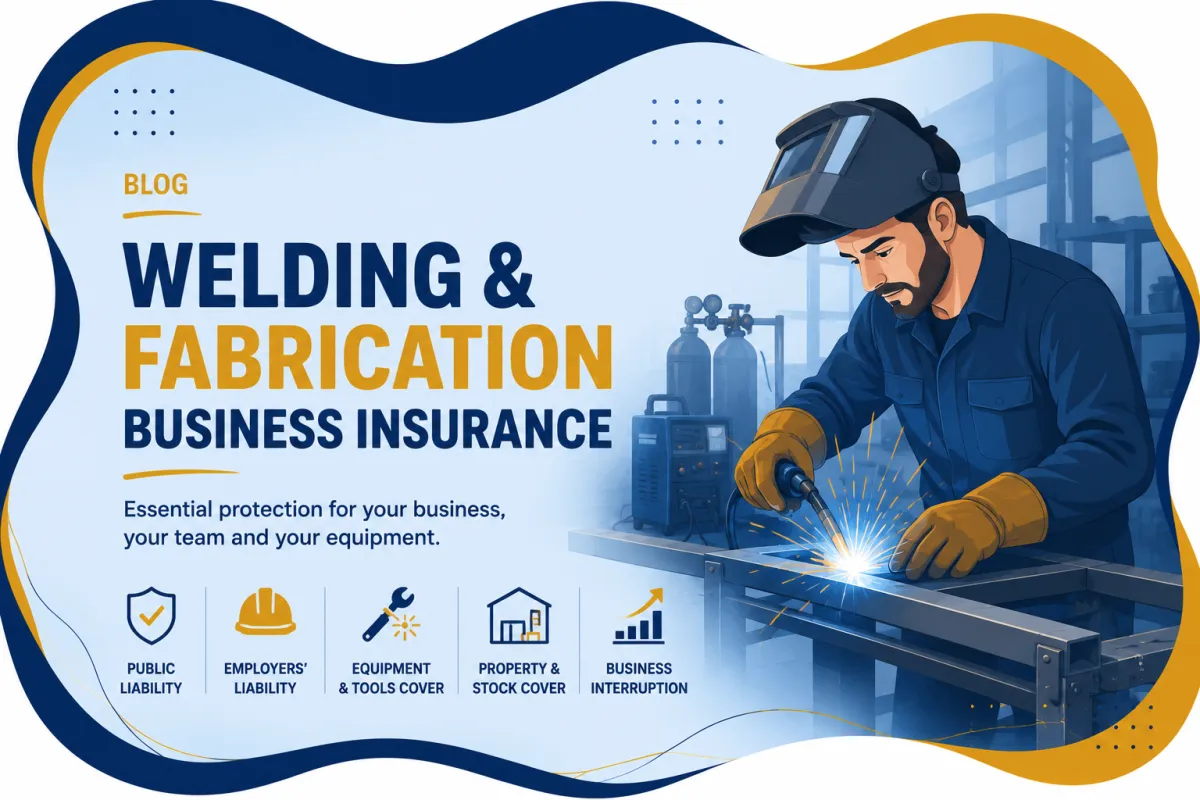
Welding and fabrication businesses face increasing risks and regulatory challenges in 2025, making the right protection more crucial than ever. In such a high-risk trade, having comprehensive welding and fabrication insurance is essential to guard against costly claims, legal disputes, and unexpected downtime. The right policy can be the difference between swift recovery and serious business disruption. It is vital to understand your options and secure robust cover tailored to your needs. This guide will help you navigate the insurance landscape, covering types of policies required, legal obligations, risk management tips, policy selection, and emerging industry trends.

Understanding Welding and Fabrication Risks

Welding and fabrication businesses face a unique combination of hazards, making risk management a core concern for 2025. The sector’s dynamic environment, reliance on skilled labour, and use of high-powered equipment all contribute to a heightened risk profile. Understanding these exposures is the first step to securing robust welding and fabrication insurance.

Understanding Welding and Fabrication Risks

Common Risks in Welding and Fabrication

Everyday operations in welding and fabrication come with several hazards:

  • Fire and explosions: Sparks and hot work can ignite nearby materials, causing fires or even explosions.

  • Burns and injuries: Direct contact with heated metals, tools, or accidental arc flashes leads to severe burns.

  • Toxic fumes: Inhalation of welding fumes and gases can result in respiratory issues and long-term health problems.

The Health and Safety Executive (HSE) consistently reports high accident rates in this sector. In recent years, more than 30% of workplace injuries in metal fabrication involved burns, eye injuries, or respiratory complications. The average claim for a serious injury can exceed £15,000, highlighting the financial stakes for businesses without adequate welding and fabrication insurance.

Faulty Workmanship and Product Liability

Mistakes in welding or fabrication can have far-reaching consequences, especially when defective products enter the supply chain. If a welded part fails in a customer’s machinery, the business may be liable for property damage, bodily injury, or significant financial loss.

Consider a scenario where an incorrectly welded joint causes a structural collapse. Such incidents can lead to claims for compensation, repair costs, and even regulatory penalties. In 2023, one UK fabrication firm faced a £120,000 claim due to a faulty bracket supplied to a construction project.

Real-World Claims and Financial Impact

Claims in this sector are not hypothetical. Real cases illustrate the need for targeted welding and fabrication insurance:

  • A fire triggered by hot work spread to a neighbouring business, resulting in a £200,000 property damage claim.

  • An employee suffered lung damage from prolonged exposure to fumes, leading to a substantial personal injury settlement and increased premiums.

  • A fabrication error in a batch of machine parts required a costly recall and legal defence expenses.

Such claims can quickly erode profit margins and threaten business continuity.

Environmental Hazards and Regulatory Fines

Welding and fabrication sites are also exposed to environmental risks:

  • Spillage: Accidental release of oils, solvents, or chemicals can pollute soil and water.

  • Pollution: Emissions from welding processes may breach environmental regulations.

  • Regulatory fines: Non-compliance with environmental standards can result in penalties exceeding £50,000.

Managing these risks requires not only operational controls but also comprehensive welding and fabrication insurance that includes environmental liability.

Business Interruption and Revenue Loss

When an incident occurs, the impact often extends beyond immediate repairs. Fires, equipment breakdowns, or regulatory investigations can halt production for days or weeks. During this downtime, businesses may lose contracts, miss deadlines, and face reputational damage.

For example, a machinery breakdown at a fabrication shop led to a two-week closure, resulting in lost revenue of over £40,000. Without proper cover, such interruptions can be devastating.

Contract Complexity and Liability in 2025

Contracts in the welding and fabrication sector are becoming increasingly complex. Clients now demand higher safety standards, product guarantees, and indemnity clauses. These requirements expose businesses to new legal risks, especially when operating internationally or on large projects.

As contracts evolve, so do the potential liabilities. Standard business insurance policies rarely address the full spectrum of exposures faced by welding and fabrication firms.

Why Specialist Insurance is Necessary

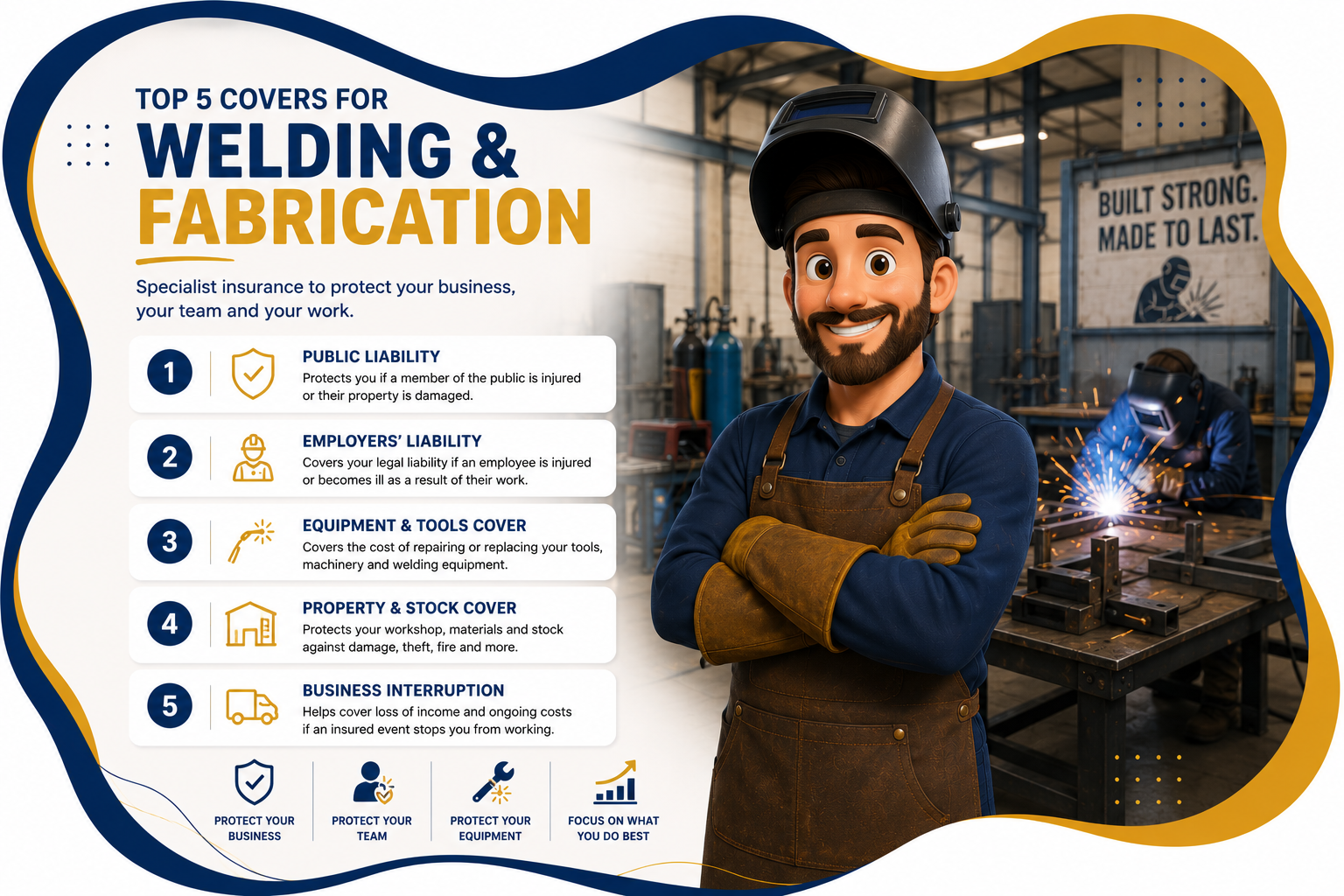
Standard commercial insurance is often insufficient for the unique risks in this sector. Welding and fabrication insurance is specifically designed to address the combination of liability, property, environmental, and business interruption risks. For a comprehensive look at the liability covers required, see the Business liability insurance overview.

In summary, understanding the distinctive risks faced by welding and fabrication businesses is crucial in 2025. Only with tailored welding and fabrication insurance can firms protect themselves from the escalating costs of claims, legal challenges, and operational disruption.

Types of Welding and Fabrication Insurance Cover

Choosing the right welding and fabrication insurance is essential to protect your business from the unique risks you face daily. Each type of insurance covers a specific set of exposures, from employee injuries to property damage and design errors. Understanding these covers will help you build a robust safety net and keep your operations running smoothly.

Welding and Fabrication Insurance

Employers’ Liability Insurance

Employers’ liability insurance is a legal requirement for any UK business with staff. This cover protects your company if an employee suffers an injury or illness due to their work. In welding and fabrication insurance, common claims include burns, respiratory conditions from fumes, and repetitive strain injuries.

  • Covers compensation claims and legal costs

  • Protects against both immediate and long-term injuries

  • Avoids hefty fines for non-compliance (up to £2,500 per day)

Failing to carry this insurance can result in significant penalties. Comprehensive welding and fabrication insurance ensures you remain compliant and safeguard your team.

Public Liability Insurance

Public liability insurance shields your business from claims made by clients, visitors, or members of the public. If your activities cause injury or property damage, this insurance steps in. In welding and fabrication insurance, a typical scenario might involve a fire spreading to neighbouring properties or a visitor tripping over equipment.

  • Covers third-party injury and property damage

  • Pays for legal defence and compensation

  • Essential for site work and customer premises

The frequency and cost of claims can be high, especially in high-risk environments. Including public liability in your welding and fabrication insurance is a must.

Product Liability Insurance

Product liability insurance is vital if your business supplies or fabricates parts for other companies. If a welded component fails and causes injury or damages machinery, you could face expensive claims. Welding and fabrication insurance must include this cover to protect against the financial fallout.

  • Covers injury or damage caused by your products

  • Includes legal defence and compensation payouts

  • Important for businesses supplying multiple sectors

Claim scenarios can be complex, so robust product liability within your welding and fabrication insurance is non-negotiable.

Tools, Equipment, and Plant Insurance

Your tools and machinery are the backbone of your operation. Tools, equipment, and plant insurance protects against loss, theft, or accidental damage. In welding and fabrication insurance, this cover is especially important given the high value and mobility of equipment.

  • Covers owned, hired-in, or mobile equipment

  • Includes theft from site or damage in transit

  • Minimises project delays and replacement costs

A single incident can stop work and hit your bottom line hard. With the right welding and fabrication insurance, you can recover quickly.

Professional Indemnity Insurance

If you provide design advice or technical consultancy, professional indemnity insurance is crucial. This cover protects your business if a client claims your guidance caused financial loss. In the context of welding and fabrication insurance, an example could be an incorrect specification leading to a failed project.

  • Covers mistakes in advice, designs, or specifications

  • Pays for legal defence and compensation

  • Increasingly relevant as clients demand higher accountability

For a deeper understanding, see the Professional indemnity insurance guide. This cover is a vital part of a comprehensive welding and fabrication insurance policy.

Contract Works Insurance

Contract works insurance covers your ongoing projects against unexpected events like fire, flood, theft, or vandalism. If a partially completed structure is damaged by a storm, this insurance ensures you are not left out of pocket. For welding and fabrication insurance, contract works cover is often a contractual requirement.

  • Protects work in progress on site

  • Covers materials, labour, and temporary structures

  • Meets client and contract obligations

Having contract works insurance as part of your welding and fabrication insurance package keeps your business moving, whatever happens.

How to Choose the Right Welding and Fabrication Insurance Policy

Selecting the right welding and fabrication insurance requires careful planning and informed decision-making. With the risks and complexities facing the industry in 2025, a tailored approach is essential. This section breaks down the key steps to help you secure effective insurance protection for your business.

Assessing Your Business Risks

Begin by conducting a thorough risk assessment of your operations. Welding and fabrication insurance policies must reflect the unique hazards your business faces. Consider:

  • The size and turnover of your business

  • Number of employees and their roles

  • Types of projects, locations, and client requirements

Identify if you undertake specialist work, such as mobile welding or high-risk fabrication. For example, a mobile welder faces different exposures compared to a fixed workshop. Understanding these distinctions ensures your welding and fabrication insurance provides the right protection.

Comparing Policies and Insurers

Not all insurance products are created equal. When comparing welding and fabrication insurance, examine:

  • Policy wording for exclusions or limitations

  • Limits of indemnity, excesses, and available extensions

  • The insurer’s reputation and claims history

Specialist brokers can help you access products like contractors combined insurance cover, which bundles key protections for welding and fabrication businesses. Working with experts ensures you find comprehensive solutions tailored to your industry.

Customising Your Cover

Every welding and fabrication insurance policy should be tailored to your operations. Consider adding optional extensions, such as:

  • Business interruption insurance for unexpected downtime

  • Legal expenses cover for disputes or regulatory challenges

  • Increased limits for large or international contracts

A bespoke approach might include cover for specialist plant or consultancy services. For instance, a fabrication firm working on complex infrastructure projects may require higher indemnity limits. Customising your policy ensures all critical risks are addressed.

Understanding Premium Calculation

Premiums for welding and fabrication insurance are influenced by multiple factors. Insurers will assess:

  • Your turnover, claims history, and business activities

  • The value and type of equipment used

  • Health and safety protocols in place

Implementing robust safety standards can help reduce your premiums. For example, businesses that regularly train staff and maintain equipment often benefit from lower risk ratings and cost savings. Risk management is key to controlling insurance expenses.

Policy Administration and Claims Process

Efficient administration is vital for welding and fabrication insurance. Keep your documentation up to date, including policy schedules, certificates, and risk assessments. When incidents occur:

  • Report them promptly to your insurer

  • Work closely with loss adjusters and surveyors

  • Maintain detailed records of all correspondence and actions taken

Timely and accurate documentation supports faster claims resolution. On average, well-prepared businesses experience shorter claim turnaround times, minimising operational disruption.

Working with a Specialist Insurance Broker

Partnering with a specialist broker is invaluable for welding and fabrication insurance. Brokers understand the sector’s complex risks and can:

Welding and Fabrication Insurance Guide for 2025 - Working with a Specialist Insurance Broker
  • Access specialist markets for tailored cover

  • Negotiate terms and premiums on your behalf

  • Provide support during claims and renewal periods

For example, Miller & Partner’s approach focuses on understanding your business and ensuring your cover evolves as your operations grow. Expert guidance helps you navigate changing requirements and maintain robust protection.

Legal and Regulatory Considerations for 2025

The legal landscape for welding and fabrication insurance is evolving rapidly as we move into 2025. Businesses in this sector must stay ahead of regulatory changes to remain compliant and protected against mounting risks.

Legislation in the UK is tightening for high-risk trades like welding and fabrication. The Health and Safety Executive (HSE) continues to enforce strict standards, focusing on safe work practices, risk assessments, and regular staff training. Welding and fabrication insurance must now reflect these higher safety expectations, as non-compliance may invalidate cover or lead to increased premiums.

Recent updates to the Building Safety Act have introduced new requirements around fire prevention, structural integrity, and accountability. Fabricators must ensure their insurance policies respond to these changes, especially when working on large-scale or high-rise projects. Fire safety regulations are stricter than ever, with mandatory documentation and risk assessments required for all welding activities.

Brexit has brought fresh challenges for cross-border contracts. Welding and fabrication businesses operating internationally must review their insurance policies to ensure they comply with both UK and EU standards. This includes cover for imported materials, overseas projects, and potential changes in liability law.

Key areas to consider for compliance:

  • Employers’ liability insurance is a legal requirement for any business with staff.

  • Public liability insurance is vital for third-party protection.

  • Product liability cover is now expected for all fabricators supplying components to other industries.

  • Documentation, including risk assessments, method statements, and training records, must be kept up to date.

  • Evidence of welding and fabrication insurance is often required by clients and regulators before work can begin.

Penalties for non-compliance are severe. Trading without valid insurance can result in fines of up to £2,500 per day for employers’ liability breaches. Regulatory bodies may also issue stop-work notices or revoke licences for inadequate cover. For example, a Midlands-based fabricator was fined £50,000 in 2024 due to insufficient liability cover when a welding incident caused extensive property damage.

To support compliance, many businesses rely on robust commercial insurance for businesses policies that are tailored to the legal environment. These policies help ensure all statutory requirements are met and that businesses are fully protected from evolving regulatory risks.

Maintaining comprehensive documentation is just as important as securing the right welding and fabrication insurance. Detailed records enable swift claims handling, provide evidence to regulators, and support legal defence in the event of a dispute.

As 2025 unfolds, the pressure on welding and fabrication companies to keep pace with regulatory change will only increase. Regular reviews of welding and fabrication insurance policies, combined with a proactive approach to compliance, are essential for safeguarding reputation and minimising financial exposure.

Legal and Regulatory Considerations for 2025

Risk Management and Reducing Insurance Costs

Effective risk management is crucial for welding and fabrication insurance to remain affordable and comprehensive. By implementing best practices, businesses can lower claims, improve safety, and secure better premiums. Proactive steps in health, fire, environmental, and documentation areas are fundamental for long-term resilience.

Health and Safety Best Practices

Robust health and safety protocols are the foundation of any effective welding and fabrication insurance strategy. Regular staff training and certification help to reduce accidents, while routine equipment inspection minimises breakdowns.

  • Conduct frequent risk assessments

  • Provide comprehensive PPE and enforce its use

  • Schedule ongoing safety training, especially for new staff or temporary workers

With the UK facing a significant skills shortage in welding, businesses must ensure all employees are well-trained to prevent costly incidents. Investing in health and safety not only protects your team but also demonstrates to insurers that you are committed to reducing claims, directly impacting your welding and fabrication insurance costs.

Fire and Explosion Prevention

Preventing fire and explosion incidents is vital for controlling risks and insurance expenses. Installing modern fire suppression and detection systems is essential, as is safe storage of flammable materials.

  • Use fire-resistant barriers between work zones

  • Store flammables in secure, ventilated locations

  • Issue hot work permits for high-risk tasks

With more UK fabricators adopting automation to tackle cost and skills challenges, fire prevention measures must adapt to new technologies. Effective controls can prevent catastrophic losses, maintain business continuity, and ensure your welding and fabrication insurance remains valid and cost-effective.

Environmental and Pollution Controls

Environmental hazards, such as chemical spills and pollution, can result in regulatory fines and expensive claims. Managing hazardous waste responsibly and complying with environmental standards are key risk management steps.

  • Use spill kits and containment systems

  • Train staff in emergency response procedures

  • Audit disposal processes regularly

Specialist welding and fabrication insurance often includes cover for accidental pollution incidents. Businesses that actively manage environmental risks are better positioned to negotiate lower premiums and avoid the reputational damage of pollution claims.

Documentation and Record Keeping

Accurate documentation supports every aspect of welding and fabrication insurance. Detailed incident logs and maintenance records help demonstrate compliance and can be critical in defending claims.

  • Keep digital records of safety checks and incidents

  • Document training sessions and certifications

  • Maintain up-to-date equipment service logs

Digital solutions make it easier to store and retrieve records, ensuring you are always prepared for audits or insurance reviews. Comprehensive documentation has proven invaluable in successful claims, offering clear evidence and supporting your business’s long-term insurability.

Emerging Trends in Welding and Fabrication Insurance for 2025

Welding and fabrication insurance is evolving rapidly as the industry faces significant change in 2025. Businesses are adapting to new risks and opportunities, driven by advances in technology, regulatory shifts, and market pressures. Understanding these trends is vital for staying protected and competitive.

Technological Advancements and Insurance Implications

The adoption of advanced welding robotics, automation, and connected equipment is transforming the sector. As highlighted in the Welding Equipment Market | Global Market Analysis Report - 2035, the demand for smart welding solutions is expected to rise, bringing new risks and insurance challenges. Insurers are now considering how remote monitoring, predictive maintenance, and AI-driven machinery affect welding and fabrication insurance policies.

With more digital tools in use, the risk landscape is changing. Insurers are developing products that address potential issues such as machinery breakdown, software failure, and supply chain disruption, all of which can impact business continuity.

Cyber Risks in Connected Operations

The integration of IoT devices and cloud-based monitoring in workshops has introduced significant cyber exposures. Welding and fabrication insurance must now cover the possibility of data breaches, ransomware, and unauthorised access to operational systems. A single cyber incident could halt production or compromise sensitive client data, leading to expensive claims and reputational harm.

To mitigate these risks, insurers are recommending stronger cybersecurity protocols and offering specialist cyber extensions. This trend is expected to grow as welding businesses rely further on digital infrastructure.

ESG Pressures and Sustainable Practices

Environmental, Social, and Governance (ESG) standards are influencing both insurers and clients. Welding and fabrication insurance providers are increasingly factoring in environmental performance, workplace safety, and social responsibility. Firms demonstrating strong ESG credentials may benefit from lower premiums or preferential policy terms.

Insurers are also supporting the transition to greener fabrication methods. For example, companies investing in low-carbon processes or renewable energy integration may receive incentives, reflecting the industry's shift towards sustainability and responsible operations.

Premium Increases and Market Hardening

Rising claim costs and the complexity of modern risks are driving up premiums for welding and fabrication insurance. Underwriters are tightening terms, especially in high-risk trades. Businesses with poor claims histories or inadequate risk management may face higher costs or reduced cover options.

This market hardening is prompting more firms to review their risk profiles and invest in proactive measures, such as enhanced health and safety, to control expenses.

Growth of Parametric and On-Demand Cover

Innovative insurance products are emerging to meet the dynamic needs of the sector. Parametric insurance, which pays out based on predefined triggers like equipment downtime, and on-demand cover, which provides flexible protection for specific projects, are gaining popularity. These solutions offer greater control and efficiency for welding and fabrication insurance buyers.

Insurer Appetite for Green and Sustainable Fabrication

There is a noticeable trend towards rewarding businesses that adopt environmentally friendly practices. Insurers are launching products tailored for sustainable operations, and some provide financial incentives for low-carbon initiatives. Welding and fabrication insurance buyers who prioritise green processes may find it easier to secure favourable terms.

Looking Ahead: Predictions for 2025 and Beyond

The future of welding and fabrication insurance will be shaped by ongoing technological progress, stricter regulatory demands, and the global push for sustainability. Businesses that adapt to these trends and maintain robust risk management will be best placed to thrive in a challenging insurance market.

As we've explored, navigating the insurance landscape for welding and fabrication in 2025 means understanding both the risks unique to your business and the specific cover you need to stay protected. Whether you're concerned about evolving safety regulations, costly claims, or keeping your projects running smoothly, having tailored insurance can make all the difference. If you want peace of mind and expert guidance for your business, it's a great time to review your current cover or find the right policy for your needs.


Get A Quote Now!

Working in the insurance industry for 15 years, I finally decided to go it alone and set up my own brokerage.

John Miller

Working in the insurance industry for 15 years, I finally decided to go it alone and set up my own brokerage.

LinkedIn logo icon
Back to Blog

Office: Vivian House, Roman Bridge Close, Mumbles, Swansea, SA3 5BG

Miller & Partner is an Authorised Representative of Gauntlet Risk Management Ltd and are authorised and regulated by the Financial Conduct Authority (FCA) under firm reference number 1029698. You may check this on the Financial Services Register by visiting the FCA website, https://www.fca.org.uk/register/ or by contacting the FCA on 0800 111 6768 Privacy Policy