
Commercial Property Insurance Specialists. Coverage UK
Commercial property insurance coverage forms the backbone of financial protection for businesses across the United Kingdom. Whether you operate from a single retail unit, manage a warehouse facility, or own multiple commercial premises, understanding the intricacies of property insurance can mean the difference between swift recovery and financial devastation when disaster strikes. This comprehensive guide explores the essential elements of commercial property insurance coverage, helping business owners make informed decisions about protecting their physical assets in 2026.
Understanding Commercial Property Insurance Coverage Fundamentals
Commercial property insurance coverage protects the physical assets of your business against a wide range of perils. Unlike residential property insurance, commercial policies are specifically designed to address the unique risks businesses face, from specialist equipment to stock and inventory.
The core function of this insurance is to provide financial compensation when your business property sustains damage or loss. This includes the building itself if you own the premises, as well as contents such as furniture, machinery, computers, stock, and other essential business assets.
What Commercial Property Insurance Typically Covers
Most standard commercial property insurance coverage policies protect against common perils that could damage or destroy your business property:
Fire and smoke damage to buildings, contents, and stock
Theft and burglary including forced entry and vandalism
Storm and flood damage subject to specific policy terms
Burst pipes and water damage from internal plumbing failures
Impact damage from vehicles or falling objects
Malicious damage caused deliberately by third parties
Subsidence and ground movement in certain circumstances
The National Association of Realtors emphasises that commercial property policies can be tailored to match specific business needs, which is particularly important for companies with unique assets or operations.
Buildings Versus Contents Coverage
Commercial property insurance coverage typically divides into two main categories. Buildings insurance covers the physical structure you own, including walls, roofs, permanent fixtures, and fittings. This protection extends to garages, outbuildings, and other permanent structures on your property.
Contents insurance, meanwhile, protects moveable items within your premises. This encompasses office equipment, computers, furniture, tools, machinery, and stock. Even if you lease your business premises rather than owning them, contents insurance remains essential for protecting your business assets.
Many businesses benefit from combining both elements into a comprehensive commercial property insurance package, ensuring complete protection across all physical assets.
Different Types of Commercial Property Insurance Coverage
Named Perils Policies
Named perils policies provide commercial property insurance coverage only for risks specifically listed in the policy document. These policies tend to be more affordable but offer narrower protection. You receive compensation only if damage results from a peril explicitly mentioned in your policy terms.
Common named perils include fire, lightning, explosion, aircraft impact, riot, malicious damage, storm, flood, escape of water, and theft. However, any peril not specifically listed remains uncovered, which can leave gaps in your protection.
All-Risk Coverage
All-risk commercial property insurance coverage takes the opposite approach, protecting against any peril unless specifically excluded. This comprehensive option provides broader protection and greater peace of mind, though premiums reflect this enhanced coverage.
All-risk policies still contain exclusions, but the burden of proof shifts. Rather than demonstrating your claim falls within covered perils, you simply need to show the loss occurred from a non-excluded cause. According to the Texas Department of Insurance, understanding these coverage levels helps businesses select appropriate protection.
Specialist Property Coverage
Certain businesses require specialist commercial property insurance coverage beyond standard policies:
High-value equipment insurance for businesses with expensive machinery or technology
Stock and inventory coverage with seasonal adjustment options for retailers
Cold storage insurance for businesses handling perishable goods
Computer and data coverage protecting against equipment failure and data loss
Glass coverage for shop fronts and commercial glazing
Signs and fascias insurance for valuable business signage
Business Interruption Coverage Within Property Insurance
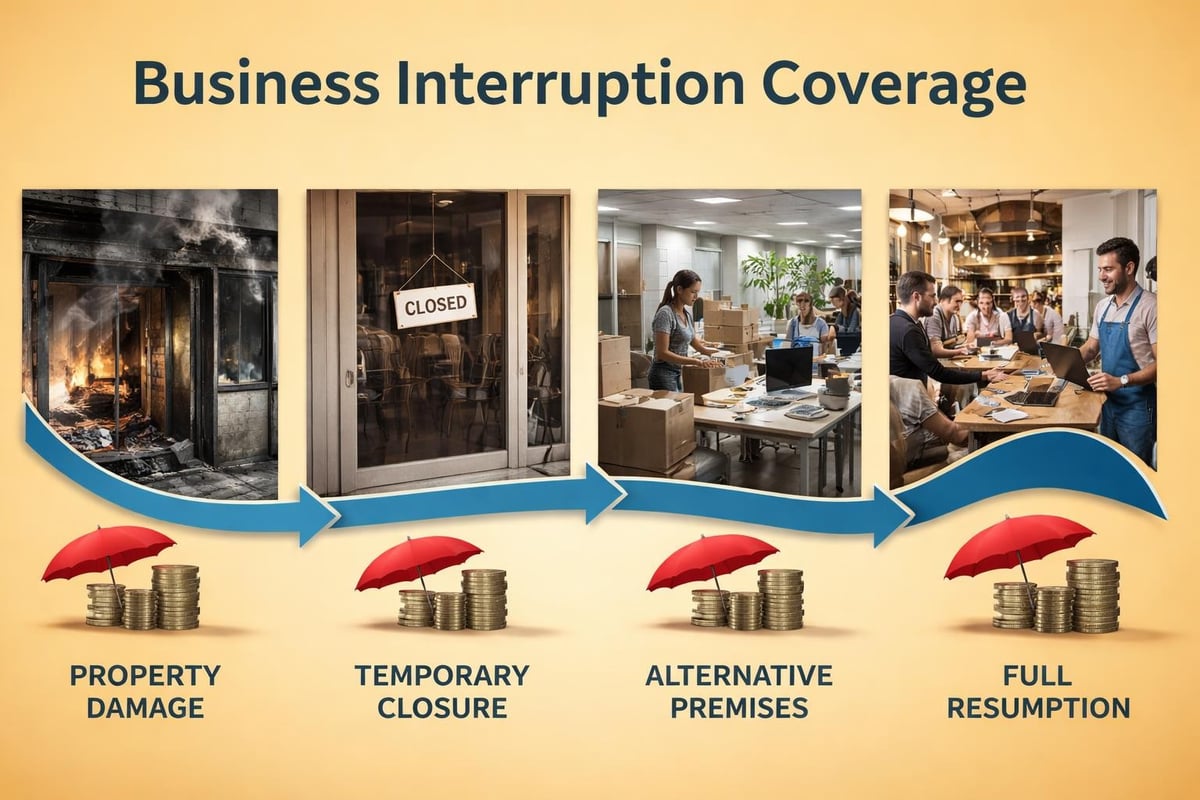
Standard commercial property insurance coverage often extends beyond physical damage to include business interruption protection. This vital element compensates for lost income when property damage forces you to cease or reduce operations.
Business interruption coverage typically includes:
Lost revenue during the period your business cannot operate normally
Continuing expenses such as rent, rates, and salaries that persist despite closure
Temporary relocation costs if you need alternative premises
Increased working costs incurred to minimise business disruption
The indemnity period, which determines how long business interruption payments continue, varies between policies. Most businesses select periods ranging from 12 to 36 months, though longer periods suit companies with extended recovery timescales.
Calculating Adequate Business Interruption Coverage
Determining appropriate business interruption coverage requires careful financial analysis. Calculate your gross profit (revenue minus variable costs) for a typical trading period, then consider seasonal variations and growth projections.
Many businesses underestimate their business interruption needs, focusing solely on property replacement costs. However, comprehensive business insurance should account for the full financial impact of prolonged closure, including customer loss and market position damage.
Common Exclusions in Commercial Property Insurance Coverage
Understanding what your commercial property insurance coverage excludes is as important as knowing what it includes. Typical exclusions help manage premium costs whilst encouraging businesses to implement appropriate risk management measures.
Standard Policy Exclusions
Most commercial property policies exclude:
Wear and tear and gradual deterioration of property
Maintenance issues resulting from poor upkeep or neglect
Inherent vice where property deteriorates due to its own characteristics
Consequential loss beyond the immediate physical damage
War and terrorism unless specifically added by endorsement
Nuclear risks and radioactive contamination
Cyber incidents requiring separate cyber insurance
Pandemic-related closures following COVID-19 clarifications
The International Risk Management Institute provides detailed analysis of policy exclusions and their implications for different business types.
Conditional Coverage Elements
Some perils receive conditional coverage within commercial property insurance coverage. Flood protection, for instance, often requires specific underwriting approval and may include higher excesses for flood-prone locations.
Unoccupied property presents another conditional area. Most policies impose stricter conditions or reduce coverage for premises left vacant beyond 30 to 60 consecutive days. Notify your insurer immediately if vacancy periods extend beyond your policy terms.
Valuation Methods for Commercial Property Insurance
Selecting appropriate property valuation methods ensures you maintain adequate commercial property insurance coverage without overpaying for unnecessary protection.
Reinstatement Value
Reinstatement value coverage pays to rebuild or replace your property to its pre-loss condition using modern materials and techniques. This comprehensive approach protects against inflation and construction cost increases, ensuring sufficient funds for complete restoration.
Most professional advice recommends reinstatement value for buildings and essential business assets. This method protects against underinsurance, which can severely impact claim settlements under average clauses.
Indemnity Value
Indemnity value considers depreciation and wear when settling claims, paying the actual cash value at the time of loss. This more economical option suits businesses with older equipment or those accepting partial replacement costs.
However, indemnity coverage can leave significant gaps between claim payments and actual replacement costs, particularly for buildings and long-life assets where depreciation substantially reduces valuations.
Day One Value
Day one valuation allows you to declare property values at policy inception, with automatic inflation protection built into the premium. This approach simplifies annual renewals and protects against seasonal stock variations or gradual asset accumulation.
Factors Affecting Commercial Property Insurance Premiums
Understanding premium determinants helps businesses manage commercial property insurance coverage costs whilst maintaining adequate protection.
Property-Related Factors
Location and local crime rates significantly influence theft and vandalism risk
Building construction type with fire-resistant materials attracting lower premiums
Property age and condition affecting susceptibility to damage
Security measures including alarms, CCTV, and physical security
Flood zone classification based on Environment Agency assessments
Occupancy type reflecting different risk profiles across industries
Business-Specific Considerations
Your claims history heavily influences premium calculations. Businesses demonstrating strong risk management and minimal claims benefit from competitive pricing and improved terms.
The nature of your operations also matters. Businesses handling hazardous materials, operating high-temperature processes, or storing valuable stock face different risk profiles than standard office operations. According to Trusted Choice, tailoring policies to specific business needs ensures appropriate coverage levels.

Working with an experienced broker streamlines the process of obtaining competitive commercial property insurance coverage. Quick Quote services enable businesses to compare multiple insurers efficiently, ensuring comprehensive protection at optimal premiums.
Enhancing Your Commercial Property Insurance Coverage
Optional Extensions and Endorsements
Standard commercial property insurance coverage can be enhanced through various extensions:
Accidental damage coverage protecting against unforeseen incidents
Loss of rent for landlords unable to collect rental income
Tenant default insurance covering unpaid rent and legal expenses
Engineering inspection for lifting equipment and pressure systems
Environmental clean-up costs following pollution incidents
Newly acquired property providing automatic coverage for recent purchases
Terrorism and Political Risk Coverage
Following recent geopolitical developments, terrorism coverage has become increasingly relevant for commercial property insurance coverage. Standard policies often exclude terrorism, requiring separate Pool Reinsurance Company (Pool Re) coverage for UK properties.
Political risk insurance protects businesses with international operations or supply chains against confiscation, expropriation, political violence, and currency inconvertibility.
Making Commercial Property Insurance Claims
Understanding the claims process ensures smoother settlements when incidents occur. Law360 emphasises the importance of understanding policy terms and following proper claims procedures.
Immediate Steps Following Property Damage
When damage occurs, take swift action to protect your commercial property insurance coverage rights:
Ensure safety by evacuating if necessary and contacting emergency services
Mitigate further damage by taking reasonable steps to prevent deterioration
Document everything through photographs, videos, and detailed notes
Notify your insurer immediately even for apparently minor incidents
Preserve evidence by retaining damaged items until insurers complete their assessment
Maintain records of all expenses incurred during the claim process
Working With Loss Adjusters
For significant claims, insurers typically appoint loss adjusters to assess damage and validate claim values. These independent professionals investigate circumstances, evaluate losses, and recommend settlement amounts.
Whilst loss adjusters work for insurers, maintaining professional cooperation facilitates smoother claims resolution. Consider appointing your own loss assessor for substantial claims to ensure your interests receive proper representation.
Avoiding Underinsurance in Commercial Property Coverage
Underinsurance represents one of the most significant pitfalls in commercial property insurance coverage. When property values exceed insured amounts, average clauses can dramatically reduce claim settlements.
The Average Clause Explained
Most commercial property policies include average clauses, which proportionally reduce claim payments when underinsurance exists. If you insure property worth £500,000 for only £250,000, claims are reduced by the same 50% proportion.
This mechanism encourages accurate valuation but can prove devastating for businesses suffering major losses. Regular professional valuations help maintain adequate coverage levels as property values fluctuate.
Regular Valuation Reviews
Property values change over time due to:
Inflation and construction cost increases affecting rebuilding expenses
Business expansion adding equipment, stock, and improvements
Market fluctuations in property and equipment values
Renovations and upgrades enhancing property specifications
Annual reviews with qualified surveyors ensure your commercial property insurance coverage remains aligned with current replacement costs. Many insurers now offer automatic index-linking to maintain pace with inflation between formal revaluations.
Integrating Property Insurance With Broader Business Protection
Commercial property insurance coverage works most effectively when integrated within comprehensive business insurance programmes. The Hartford explains how bundling property coverage with other protections through Business Owner's Policies creates efficient, cost-effective solutions.
Combined Insurance Packages
Many businesses benefit from combining property insurance with:
Public liability coverage protecting against third-party injury and property damage claims
Employers' liability insurance meeting legal requirements for employee protection
Professional indemnity covering advice and service errors
Cyber insurance protecting against digital threats and data breaches
Business liability coverage complements property protection by addressing risks that commercial property insurance coverage alone cannot handle.
Industry-Specific Requirements
Different sectors face unique commercial property insurance coverage needs. Retailers require robust stock coverage with seasonal variations. Manufacturers need machinery breakdown insurance and product contamination protection. Hospitality businesses benefit from money coverage and refrigeration insurance.
Specialist brokers understand these nuances, matching businesses with insurers offering sector-specific expertise and tailored policy wordings.

Regulatory Compliance and Commercial Property Insurance
Whilst commercial property insurance coverage isn't universally mandated by law, various regulations and contractual obligations often require specific protection levels.
Lease Requirements
Commercial lease agreements typically impose insurance obligations on tenants or landlords. Full repairing and insuring (FRI) leases require tenants to maintain comprehensive property insurance, whilst landlords retain responsibility under internal repairing insuring (IRI) arrangements.
Understanding your lease obligations ensures compliance and prevents disputes following property damage. Many lease insurance clauses specify minimum coverage levels, valuation methods, and approved insurer requirements.
Lender Requirements
Commercial mortgages invariably require borrowers to maintain adequate buildings insurance as loan security. Lenders specify coverage types, minimum values, and insurer financial ratings to protect their interests.
Non-compliance with lender insurance requirements can trigger mortgage default clauses, potentially leading to accelerated repayment demands or foreclosure proceedings.
Frequently Asked Questions About Commercial Property Insurance Coverage
What is the difference between commercial property insurance and buildings insurance?
Commercial property insurance coverage encompasses both buildings and contents protection for business premises. Buildings insurance specifically covers the physical structure itself, whilst commercial property insurance provides comprehensive protection including contents, stock, business interruption, and other elements essential for business operations. Businesses can purchase buildings insurance separately if they only own the premises without operating from them, though most require complete commercial property coverage.
How much commercial property insurance coverage does my business need?
The appropriate coverage level depends on the full reinstatement value of your buildings, replacement cost of contents and equipment, typical stock levels, and potential business interruption losses. Professional valuations provide accurate figures, ensuring adequate protection without overpaying. Remember that underinsurance triggers average clauses, proportionally reducing claim settlements. Most businesses should insure for 100% of reinstatement values plus 12 to 36 months of business interruption coverage matching their recovery timeframes.
Does commercial property insurance cover flood damage?
Flood coverage within commercial property insurance coverage varies significantly between policies and locations. Many standard policies exclude flood damage or provide limited coverage subject to higher excesses and specific conditions. Properties in high-risk flood zones may require specialist flood insurance or accept restricted coverage terms. The Environment Agency's flood risk assessments influence insurer decisions, with properties in Flood Zones 2 and 3 facing higher premiums or coverage restrictions. Always verify flood protection explicitly with your insurer.
Can I claim for business interruption without physical property damage?
Traditional commercial property insurance coverage requires physical property damage to trigger business interruption claims. Non-damage business interruption extensions can cover specific scenarios like utility failures, denied access due to nearby incidents, or supplier/customer premises damage. Following COVID-19, most policies explicitly exclude pandemic-related closures without property damage. Some specialist policies offer standalone business interruption coverage, but these remain relatively uncommon and typically address specific risks like supply chain failure.
How often should I review my commercial property insurance coverage?
Annual policy renewals provide natural review opportunities, but significant business changes warrant immediate coverage reassessment. Review your commercial property insurance coverage when you relocate premises, expand operations, purchase expensive equipment, substantially increase stock levels, undertake major renovations, or experience significant revenue changes. Property values fluctuate due to construction cost inflation, making professional revaluations advisable every three to five years. Regular reviews prevent underinsurance whilst ensuring you don't pay for unnecessary coverage as circumstances change.
Commercial property insurance coverage provides essential financial protection for businesses across all sectors, safeguarding physical assets and ensuring operational continuity when unexpected incidents occur. By understanding coverage types, valuation methods, policy exclusions, and claims procedures, business owners can make informed decisions about protecting their most valuable assets. Miller & Partner Limited specialises in matching businesses with appropriate commercial insurance solutions, leveraging extensive market knowledge to secure comprehensive protection at competitive premiums tailored to your specific operational requirements.

