FS Register FRN 1029698
Five Star Rated on Google
13+ years specialist broking experience
Aesthetics & Beauty Insurance UK — Specialist Cover for Clinics, Salons & Injectable Practitioners
Specialist UK aesthetics and beauty business insurance from a specialist broker. Cover built around the 2026 regulatory shift — JCCP, Save Face, traffic-light system, and the upcoming local authority licensing scheme. Tailored for clinics, salons, injectable practitioners, laser specialists, and beauty therapists.
UK aesthetics is being regulated — your insurance needs to follow
2026 is the most significant year for UK aesthetics regulation in a generation. Generic salon cover doesn't contemplate the new framework. Your insurance should.
The proposed UK aesthetics traffic-light system
The Government's 2025 consultation response proposed a three-tier classification by risk. Even though full licensing isn't yet in force, insurers are increasingly pricing cover around these categories.
A 2026 status snapshot — the licensing scheme is not yet operational. Voluntary accreditation (JCCP, Save Face) and practitioner-level regulation (GDC, GMC, NMC, GPhC) remain the most reliable trust signals. Align your practice and your insurance now to be ready when the scheme commences.
Lower-risk procedures
Local authority licensing expected for both practitioner and premises.
- Facial peels (superficial)
- Microdermabrasion
- LED light therapy
- Lash extensions, brow treatments
- Microblading / SMP
Standard injectables & laser
Local authority licensing — training, hygiene, insurance and safety standards required.
- Botulinum toxin (Botox)
- Facial dermal fillers
- Microneedling
- Laser hair removal
- Mid-depth chemical peels
High-risk procedures
Restricted to qualified healthcare professionals in CQC-registered premises (England).
- Liquid BBL (Brazilian Butt Lift)
- Genital filler / intimate area injectables
- Breast fillers
- Thread lifts (some types)
- Hair transplants
What UK aesthetics & beauty insurance covers
A modular policy — we build the cover stack to match your specific treatments, premises, staff, and 2026 regulatory exposure.
Public Liability
£2m–£10m cover for client injury or property damage at your premises or during mobile treatments.
Treatment Liability
Specific scope for adverse outcomes from declared treatments — bruising, asymmetry, allergic reaction, infection, nerve injury.
Professional Indemnity
Cover for negligent advice, incorrect treatment recommendations, consent failures, and aftercare disputes.
Employers' Liability
£10m cover legally required if you have staff — including bank therapists, apprentices, or therapy room renters in some cases.
Products Liability
Cover where products you use, supply, or sell to clients cause harm — including counterfeit product exposure on the grey market.
Equipment & Stock
Cover for high-value equipment (laser, IPL, HIFU, RF), products, and stock against theft, damage, and breakdown.
Premises & Contents
Cover for your clinic or salon building, fixtures, fittings, and contents — including loss of rent following insured damage.
Business Interruption
Loss of income and ongoing expenses if your clinic is forced to close after fire, flood, theft, or other insured damage.
Cyber & Client Data
Cover for client booking systems, before/after photos, medical questionnaires, and consultation records — special category UK GDPR exposure.
What aesthetics cover does my practice need?
Select your practice type for a tailored cover recommendation
Mobile Aesthetician Cover
- Core Public Liability £2m–£5m
- Core Treatment Liability with mobile working scope
- Core Professional Indemnity £100k–£500k
- Core Products Liability
- Core Equipment cover (in vehicle and at client premises)
- Add Personal Accident — sole earner protection
- Boost CIBTAC / BABTAC / NHBF membership — premium discount
Beauty Salon Cover
- Legal Employers' Liability £10m (if staff)
- Core Public Liability £5m
- Core Treatment Liability — declared treatments only
- Core Products Liability
- Core Premises & contents cover
- Core Equipment cover at replacement value
- Core Business Interruption matched to revenue
- Core Money cover (cash on premises and in transit)
- Add Cyber for booking systems
Injectable Practitioner Cover (Botox / Fillers)
- Core Public Liability £5m–£10m
- Core Treatment Liability with botulinum toxin + dermal filler scope
- Core Professional Indemnity £500k–£2m
- Core Individual prescription pathway evidenced (not PGD)
- Core Products Liability — anti-counterfeit verification
- Core Under-18 treatment exclusion explicitly documented
- Core Cyber liability for client records
- Boost JCCP register / Save Face membership — premium discount
Laser / IPL Specialist Cover
- Core Public Liability £5m
- Core Treatment Liability with class 3B / 4 laser scope
- Core Equipment cover (laser £15k–£60k+)
- Core Laser Protection Adviser (LPA) consulted
- Core Local authority laser registration (where applicable)
- Core Eye safety protocols documented
- Core Skin type assessment (Fitzpatrick) documented
- Add Equipment breakdown for cooling failure
Aesthetic Clinic Cover
- Legal Employers' Liability £10m
- Core Public Liability £10m
- Core Treatment Liability comprehensive (all declared treatments)
- Core Professional Indemnity £1m–£2m
- Core Products Liability with grey market exclusion if applicable
- Core Premises, contents, equipment
- Core Business Interruption 12+ months
- Core Cyber with special category data scope
- Core CQC compliance documented (England — red procedures)
- Add D&O for clinic directors
Beauty Training School / Academy Cover
- Legal Employers' Liability £10m
- Core Public Liability £5m–£10m (student model exposure)
- Core Professional Indemnity for course content / certification
- Core Treatment Liability covering trainee practice scope
- Core Equipment cover
- Core Premises / contents
- Add CIBTAC / VTCT / ITEC accreditation evidenced
- Add Cyber for student records
Why choose Miller & Partner for aesthetics insurance?
Generic salon insurance from comparison sites typically excludes injectables, has wrong treatment scope, and doesn't contemplate the upcoming licensing scheme. Specialist broker placement matters more in this sector than almost any other.
Specialist Broker
FRN 1029698. Appointed Representative of Gauntlet Risk Management Ltd, which is authorised and regulated by the FCA.
Specialist Markets
Lloyd's and aesthetics MGA access for high-risk treatments comparison sites can't quote.
2026 Regulation Aware
JCCP, Save Face, traffic-light system, prescribing pathways — we know the framework.
Claims Support
When a treatment complaint arrives, we coordinate the response and fight for fair settlement.
Indicative UK aesthetics & beauty insurance premium
Pricing varies significantly by treatment scope. The estimator gives an indicative starting range — your exact quote depends on declared treatments, prescribing pathway, claims history, and limits.
Aesthetics Insurance Premium Estimator
Indicative annual UK aesthetics & beauty insurance premium range
Indicative range only. Final premium depends on declared treatments, prescribing pathway, claims history, and limits required. Get an exact quote →
Frequently asked questions
Aesthetics insurance is specialist commercial cover for UK businesses offering aesthetic and beauty treatments. The core covers: Public Liability for client injury, Treatment Liability for adverse outcomes from specific declared treatments (botox, fillers, laser, etc.), Professional Indemnity for negligent advice or consent failures, Employers' Liability where you have staff, Products Liability for products you use or sell, equipment and premises cover, business interruption, and increasingly Cyber for client data. Cover differs fundamentally from generic salon insurance — most generic policies exclude or sub-limit injectables and high-risk treatments.
Significantly. The Government's August 2025 consultation response proposed a three-tier (red/amber/green) classification of cosmetic procedures by risk. Lower-risk (amber — including standard Botox and dermal fillers) will require local authority licensing for both practitioner and premises. High-risk (red — liquid BBL, intimate fillers) will be restricted to qualified healthcare professionals in CQC-registered premises in England. Scotland is introducing a Non-surgical Cosmetic Procedures Bill by May 2026. Even before the licensing scheme is operational, insurers are pricing cover around these categories and increasingly requiring evidence of JCCP / Save Face accreditation, prescribing pathway documentation, and treatment-specific training records.
Not for most facial aesthetics in 2026 — the CQC's regulated-activity scope was narrowly extended only to specific high-risk procedures (genital filler augmentation and intimate-area injectables). Standard facial Botox and facial dermal fillers remain outside CQC's current regulated-activity definitions. CQC oversight of standard facial aesthetics will only follow if and when the wider licensing scheme is enacted. Dental practices in England are CQC-registered for dentistry activities but that registration is for dentistry, not aesthetics. Voluntary accreditation (Save Face, JCCP) remains the most reliable practitioner trust signal in 2026.
While Patient Group Directions (PGDs) are technically legally valid for botulinum toxin, the insurance reality has shifted. Many UK indemnity providers (including major aesthetics specialists) do not cover botulinum toxin administration under PGDs — only under individual prescriptions following face-to-face prescriber assessment. The JCCP recommends face-to-face prescriber assessment for all new patients. The safest insurable approach: obtain individual prescriptions for each patient from an authorised prescriber (doctor, dentist, independent prescriber nurse V300, or independent prescriber pharmacist) who has assessed the patient. Check your policy wording carefully — PGD-only working may void cover.
No — administering botulinum toxin or dermal fillers to anyone under 18 for cosmetic purposes is illegal in England under the Botulinum Toxin and Cosmetic Fillers (Children) Act 2021. The proposed wider licensing scheme would extend this to additional procedures. Treating an under-18 outside this Act voids insurance entirely and creates direct criminal liability for the practitioner. Age verification at consultation is essential — and the proposed 2026 framework strengthens enforcement.
Indicative 2026 annual premiums: mobile aestheticians £250–£600; beauty salons £550–£1,500; injectable practitioners £650–£1,800; laser/IPL specialists £800–£2,200; aesthetic clinics £1,500–£4,500; training schools £1,200–£3,200. Pricing scales with declared treatments (toxin/filler scope adds materially), claims history, premises type, staff numbers, and limits. JCCP / Save Face accreditation typically reduces premium 5–15%; evidence of individual prescribing pathway and treatment-specific training records also attracts discounts.
Treatment Liability covers adverse outcomes from the physical treatment itself — bruising, asymmetry, allergic reactions, infection, nerve damage, scarring. Professional Indemnity covers negligent advice or consultation — recommending the wrong treatment, failing to obtain proper consent, inadequate aftercare advice, incorrect medical history assessment. Both are essential for injectable practitioners. Many generic salon policies have only basic Treatment Liability and no PI — leaving the consultation and consent phase uncovered. Specialist aesthetics cover combines both with explicit scope for your declared treatments.
Only if specifically declared and where appropriate safety controls are evidenced. Class 3B and Class 4 medical lasers require specific scope — your policy should declare the laser class, treatment areas, and skin types treated. Insurers typically require: documented Laser Protection Adviser (LPA) consultation; eye safety protocols including protective eyewear for all parties; Fitzpatrick skin type assessment per client; documented treatment parameters per skin type; local authority registration where required (varies by council). Without these controls evidenced, laser claims defence becomes very difficult.
Increasingly yes. Aesthetics practices hold UK GDPR "special category data" — medical history, allergy information, before/after photos, consent forms — that attracts higher regulatory exposure than standard customer data. The ICO can issue fines up to £17.5m or 4% of global turnover for serious breaches; special category data breaches attract additional scrutiny. Cyber cover for aesthetics typically includes: breach notification, ICO investigation costs, ransomware response, business interruption from clinic system failure, and PR support. Premium is typically £200–£600 per year for small aesthetics businesses — see our Cyber Insurance page for detail.
Apprentices and trainees working in your business are employees for Employers' Liability purposes — you must have EL cover (£5m minimum, £10m standard) the moment they start. If you provide training courses to outside students, you need additional cover: PI for course content and certification accuracy, PL extension for student-on-student treatment exposure, and treatment scope explicitly covering trainee practice. Generic salon insurance typically doesn't contemplate training scope — academies need specialist placement.
Insurance non-disclosure under the Insurance Act 2015, specifically around treatment scope. Practitioners expand their treatment offering — adding lip filler to a Botox practice, adding microneedling to a laser practice, adding skin boosters to a salon — without updating their cover declarations. At claim stage, the insurer points to proposal documentation showing the original (narrower) treatment scope, and a claim involving the undeclared treatment becomes uninsured. Annual review of declared treatments against actual treatments offered is the fix; specialist broker placement makes this systematic rather than ad-hoc.
Several effective levers: JCCP or Save Face accreditation (5–15% discount); documented individual prescribing pathway rather than PGD; treatment-specific training certificates evidenced (CIBTAC, BABTAC, Harley Academy, etc.); documented client consultation and consent process; before/after photo documentation per treatment; complaints log and resolution process; 3+ years continuity with same insurer (5–10% loyalty reduction); annual payment rather than monthly. Avoid the trap of buying the cheapest generic salon package — the £100 saving creates uninsured exposure on every treatment outside the policy's actual scope.
General information, not advice. This page describes the types of cover we arrange. It is not personalised advice, a personal recommendation or an offer of cover, and it does not take account of your own circumstances. Cover is subject to insurer acceptance, underwriting criteria and the full terms, conditions, limits and exclusions of the policy issued. Any figures shown are illustrative and are not quotations. Our full regulatory status and complaints information are set out in the footer of every page.
Real World Example
An aesthetics and beauty clinic approached Miller & Partner Limited after a client alleged an adverse reaction following a cosmetic treatment, resulting in a potential injury claim. We immediately engaged insurers under their Treatment Risk and Public Liability cover, coordinating medical evidence and specialist claims handlers. By presenting clear documentation of procedures and consent, the matter was resolved without escalation to litigation. The client avoided significant financial exposure and was able to continue operating with confidence.
Our Expertise in this Field
At Miller & Partner Limited, we specialise in arranging tailored insurance for aesthetics and beauty businesses offering a wide range of treatments. We understand the unique risks involved, from treatment and malpractice exposures to public liability and equipment cover. Our expertise ensures comprehensive protection is in place, including specialist cover aligned to advanced procedures and client care. With a hands-on, advisory approach, we provide robust insurance that protects your reputation, clients, and business.
Ready to protect your business?
Get expert advice and a tailored commercial insurance quote today.
✔ Independent broker
✔ Access to leading UK insurers
✔ Fast turnaround
Free Insurance Review
& Zero Broker Fee
Let us review your current insurance and see if we can improve your cover while reducing the cost.
You're in 🎉
Thanks for requesting your free review. We'll be in touch shortly.
Check out our Lifestyle Insights and Articles Hub

Check out our related blog on this topic
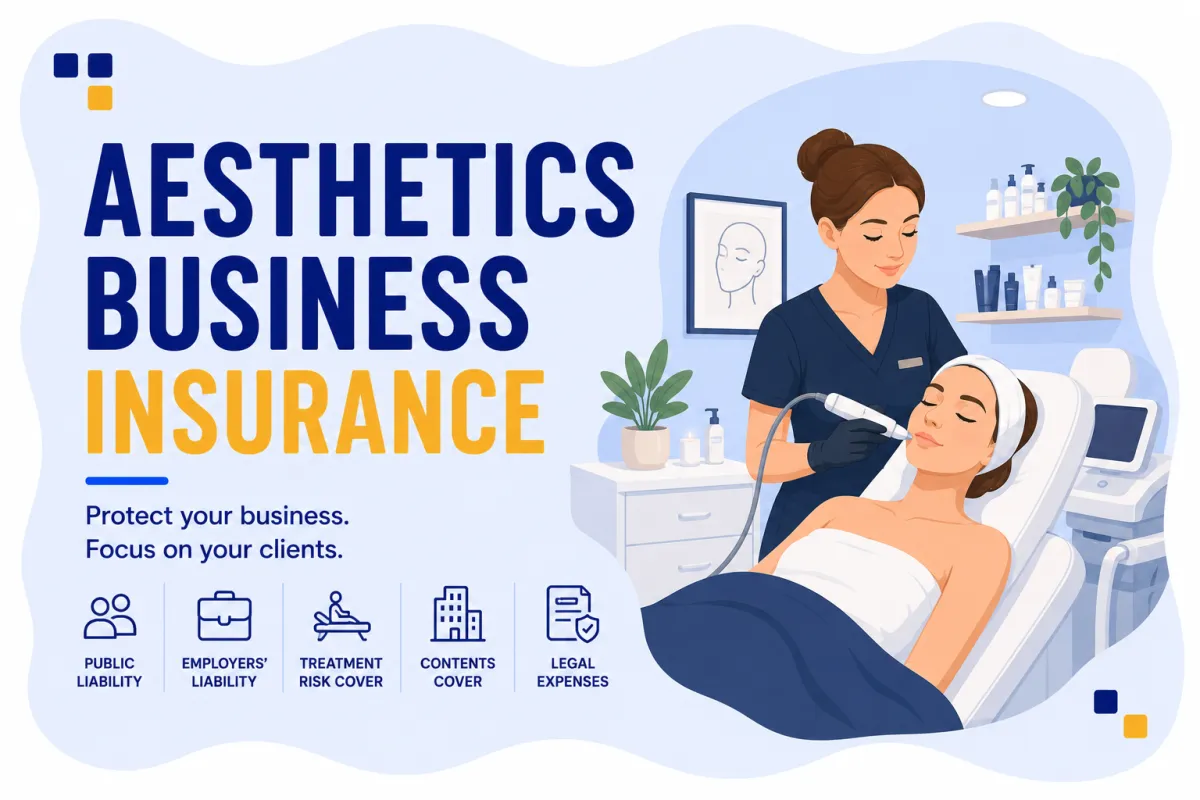
Aesthetics Business Insurance Specialist - A Guide 2026
John sorted me out for the insurance I needed for my company and provided an excellent service. I can highly recommend Miller & Partner and will be using them again for all my commercial insurance requirements.

I can recommend Miller and Partner. They were prompt, efficient and responsive to my needs.

Very grateful for John’s assistance in finding a suitable policy for our needs, and being helpful and prompt in his advice. Highly recommended!
We're an Appointed Representative of Gauntlet Risk Management Ltd, which is authorised and regulated by the FCA. You can check our entry on the FCA Register.
MEET THE Director
Hey, I'm John!
I started Miller & Partner with the aim to bring back personable, approachable broking to UK businesses who were tired of large corporate brokers and feeling like they were just another number.
I have built this brokerage up with no pushy sales techniques or big business tactics, just honest, approachable and professional relationships with my clients.
Over 13 years experience in business insurance
Client first approach
5* rated broker on Google


Office: Vivian House, Roman Bridge Close, Mumbles, Swansea, SA3 5BG
Call 01792 001350
Email: [email protected]
Instagram
LinkedIn