



Business Insurance Business: A Guide for UK Companies
Looking for a quick quote? Click here!
The business insurance business represents a vital sector within the UK's financial services landscape, connecting enterprises with protection against operational risks. Whether you're launching a start-up or expanding an established firm, understanding how commercial insurance works and selecting the right cover can mean the difference between weathering unexpected challenges and facing financial devastation. This guide explores the fundamentals of the business insurance business, helping you navigate policy options, coverage requirements, and the value of professional broker services.
Understanding the Business Insurance Business Landscape
The business insurance business encompasses a diverse ecosystem of insurers, brokers, underwriters, and regulatory bodies working together to protect commercial enterprises. In the UK, this sector manages billions of pounds in annual premiums whilst serving organisations across every industry imaginable.
How the Business Insurance Business Operates
Commercial insurance providers assess organisational risks, underwrite policies, and process claims when incidents occur. This intricate system relies on data analytics, actuarial science, and market expertise to price coverage accurately. The Insurance Information Institute offers comprehensive guidance on how these mechanisms function within commercial contexts.
Key players in the business insurance business include:
Insurance carriers who underwrite policies and assume financial risk
Commercial insurance brokers who match businesses with appropriate coverage
Underwriters who evaluate risk and determine premium pricing
Loss adjusters who assess claims and determine payouts
Regulatory authorities such as the Financial Conduct Authority overseeing market conduct
The relationship between these entities creates a marketplace where businesses can access tailored protection without bearing the full burden of potential losses independently.

Market Growth and Business Opportunities
The business insurance business continues expanding as enterprises recognise the necessity of comprehensive risk management. Market analysis indicates steady growth driven by increasing regulatory requirements, cyber threats, and supply chain vulnerabilities.
This growth creates opportunities for both insurance providers and businesses seeking coverage. New insurance products emerge regularly, addressing contemporary risks like data breaches, climate change impacts, and business interruption from pandemics.
Essential Coverage Types Within the Business Insurance Business
Commercial insurance encompasses numerous policy types, each addressing specific organisational vulnerabilities. Understanding these categories helps businesses construct comprehensive protection strategies.
Foundational Business Insurance Policies
Every enterprise requires certain baseline coverages regardless of industry or size. These fundamental policies form the core of most business insurance business arrangements.
Employers' liability insurance stands as a legal requirement in the UK for any business employing staff. This coverage protects against claims from employees who suffer work-related injuries or illnesses. Penalties for operating without valid employers' liability insurance can reach £2,500 per day.
Public liability insurance shields businesses from third-party claims involving injury or property damage. Whether a customer slips in your premises or your operations damage neighbouring property, this coverage handles legal costs and compensation payments.
Professional indemnity insurance proves essential for service-based businesses offering advice or expertise. Solicitors, accountants, consultants, and similar professionals rely on this coverage when clients allege negligent work caused financial loss.
Specialist Coverage Within the Business Insurance Business
Beyond foundational policies, the business insurance business offers specialised products addressing unique operational risks.
Product liability insurance for manufacturers and retailers
Cyber insurance covering data breaches and digital attacks
Directors and officers insurance protecting leadership from personal liability
Business interruption insurance replacing lost income during operational disruptions
Commercial property insurance protecting physical assets and premises
Goods in transit insurance covering merchandise during transportation
Selecting appropriate specialist coverage requires thorough risk assessment and understanding of your operational vulnerabilities. The U.S. Small Business Administration provides frameworks applicable to UK contexts for evaluating insurance needs systematically.
Navigating the Business Insurance Business as a Purchaser
Acquiring appropriate commercial insurance involves more than comparing premium quotes. Strategic purchasing requires understanding policy structures, exclusions, and the claims process.
Assessing Your Business Insurance Business Needs
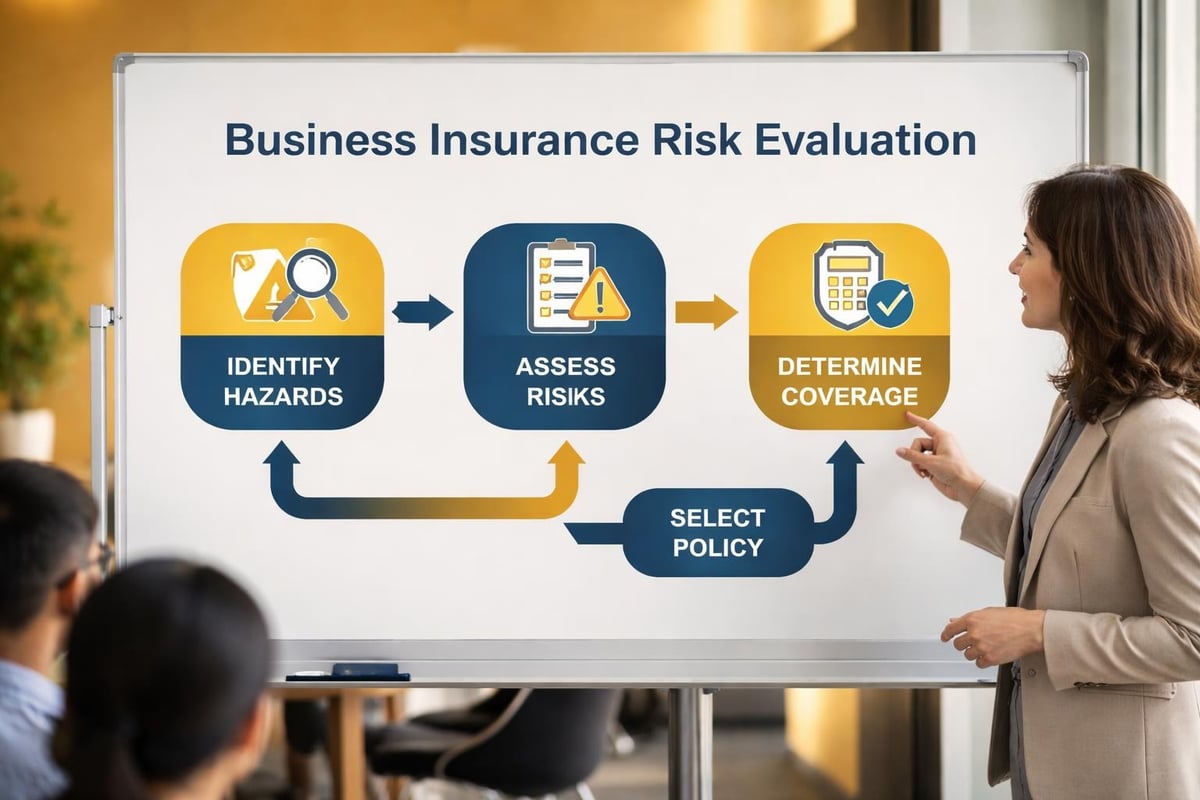
Risk assessment forms the foundation of intelligent insurance purchasing. Begin by cataloguing potential threats to your operations, finances, and reputation.
Conduct a comprehensive risk audit examining:
Physical assets including property, equipment, and inventory
Revenue streams and potential business interruption scenarios
Legal obligations and contractual insurance requirements
Employee-related risks from workplace injuries to employment disputes
Industry-specific exposures unique to your sector
Supply chain dependencies and third-party relationships
This systematic approach reveals coverage gaps that might otherwise remain unnoticed until a claim situation arises. Research suggests that 75% of small businesses remain underinsured, often because they haven't conducted thorough risk assessments.
Working With Commercial Insurance Brokers
The business insurance business includes thousands of brokers who simplify the purchasing process by matching businesses with suitable insurers and policies. These intermediaries offer significant advantages over direct purchasing.
Professional brokers possess market knowledge spanning dozens of insurers and hundreds of policy variations. They understand which carriers favour specific industries, offer competitive rates for particular risk profiles, and provide superior claims service. This expertise proves invaluable when navigating complex coverage requirements.
When you need tailored protection that precisely matches your operational risks, obtaining a Quick Quote through a specialist broker streamlines the entire process whilst ensuring comprehensive coverage.

Broker services typically include:
Independent policy comparison across multiple insurers
Risk assessment and coverage gap identification
Policy wording negotiation and customisation
Claims advocacy when incidents occur
Ongoing policy reviews as your business evolves
Regulatory compliance guidance
Unlike captive agents representing single insurers, independent brokers within the business insurance business work for you, prioritising your interests throughout the insurance lifecycle.
Understanding Policy Terms and Exclusions
Commercial insurance policies contain technical language requiring careful interpretation. Terms, conditions, exclusions, and endorsements determine precisely what situations trigger coverage and which fall outside policy scope.
Critical policy elements demanding attention:
Coverage limits capping maximum payouts per incident or policy period
Deductibles representing out-of-pocket amounts before insurance responds
Exclusions specifying scenarios explicitly not covered
Conditions outlining obligations businesses must fulfil
Extensions adding optional coverage for specific risks
Territorial limits defining geographic areas where coverage applies
Never assume coverage exists for particular scenarios without confirming through policy documentation. The business insurance business operates on precise contractual terms that determine whether claims succeed or fail.
Claims Management Within the Business Insurance Business
Understanding the claims process proves essential because insurance value materialises only when policies respond effectively during difficult situations.
Initiating Business Insurance Business Claims
Prompt notification stands as a universal policy condition. Most commercial insurance requires businesses to report potential claims immediately, even before loss amounts become clear.
Effective claims initiation involves:
Immediate notification to your insurer or broker upon incident discovery
Loss mitigation taking reasonable steps to prevent further damage
Evidence preservation documenting damage through photographs and records
Witness information collecting contact details from relevant parties
Professional guidance consulting legal or claims specialists when appropriate
The business insurance business processes thousands of claims daily, with settlement speed and fairness varying considerably between insurers. Broker relationships prove particularly valuable during claims, as they advocate for clients throughout the adjustment process.
Common Business Insurance Business Claim Challenges
Claims occasionally face complications requiring persistence and expertise to resolve satisfactorily. Understanding common issues prepares businesses for potential difficulties.
Disputes frequently arise regarding policy interpretation, with insurers and policyholders disagreeing about whether specific exclusions apply. Coverage for cyber incidents, pandemic-related business interruption, and regulatory fines often generates contentious claims discussions.
Underinsurance creates another common challenge. When property coverage limits fall below actual replacement costs, insurers may invoke average clauses, reducing claim payments proportionally. This situation reinforces the importance of regular policy reviews ensuring coverage keeps pace with asset values.
Optimising Your Business Insurance Business Strategy
Strategic insurance management extends beyond initial policy purchase, requiring ongoing attention and periodic adjustments.
Regular Policy Reviews and Updates
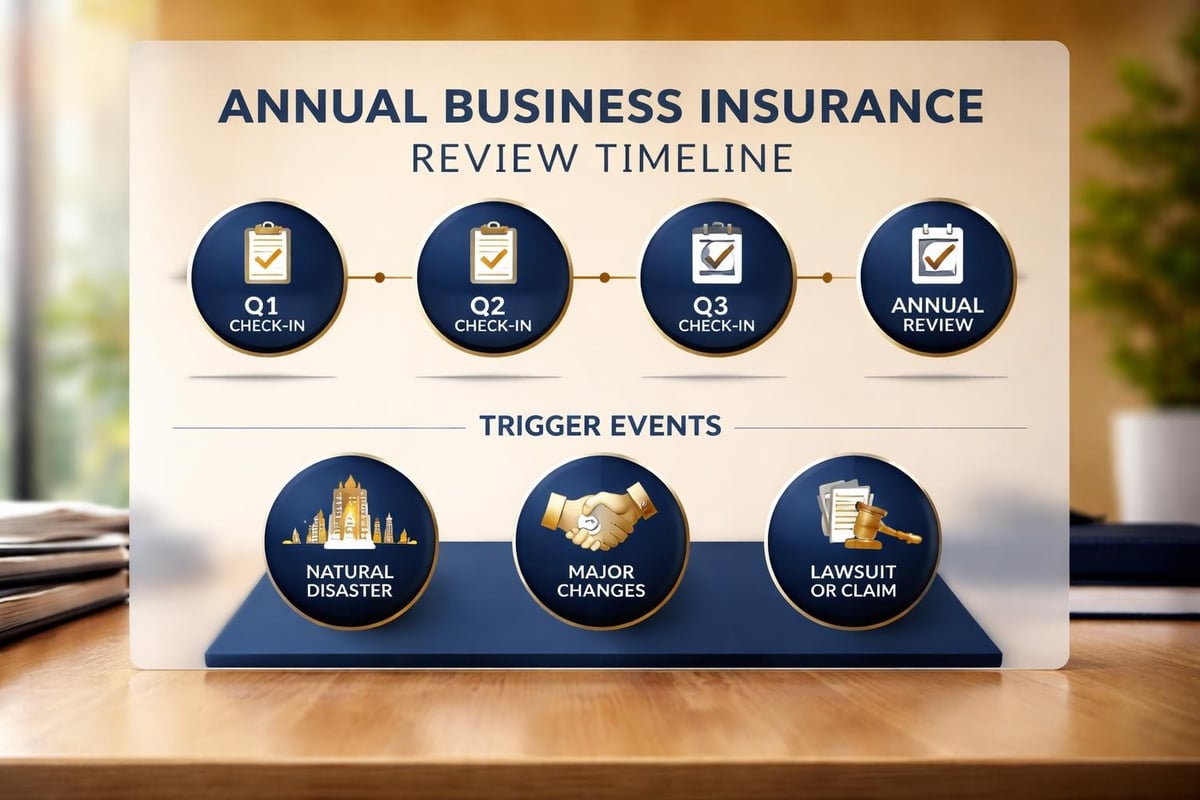
Business evolution demands corresponding insurance adaptations. Annual reviews ensure coverage remains appropriate as operations expand, contract, or transform.
Schedule comprehensive insurance reviews when:
Revenue increases or decreases by more than 20%
You launch new products or services
Physical locations change through moves, additions, or closures
Employee numbers fluctuate significantly
You acquire new equipment or property
Contractual obligations impose new insurance requirements
Industry regulations change affecting coverage needs
The business insurance business releases new products regularly, meaning better or more cost-effective coverage might exist compared to policies purchased years ago.
Cost Management Without Compromising Protection
Premium costs represent significant operational expenses, particularly for risk-intensive industries. However, reducing insurance spend shouldn't mean accepting inadequate protection.
Legitimate cost reduction strategies include:
Risk management improvements reducing exposure and potentially lowering premiums
Deductible optimisation balancing self-insurance against premium savings
Package policies combining multiple coverages for bundling discounts
Claims history management maintaining low claim frequency through loss prevention
Market shopping regularly comparing quotes across the business insurance business landscape
Conversely, selecting coverage solely based on price often proves expensive when inadequate policies fail to respond appropriately during claims.
Regulatory Compliance and the Business Insurance Business
UK commercial insurance operates within a robust regulatory framework protecting both businesses and consumers whilst maintaining market stability.
Financial Conduct Authority Oversight
The Financial Conduct Authority (FCA) regulates insurance intermediaries and enforces conduct standards throughout the business insurance business. These rules ensure fair treatment, transparent pricing, and appropriate product recommendations.
Businesses benefit from these protections through standardised disclosure requirements, complaints procedures, and compensation schemes when insurers fail financially. When selecting brokers or insurers, verify FCA authorisation through the Financial Services Register.
Legal Insurance Requirements
Various statutes mandate specific insurance coverages for UK businesses. Employers' liability insurance represents the most universal requirement, but other industries face additional compulsory coverage.
Motor insurance for any business-owned vehicles
Professional indemnity insurance for certain regulated professions
Public liability insurance required by many commercial leases and contracts
Operating without legally mandated coverage exposes businesses to substantial fines, prosecution, and potentially unlimited personal liability for directors.
Frequently Asked Questions
What factors influence business insurance premiums?
Insurers calculate premiums by assessing multiple risk factors specific to your enterprise. Industry sector, claims history, revenue, employee numbers, and geographical location all impact pricing within the business insurance business. Businesses in high-risk industries such as construction typically pay more than office-based consultancies. Your specific operations, safety procedures, and risk management practices also influence costs, with well-managed businesses often securing preferential rates.
How much business insurance coverage do I actually need?
Coverage requirements depend entirely on your specific operational risks, asset values, and potential liability exposures. Conduct a thorough risk assessment examining worst-case scenarios rather than likely outcomes. Consider replacement costs for physical assets, potential revenue loss during interruptions, and liability limits matching realistic claim scenarios in your industry. Professional brokers within the business insurance business can provide industry benchmarks and help determine appropriate coverage levels based on comparable organisations.
Can I change business insurance providers mid-term?
Yes, most commercial insurance policies allow mid-term cancellation, though this may incur short-period charges or administrative fees. The business insurance business operates competitively, meaning switching providers when better terms emerge makes financial sense. However, consider timing carefully to avoid coverage gaps, and ensure replacement policies begin before cancelling existing coverage. Brokers can coordinate seamless transitions between insurers whilst maintaining continuous protection.
What happens if I don't disclose all information when applying for business insurance?
Non-disclosure or misrepresentation, whether intentional or accidental, can void policies entirely. The business insurance business operates on "utmost good faith" principles requiring complete accuracy during applications and renewals. If insurers discover material information wasn't disclosed after a claim occurs, they may refuse payment and cancel the policy retroactively. Always provide comprehensive, accurate information to insurers, disclosing anything that might influence their underwriting decision.
How quickly do business insurance claims get settled?
Settlement timeframes vary considerably depending on claim complexity, policy type, and insurer efficiency within the business insurance business. Straightforward property damage claims might settle within weeks, whilst complex liability disputes can extend months or even years. Providing thorough documentation, responding promptly to insurer requests, and working with experienced brokers accelerates the process. Some policies include service level commitments specifying maximum response times for different claim types.
Navigating the business insurance business requires understanding coverage options, regulatory requirements, and strategic purchasing approaches that balance protection with cost efficiency. By conducting thorough risk assessments, working with knowledgeable brokers, and maintaining appropriate coverage levels, UK businesses can secure the protection necessary for long-term success. Miller & Partner Limited specialises in matching businesses with precisely the right insurance cover, ensuring comprehensive protection tailored to your unique operational risks and industry requirements.