EV Charging Installer Insurance UK:

EV Charging Installer Insurance UK: Complete 2026 Guide

May 03, 202613 min read

This is the best guide for EV Charging Installer Insurance in the UK.

EV Charger installer insurance uk quote

The electric vehicle revolution continues to accelerate across the United Kingdom, creating unprecedented opportunities for businesses specialising in EV charging point installations. With the government's ambitious target to phase out new petrol and diesel vehicle sales, demand for qualified installers has never been higher.

However, this burgeoning industry brings substantial risks that require comprehensive insurance protection. Understanding ev charging installer insurance options is essential for any business operating in this sector, whether you're an established electrical contractor expanding your services or a new enterprise dedicated exclusively to EV infrastructure.


Understanding the EV Charging Installation Landscape

The UK's commitment to electrification has transformed the installation industry overnight. Thousands of domestic and commercial properties now require charging infrastructure, creating a competitive marketplace where professional credentials and proper insurance coverage separate reputable installers from those operating on the margins.

Regulatory Framework and Compliance Requirements

EV charger installation is governed by strict regulations designed to ensure safety and standardisation. Installers must comply with regulatory frameworks that mandate specific qualifications and demonstrate competency before undertaking work. The Building Regulations Part P covers electrical installations in dwellings, whilst commercial installations fall under different compliance standards.

OZEV (Office for Zero Emission Vehicles) registration represents the gold standard in the industry. Registered installers can access government grants and demonstrate to clients they meet rigorous safety and quality standards. This registration process examines technical qualifications, insurance coverage, and business credentials, making ev charging installer insurance uk a fundamental requirement rather than an optional extra.

EV installer certification requirements

Core Insurance Coverage Types for EV Installers

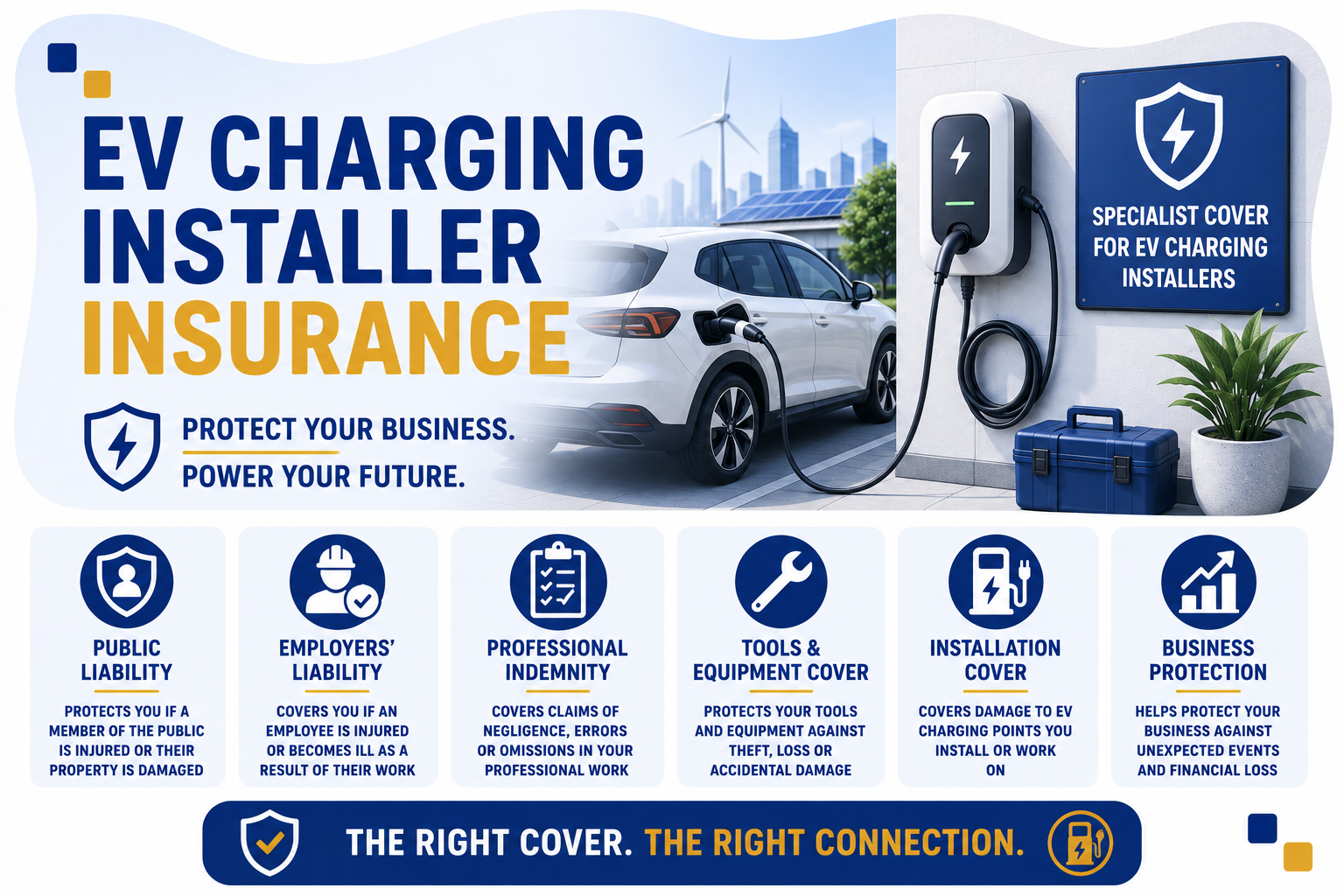
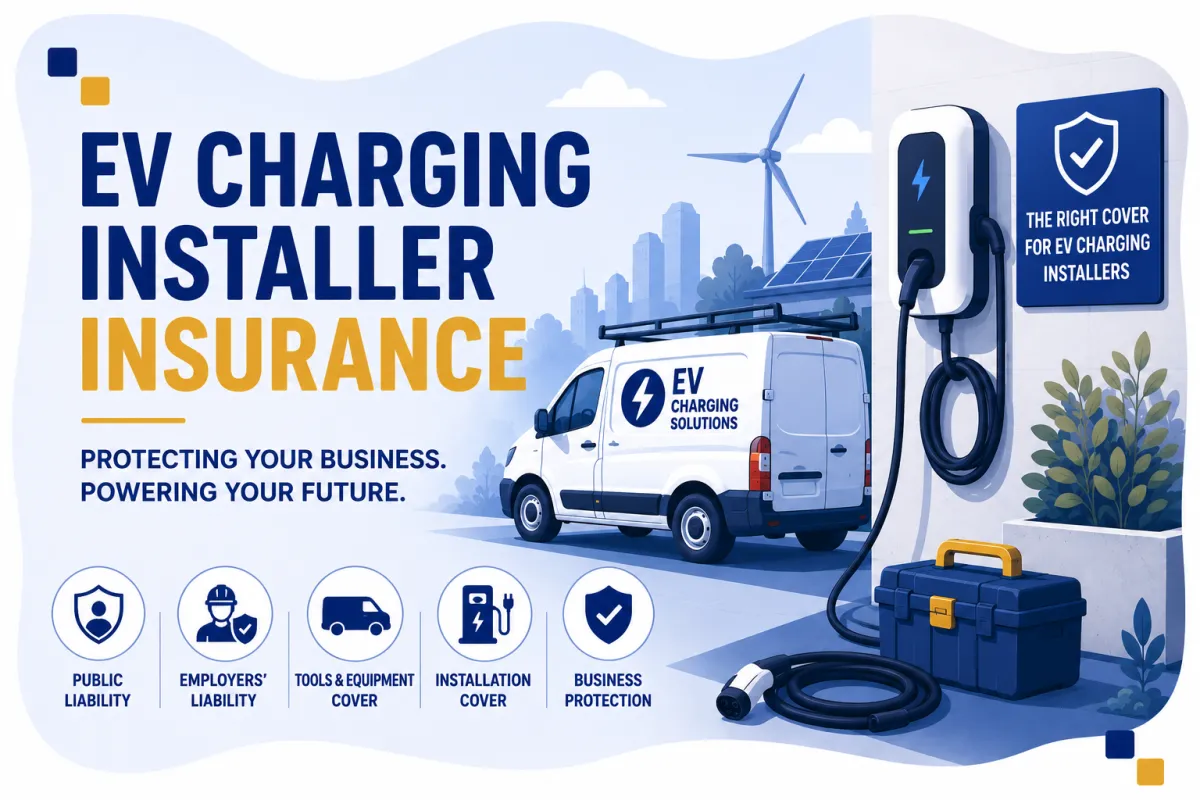
Protecting your installation business requires multiple insurance layers that address different risk categories. Each coverage type serves a specific purpose, and comprehensive protection typically combines several policies into a tailored package.

Public Liability Insurance

This foundational coverage protects your business when installation work causes injury to third parties or damage to customer property. Consider scenarios where faulty installation leads to electrical fires, or where equipment falls and damages a client's vehicle. Public liability insurance responds to these claims, covering legal costs and compensation payments.

Most installers carry coverage between £5 million and £10 million. Commercial clients frequently specify minimum coverage levels as a contract prerequisite. Aviva has introduced specialised products recognising the unique risks EV charging installers face.

Key features include:

  • Coverage for bodily injury claims

  • Property damage protection

  • Legal defence costs

  • Compensation payment coverage

  • Worldwide coverage options for international projects

Professional Indemnity Insurance

Professional indemnity protects against claims arising from professional advice, design errors, or negligent service delivery. If your design specifications prove inadequate or your advice leads to client financial loss, this coverage responds. The complexity of EV charging systems, particularly commercial installations involving load management and grid integration, creates substantial exposure to professional negligence claims.

Professional indemnity insurance typically covers:

  • Errors in design or specification

  • Incorrect advice regarding charging infrastructure

  • Breach of professional duty

  • Financial losses resulting from your negligence

  • Defence costs and compensation payments

Employers' Liability Insurance

Any business employing staff must maintain employers' liability insurance by law. This coverage protects against employee injury or illness claims arising from their work. Given the electrical nature of installation work and the physical demands of mounting equipment, injury risks remain significant.

Minimum coverage stands at £5 million, though many insurers provide £10 million as standard. Consider risks including electrical shock, falls from height when installing wall-mounted units, manual handling injuries, and vehicle accidents when travelling between sites.

Tools and Equipment Insurance

Installation businesses invest heavily in specialised equipment including testing instruments, power tools, installation kits, and diagnostic devices. Tools and equipment insurance protects these assets against theft, damage, and loss. Many policies extend coverage to tools held in vehicles, at client premises, or in storage.

Additional Coverage Considerations

Beyond core policies, ev charging installer insurance uk packages may include several additional protections that address specific operational risks.

Product Liability Insurance

This coverage protects when products you supply or install cause injury or damage. If a charging unit malfunctions and causes a fire, product liability insurance responds to resulting claims. Some public liability policies include product liability automatically, whilst others require separate coverage.

Contract Works Insurance

Large commercial installations may justify dedicated contract works coverage protecting the project itself during construction. This insurance covers materials, equipment, and partially completed work against damage from various perils including fire, theft, vandalism, and weather events.

Cyber Liability Insurance

Modern charging installations increasingly connect to network systems and cloud platforms for management, billing, and monitoring. This connectivity creates cyber risk exposure. A research paper highlights how cyber insurance protects EV charging stations from increasingly sophisticated cyber threats. Data breaches, ransomware attacks, and system failures could result in substantial liability.

Legal Expenses Insurance

Legal disputes can arise from contract disagreements, payment disputes, or employment matters. Legal expenses insurance covers professional legal representation costs, providing access to qualified solicitors without depleting business resources.

Insurance coverage layers

Cost Factors and Premium Determinants

Understanding what influences ev charging installer insurance uk premiums helps businesses budget accurately and identify opportunities to reduce costs through risk management.

Business Size and Turnover

Annual turnover directly impacts premium calculations. Insurers assume higher turnover correlates with increased activity levels and greater exposure to claims. A sole trader undertaking domestic installations faces lower premiums than a company with multiple teams handling commercial contracts.

Claims History

Previous claims significantly influence premium pricing. A clean claims record demonstrates effective risk management and typically results in lower premiums. Conversely, multiple claims suggest higher risk and trigger premium increases. Some insurers offer no-claims discounts rewarding loss-free trading years.

Coverage Limits and Excesses

Higher coverage limits increase premiums proportionally. Similarly, selecting lower policy excesses (the amount you pay towards any claim) results in higher premiums. Balancing adequate protection against affordable premiums requires careful consideration of your genuine risk exposure.

Qualifications and Certifications

Demonstrating robust professional credentials often reduces premiums. OZEV registration, relevant electrical qualifications, and manufacturer certifications signal competence and risk awareness to insurers. Some providers offer discounts for installers holding specific accreditations.

Business Activities and Risk Profile

Installation exclusively in domestic properties typically attracts lower premiums than commercial work involving complex installations, higher property values, and greater liability exposure. Similarly, installers offering ongoing maintenance services face different risk profiles than those focusing solely on installation work.

Selecting the Right Insurance Provider

The insurance marketplace offers numerous providers, but not all understand the specific nuances of ev charging installer insurance uk requirements. Choosing a provider with sector expertise ensures appropriate coverage and fair pricing.

Specialist Commercial Insurance Brokers

Working with commercial insurance specialists who understand your industry offers significant advantages. These brokers access multiple insurers, compare coverage options, and negotiate competitive terms on your behalf. Their sector knowledge helps identify coverage gaps and ensure policies genuinely protect your business.

Miller & Partner Limited specialises in matching businesses with appropriate insurance coverage, understanding the unique requirements facing EV charging installers. Their expertise helps navigate complex policy wordings and ensure comprehensive protection.

Quick Quote - Miller & Partner Limited

Questions to Ask Potential Insurers

When evaluating insurance providers, ask targeted questions revealing their understanding of your business:

  • Do they offer specific EV charging installer policies or just general trades coverage?

  • What exclusions apply to electrical work and charging installations?

  • How do they handle claims involving emerging technology?

  • Can they provide references from other EV installers?

  • What risk management support do they offer?

  • Do they understand OZEV requirements and regulatory compliance?

Common Coverage Exclusions and Limitations

Understanding what your policy doesn't cover proves as important as knowing what protection you have. Common exclusions in ev charging installer insurance uk policies include:

  • Intentional damage or criminal acts

  • Work performed outside your qualified scope

  • Pollution and environmental damage (unless specifically included)

  • Professional services beyond installation work

  • Cyber incidents (without dedicated cyber coverage)

  • Contractual liability exceeding common law obligations

  • Work subcontracted to uninsured parties

Always review policy documents thoroughly and seek clarification on ambiguous terms. Professional guidance helps businesses understand complex insurance terminology and identify potential coverage gaps before they become problematic.

Risk Management Strategies

Effective risk management reduces claims frequency and severity, benefiting both your business operations and insurance premiums. Implementing structured safety protocols demonstrates professionalism and protects your bottom line.

Health and Safety Protocols

Comprehensive health and safety procedures should cover:

  • Risk assessment processes for each installation site

  • Method statements detailing safe working practices

  • Personal protective equipment requirements

  • Electrical isolation and testing procedures

  • Working at height protocols

  • Manual handling guidelines

  • Emergency response procedures

Regular training ensures all team members understand and follow safety protocols consistently.

Quality Assurance Systems

Implementing quality management systems reduces errors and ensures consistent service delivery. Document installation processes, maintain equipment calibration records, and conduct post-installation testing according to manufacturer specifications and regulatory requirements.

Customer Communication and Documentation

Clear communication prevents misunderstandings that escalate into disputes. Provide detailed quotations specifying scope of work, timelines, and costs. Document site conditions before commencing work and maintain comprehensive records of all installations including photographs, test results, and compliance certificates.

Risk management framework infographic

OZEV Registration and Insurance Requirements

The Office for Zero Emission Vehicles maintains an approved installer scheme that sets industry standards for EV charging point installation. Registration requires demonstrating technical competence, appropriate insurance coverage, and adherence to quality standards.

Insurance Criteria for OZEV Approval

OZEV registration mandates specific insurance levels including:

  • Public liability insurance with minimum £2 million coverage (though £5 million is recommended)

  • Professional indemnity insurance appropriate to business activities

  • Employers' liability insurance (if employing staff)

  • Product liability coverage for supplied equipment

Maintaining current insurance certificates and providing evidence during renewal applications is mandatory. Allowing coverage to lapse results in registration suspension and loss of access to government grant schemes.

Benefits of OZEV Registration

Beyond insurance requirements, OZEV registration provides competitive advantages:

  • Access to government grant funding schemes

  • Enhanced credibility with domestic and commercial clients

  • Listing on the official installer database

  • Marketing materials demonstrating approved status

  • Technical support and industry updates

The Impact of Industry Growth on Insurance

The rapid expansion of EV charging infrastructure influences insurance availability, pricing, and coverage terms. Understanding these market dynamics helps installers anticipate changes and plan accordingly.

Emerging Coverage Options

Insurers are developing specialised products addressing EV sector needs, including standalone policies for charging point installers. These products recognise unique risk profiles and provide more appropriate coverage than adapted general trades policies.

Claims Data and Premium Trends

As the industry matures, insurers accumulate claims data revealing actual risk levels. This data-driven approach should eventually result in more accurate pricing, rewarding installers with strong risk management whilst penalising those with poor safety records.

Technology and Insurance Innovation

Telematics, remote monitoring, and predictive maintenance technologies may influence future insurance products. Installers adopting advanced diagnostic tools and proactive maintenance programmes might access preferential premium rates.

Seasonal Considerations and Coverage Adjustments

Installation demand fluctuates throughout the year, influenced by weather conditions, funding availability, and consumer behaviour. Understanding how seasonality affects your insurance needs ensures continuous appropriate protection.

During peak trading periods, consider whether your coverage limits adequately reflect increased activity levels. Some policies allow mid-term adjustments to reflect business growth, whilst others require waiting until renewal. Plan ahead to ensure protection scales with your operations.

Winter weather presents additional risks including working in adverse conditions, increased vehicle accident likelihood, and heightened property damage exposure from storms and flooding. Review your coverage specifically addresses seasonal perils.

International Work and Cross-Border Coverage

Some installers undertake projects outside the United Kingdom, either in the Republic of Ireland, continental Europe, or further afield. Standard ev charging installer insurance uk policies typically provide limited or no coverage for overseas work.

If international projects form part of your business plan, discuss territorial limits with your insurer. Extending coverage to specific jurisdictions usually incurs additional premium but proves far more cost-effective than purchasing separate local policies for each project.

Consider professional indemnity territorial limits carefully, as design advice provided in the UK but implemented overseas may fall outside standard coverage. Similarly, understand how product liability responds to equipment installed in foreign jurisdictions.


Frequently Asked Questions

What is the minimum insurance coverage required for EV charging installers in the UK?

The legal minimum is £5 million employers' liability insurance if you employ staff. OZEV registration requires at least £2 million public liability insurance, though £5 million is industry standard. Professional indemnity requirements vary based on contract values and client specifications, with £1 million to £5 million being typical. Many commercial clients mandate £10 million public liability coverage. The risks involved in electrical installation work, combined with high property values and potential for significant damage from faulty installations, make comprehensive coverage essential regardless of legal minimums.

Does standard electrician insurance cover EV charging installation work?

Not necessarily. Traditional electrician insurance may exclude specialist EV charging work or provide inadequate coverage for the specific risks involved. EV charging installations involve unique considerations including integration with building electrical systems, load management, network connectivity, and long-term performance liability. Review your existing policy carefully and discuss coverage extensions or specialist ev charging installer insurance uk policies with your broker. Many insurers now offer dedicated products recognising the distinct nature of this work. Never assume coverage extends to new services without written confirmation.

How does claims history affect my insurance premiums?

Claims history significantly influences premium pricing. Each claim demonstrates risk exposure and potential for future losses, prompting insurers to increase premiums or impose additional terms. Multiple claims may result in coverage refusal from some providers. Conversely, maintaining a claims-free record typically results in lower premiums and access to no-claims discounts. Some insurers offer step-back provisions where premiums reduce after specified claims-free periods. Consider whether small claims justify the long-term premium impact-sometimes absorbing minor losses proves more economical than claiming and suffering years of increased premiums.

Can I reduce insurance costs without compromising coverage?

Yes, several strategies help manage costs whilst maintaining adequate protection. Implementing robust health and safety systems demonstrates risk awareness and may qualify for premium discounts. Choosing higher policy excesses reduces premiums but ensure you can afford the excess if claiming becomes necessary. Accurate declaration of business activities, turnover, and employee numbers prevents premium overpayment. Bundling multiple coverage types with one insurer often attracts multi-policy discounts. Regular insurance reviews ensure coverage remains appropriate as your business evolves. Working with specialist brokers who access multiple markets helps identify competitive pricing whilst maintaining comprehensive protection.

What should I do immediately after an incident that might result in a claim?

Take immediate action to mitigate further damage and preserve evidence. Ensure safety first-isolate electrical systems and prevent access to hazardous areas. Document everything through photographs, witness statements, and detailed notes. Notify your insurer promptly-most policies require notification within specific timeframes regardless of whether you intend to claim. Preserve all relevant materials, equipment, and documentation. Avoid admitting liability or making commitments to third parties without insurer consultation. Cooperate fully with insurer investigations and provide requested information promptly. Consider whether professional legal advice proves necessary, particularly for complex or high-value claims.


Navigating the complexities of ev charging installer insurance uk requirements demands specialist knowledge and careful policy selection. The right coverage protects your business from potentially catastrophic financial exposure whilst demonstrating professionalism to clients and regulatory bodies. As the EV charging sector continues its rapid growth throughout 2026 and beyond, ensuring comprehensive insurance protection positions your business for sustainable success.

Miller & Partner Limited specialises in matching installation businesses with appropriate commercial insurance coverage, providing expert guidance through the selection process and ensuring your policy genuinely protects your unique risk profile.

Contact us now on [email protected] or call 01792 001350

Or simply...

ev installer insurance uk

ev charging installer insuranceelectric vehicle insurance
Working in the insurance industry for 15 years, I finally decided to go it alone and set up my own brokerage.

John Miller

Working in the insurance industry for 15 years, I finally decided to go it alone and set up my own brokerage.

LinkedIn logo icon
Back to Blog


We’re authorised and regulated by the FCA. You can check our registration on the FCA Register.

Office: Vivian House, Roman Bridge Close, Mumbles, Swansea, SA3 5BG

Miller & Partner is an Authorised Representative of Gauntlet Risk Management Ltd and are authorised and regulated by the Financial Conduct Authority (FCA) under firm reference number 1029698. You may check this on the Financial Services Register by visiting the FCA website, https://www.fca.org.uk/register/ or by contacting the FCA on 0800 111 6768 Privacy Policy