


Small Business Insurance Health: A Complete UK Guide
Providing health insurance for employees represents one of the most strategic decisions a small business owner can make in 2026. Whilst the NHS remains the cornerstone of healthcare in the UK, small business insurance health packages offer significant advantages that extend beyond basic medical cover. These benefits include faster access to treatment, enhanced employee retention, and valuable tax efficiencies. For businesses navigating an increasingly competitive talent market, understanding the nuances of health insurance options has become essential to maintaining a productive, loyal workforce whilst protecting the company's bottom line.
Why Small Business Insurance Health Matters
The landscape of employee expectations has shifted dramatically over recent years. Health insurance is no longer viewed as a luxury perk reserved for large corporations but rather as a fundamental component of a comprehensive benefits package.
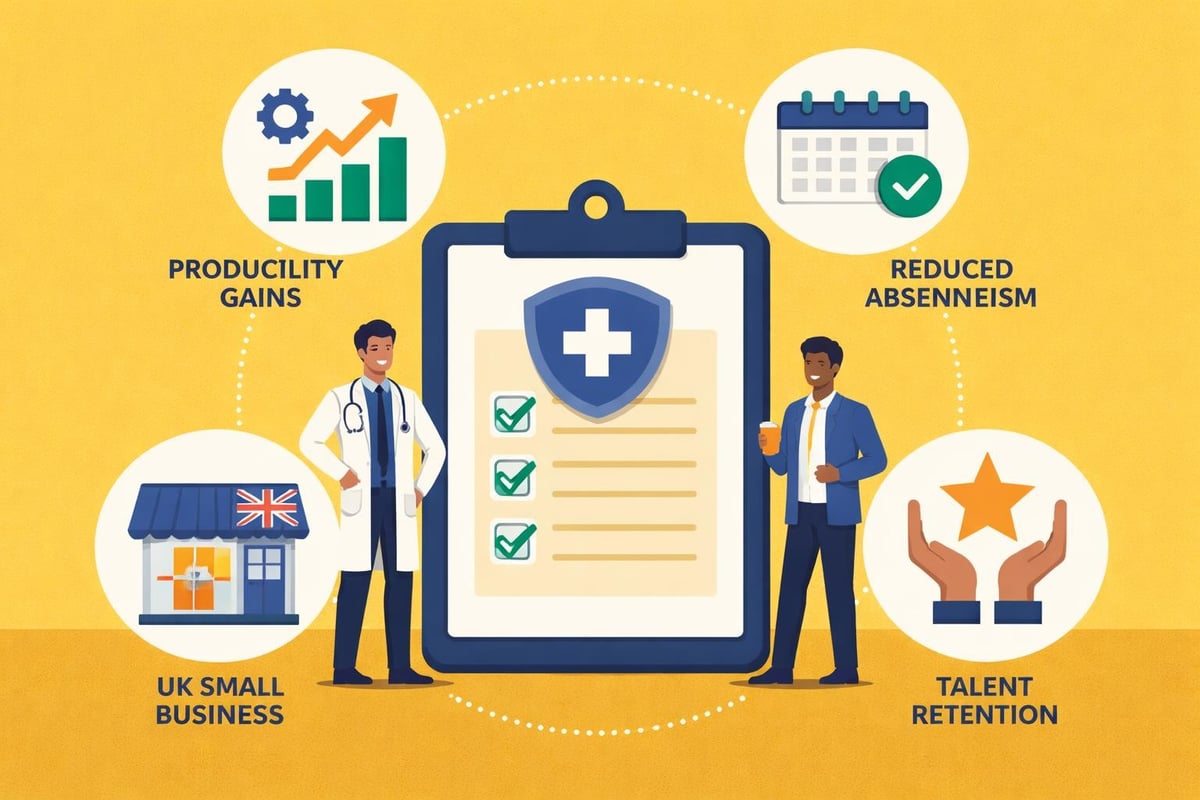
Small businesses that invest in health cover demonstrate a commitment to employee wellbeing that translates directly into measurable business outcomes. Research consistently shows that companies offering health benefits experience lower staff turnover, reduced absenteeism, and improved productivity levels.
Key benefits of small business insurance health include:
Faster access to specialist consultations and diagnostic procedures
Reduced waiting times for non-emergency treatments
Tax-efficient way to reward employees
Enhanced recruitment capabilities in competitive sectors
Improved employee morale and job satisfaction
Coverage for mental health support services
The financial implications extend beyond the immediate premium costs. When employees can access timely medical treatment, businesses avoid the costly impact of extended sick leave and reduced productivity. Furthermore, the commercial insurance landscape offers flexible solutions tailored specifically to small business needs.
Types of Small Business Insurance Health Cover
Understanding the different types of health insurance available helps business owners make informed decisions that align with their budget and workforce needs.
Private Medical Insurance (PMI)
Private medical insurance represents the most comprehensive form of small business insurance health cover available. PMI policies typically cover inpatient and outpatient treatment, diagnostic tests, specialist consultations, and surgical procedures.
Most policies exclude pre-existing conditions and routine care, focusing instead on acute conditions that arise after the policy commences. However, moratorium underwriting can make PMI more accessible for businesses with diverse workforces.
Health Cash Plans
For budget-conscious businesses, health cash plans offer an affordable alternative that still provides tangible value to employees. These plans reimburse everyday healthcare costs up to annual limits.
Typical health cash plan benefits include:
Dental check-ups and treatment
Optical examinations and glasses
Physiotherapy sessions
Complementary therapies
Prescription costs
Hospital stays
Health cash plans typically cost significantly less than comprehensive PMI whilst still demonstrating employer commitment to employee health.
Income Protection Insurance
Income protection insurance serves as a crucial safety net for both businesses and employees. This cover provides replacement income if an employee becomes unable to work due to illness or injury, protecting the business from financial strain whilst supporting the affected employee.
The general commercial insurance framework often incorporates income protection as part of a broader risk management strategy, particularly for businesses heavily reliant on key personnel.
Critical Illness Cover
Critical illness policies pay a lump sum if an employee is diagnosed with a specified serious condition. This cover complements rather than replaces PMI, providing financial support during challenging periods when employees may need extended time away from work.
Determining Small Business Insurance Health Requirements
Selecting appropriate health insurance requires careful analysis of several factors unique to each business. The decision-making process should balance employee needs, budget constraints, and strategic business objectives.
Workforce Demographics
Employee age, health status, and family circumstances significantly influence the type and level of cover that provides optimal value. Younger workforces might prioritise mental health support and preventative care, whilst older employees may value comprehensive diagnostic and treatment benefits.
Business Size and Structure
The number of employees directly impacts both available options and pricing structures. Some insurers require minimum employee numbers, whilst others specialise in micro-businesses with just a handful of staff members.
Consider these size-related factors:
Minimum participation requirements
Volume-based discounting
Administrative capacity for policy management
Flexibility for business growth or contraction
Employee contribution structures
Industry-Specific Considerations
Certain industries face unique health and safety risks that should inform insurance decisions. Construction firms, manufacturers, and hospitality businesses each encounter distinct occupational health challenges requiring tailored approaches to small business insurance health provision.
Much like contractors insurance for small builders, health cover should align with the specific risks your workforce faces daily.
Budget Allocation
Establishing a realistic budget requires understanding both immediate costs and long-term value. Premium costs vary based on coverage level, employee numbers, geographical location, and claim history.
Most insurers offer flexible payment structures, including monthly premiums that ease cash flow management. Employers can choose to fully fund policies, require employee contributions, or adopt hybrid approaches where the business covers basic cover whilst employees can upgrade at their own expense.
Navigating Small Business Insurance Health Costs
Understanding the cost structure of health insurance enables more accurate budgeting and informed decision-making. Premiums represent just one component of the total investment in employee health benefits.
Premium Structures
Insurance providers calculate premiums using various methodologies. Age-banded pricing reflects the statistical reality that healthcare costs increase with age. Community-rated pricing spreads costs more evenly across all employees regardless of age, which can benefit businesses with older workforces.
Tax Implications
Small business insurance health provision carries important tax considerations. Whilst employer-paid health insurance premiums constitute a taxable benefit for employees, businesses can claim these costs as allowable business expenses. This creates a tax-efficient method of providing valuable compensation.
Employees receiving health insurance benefits pay tax based on the value of the cover provided. However, many employees find this arrangement preferable to purchasing individual policies with post-tax income, particularly when employers negotiate group rates unavailable to individuals.
Cost Management Strategies
Several approaches can help control health insurance expenses without compromising benefit quality:
Implement tiered coverage levels allowing employee choice
Utilise excess payments to reduce premium costs
Focus cover on specific high-value benefits rather than comprehensive packages
Review and renegotiate policies annually
Consider voluntary benefits where employees pay discounted group rates
Implement wellness programmes to reduce claim frequency
Some businesses find value in combining different insurance types. For instance, providing basic health cash plans to all employees whilst offering PMI upgrades for senior staff creates a cost-effective tiered structure.
Implementing Small Business Insurance Health Programmes
Successfully launching a health insurance programme requires careful planning and clear communication. The implementation process significantly influences employee uptake and satisfaction levels.
Selection Process
When evaluating providers, request detailed quotations from multiple insurers. Compare not only premium costs but also coverage details, exclusions, claim processes, and customer service reputation. Working with an experienced commercial insurance broker streamlines this process, ensuring businesses access appropriate options without becoming overwhelmed by technical details.
For comprehensive support throughout the selection and implementation process, businesses can get a quick quote that considers their specific circumstances and requirements. This tailored approach ensures the chosen policy aligns with both business objectives and employee needs.

Employee Communication
Transparent communication maximises the value employees derive from health benefits. Many workers underestimate health insurance benefits simply because they don't fully understand what's covered or how to access services.
Effective communication strategies include:
Hosting informational sessions explaining coverage details
Providing written materials in plain English avoiding insurance jargon
Creating simple guides on claiming procedures
Offering one-to-one consultations for employees with questions
Sharing case studies demonstrating real-world benefit applications
Regular reminders about available services and coverage
Ongoing Management
Health insurance requires active management rather than a "set and forget" approach. Annual reviews ensure the policy continues meeting business needs as circumstances evolve.
Monitor utilisation rates to understand which benefits employees value most. Low uptake of certain benefits might indicate either poor communication or misalignment with employee needs. Conversely, high claim rates in specific areas might suggest opportunities for preventative initiatives.
Legal and Compliance Considerations
Whilst health insurance provision remains voluntary in the UK, certain legal obligations apply once businesses choose to offer these benefits.
Equality and Discrimination
Health insurance policies must comply with equality legislation. Businesses cannot discriminate based on protected characteristics when offering or administering health benefits. All eligible employees should have equal access to participation, though different levels of cover for different staff categories remain permissible provided clear, objective criteria determine eligibility.
Data Protection
Health information constitutes sensitive personal data under GDPR. Businesses must implement robust data protection measures when collecting, storing, and sharing employee health information with insurers.
Key data protection requirements include:
Obtaining explicit employee consent for data processing
Limiting data collection to information necessary for insurance purposes
Securely storing health records with restricted access
Providing clear privacy notices explaining data usage
Establishing data retention and deletion policies
Training staff who handle health data on confidentiality requirements
Employment Contract Considerations
Health insurance benefits should be clearly documented in employment contracts or separate benefit documentation. Specify whether benefits form part of contractual entitlement or remain at the employer's discretion, as this distinction affects your ability to modify or withdraw benefits.
The professional indemnity considerations that apply to many professional services businesses underscore the importance of clear contractual terms in all aspects of business operations, including employee benefits.
Small Business Insurance Health Trends for 2026
The health insurance landscape continues evolving, with several emerging trends shaping small business insurance health provision in 2026.
Mental Health Support
Mental health coverage has transitioned from optional add-on to essential component. Modern policies increasingly include counselling services, cognitive behavioural therapy, and access to mental health professionals without the restrictions traditionally applied to psychological treatments.
Progressive businesses recognise that mental health significantly impacts productivity, absenteeism, and overall workplace culture. Comprehensive small business insurance health packages now routinely incorporate mental wellbeing support alongside traditional medical cover.
Virtual Healthcare Services
Telemedicine and digital health platforms have become standard features in health insurance policies. These services provide convenient access to GP consultations, specialist advice, and prescription services through smartphone apps and video calls.
Virtual healthcare reduces time away from work for routine consultations whilst providing 24/7 access to medical advice. This convenience particularly appeals to younger employees and businesses with remote working arrangements.
Preventative Care Focus
Insurers increasingly emphasise preventative care and wellness initiatives. Modern policies often include health screenings, nutrition advice, fitness benefits, and early intervention programmes designed to identify health issues before they require expensive treatment.
This preventative approach benefits both insurers through reduced claims and businesses through healthier, more productive workforces. Some providers offer premium discounts for companies implementing comprehensive wellness programmes.
Flexible Benefit Platforms
Technology-enabled flexible benefit platforms allow employees to customise their insurance packages, selecting the coverage elements most relevant to their circumstances. This personalisation improves perceived value whilst potentially reducing costs by eliminating unwanted coverage.

Regional Variations in Small Business Insurance Health
Whilst the NHS provides universal healthcare across the UK, regional variations in healthcare access and private insurance markets create different considerations for businesses operating in different areas.
England
The private medical insurance market in England remains the most developed, with numerous providers offering competitive rates and diverse product options. Longer NHS waiting times in some English regions make PMI particularly attractive to employees.
Businesses can explore comprehensive guidance on small businesses obtaining health coverage to understand the broader context of health insurance provision, though UK-specific factors naturally differ from international examples.
Scotland
Scottish businesses benefit from slightly different healthcare dynamics. The NHS in Scotland often delivers faster treatment times than some English regions, potentially reducing the perceived urgency of private medical insurance. However, health cash plans and critical illness cover remain popular options.
Wales
Welsh small businesses face similar considerations to their English counterparts. Private medical insurance uptake varies significantly by region, with urban areas generally showing higher demand than rural locations.
Northern Ireland
Northern Ireland presents unique challenges, with some businesses purchasing policies covering treatment in the Republic of Ireland to expand access to specialist facilities. Cross-border healthcare provisions require careful policy review to ensure appropriate coverage.
Comparing Small Business Insurance Health Providers
The UK market offers numerous health insurance providers, each with distinct strengths, pricing structures, and coverage options. Selecting the right provider requires methodical comparison across multiple dimensions.
Major Market Providers
Several established insurers dominate the small business insurance health market. These providers offer comprehensive networks of medical facilities, extensive experience in group policies, and sophisticated claims management systems.
Specialist Small Business Insurers
Some providers specifically target the small business segment, offering simplified application processes, flexible eligibility criteria, and dedicated support for companies with limited HR resources. These specialists often accommodate businesses with as few as two employees, whereas larger insurers may require higher minimum participation levels.
Provider Evaluation Criteria
When comparing providers, assess these critical factors:
Network size and quality of participating hospitals and consultants
Claims processing efficiency and customer service ratings
Policy flexibility and customisation options
Financial stability and claims-paying history
Additional value-added services beyond basic medical cover
Technology platforms for policy management and employee access
Renewal price stability and historical rate increases
The resources available through healthcare.gov's small business section provide valuable frameworks for evaluating insurance options, even though UK businesses operate under different regulatory structures.
Integration with Broader Business Insurance Strategies
Small business insurance health provision should complement rather than exist in isolation from other business insurance arrangements. Holistic risk management considers how various insurance products interact to provide comprehensive protection.
Employers' Liability Insurance
Whilst employers' liability insurance is legally required in the UK, health insurance serves different purposes. Employers' liability covers compensation claims arising from work-related injuries or illnesses, whereas health insurance provides medical treatment access.
However, these policies can work synergistically. Effective health insurance may reduce employers' liability claims by ensuring employees receive prompt treatment, potentially preventing conditions from worsening.
Key Person Insurance
Businesses heavily dependent on specific individuals should consider how health insurance interacts with key person protection. Comprehensive health cover helps key employees maintain their health and return to work quickly if health issues arise, whilst key person insurance provides financial compensation if they cannot work.
Business Interruption Cover
Health-related business interruptions can significantly impact small businesses. When key employees face extended absences due to health issues, business interruption insurance provides financial protection. Combining this with robust small business insurance health coverage creates layered protection against health-related business risks.
Much like businesses require specialised coverage for unique operations, health insurance should integrate seamlessly with the broader insurance portfolio addressing all business risks.
Common Small Business Insurance Health Mistakes
Avoiding common pitfalls helps businesses maximise the value of their health insurance investment whilst preventing costly errors.
Inadequate Research
Purchasing the first policy encountered or selecting solely based on price often leads to suboptimal outcomes. Insufficient coverage, excluded conditions, or inadequate provider networks can render policies ineffective when employees need them most.
Poor Communication
Even excellent policies provide minimal value if employees don't understand or utilise them. Failing to properly communicate benefits, coverage details, and claiming procedures represents wasted expenditure.
Ignoring Policy Details
Not thoroughly reviewing policy terms, exclusions, and limitations before purchase creates unwelcome surprises. Common oversights include failing to understand pre-existing condition clauses, outpatient coverage limitations, or territorial restrictions.
Neglecting Annual Reviews
Business circumstances, workforce demographics, and insurance markets change constantly. Failing to conduct annual policy reviews means businesses may continue paying for coverage that no longer meets their needs or miss opportunities to access better value elsewhere.
Overlooking Employee Input
Implementing health insurance without consulting employees about their preferences and needs can result in low uptake and dissatisfaction. Simple surveys revealing what employees value most inform more effective benefit design.
Maximising Return on Small Business Insurance Health Investment
Strategic approaches help businesses extract maximum value from health insurance expenditure.
Wellness Programme Integration
Combining health insurance with workplace wellness initiatives creates synergistic benefits. Programmes promoting healthy lifestyles, stress management, and preventative care reduce claim frequency, potentially lowering future premiums whilst improving overall workforce health.
Effective wellness initiatives include:
Regular health screenings and check-ups
Smoking cessation support programmes
Mental health awareness training
Exercise and nutrition guidance
Ergonomic workplace assessments
Stress management workshops
Employee Education
Ongoing education ensures employees understand and utilise available benefits. Regular communications highlighting different coverage aspects, sharing success stories, and providing practical guidance on accessing services maximise engagement.
Claims Support
Assisting employees with claims processes improves satisfaction and ensures they receive entitled benefits. Designating an internal point of contact for insurance questions reduces frustration and demonstrates employer commitment to supporting benefit utilisation.
Performance Monitoring
Track key metrics to assess insurance programme effectiveness:
Employee participation rates
Benefit utilisation by category
Employee satisfaction scores
Sick leave patterns before and after implementation
Recruitment and retention statistics
Return on investment calculations
These metrics inform future decisions about coverage levels, provider selection, and programme modifications.
Frequently Asked Questions
Is health insurance tax-deductible for small businesses?
Health insurance premiums paid by employers constitute allowable business expenses for tax purposes. Businesses can deduct these costs when calculating taxable profits. However, employees typically face tax and National Insurance contributions on the benefit value, though this remains tax-efficient compared to purchasing individual coverage with post-tax income.
What's the minimum number of employees required for group health insurance?
Requirements vary by insurer. Some providers offer policies for businesses with just two employees, whilst others require five or more participants. Specialist small business insurers typically accommodate smaller teams than major providers targeting larger corporate clients.
Can businesses offer different health insurance levels to different employees?
Yes, provided eligibility criteria are objective and non-discriminatory. Many businesses offer enhanced coverage to senior staff or create tiered systems where employees can choose coverage levels. Criteria must not discriminate based on protected characteristics under equality legislation.
How do pre-existing conditions affect small business insurance health policies?
Most policies exclude pre-existing conditions or apply moratorium periods. Under moratorium underwriting, conditions for which employees received treatment or advice during a specified period before policy commencement remain excluded. After a continuous period without treatment (typically two years), coverage may commence. Some insurers offer full medical underwriting as an alternative, providing clearer certainty about coverage from policy inception.
What happens to health insurance when employees leave the company?
Group health insurance typically terminates when employment ends. However, some insurers allow departing employees to continue coverage by transferring to individual policies, often at higher rates. COBRA-style continuation rights don't exist in the UK as they do in the United States, though similar arrangements may be negotiated with specific providers.
How does small business health insurance differ from individual policies?
Group policies generally cost less per person than individual coverage due to economies of scale and reduced underwriting requirements. Insurers spread risk across the employee group, making coverage more accessible for individuals with health conditions. Additionally, group policies typically feature simpler application processes with less detailed medical questionnaires.
Can part-time employees receive health insurance benefits?
Eligibility for part-time workers depends on employer policy rather than legal requirements. Many businesses extend benefits to part-time employees working above specified hour thresholds. Including part-time workers may increase overall policy costs but demonstrates commitment to the entire workforce and can improve recruitment of flexible workers.
How often can businesses change health insurance providers?
Businesses can typically switch providers at policy renewal, usually annually. Some providers may impose notice periods or contractual terms requiring minimum commitment periods. However, annual reviews and competitive tendering remain standard practice, allowing businesses to secure optimal terms.
Small business insurance health represents a strategic investment that delivers measurable returns through improved employee wellbeing, enhanced retention, and competitive recruitment advantages. Understanding the available options, carefully matching coverage to workforce needs, and implementing robust communication strategies maximise the value of this essential benefit. As the commercial insurance landscape continues evolving, businesses that regularly review and optimise their health insurance provision position themselves advantageously in the talent market whilst protecting their most valuable asset – their people. Miller & Partner Limited specialises in matching businesses with appropriate insurance cover, ensuring your health insurance programme aligns perfectly with your unique requirements and budget constraints.