
Commercial Insurance Near Me: Finding the Right Cover
Finding the right commercial insurance near me has become a priority for UK business owners who understand the value of local expertise combined with comprehensive protection. Whether you're launching a startup, expanding operations, or simply reviewing your current cover, working with a nearby insurance broker ensures you receive personalised service that understands regional market conditions, local risks, and industry-specific requirements. The search for "commercial insurance near me" reflects more than geographical convenience; it represents a desire for accessible, responsive professional guidance when protecting your business assets, employees, and future growth.
Understanding Commercial Insurance Requirements for UK Businesses
Commercial insurance encompasses a broad range of policies designed to protect businesses from financial losses arising from various risks. Unlike personal insurance, commercial cover addresses operational risks specific to business activities, including liability claims, property damage, business interruption, and professional negligence.
Every UK business faces unique exposure depending on its sector, size, location, and activities. A manufacturing firm requires substantially different protection compared to a consultancy practice or retail shop. Understanding these distinctions helps when searching for commercial insurance near me, as local brokers possess detailed knowledge of regional industry clusters and their specific insurance needs.
Core Commercial Insurance Policies
The foundation of business protection typically includes several essential policy types:
Public Liability Insurance: Covers claims from third parties for injury or property damage caused by your business operations
Employers' Liability Insurance: Legally required for most UK businesses with employees, protecting against employee injury or illness claims
Commercial Property Insurance: Safeguards business premises, equipment, stock, and contents against damage or loss
Professional Indemnity Insurance: Essential for service-based businesses, covering claims arising from professional advice or services
Business Interruption Insurance: Replaces lost income when your business cannot operate due to insured events
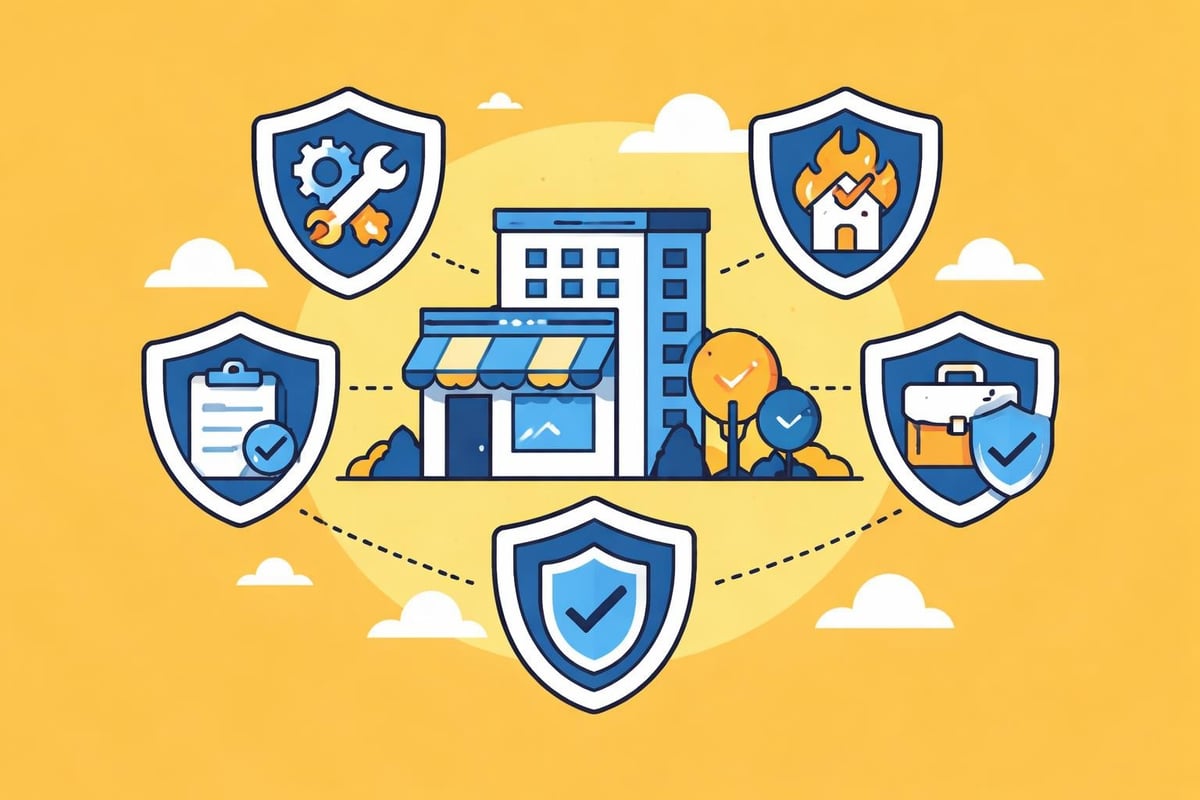
Many businesses benefit from package policies that combine multiple covers. General commercial insurance packages often provide more cost-effective solutions than purchasing individual policies separately, whilst ensuring comprehensive protection without coverage gaps.
Why Location Matters When Choosing Commercial Insurance
Searching for commercial insurance near me offers distinct advantages beyond simple proximity. Local insurance brokers understand regional economic conditions, prevalent business types, and area-specific risks that impact policy requirements and pricing.
Regional factors significantly influence insurance needs and costs. Coastal businesses face different property risks than inland operations. Urban retailers encounter different liability exposures than rural enterprises. A broker familiar with your locality can identify these nuances and recommend appropriate coverage levels.
Benefits of Working with Local Insurance Professionals
Proximity to your insurance broker creates tangible operational benefits:
Face-to-Face Consultations: Complex insurance needs often require detailed discussions that benefit from personal meetings
Rapid Response Times: Local brokers can attend your premises quickly for risk assessments or claim investigations
Regional Market Knowledge: Understanding local business conditions helps brokers negotiate better terms with insurers
Network Connections: Established local brokers often have relationships with loss adjusters, solicitors, and risk management specialists
Community Understanding: Local brokers recognise seasonal business patterns, regional events, and economic factors affecting your operation
When evaluating commercial insurance near me options, consider brokers who demonstrate genuine familiarity with your industry and location. Their insights can prove invaluable during policy selection and particularly during claims processes.
Evaluating Commercial Insurance Brokers in Your Area
Not all insurance brokers offer identical services or expertise. When researching commercial insurance near me, assess potential brokers against several critical criteria to ensure you receive appropriate guidance and coverage.
Qualifications and Regulatory Status
All legitimate UK insurance brokers must be authorised by the Financial Conduct Authority (FCA). Verify any broker's regulatory status before engaging their services. Additionally, professional qualifications such as those from the Chartered Insurance Institute (CII) demonstrate commitment to professional standards and ongoing education.
Professional indemnity cover for the broker themselves indicates their confidence in their advice quality. If a broker makes errors that result in inadequate coverage for your business, their professional indemnity insurance should protect you from resulting financial losses.
Industry Specialisation and Experience
Brokers often develop expertise in specific sectors through repeated exposure to similar businesses. This specialisation brings considerable value:
Technical Knowledge: Understanding industry-specific risks, regulations, and operational challenges
Insurer Relationships: Established connections with insurers who favour particular business types
Policy Customisation: Ability to identify coverage enhancements relevant to your sector
Claims Experience: Historical knowledge of how claims develop in your industry
Risk Management Advice: Practical guidance on reducing exposures specific to your operations
When searching for commercial insurance near me, prioritise brokers with demonstrable experience in your sector. A broker familiar with contractors insurance brings different expertise than one specialising in hospitality or technology businesses.
Comparing Commercial Insurance Quotes Effectively
Obtaining multiple quotes represents standard practice when evaluating commercial insurance near me options. However, meaningful comparison requires looking beyond premium costs to assess coverage quality, policy terms, and insurer financial strength.
Key Elements to Compare Across Quotes
Price alone provides insufficient basis for insurance decisions. Comprehensive evaluation should examine:
Coverage Limits: Ensure adequate protection levels across all policy sections
Excesses: Understand amounts you'll contribute to any claim before insurer payments begin
Exclusions: Identify what isn't covered under each policy
Extensions: Note valuable additional protections included or available
Insurer Financial Ratings: Verify the insurer's ability to pay claims through independent ratings
Claims Service Reputation: Research insurers' claims handling speed and fairness
The cheapest premium often reflects reduced coverage or higher excesses rather than superior value. Understanding different types of commercial insurance helps you identify whether quotes provide equivalent protection levels.
Taking advantage of a Quick Quote service can streamline the initial comparison process, allowing you to quickly understand the coverage options and pricing available for your specific business needs before making detailed policy comparisons.

Questions to Ask When Reviewing Quotes
Before accepting any commercial insurance near me quotation, clarify essential details:
What specific scenarios does this policy cover and exclude?
How do coverage limits align with my actual business exposures?
What circumstances might void coverage or reduce claim payments?
How does the insurer handle claims, and what's their typical settlement timeframe?
What options exist for adjusting coverage as my business evolves?
Documentation matters significantly. Ensure you receive full policy wordings, not merely summary documents. These detailed terms govern what is and isn't covered when you need to make a claim.
Assessing Your Business's Specific Insurance Needs

Determining appropriate commercial insurance near me starts with thoroughly understanding your business's risk profile. This assessment should examine all aspects of your operations to identify potential loss scenarios.
Conducting a Business Risk Audit
Systematic risk evaluation covers multiple operational dimensions:
Physical Assets: Property, equipment, stock, and vehicles requiring protection
Revenue Dependencies: Critical operations whose interruption would impact income
Legal Obligations: Regulatory requirements and contractual insurance stipulations
Liability Exposures: Activities that could result in third-party injury or financial loss claims
Professional Services: Advice or services that could lead to negligence allegations
Employment Risks: Number of employees and associated liability requirements
Supply Chain Vulnerabilities: Dependencies on suppliers or distribution channels
Cyber Exposures: Digital assets, data holdings, and online operations requiring protection
Businesses operating in specialised sectors face unique considerations. Those involved in 3D printing operations encounter different risks than traditional manufacturers, whilst battery storage facilities require specialist understanding of emerging technology risks.
Industry-Specific Insurance Considerations
Different sectors demand tailored insurance approaches. The Insurance Information Institute provides detailed information on various commercial policies suited to different business types. Understanding these variations ensures you obtain appropriate rather than generic coverage.
Retailers require different emphasis on stock and public liability compared to consultancies focused on professional indemnity. Hospitality businesses need specific considerations for food safety and alcohol service liability. Technology companies increasingly require cyber insurance alongside traditional commercial covers.
The Commercial Insurance Application Process
Securing commercial insurance near me involves providing detailed information about your business operations, history, and risk management practices. Insurers use this information to assess risk levels and determine appropriate premiums.
Information Insurers Require
Comprehensive applications typically request:
Business Details: Legal structure, trading history, annual turnover, and employee numbers
Operations Description: Detailed explanation of activities, processes, and services
Premises Information: Building construction, security measures, and occupancy details
Claims History: Previous insurance claims across all policy types during recent years
Risk Management: Security systems, health and safety procedures, and quality controls
Financial Information: Accounts, revenue projections, and sometimes credit history
Accuracy in applications proves crucial. Material misrepresentations or omissions can void coverage when you need it most. If you're uncertain about any application question, seek clarification from your broker before responding.
Timeline Expectations
The commercial insurance near me process duration varies based on business complexity:
Simple Businesses: Straightforward operations might receive quotes within 24-48 hours
Standard Risks: Most businesses complete the process within one week
Complex Operations: Unusual or high-risk businesses may require two to four weeks for underwriting
Specialist Risks: Unique exposures might need surveyor visits and bespoke policy construction
Planning ahead prevents coverage gaps. Begin your insurance search several weeks before existing policies expire or new operations commence. This buffer accommodates underwriting delays and ensures adequate time for quote comparison.
Understanding Commercial Insurance Costs and Pricing Factors
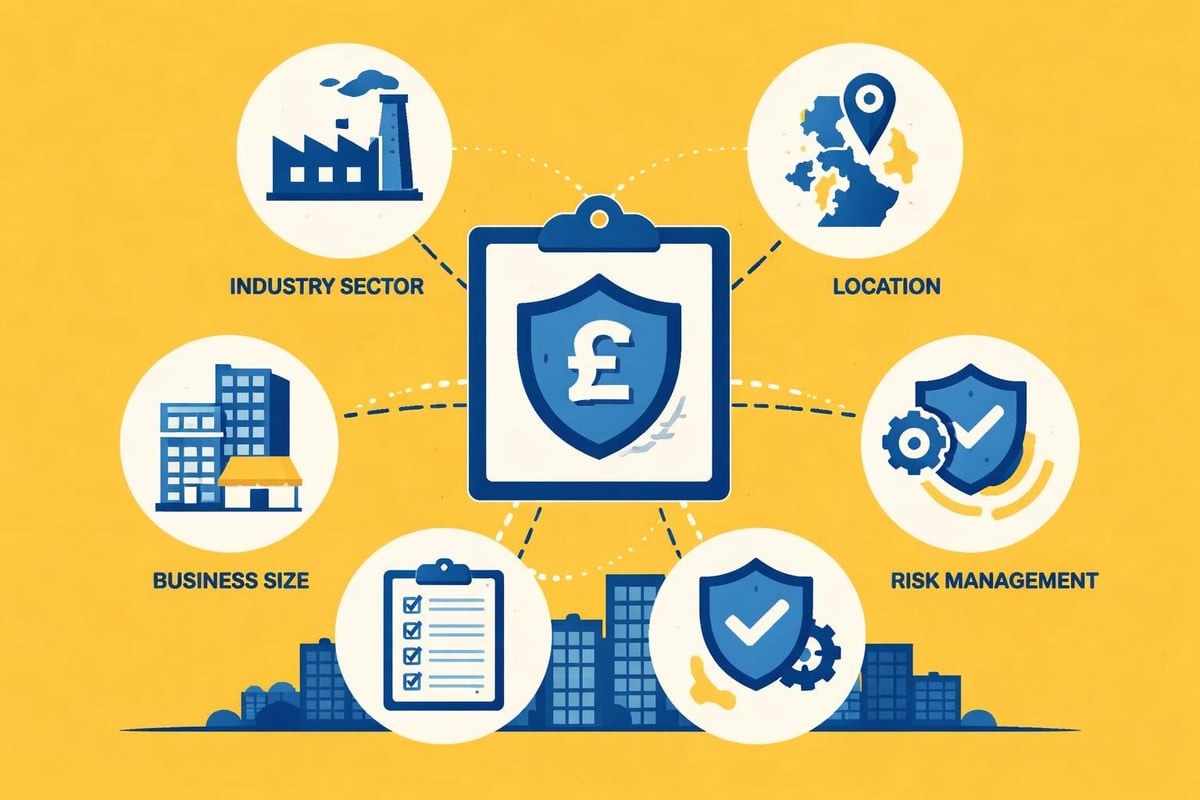
Commercial insurance near me pricing reflects numerous variables that underwriters analyse when calculating premiums. Understanding these factors helps businesses manage costs whilst maintaining adequate protection.
Primary Factors Affecting Premium Costs
Insurers consider multiple elements when pricing commercial policies:
Industry Sector: Some industries statistically generate more claims than others
Business Size: Turnover, employee numbers, and premises size all influence exposure levels
Location: Regional crime rates, flood risks, and loss histories affect pricing
Claims History: Previous claims indicate future claim likelihood
Coverage Limits: Higher protection levels require higher premiums
Excesses: Accepting larger excesses reduces premiums by transferring more risk to you
Security Measures: Alarms, CCTV, and physical security can reduce property insurance costs
Risk Management: Documented safety procedures and quality systems often secure premium reductions
Market trends and conditions also impact pricing. Insurance markets fluctuate between "soft" periods of competitive pricing and "hard" markets where capacity tightens and premiums rise across sectors.
Strategies for Managing Insurance Costs
Several approaches can help control commercial insurance near me expenses without compromising protection:
Bundle Policies: Package policies typically cost less than purchasing individual covers separately
Annual Payments: Paying annually rather than monthly usually avoids financing charges
Risk Improvements: Implementing security and safety enhancements can justify premium reductions
Review Coverage Regularly: Ensure limits remain appropriate rather than excessive for current operations
Maintain Claims Discipline: Carefully consider whether to claim for minor losses that might impact future premiums
Professional Advice: Brokers can identify coverage optimisations and negotiate with insurers on your behalf
Commercial property insurance shopping guidance emphasises the importance of balancing cost with adequate coverage rather than simply selecting the cheapest option available.
Policy Management and Ongoing Review
Securing commercial insurance near me represents the beginning rather than the end of your risk management journey. Effective policy management ensures coverage remains appropriate as your business evolves.
Annual Policy Reviews
Business circumstances change continuously. Annual reviews should assess whether existing coverage still matches current operations:
Revenue Changes: Significant turnover increases or decreases may require coverage adjustments
New Activities: Expanding into new services or products can introduce uncovered risks
Additional Locations: Opening new premises requires extending property and liability coverage
Equipment Acquisitions: New machinery or technology may exceed existing policy limits
Staff Changes: Employee numbers directly affect employers' liability requirements
Regulatory Updates: New legal obligations might necessitate additional coverage types
Proactive reviews prevent coverage gaps that emerge when policies fail to keep pace with business development. Schedule annual meetings with your broker to systematically evaluate whether adjustments are needed.
Mid-Term Adjustments
Don't wait until renewal if material changes occur during the policy year. Most insurers allow mid-term adjustments, though they may charge administration fees. Significant changes requiring immediate notification typically include:
Changing business activities or introducing new product lines
Acquiring or disposing of business premises
Making substantial equipment or stock purchases
Significantly increasing employee numbers
Entering new markets or geographical territories
Failing to notify insurers of material changes can result in claim rejections if undisclosed circumstances contributed to the loss. When searching for commercial insurance near me, prioritise brokers who provide ongoing account management rather than merely selling initial policies.
Claims Process and What to Expect
Understanding how to navigate claims processes ensures you receive appropriate support when losses occur. Efficient claims handling represents one of the most important aspects of commercial insurance near me services.
Immediate Steps Following an Incident
When losses occur, take these initial actions:
Ensure Safety: Address any immediate dangers to people or property
Document Everything: Photograph damage, collect witness details, and preserve evidence
Notify Authorities: Contact police for theft, vandalism, or criminal activity
Inform Your Broker: Report the incident promptly, even before full loss details are known
Prevent Further Damage: Take reasonable steps to minimise additional losses
Maintain Records: Keep receipts for any emergency expenditure related to the incident
Most policies require notification within specific timeframes. Delays can complicate claims or, in extreme cases, provide grounds for rejection. Your broker guides you through insurer-specific requirements and helps compile necessary documentation.
Working with Loss Adjusters
For significant claims, insurers typically appoint loss adjusters to investigate circumstances and verify loss amounts. These professionals represent the insurer's interests, though they should operate impartially.
Cooperation facilitates smooth claims resolution. Provide requested documentation promptly and answer questions thoroughly. However, you're entitled to professional representation. Your broker can attend meetings, review settlement offers, and negotiate on your behalf to ensure fair treatment.
Complex claims sometimes benefit from appointing your own loss assessor who works exclusively for you. Whilst this involves additional cost, it can prove worthwhile for substantial or disputed claims where settlement amounts significantly impact your business.
Emerging Trends in Commercial Insurance
The commercial insurance landscape continuously evolves in response to emerging risks, technological advances, and changing business models. Understanding these trends helps when evaluating commercial insurance near me options for future adequacy.
Digital Risks and Cyber Insurance
Cyber threats represent one of the fastest-growing business risks. Data breaches, ransomware attacks, and system failures can devastate businesses regardless of size or sector. Traditional commercial policies typically exclude or severely limit cyber-related losses.
Dedicated cyber insurance has evolved from niche coverage to essential protection for businesses with any digital presence. These policies cover costs associated with data breaches, business interruption from system failures, ransomware payments, and legal liabilities arising from compromised customer information.
Climate Change and Extreme Weather
Increasing frequency and severity of weather events affect commercial property insurance. Flooding, storms, and temperature extremes pose growing threats to business premises and operations. Property and casualty market reports track these evolving patterns and their impact on insurance availability and pricing.
Businesses in vulnerable locations face particular challenges. Some insurers restrict coverage or increase premiums substantially for flood-prone areas. Proactive risk management, including flood defences and business continuity planning, becomes increasingly important for maintaining affordable coverage.
Technology-Driven Risk Assessment
Insurers increasingly employ sophisticated data analytics and technology for risk assessment. Telematics in commercial vehicles, IoT sensors in properties, and artificial intelligence in underwriting all influence how insurers evaluate and price risks.
These technologies can benefit businesses that demonstrate strong risk management. Real-time monitoring might enable premium reductions for companies with excellent safety records. However, they also increase scrutiny, potentially leading to higher premiums or coverage restrictions for operations with elevated exposures.
Frequently Asked Questions About Commercial Insurance
How much does commercial insurance cost for small UK businesses?
Commercial insurance costs vary enormously based on business type, size, and activities. Small businesses might pay from £500 to £5,000 annually for basic packages covering public liability, employers' liability, and commercial property. Professional indemnity adds further costs depending on services provided and coverage limits required. Obtaining personalised quotes from multiple brokers provides realistic cost expectations for your specific circumstances.
Is commercial insurance legally required for UK businesses?
Employers' liability insurance is legally mandatory for most UK businesses with employees, with fines up to £2,500 daily for non-compliance. Other commercial insurance types aren't legally required but may be contractually necessary. Many landlords require tenants to maintain commercial property insurance, whilst clients often stipulate minimum public liability or professional indemnity coverage before awarding contracts. Even when not legally mandated, appropriate commercial insurance protects your business from potentially catastrophic financial losses.
What's the difference between a commercial insurance broker and an agent?
Brokers work for you, searching the insurance market to find policies matching your needs from multiple insurers. They owe you a duty of care to provide suitable recommendations. Agents represent specific insurance companies, selling only their employer's products. Brokers typically offer wider market access and impartial advice, though quality varies. When searching for commercial insurance near me, verify whether providers operate as brokers or agents to understand whose interests they primarily serve.
Can I switch commercial insurance providers mid-policy?
Switching mid-term is possible but rarely advisable. Most policies impose cancellation fees, and you'll typically forfeit portions of your premium. New insurers often charge higher premiums for mid-term starts. Unless your current insurer demonstrates serious service failures or you discover substantially inadequate coverage, waiting until renewal usually provides better value. However, consult your broker if you have concerns about current coverage adequacy rather than continuing with potentially insufficient protection.
How long does commercial insurance underwriting take?
Standard commercial risks typically receive quotes within 48 hours to one week. Complex or unusual businesses may require two to four weeks for thorough underwriting, particularly if surveyor visits or specialist assessors are needed. Starting your insurance search several weeks before coverage is required prevents rushed decisions and ensures adequate time for comprehensive market comparison. Providing complete, accurate information initially accelerates the process by avoiding requests for additional details.
Do commercial insurance policies automatically renew?
Most commercial policies don't automatically renew without active confirmation. Insurers typically issue renewal invitations 30-60 days before expiry, requiring acceptance to continue coverage. Some provide automatic renewal subject to premium payment, but policy terms and conditions often change at renewal. Always review renewal documentation carefully rather than assuming identical coverage continues. This represents an ideal opportunity to reassess whether your current commercial insurance near me still offers optimal value and protection.
Navigating the commercial insurance landscape requires understanding your business's unique risks, evaluating local expertise, and ensuring coverage evolves alongside your operations. Whether you're a startup securing initial protection or an established business reviewing existing policies, working with knowledgeable professionals who understand both your industry and local market conditions provides invaluable guidance. Miller & Partner Limited specialises in matching UK businesses with appropriate commercial insurance coverage through personalised service that addresses your specific operational requirements and risk exposures. Contact Miller & Partner Limited today to discuss how we can help protect your business with tailored insurance solutions.