Eco Builder Insurance UK: Complete 2026 Guide
This is the ultimate guide for eco builder insurance in the UK. We are experts at placing these risks, so...

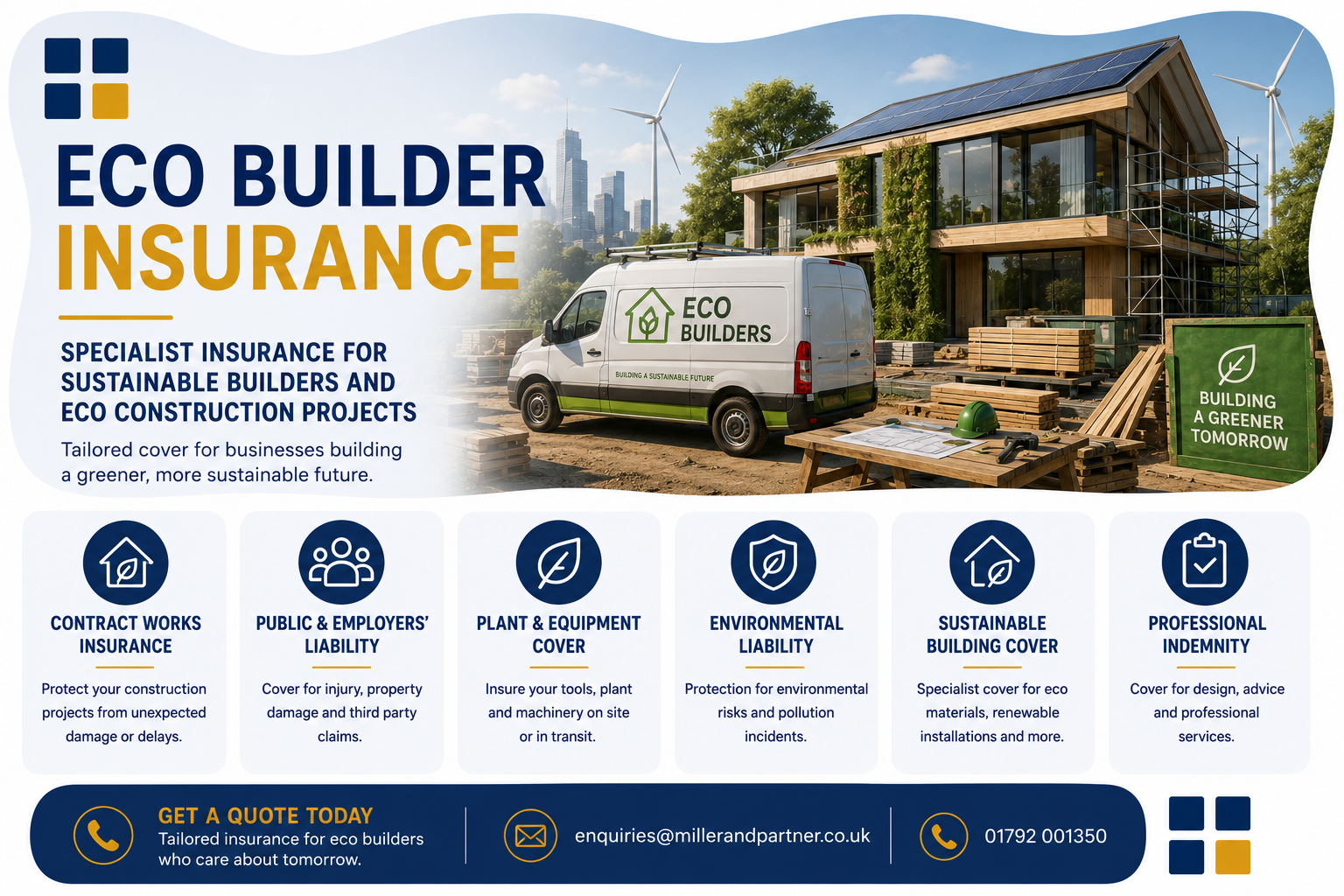
The sustainable construction industry in the United Kingdom has experienced unprecedented growth over the past five years, with eco-friendly building projects becoming mainstream rather than niche. As environmental regulations tighten and consumer demand for energy-efficient homes increases, builders specialising in sustainable construction face unique insurance challenges that traditional policies often fail to address.
Understanding eco builder insurance UK requirements has become essential for contractors working with innovative materials, renewable technologies, and government-backed retrofit schemes.
Understanding Eco Builder Insurance Requirements
Eco builder insurance UK policies differ significantly from standard construction insurance due to the specialised nature of sustainable building work. These policies must account for innovative building methods, unfamiliar materials, and emerging technologies that carry different risk profiles compared to conventional construction.
The foundation of any eco builder insurance UK package begins with public liability cover. This protection shields businesses from claims arising when third parties suffer injury or property damage during construction activities. For eco builders, this coverage becomes particularly critical when installing solar panels, ground source heat pumps, or working with experimental insulation materials.
Core Coverage Components
Professional indemnity insurance forms another essential pillar of comprehensive eco builder insurance UK protection. This coverage responds when design errors, specification mistakes, or inadequate advice lead to financial losses for clients. Given the technical complexity of achieving thermal efficiency targets and meeting sustainability certifications, professional indemnity becomes invaluable.
Key coverage areas include:
Material defect liability for sustainable building products
Installation errors with renewable energy systems
Breach of building regulations specific to energy efficiency
Failure to achieve promised thermal performance ratings
Contamination of eco-friendly materials during storage
Design flaws in ventilation systems for airtight buildings
Employers' liability insurance remains a legal requirement for any eco building business employing staff. This coverage protects against compensation claims from employees who suffer work-related injuries or illnesses. The specialised nature of eco construction work, including handling new materials and working with complex mechanical systems, creates distinct occupational hazards.

Specialist Coverage for ECO4 Contractors
The Energy Company Obligation scheme has created substantial opportunities for builders focused on domestic retrofitting. However, working under ECO4 guidelines requires specific insurance arrangements that standard eco builder insurance UK policies may not provide. SRS Insurance provides detailed guidance on PAS 2030-compliant coverage requirements.
Contractors participating in ECO4 must demonstrate appropriate insurance coverage before undertaking funded projects. This typically includes minimum public liability limits of £5 million and professional indemnity coverage reflecting the contract values involved. The scheme's focus on vulnerable households adds additional responsibility layers that insurance must address.
PAS 2030 Compliance Requirements
The PAS 2030 standard governs energy efficiency installations in domestic properties, establishing quality frameworks that ECO4 contractors must follow. Your eco builder insurance UK policy should acknowledge PAS 2030 compliance activities and provide coverage aligned with these requirements.
Insurance considerations for PAS 2030 work:
Coverage for retrofit coordinator roles and responsibilities
Protection during energy assessment activities
Liability for performance gap between predicted and actual energy savings
Claims arising from inadequate fabric-first approaches
Disputes over appropriate measures for specific properties
Failures in quality assurance processes
Qudos Insurance Brokers offer specialised packages specifically designed for ECO4 scheme participants, addressing the unique exposures these contractors face.
Material and Technology Risks
Eco builder insurance UK policies must account for the distinctive characteristics of sustainable building materials. Natural insulation products like sheep's wool, hemp, and wood fibre respond differently to water damage compared to conventional alternatives. Similarly, breathing wall systems and vapour-permeable membranes require careful handling to maintain performance.
The storage and installation of these materials creates specific insurance considerations. Many eco-friendly products prove more susceptible to moisture damage during the construction phase, potentially leading to claims if materials deteriorate before installation completes. Your policy should clarify coverage for materials in storage, in transit, and during installation.
Renewable Technology Integration
Installing renewable energy systems introduces technical complexity that traditional builders insurance may inadequately address. Ground source heat pumps require ground works that could damage neighbouring properties through settlement or water table disruption. Solar panel installations create roof penetration risks and electrical system integration challenges.
Technology-specific risks requiring coverage:
Ground source heat pump installation causing subsidence
Solar panel mounting failures leading to water ingress
Battery storage system fire or explosion risks
Air source heat pump noise complaints and associated legal costs
Biomass boiler installation errors causing carbon monoxide exposure
Smart home technology integration failures
Getting the right eco builder insurance UK protection requires working with specialists who understand these emerging technologies. Miller & Partner Limited connects sustainable construction businesses with insurers experienced in assessing and pricing these distinctive risks, ensuring coverage adequately reflects operational realities.

Regulatory and Certification Challenges
The sustainable construction sector operates within an increasingly complex regulatory environment. Building regulations increasingly emphasise thermal efficiency, airtightness, and renewable energy integration. Eco builders must demonstrate compliance with standards that evolve faster than traditional construction requirements.
Your eco builder insurance UK policy should provide protection when regulatory interpretations change or certification disputes arise. Professional indemnity coverage becomes particularly valuable when challenging whether specific approaches meet current standards or when certifying bodies reject completed work.
Future Homes Standard Preparation
The Future Homes Standard, expected to mandate significant carbon reduction in new dwellings, will reshape construction practices across England. Builders preparing for these changes need insurance that covers experimental approaches and innovative techniques deployed ahead of formal implementation.

Contract Works and Project Insurance
Contract works insurance protects the physical construction project itself, covering damage to materials, partially completed work, and temporary structures. For eco builder insurance UK purposes, this coverage must address the replacement cost of sustainable materials, which often exceeds conventional alternatives.
The extended construction timelines sometimes associated with eco-building techniques can affect insurance costs and coverage terms. Policies typically price based on contract duration, and projects employing labour-intensive natural building methods may require extended coverage periods.
Project insurance considerations include:
Replacement cost endorsements for premium eco materials
Coverage for off-site fabrication of timber frame components
Protection for materials requiring special environmental conditions
Extended coverage periods for slower construction methods
Phased completion arrangements for complex projects
Risk Management for Sustainable Builders
Effective risk management reduces both insurance costs and claim frequency. Eco builders should implement robust quality control procedures specific to sustainable construction methodologies. Documentation proves particularly important when working with unfamiliar materials or innovative techniques.
Maintaining detailed records of supplier certifications, material storage conditions, and installation procedures provides valuable evidence should disputes arise. Photographic documentation of work stages helps demonstrate proper installation techniques, particularly important when warranty claims emerge years after project completion.
Training and Competency
Insurance providers increasingly scrutinise workforce competency when underwriting eco builder insurance UK policies. Demonstrating appropriate training for staff working with sustainable technologies can positively influence premium calculations. Recognised qualifications in specific technologies signal reduced risk to underwriters.
The industry's skills shortage in sustainable construction creates pressure to upskill existing teams rapidly. Ensuring insurance coverage remains appropriate as your business adopts new techniques requires proactive communication with your broker about capability development.

Claims Scenarios and Prevention
Understanding common claim scenarios helps eco builders implement preventative measures and ensure adequate insurance protection. Thermal performance shortfalls represent an emerging claim category as building physics becomes more prominent in construction. When completed buildings fail to achieve predicted energy efficiency levels, clients may pursue compensation for ongoing energy costs exceeding projections.
Water damage claims occur when unfamiliar moisture management approaches fail. Breathing wall systems require precise execution, and errors can lead to interstitial condensation and subsequent mould growth. Your eco builder insurance UK policy should clarify coverage for these building physics-related failures.
Common eco building claim types:
Thermal bridging creating cold spots and condensation
Airtightness test failures requiring remedial work
Ventilation system inadequacies in highly insulated buildings
Natural material degradation from improper storage
Renewable technology performance falling short of specifications
Third-party damage during ground source heat pump installation
Insurance Times discusses how insurers adapt their approaches to support customers involved in eco-construction, reflecting industry evolution.
Choosing the Right Insurance Partner
Selecting an insurance provider with genuine understanding of sustainable construction proves essential. Generic construction insurance may contain exclusions rendering coverage inadequate for eco building activities. Specialist eco builder insurance UK providers recognise the sector's distinctive characteristics and structure policies accordingly.
Working with an experienced commercial insurance broker ensures access to insurers comfortable with sustainable construction risks. Brokers maintain relationships with underwriters who appreciate eco building methodologies rather than viewing them as unacceptable deviations from conventional practice.
Policy Comparison Factors
When comparing eco builder insurance quotations, look beyond premium costs to coverage breadth and claim support quality. The cheapest policy frequently contains the most restrictive terms, potentially leaving significant exposures uninsured.
Evaluation criteria include:
Public liability limits appropriate to contract sizes
Professional indemnity coverage adequate for design responsibilities
Materials and stock protection reflecting sustainable product values
Recognition of eco-specific methodologies within policy wordings
Insurer experience with sustainable construction claims
Run-off coverage provisions for completed projects
Video Resource: Understanding Eco Builder Insurance
Subcontractor and Supply Chain Insurance
Eco building projects frequently involve specialist subcontractors with expertise in particular sustainable technologies. Ensuring adequate insurance coverage exists throughout your supply chain protects against gaps that could expose your business to unexpected liabilities. Your eco builder insurance UK policy may include contingent liability provisions, but these shouldn't replace proper due diligence.
Verifying subcontractor insurance before engagement prevents situations where their policy inadequacies become your problems. Request current certificates of insurance and confirm coverage limits match the work scope. For renewable technology installations, ensure specialists carry product liability coverage extending beyond installation completion.
Joint Venture Considerations
Collaborative projects between traditional builders and eco specialists require careful insurance coordination. Joint venture arrangements may necessitate project-specific insurance wrapping both parties under unified coverage. This approach prevents coverage disputes when determining which partner's policy responds to particular claims.
The growth of third sector and community building projects incorporating sustainable design creates additional insurance complexity, as these clients often have specific insurance requirements reflecting their charitable status.
Regional Variations and Local Authority Requirements
Local planning authorities across the UK increasingly mandate sustainable building practices through supplementary planning documents. Some regions require higher thermal performance standards than national Building Regulations specify. Your eco builder insurance UK coverage should protect against claims arising from these enhanced local requirements.
Scotland's building standards differ from those in England and Wales, particularly regarding energy efficiency requirements. Builders operating across borders need insurance reflecting varying regulatory frameworks. Northern Ireland maintains separate building control arrangements requiring specific consideration.
Regional insurance factors:
Scottish building warrant requirements and third-party rights
Welsh Government sustainability initiatives affecting construction
London Plan requirements for major developments
Coastal and flood zone considerations for sustainable drainage
Conservation area restrictions affecting eco-retrofit projects
Cost Factors and Premium Optimisation
Eco builder insurance UK premiums reflect numerous variables beyond basic turnover and employee numbers. Claims history obviously influences pricing, but insurers also consider the complexity of projects undertaken, the types of sustainable technologies deployed, and the proportion of work involving unfamiliar methodologies.
Businesses demonstrating strong risk management through documented procedures, regular staff training, and quality assurance processes typically secure more competitive premiums. Maintaining continuous insurance coverage without gaps proves important, as policy lapses signal instability to underwriters.
Multi-Year Agreements
Some insurers offer premium stability through multi-year agreements, protecting businesses from significant mid-project premium increases. These arrangements work particularly well for eco builders with substantial forward order books requiring predictable insurance costs for accurate project pricing. However, ensure agreements include provisions for coverage adjustments as your business capabilities expand.
The competitive landscape for eco builder insurance UK has improved as more insurers recognise sustainable construction's market potential. Finding eco-friendly building professionals has become easier, and insurance markets have followed this trend.
Integration with Business Development
As your eco building business expands into new sustainable technologies or different project types, insurance arrangements must evolve accordingly. Moving from domestic retrofit into commercial eco construction, for example, requires coverage limit increases and potentially different policy structures.
Developing design capabilities alongside installation services necessitates robust professional indemnity coverage. The transition from subcontractor to main contractor status dramatically alters insurance requirements, particularly regarding contract works coverage and overall liability exposures.
Business expansion insurance triggers:
First commercial project requiring enhanced liability limits
Acquiring design responsibilities through in-house expertise
Employing specialist renewable energy engineers
Entering ECO4 scheme requiring PAS 2030 certification
Undertaking projects exceeding £500,000 contract value
Expanding geographically into different regulatory jurisdictions
Regular insurance reviews with specialists who understand sustainable construction ensure coverage remains appropriate as capabilities develop. For businesses seeking guidance, contacting experienced brokers provides access to market knowledge and insurer relationships specifically relevant to eco building.
Warranty and Latent Defect Insurance
Beyond standard liability policies, eco builders should consider warranty and latent defect insurance protecting clients against building failures emerging after practical completion. These products prove particularly valuable for innovative construction methods where long-term performance data remains limited.
Structural warranty providers traditionally viewed sustainable construction techniques cautiously, but dedicated products now exist recognising eco building methodologies. Ten-year structural warranties give clients confidence whilst protecting builders against legacy claims that could emerge years after project completion.
The interaction between warranty providers and eco builder insurance UK policies requires careful coordination. Some warranties demand specific insurance arrangements during construction, whilst others integrate with professional indemnity coverage to provide comprehensive protection across project lifecycles.
Frequently Asked Questions
Securing appropriate eco builder insurance UK coverage requires understanding the distinctive risks sustainable construction businesses face and working with insurance professionals who appreciate these specialised requirements. From ECO4 scheme compliance to cutting-edge renewable technology integration, comprehensive protection enables eco builders to operate confidently whilst meeting increasingly stringent environmental standards.
Miller & Partner Limited specialises in connecting sustainable construction businesses with insurers who understand eco building's unique challenges, ensuring coverage genuinely reflects operational realities rather than applying unsuitable standard construction policies.
Contact us today on [email protected] or call 01792 001350
or simply...