


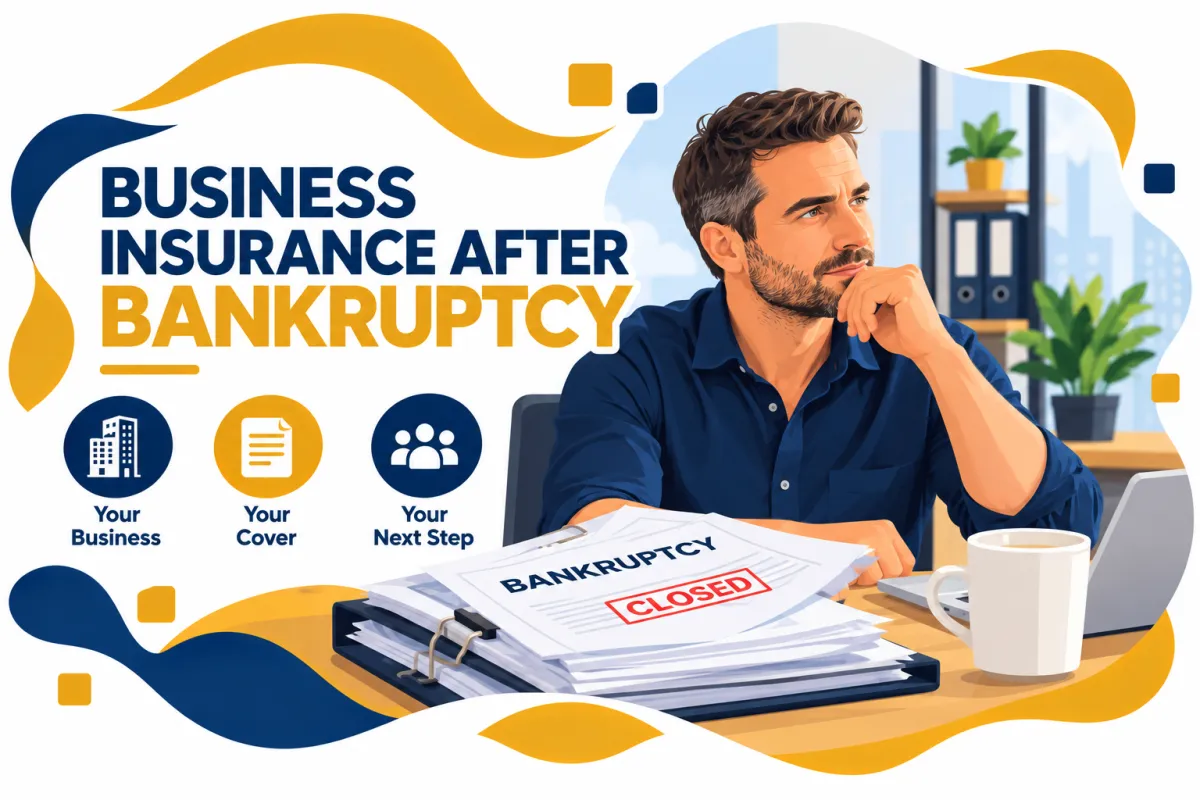
Can You Get Business Insurance After Bankruptcy? (UK)
Can you get business insurance after bankruptcy?
Yes. Sole traders, partners and company directors with a bankruptcy behind them, or still undischarged, can get public liability, employers' liability, tools, property and professional indemnity cover. What changes is who will quote. Comparison sites and most direct insurers decline automatically when you answer yes to the bankruptcy question. Lloyd's syndicates and specialist MGAs look at the circumstances and how the business trades now.
The three things that matter most: disclose the bankruptcy exactly as the proposal form asks, stop collecting online declines, and pay annually if you can.
Bankruptcy is a personal insolvency. It applies to individuals, so it is the route sole traders and partners most often go through when a business fails. A limited company goes into liquidation instead, which we cover in our guide to insurance after insolvency or liquidation. This guide is for the person: the self-employed trader who was made bankrupt, the partner whose firm failed, and the director whose personal bankruptcy now shows up on the company's insurance application. It follows the rules in England and Wales. Scotland (sequestration) and Northern Ireland have their own procedures, but the insurance approach is the same.
Bankruptcy, liquidation and IVAs: which one applies to you?
Insurers ask about all of these, but they are different events and they are presented differently:
| Event | Who it applies to | What insurers focus on |
|---|---|---|
| Bankruptcy | Individuals: sole traders, partners, directors personally | Whether you are discharged, what caused it, and how the current business is funded and run |
| Individual Voluntary Arrangement (IVA) | Individuals repaying creditors under a formal agreement | Whether payments are up to date and how long is left to run |
| Liquidation | Limited companies | The director's link to the failed company, and any new or phoenix company. See business insurance after insolvency |
| CCJ or poor credit | Individuals or companies | Amount, age and whether it is satisfied. See business insurance with poor credit |
Undischarged or discharged: what changes for your insurance
In England and Wales most people are automatically discharged one year after the bankruptcy order. Discharge improves your position, but it does not wipe the slate clean:
| Undischarged | Discharged | |
|---|---|---|
| Trading as a sole trader | Usually allowed, with restrictions. You must not trade under a different name without telling people the name you were made bankrupt in | No bankruptcy restrictions, unless a bankruptcy restrictions order or undertaking is in place |
| Acting as a company director | Not allowed without the court's permission | Allowed, unless restrictions apply |
| Credit, including monthly premiums | You must disclose the bankruptcy when obtaining credit of £500 or more | No legal duty to disclose, but lenders still see it on your credit file |
| Insolvency register | Listed on the Individual Insolvency Register | Removed three months after discharge, unless restrictions apply |
| Credit file | Shows the bankruptcy | Shows it for six years from the date of the order |
| Insurance proposal forms | Must be disclosed | Must still be disclosed if the question covers the date |
Bankruptcy restrictions orders and undertakings can extend the restrictions for between two and 15 years. If one applies to you, tell your broker at the outset, because underwriters will ask about it.
What insurers ask, and how long you have to tell them
Most commercial proposal forms ask a version of: "Has any proprietor, partner or director ever been declared bankrupt, entered an IVA, or been the subject of a bankruptcy order?" Some limit it to the last five or six years. Others ask "ever". Answer the question exactly as it is asked. Business insurance is covered by the duty of fair presentation in the Insurance Act 2015, and leaving a bankruptcy out can let the insurer void the policy or cut a claim when you need it most.
What cover you can still get after bankruptcy
Bankruptcy changes which insurers will quote, not what cover exists. Through specialist markets we regularly arrange:
- Public liability: the cover most contracts and sites insist on before you can start work, and the one bankrupt sole traders ask for most.
- Employers' liability: a legal requirement if you employ anyone, including casual or part-time staff.
- Tools and equipment: tools you need for your trade are normally exempt property in a bankruptcy, so protecting them matters.
- Professional indemnity: available, though underwriters look more closely at financial history for advice-based work.
- Commercial property, contents and stock: for premises you rent or own through the new business.
- Combined and package policies: for trades and small businesses that need several covers together.
When the bankrupt person is a company director
An undischarged bankrupt cannot act as a director without the court's permission. Once discharged, you can, and the company's insurance application will ask about every director's personal history. A limited company with a director who has a past bankruptcy is a common specialist placement. The underwriter looks at the director's track record since, the company's own finances, and who else is on the board.
Professional indemnity after bankruptcy
Professional indemnity protects clients who rely on your advice or work, so underwriters want to understand what caused the bankruptcy and how client money, records and contracts are handled now. If you work in a regulated profession, check your professional body's rules on bankruptcy too, as some have their own requirements on top of the insurance question.
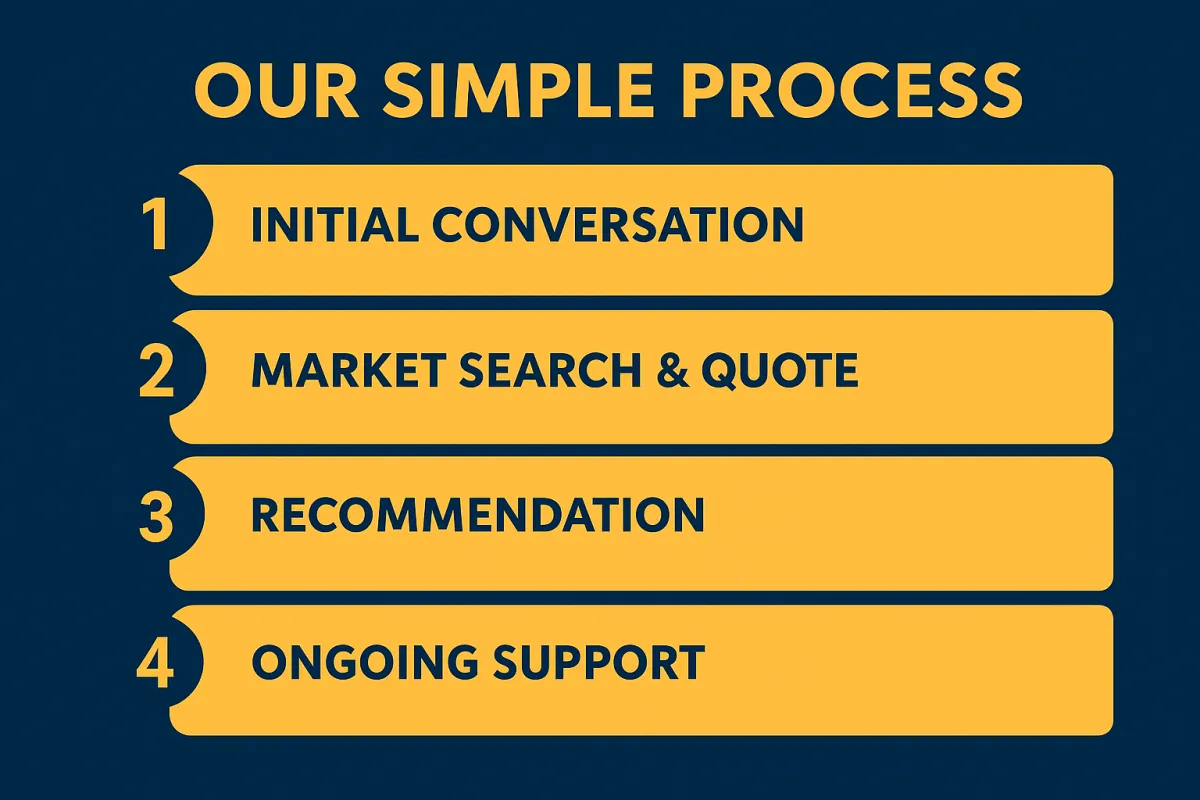
How we place business insurance after bankruptcy
Get the facts together
Date of the bankruptcy order, discharge date or expected date, any restrictions, and what caused it.
Show the business today
What you do, turnover, contracts, who you work for, and how the business is funded now.
Present it in writing
A short narrative explaining what happened and what has changed goes with the disclosure, so the underwriter sees context, not just a yes.
One targeted approach
We go to the Lloyd's syndicate or MGA with appetite for your profile, rather than collecting more declines.
Pay in a way that works
Paying annually avoids a premium finance credit check. We'll explain the terms before you commit.
Frequently asked questions
Yes. Bankruptcy closes off most comparison sites and direct insurers, because their automated systems decline any yes to the bankruptcy question. Lloyd's syndicates and specialist MGAs do write sole traders, partners and directors with a bankruptcy history. The route is a specialist broker who discloses the bankruptcy in full and presents how the business trades today.
Yes. Public liability is one of the most commonly placed covers for bankrupt and recently discharged sole traders, because so many contracts and sites require it before you can work. Mainstream online insurers will usually decline, so it needs to go through a specialist market that accepts the disclosure.
Usually, yes, although professional indemnity underwriters look more closely at financial history because the cover protects clients who rely on your advice. Expect questions about what caused the bankruptcy and how client money and records are handled now. If you work in a regulated profession, check your professional body's rules on bankruptcy as well.
As long as the proposal form asks. Many ask about the last five or six years and some ask whether you have ever been bankrupt. Answer the question exactly as it is asked. Discharge does not remove the duty to disclose if the question still covers the date.
In England and Wales you can usually keep working as a self-employed sole trader while undischarged, subject to restrictions. You must not trade under a different name without telling people the name you were made bankrupt in, and you must disclose your bankruptcy when obtaining credit of £500 or more. Speak to the Official Receiver or your trustee about your specific position.
Monthly instalments are usually arranged through a premium finance loan, which is credit. An undischarged bankrupt must disclose the bankruptcy when obtaining credit of £500 or more, and finance providers often decline. Paying the premium annually avoids the finance check altogether and keeps more insurers open to you.






Instagram
LinkedIn