
FS Register FRN 1029698
55 Five Star Google Reviews
13+ years specialist broking experience
Marina & Boatyard Insurance UK — cover for the boats you do not own
Standard commercial policies exclude damage to property in your care, custody and control — which is every craft on your berths, hardstanding and cradles. Marinas insured as property businesses are routinely uninsured for the single largest claim they will ever face.
We place customers' vessels, marine structures, lifting operations, storm and flood, wreck removal and pollution as one coherent programme, through marine-aware Lloyd's syndicates and specialist MGAs — with your berth list and vessel values read before the policy is bought.
What is marina and boatyard insurance?
It is a combined property and liability programme built around third party vessels held in the operator's custody. That is the feature which separates it from an ordinary commercial policy. A marina holds millions of pounds of boats it does not own, lifts them with machinery, stores them in concentrated compounds and does all of it at the water's edge. A specialist programme writes customers' craft back against the care, custody and control exclusion, schedules pontoons and piles as the primary assets they are, covers damage to the load during lifting, and treats storm and tidal flood as structural rather than remote.
What you need to know before you buy
- Public liability excludes customers' boats. The care, custody and control exclusion appears in almost every commercial wording. Cover has to be bought back specifically, with an any one vessel limit and an aggregate limit that reflect the craft you actually hold.
- The aggregate limit is what a fire tests, not the single-vessel limit. A compound fire reaches a row of boats. Model your worst-case event across the vessels it could touch, in your most densely packed location, in peak storage season.
- Pontoons are usually the principal asset and the first storm casualty. Carried inside a general external property heading at a figure last reviewed years ago, they are the most consistently underinsured item on a marina schedule.
- Damage to the load is a separate question from insuring the hoist. Lifting equipment falls under the Lifting Operations and Lifting Equipment Regulations 1998, and after a dropped boat the first documents requested are the examination report, the lifting plan and the operator's competence record.
- The Ports and Marine Facilities Safety Code now reaches marinas. The Department for Transport's updated Code expects a senior Duty Holder, an independent Designated Person auditing annually, a Marine Safety Management System and a published Marine Safety Plan. It is not statutory, but it is becoming the benchmark of reasonable care in a negligence claim.
- Berth holder terms do not exclude what operators think they exclude. The Unfair Contract Terms Act 1977 and, for consumers, the Consumer Rights Act 2015 constrain attempts to disclaim liability for your own negligence.
- Wreck removal is not in a standard wording. A vessel that sinks on your berth or is abandoned by an untraceable owner becomes your cost, and raising and disposal frequently exceeds the value of the craft.
What does a marina insurance programme include?
Eight components, and the programme usually fails at the seams between them rather than inside any one wording. Customers' vessels, marine structures, lifting operations, buildings and yard property, storm and flood, wreck removal, pollution and business interruption. Arranging these across separate policies with different renewal dates is the most common structural weakness we find on a marina schedule.
Customers' vessels
Written back against the care, custody and control exclusion, afloat, ashore, in slings and in transit across the site — with an any one vessel limit set above your largest craft.
Marine structures
Pontoons, piles, finger berths, walkways, bridges and fendering scheduled and valued on replacement including marine installation cost, not carried as unspecified external property.
Lifting operations
Hoist, crane and handler cover including damage to the load, with the statutory thorough examination regime integrated rather than tracked separately.
Storm, surge and flood
Rated deliberately against your site's actual water exposure, with mitigation credited — freeboard, storm procedures and closure authority all count.
Wreck removal
Raising, recovery and disposal of sunken and abandoned craft, including the pollution response that comes with them.
Pollution & environmental
Fuel berth, antifouling residues, washdown water and historic contamination — gradual pollution needs a standalone environmental policy, not a liability extension.
Liability
Public and employers' liability sized for marine operations and visitor footfall together, with unfenced water and pontoon access considered explicitly.
Business interruption
Indemnity period set against marine structure lead times and lost season effects, rather than the time it takes to rebuild an office.
How do we place marine risks other brokers decline?
Through a structured method rather than a wider panel. Marinas are declined by general markets because the combination — third party property in custody, heavy lifting, marine structures and coastal flood — sits outside standard appetite, not because the businesses are poorly run. The Insurability Framework™ is how we turn that into a risk a specialist underwriter can quote with confidence.
The Insurability Framework applied to marine facilities
Four pillars, applied to marinas, boatyards, yacht harbours, dry stacks and moorings operators.
Marine underwriters price on custody controls and lifting discipline. Vessel inventories with values, lifting procedures, examination currency, hot works permits, storage layout and marine safety governance are what move the number.
Third party craft, marine structures and coastal flood exposure fall outside general commercial appetite. We place through markets that write customers' vessels properly rather than sub-limiting the cover into irrelevance.
The dangerous gaps are structural: an any one vessel limit below the biggest boat on site, pontoons missing from the schedule, no wreck removal provision, and berth holder terms that do not do what the operator believes.
A marina claim involves an asset you do not own and an owner who is also a customer who will be back next season. Managing the coverage position and the relationship together is the whole job.
The method is set out in full on our Insurability Framework page, and applied across other hard-to-place sectors in our adverse risk insights hub.
How does specialist marina cover differ from a commercial combined policy?
On six features that decide whether a claim is paid. Customers' vessels, marine structures, lifting, flood, wreck removal and pollution. A general wording is not wrong so much as silent on each of them, and silence is easy to mistake for cover until something happens.
| Feature | Standard commercial combined | Specialist marina programme |
|---|---|---|
| Customers' vessels | Excluded by care, custody and control | Written back with any one vessel and aggregate limits |
| Cover through the transitions | Ambiguous between afloat, slings, cradle and transit | Continuous across every state a boat occupies on your site |
| Pontoons and piles | Unspecified external property, frequently sub-limited | Scheduled and valued including marine installation cost |
| Damage to the load | Hoist insured, the boat it holds usually not | Covered at a limit matched to the craft you lift |
| Storm, surge and tidal flood | Excluded or heavily sub-limited at waterside sites | Rated against the site, with mitigation credited |
| Wreck removal | Not contemplated | Provided, including abandoned and untraceable craft |
| Business interruption | 12 months against annual turnover | Set against marine lead times and seasonality |
| Safety governance | Not asked about | Duty Holder and safety management system used as rating evidence |
Which marine facilities do we insure?
Select the closest match to see the cover priorities we would build for your site.
Find your cover priorities
Coastal marina
- CRITICAL Any one vessel limit set above your largest berth holder, checked seasonally.
- CRITICAL Storm and tidal surge rated deliberately rather than treated as a remote peril.
- ESSENTIAL Pontoons, piles and walkways scheduled and valued on replacement.
- ESSENTIAL Lifting cover including damage to the load, with examinations current.
- RECOMMENDED Wreck removal and pollution provision for sunken and abandoned craft.
Inland and canal marina
- CRITICAL Continuous custody exposure where boats are lived aboard year round.
- ESSENTIAL Liability reflecting residential occupancy and the duties that come with it.
- ESSENTIAL Solid fuel stove, gas and carbon monoxide exposure in narrowboats.
- ESSENTIAL Fluvial flood and bank stability assessed rather than assumed.
- CONSIDER Obligations owed under your navigation authority lease or licence.
Boatyard and hardstanding
- CRITICAL Aggregate limit modelled on a compound fire, not a single-boat loss.
- CRITICAL Hot works permit system with a documented post-work watch period.
- ESSENTIAL Cradle, chock and prop failure cover — boats falling over on the hard are a frequent claim.
- ESSENTIAL Pollution cover for antifouling removal, blasting and washdown.
- RECOMMENDED Written lithium battery storage and charging policy.
Dry stack and racked storage
- CRITICAL Racking collapse exposure, which reaches many vessels at once.
- CRITICAL Aggregate limit modelled across the whole structure.
- ESSENTIAL Forklift and handler operations including damage to the load in transit.
- ESSENTIAL Fire detection and suppression appropriate to a high-density enclosed store.
- RECOMMENDED Racking inspection regime documented and current.
Moorings and swinging berths
- CRITICAL Mooring tackle inspection and replacement regime — a failed mooring is a claim against you.
- ESSENTIAL Clarity on whether you or the owner supplies the tackle.
- ESSENTIAL Public liability for tender and launch operations carrying people.
- RECOMMENDED Wreck removal provision for craft that break adrift.
- CONSIDER Storm contingency and pre- and post-weather mooring checks.
Marina with hospitality and visitor facilities
- CRITICAL Public liability sized for visitor footfall alongside marine operations.
- ESSENTIAL Water safety measures for non-boating visitors near unfenced water.
- ESSENTIAL Food safety and licensed premises exposures declared.
- RECOMMENDED Event cover for regattas, boat shows and functions.
- CONSIDER Cyber cover for berthing, booking and payment systems — see cyber insurance.
Does your current policy match your site?
Tick anything you cannot answer immediately. Each is a mismatch we find regularly on marina schedules written on general commercial paper.
Marina cover mismatch check
- You cannot state your any one vessel limit for customers' craft.
- The most valuable boat on site today may exceed that limit.
- Your aggregate limit has never been modelled against a compound fire.
- Pontoons and piles are carried at a round number nobody has revisited.
- Cover is unclear at one of the transitions — afloat, slings, cradle, transit.
- Damage to the load during lifting is not clearly covered.
- There is no wreck removal provision in the wording.
- Hot works permits have no documented post-work watch period.
- You have no written policy on lithium batteries stored or charged on site.
- Berth holder terms have not been reviewed against consumer protection legislation.
Three or more ticks and your programme was written for a property business rather than a marine facility. Send us the schedule and we will tell you exactly where the gaps are.
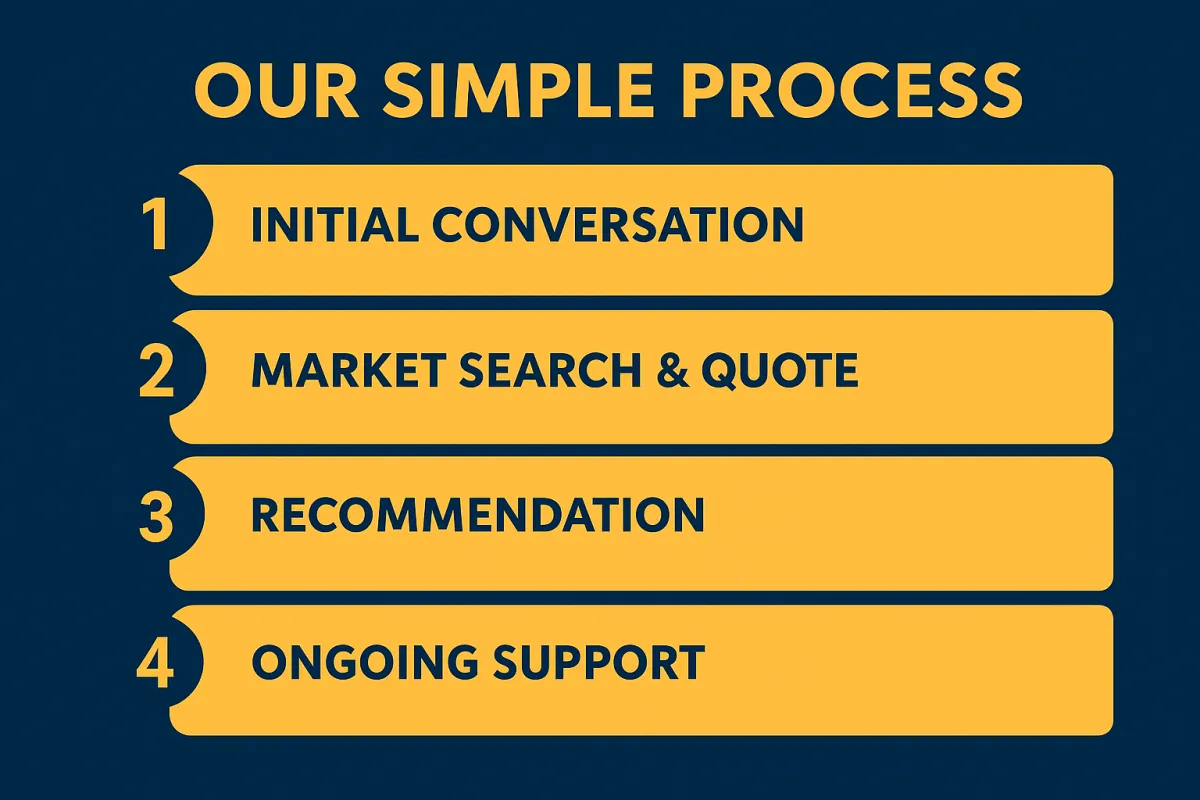
How does the placement process work?
Five stages, and the first two do most of the work. We start with your berth list and vessel values rather than your renewal date, because the exposure that decides the price is what you are holding. Marine placements are won or lost in the submission: a structured presentation of custody controls and lifting discipline gets terms from markets that decline the same risk presented loosely.
-
Berth list and value review
Send us your berth and storage list with vessel values, your largest craft, and your current schedule. We identify immediately whether your any one vessel and aggregate limits match what is physically on your site.
-
Exposure mapping
We map custody through every state a boat occupies — afloat, slings, cradle, transit — and check marine structure values, lifting cover, flood position, wreck removal and pollution against the wording rather than the certificate.
-
Structured market submission
Your controls are presented in the form marine underwriters assess: storage layout and separation, hot works permits, lithium policy, lifting procedures and examination currency, storm procedures, and your marine safety governance documentation.
-
Terms, comparison and placement
We present terms with the wording differences explained, not just the premiums. Where a required feature is unavailable or uneconomic, we say so and set out the alternative — which is sometimes an operational change rather than an insurance one.
-
Seasonal review and claims support
Limits checked against the berth mix each season rather than annually, terms and conditions reviewed alongside the policy, and direct claims advocacy when a customer's boat is involved.
The step most operators skip. Stage one is free and it answers the question that matters most: is your any one vessel limit bigger than your biggest boat? We can usually tell you within a day of receiving the list, and for a meaningful number of marinas the answer is no.
What if you have been declined, or have storm and flood history?
A decline on a marina is usually an appetite problem rather than a risk problem. General markets decline the combination of custody, lifting and waterside flood as a matter of policy, regardless of how well the site is run. Flood history in particular is not a bar — it is structural to the location, so the useful conversation is about terms, excess and mitigation credit rather than whether cover exists at all.
We regularly place operators who have been declined elsewhere, had cover withdrawn after a storm season, or been offered terms with a customers' vessels sub-limit so low that the cover would not have responded to a realistic loss. Where there is a claims record, the submission has to do more work — but marine underwriters expect losses in this class, and what they price is whether the business changed anything afterwards.
Further reading on the approach: insurance for businesses refused cover, business insurance with a claims history, commercial property insurance after a claim and flood zone 3 commercial property insurance.
What does marina and boatyard insurance cost?
Vessel values in custody and water exposure drive the price far more than berth income does. Two marinas with identical turnover can be priced very differently if one sits on an exposed coast holding large motor yachts and the other is inland with modest craft. This class is judgement-underwritten by a limited number of markets, so how the risk is presented has a direct and measurable effect.
| Cost driver | Why it matters | What reduces the loading |
|---|---|---|
| Aggregate vessel values in custody | Drives the realistic maximum loss more than any building on site | An accurate live inventory with values, updated seasonally |
| Storage layout and density | A compound fire reaches a row, not a boat | Firebreaks and separated blocks rather than maximum packing |
| Hot works control | Yard fires typically start after the work stops | Permit system with a documented post-work watch period |
| Lithium battery exposure | Electric craft, tenders and e-bikes are a growing ignition source | Written charging, isolation and separation policy |
| Lifting operations | Single-item severity on assets you do not own | Examination currency, operator competence, verified vessel weights |
| Flood and storm exposure | Structural to the location and cannot be treated as remote | Historic levels, freeboard data, storm procedures, closure authority |
| Marine structure values | Pontoons are the principal asset and first storm casualty | Professional valuations including installation cost and lead times |
| Marine safety governance | The Code's expectations are becoming the benchmark of reasonable care | Duty Holder, Designated Person, audited system, published plan |
| Berth holder terms | Terms decide who insures what and how disputes resolve | Terms requiring berth holders to carry their own cover |
| Claims record | Frequency predicts management quality more reliably than severity | A clean run, or a documented account of what changed |
| Presentation quality | Few markets write this class; ambiguity is expensive | A structured submission including your safety documentation |
Why we do not publish a premium table. Any figure we printed would mislead. The same berth income can produce a four-figure or a six-figure programme depending on vessel values, water exposure and whether you lift. Send us the berth list and you will have a realistic indication quickly, based on your site rather than a sector average.

John Miller — Director & Principal Broker
John has spent over thirteen years placing specialist commercial risks, with a particular focus on businesses that hold other people's property. Marinas and boatyards are the clearest example: operations insured as property businesses when the largest thing on the site is several hundred boats belonging to somebody else, sitting inside a care, custody and control exclusion nobody has read. He works with marinas, boatyards, yacht harbours, dry stacks and moorings operators to get vessel limits matched to the berth mix, marine structures valued properly, lifting cover that includes the load, and terms and conditions that agree with the insurance rather than contradicting it.
Former #1 Account Executive at Brown & Brown and former #1 Salesperson at AXA, with direct access to the Lloyd's Market and specialist MGA schemes.
More about John Miller | Contact the team | 01792 001350
Marina insurance — frequently asked questions
Does public liability cover damage to customers' boats?
No. Almost every commercial liability wording excludes damage to third party property in the insured's care, custody or control, and a customer's vessel on your berth, hardstanding or cradle falls squarely within that exclusion. Cover has to be bought back specifically as customers' vessels or marine trade liability, with an any one vessel limit and an aggregate limit set against the craft you actually hold.
What limit should I set for customers' vessels?
Set the any one vessel limit against the most valuable boat on your site rather than the average, and check it seasonally because the berth mix changes as the business grows. Set the aggregate by modelling a single event across the vessels it could reach. Marinas are far more often caught by an inadequate aggregate than by an inadequate single-vessel limit.
Are pontoons and piles covered by a standard policy?
Frequently they sit inside a general external property heading, undervalued and sometimes sub-limited into insignificance. Marine structures are usually a marina's principal asset and the first thing a storm damages, so they should be scheduled and valued on replacement including marine installation cost, with lead times considered separately for business interruption.
Is damage to a boat during lifting covered?
Only if damage to the load is specifically covered and adequately limited. Many wordings insure the hoist while excluding or sub-limiting the vessel it is holding, which inverts the actual exposure. Lifting equipment also requires thorough examination under LOLER 1998, and the examination report, lifting plan and operator competence record are the first documents requested after a dropped boat.
Does the Ports and Marine Facilities Safety Code apply to marinas?
The Department for Transport's updated Code extends its expectations to marina operators, having historically applied to statutory harbour authorities. Those expectations include a senior Duty Holder, an independent Designated Person auditing annually, a formal Marine Safety Management System, a published Marine Safety Plan and a Conservancy Duty. It is not statutory, but it is influential in legal contexts and useful underwriting evidence.
Who pays to remove a sunken or abandoned boat?
Frequently the marina, and frequently without any contribution from the owner. Raising, disposal and pollution response can cost far more than the craft was worth, and absent or insolvent owners rarely repay it. Wreck removal is a specific cover feature that general commercial wordings do not contain, and berth holder terms should address abandonment, lien and disposal properly.
Can a marina in a flood zone get insurance?
Yes, though it is a specialist placement. Flood is structural to a marina's location, so the conversation is about terms, excess and mitigation credit rather than whether cover exists. Underwriters respond to specifics: historic water levels, pontoon freeboard and pile heights, storm procedures, whether craft are moved or double-moored ahead of severe weather, and who has authority to close the site.
Do I need environmental insurance for a boatyard?
If you handle fuel, remove antifouling, blast hulls or pressure wash on site, it is worth serious consideration. Standard liability wordings typically cover only sudden and accidental pollution, which excludes the gradual contamination yard operations tend to produce. Historic contamination on an old boatyard site is a separate exposure that can attach to the current occupier and survive a sale.
Can I exclude liability for customers' boats in my terms?
Not for your own negligence. The Unfair Contract Terms Act 1977 restricts exclusion in business contracts and the Consumer Rights Act 2015 applies a fairness and transparency test for consumer berth holders. Terms that allocate risk reasonably survive scrutiny far better than blanket disclaimers, and requiring berth holders to carry their own insurance is the single most effective clause you can include.
How quickly can you get terms?
Once we have your berth and storage list with vessel values, your current schedule and a description of your lifting and storage arrangements, we can usually give an initial appetite response within 24 hours. Full terms depend on the complexity of the programme and whether layered limits are involved. If you have a renewal deadline, tell us at the outset and we will work to it.
Do you insure inland and canal marinas as well as coastal?
Yes, and they are genuinely different risks. Inland sites bring continuous custody exposure where boats are lived aboard, residential occupancy duties, solid fuel and gas exposures in narrowboats, and fluvial rather than tidal flood. The cover set overlaps with a coastal marina but the emphasis is different, so tell us which you are at the outset.
What do you need from me to start?
Your berth and storage list with vessel values, the value of your largest craft, your current insurance schedule, details of lifting equipment and examination dates, your storage layout, and five years of claims experience. Your marine safety documentation is useful too. Email it to [email protected] or use the quote form and we will come back to you.
About this page
This page is general information about insurance for UK marinas, boatyards, yacht harbours, dry stack operators and moorings businesses. It is not advice, and it is not a recommendation to buy or hold any particular policy. Any cover described is subject to insurer acceptance, underwriting and the terms of the policy actually issued.
Cover descriptions and turnaround times are indicative and describe how we typically approach placements in this sector. They are not quotations and do not form part of any contract. The interactive cover selector and mismatch check are general information tools only — not personalised advice, not a recommendation and not a quotation.
Miller & Partner is not affiliated with British Marine, the Department for Transport or the Maritime and Coastguard Agency, and this page is not an official statement of the Ports and Marine Facilities Safety Code. Nothing here is legal advice; berth holder terms and conditions should be reviewed by a suitably qualified legal adviser.
Legislation and regulatory guidance are described as at the review date shown at the top of this page and may change. For our regulatory status, please see the footer of this website. To discuss a marina or boatyard placement, email [email protected] or call 01792 001350.
John was very helpful in an area where other brokers could not find policies that met the needs of my business. Quick responses and always friendly!

I’ve been dealing with John for our specialist crime scene and biohazard cleaning insurance, and the service has been excellent. He took the time to understand the nature of our work and ensured we had the right level of cover in place. Responsive, knowledgeable, and easy to deal with throughout. Would recommend 100%
John M provided excellent support in arranging a policy suited to our needs. Despite our niche requirements, he communicated everything clearly and made the process simple. Highly recommended!
MEET THE Director
Hey, I'm John!
I started Miller & Partner with the aim to bring back personable, approachable broking to UK businesses who were tired of large corporate brokers and feeling like they were just another number.
I have built this brokerage up with no pushy sales techniques or big business tactics, just honest, approachable and professional relationships with my clients.
Over 13 years experience in business insurance
Client first approach
5* rated broker on Google



Office: Vivian House, Roman Bridge Close, Mumbles, Swansea, SA3 5BG
Call 01792 001350
Email: [email protected]

Instagram
LinkedIn