FS Register FRN 1029698
52 Five Star Google Reviews
13+ years specialist broking experience
Manufacturing Insurance
Specialist cover for UK manufacturers, fabricators and producers: products liability, machinery breakdown, business interruption, recall and export cover, arranged by a broker who looks at your process, not just a tick-box form. Including manufacturers declined elsewhere.
What is manufacturing insurance?
Manufacturing insurance is not a single policy. It is the set of covers a business that makes things needs: employers' liability (a legal requirement), public and products liability, cover for your buildings, machinery and stock, business interruption if production stops, and machinery breakdown and engineering inspection. Depending on what you make and where it goes, you may also need product recall, goods in transit, trade credit and cyber cover.
Most manufacturers buy these as a combined policy or a tailored programme arranged by a broker, because quote engines rarely understand processes, materials or export exposure.
Manufacturing risks are judged on detail. Two businesses with the same turnover can look completely different to an underwriter: one assembles electronics in a sprinklered unit, the other runs a curing oven next to stored resin. Insurers want to know what you make, how you make it, what it goes into, and where it ends up. Present that properly and you get better terms. Leave it to a tick-box form and you risk a decline, or a policy that does not respond when you need it.
The core covers every manufacturer should consider
| Cover | What it protects | Required? |
|---|---|---|
| Employers' liability | Claims from staff injured or made ill at work, including long-tail disease claims from dust, fumes and noise | Legal requirement if you employ anyone. Minimum £5m |
| Public liability | Injury or damage to third parties at your premises or where you work | Usually required by customers, landlords and sites |
| Products liability | Injury or damage caused by products you make, supply, own-brand or import | Often a contract requirement |
| Buildings, contents and stock | Premises, plant, raw materials, work in progress and finished goods | Usually required by landlords and lenders |
| Business interruption | Lost gross profit and extra costs while production is disrupted after insured damage | Strongly advisable |
| Machinery breakdown | Sudden mechanical or electrical failure of production machinery | Optional, but rarely covered by standard property policies |
| Engineering inspection | Statutory examinations of lifting equipment and pressure systems | Legally required inspections where the equipment exists |
Products liability and what you make
Under the Consumer Protection Act 1987, producers of defective products can be liable for injury and damage they cause without anyone having to prove negligence. That liability extends to anyone who puts their own name on a product or imports it into the UK. Underwriters therefore look closely at:
- What the product goes into. Components for aerospace, automotive, medical devices, rail or offshore carry much heavier liability than general consumer goods.
- Where it is sold. Sales to the USA and Canada are often excluded or restricted unless declared. That includes products that reach North America through your customers.
- Your quality controls. Batch traceability, testing, certification and documented sign-off make a real difference to terms.
- Design responsibility. If you design or specify as well as make, you may need professional indemnity too, because products liability does not cover pure financial loss from a design error.
Property, machinery and business interruption
For most manufacturers the largest single exposure is a fire or major breakdown that stops production. The damage itself is only part of the loss. The bigger hit is often months of lost output, customers moving to other suppliers, and fixed costs that keep running.
Getting the sums insured right
Buildings and machinery should be insured for what it would cost to rebuild and replace them now, including removal, installation and professional fees. Underinsure and the insurer can reduce a claim in proportion under the average condition. Our guides to underinsurance and the condition of average and day one reinstatement explain how to avoid this, especially while machinery prices and lead times are rising.
Business interruption
Business interruption pays for lost gross profit and the extra costs of keeping going after insured damage. The indemnity period is the setting most often got wrong. It has to cover the time to rebuild, source and commission replacement machinery, and win back customers. For specialist plant with long lead times, 12 months is rarely enough. If you depend on one key supplier or customer, ask about contingent business interruption. Our business interruption guide covers the details.
Machinery breakdown and engineering inspection
Standard property policies cover events such as fire, flood and theft, not the sudden failure of a press, CNC machine or compressor. Machinery breakdown cover fills that gap. Lifting equipment must be thoroughly examined under LOLER 1998, and pressure systems need a written scheme of examination under PSSR 2000. Engineering inspection policies provide those examinations. See our guide to engineering inspection insurance, and our plant and machinery insurance guide for mobile plant and forklifts.
Covers manufacturers often miss
| Cover | When it matters |
|---|---|
| Product recall | Food and drink, supplements, electronics, components, and anything sold to retailers with recall clauses in their supply terms |
| Goods in transit | Raw materials coming in and finished goods going out, in your own vehicles or by carrier |
| Trade credit | A few large customers make up much of your turnover, or you sell on long payment terms |
| Cyber | Production, scheduling or machine control depends on networked systems, where ransomware can stop the line |
| Environmental liability | You store or use chemicals, oils or solvents. Many public liability policies only cover sudden and accidental pollution |
| Directors' and officers' | Claims against directors personally from regulators, creditors, investors or employees |
Manufacturing sectors we insure
We place cover across light and heavy manufacturing. These guides cover specific processes in more depth:
Welding and fabrication
Hot work, fume exposure, structural fabrication and lifting.
CNC machining and precision engineering
High-value machine tools, tight tolerances and component liability.
Powder coating
Curing ovens, spray booths, combustible powders and customers' goods.
Foundry and casting
Molten metal, furnaces and some of the hardest fire risks to place.
GRP and composites
Resins, solvents and fire loads that standard insurers often decline.
3D printing
Print farms, additive manufacturing and parts supplied to third parties.
Smart home and electronics manufacturing
Connected products, software faults and product liability.
Electronics design
Design liability where you specify and someone else builds.
Brewing and drinks production
Pressure vessels, CO2, stock and product contamination.
Supplements and nutrition products
Ingestible products, labelling claims and recall exposure.
Commercial printing
Presses, solvents, customers' materials and deadline-driven contracts.
Prototype development
Products not yet on the market, testing and early production runs.
Manufacturers declined by standard insurers
Many manufacturers come to us after being refused elsewhere, or after their insurer has left the sector. The usual reasons are:
- Hot processes and combustible materials: welding, furnaces, curing ovens, spray finishing, resins, dust and solvents.
- Building construction: composite or insulated panels, older timber-framed units, or no sprinklers on a high fire load.
- A previous fire or major claim, or risk improvements an insurer required that are still outstanding.
- Exports to the USA or Canada, or products going into aerospace, automotive or medical uses.
- Financial history: a director's previous insolvency, a CCJ, or a poor company credit score.
None of these makes a manufacturer uninsurable. They mean the risk needs to be presented properly to a Lloyd's syndicate or specialist insurer that understands it. Our guides to being refused an insurance quote, business insurance after a fire claim and insurance after insolvency explain how.
How we arrange manufacturing insurance
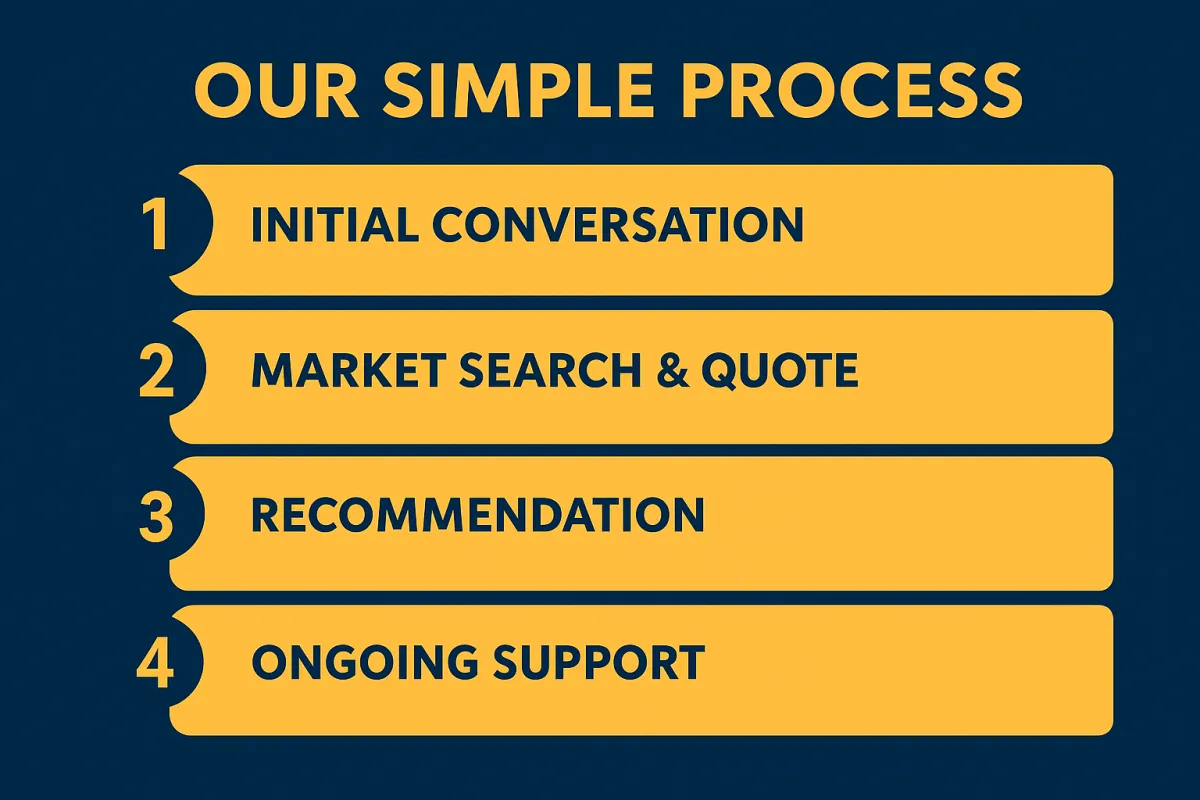
Understand the process
What you make, the materials and machinery involved, your premises, and where your products end up.
Set the values
Rebuild and replacement values, stock levels, gross profit and a realistic indemnity period.
Present the risk
A written submission covering fire protection, risk management, quality controls and claims history.
Go to the right markets
Insurers and Lloyd's syndicates with appetite for your process, rather than whoever a quote engine reaches.
Review every year
Values, exports and processes change. We keep the programme in step at each renewal.
To get started, it helps to have your turnover and wage roll, a description of your processes, premises details, rebuild and machinery values, export territories, and five years of claims history.
Frequently asked questions
Employers' liability is a legal requirement if you employ staff, with a minimum limit of £5 million. Beyond that, most manufacturers need public and products liability, property cover for buildings, machinery and stock, business interruption, and machinery breakdown. Engineering inspection is needed where you have lifting equipment or pressure systems. Product recall, goods in transit, trade credit and cyber depend on what you make and who you sell to.
No. Products liability covers injury or damage your product causes to third parties. It does not pay to withdraw, recover or replace faulty products. That needs separate product recall insurance.
Not automatically. Many products liability policies exclude or restrict claims from the USA and Canada unless sales there have been declared and agreed. If any of your products end up in North America, directly or through a customer, tell your broker so the territorial limits are set correctly.
Usually not. Standard property insurance covers events such as fire, flood and theft. Sudden mechanical or electrical breakdown of machinery is normally covered under a separate machinery breakdown or engineering policy, often arranged alongside engineering inspection.
If you have lifting equipment or pressure systems, the law requires them to be thoroughly examined by a competent person, under LOLER 1998 and PSSR 2000. Engineering inspection policies provide those examinations and are often combined with breakdown cover.
Yes. Manufacturers are often declined because of hot processes, combustible materials or composite panels, a previous fire claim, US exports, or a director's previous insolvency. We present these risks to Lloyd's syndicates and specialist insurers who underwrite them individually.

Related guides from Miller & Partner
John was very helpful in an area where other brokers could not find policies that met the needs of my business. Quick responses and always friendly!

I’ve been dealing with John for our specialist crime scene and biohazard cleaning insurance, and the service has been excellent. He took the time to understand the nature of our work and ensured we had the right level of cover in place. Responsive, knowledgeable, and easy to deal with throughout. Would recommend 100%
John M provided excellent support in arranging a policy suited to our needs. Despite our niche requirements, he communicated everything clearly and made the process simple. Highly recommended!
MEET THE Director
Hey, I'm John!
I started Miller & Partner with the aim to bring back personable, approachable broking to UK businesses who were tired of large corporate brokers and feeling like they were just another number.
I have built this brokerage up with no pushy sales techniques or big business tactics, just honest, approachable and professional relationships with my clients.
Over 13 years experience in business insurance
Client first approach
5* rated broker on Google



Office: Vivian House, Roman Bridge Close, Mumbles, Swansea, SA3 5BG
Call 01792 001350
Email: [email protected]
Instagram
LinkedIn