


Patient Transport Service Insurance UK | NHS Contracts
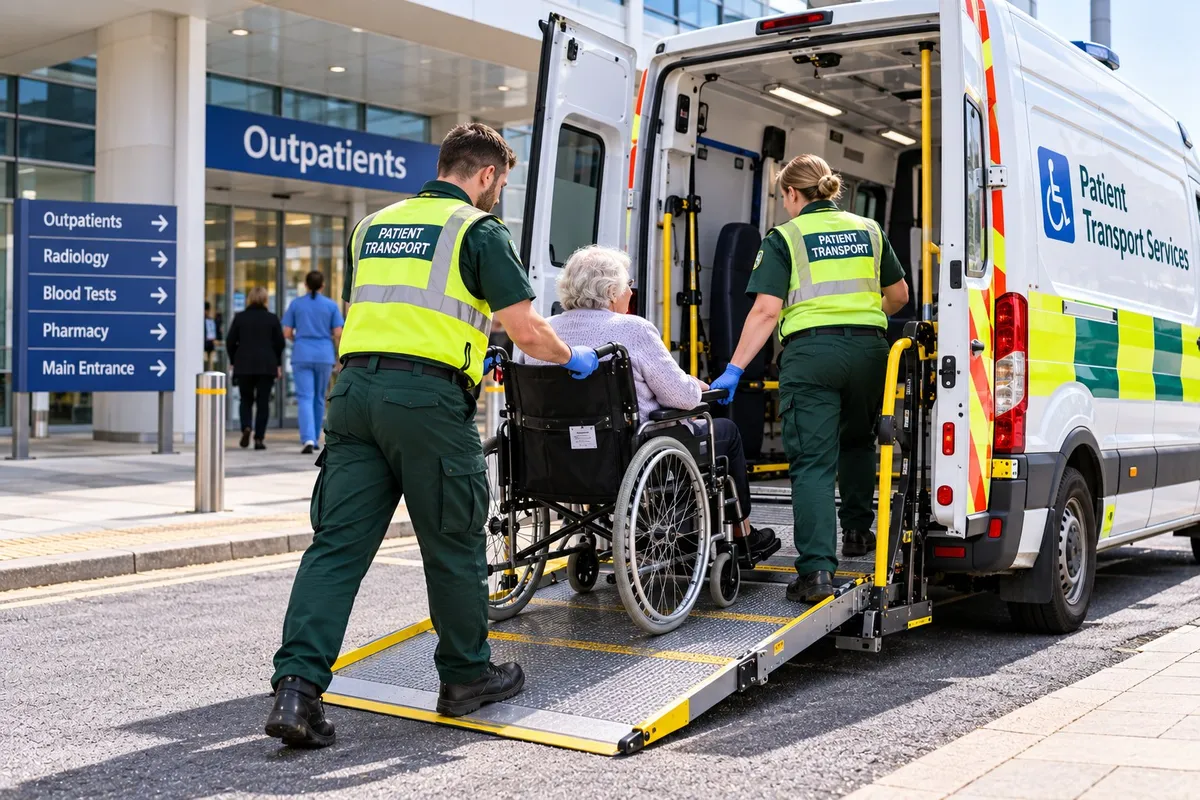
Patient transport service insurance covers providers that move patients to and from hospital, clinics and care settings. It usually combines employers' and public liability, medical malpractice, abuse cover and motor insurance for ambulances and patient transport vehicles. NHS trusts and commissioners set minimum limits in their contracts, so the programme needs to be built around the tender requirements, the patients you carry and the staff you use.
Key facts at a glance
- Contracts set the bar. NHS tenders specify limits and covers you must hold.
- Vulnerable patients. Abuse cover is essential and usually excluded unless added.
- Handling injuries are common. Loading, transfer and mobility support drive claims.
- Clinical care still happens. Malpractice cover is needed even for non-emergency work.
- Registration is expected. Insurers and commissioners will ask for CQC or equivalent.
Who needs patient transport service insurance?
Patient transport services carry patients who need help to travel because of their medical condition: outpatients, dialysis and cancer patients, hospital discharges and transfers between care settings. Many services also provide high dependency or secure transport. Our main private ambulance insurance page explains how these services are underwritten across the sector.
What do NHS contracts usually require?
| Cover | Typical requirement | Points to check |
|---|---|---|
| Employers' liability | At least 10 million pounds | All staff, including bank and agency |
| Public liability | 5 or 10 million pounds | Indemnity to the commissioning body |
| Medical malpractice | 5 or 10 million pounds | Staff grades and services listed |
| Abuse | Often required where vulnerable patients are carried | Sub-limits and safeguarding conditions |
| Motor | Comprehensive cover for all vehicles | Conversions, equipment and blue light use declared |
| Professional indemnity | Sometimes required for booking and planning advice | Whether it is needed for your role |
Limits vary between contracts, so always work from the actual tender document rather than a standard figure.
Clinical and safeguarding risks
Crews assess patients before travel, help them move, monitor them on the journey and respond if they deteriorate. A fall during transfer, a missed sign of deterioration or an allegation from a vulnerable patient can all lead to claims. Insurers look for safeguarding training, enhanced vetting, clear policies on lone working and chaperoning, and robust incident reporting. Our guide to medical malpractice insurance for private ambulance services covers the clinical side.
- Read the tender insurance clause. Confirm every required cover and limit before you bid.
- Declare every service type. Routine, high dependency, bariatric and secure transport are rated differently.
- Evidence safeguarding. Training, vetting and procedures for vulnerable patients.
- Document handling training. Manual handling and equipment training reduce injury claims.
- Share your vehicle list. Include conversions, equipment fitted and how vehicles are used.
Secure and mental health transport
Insurers will ask about restraint training, staff ratios, vehicle security features and how incidents and complaints are handled. Not every insurer will write it, which is why specialist placement matters. If you also provide medical cover at events, see our event medical cover insurance guide, and if you have struggled to find cover, read private ambulance insurance after a refusal.
Frequently asked questions
It is the insurance programme for providers of non-emergency patient transport, usually combining public and employers' liability, medical malpractice, abuse cover and motor cover for ambulances and patient transport vehicles.
Requirements vary, but commonly include employers' liability of at least 10 million pounds and public liability and medical malpractice of 5 or 10 million pounds. Some contracts also ask for professional indemnity, abuse cover or specific motor terms.
Yes. Even where crews are not giving advanced treatment, they assess patients, assist with mobility and respond if a patient deteriorates. Claims arising from that care can fall outside public liability.
Patient transport crews often work alone with vulnerable patients. Allegations of abuse are usually excluded from standard liability policies, so specific abuse cover is needed, supported by safeguarding training and vetting.
Injuries to patients during handling, loading and transfer are a common claim. They fall under public liability or malpractice depending on the circumstances, so both need to be in place.
This is higher risk and must be declared. Insurers will ask about restraint training, staffing, vehicle security and safeguarding procedures, and will want to see clear policies.
Related guides from Miller & Partner








Instagram
LinkedIn