


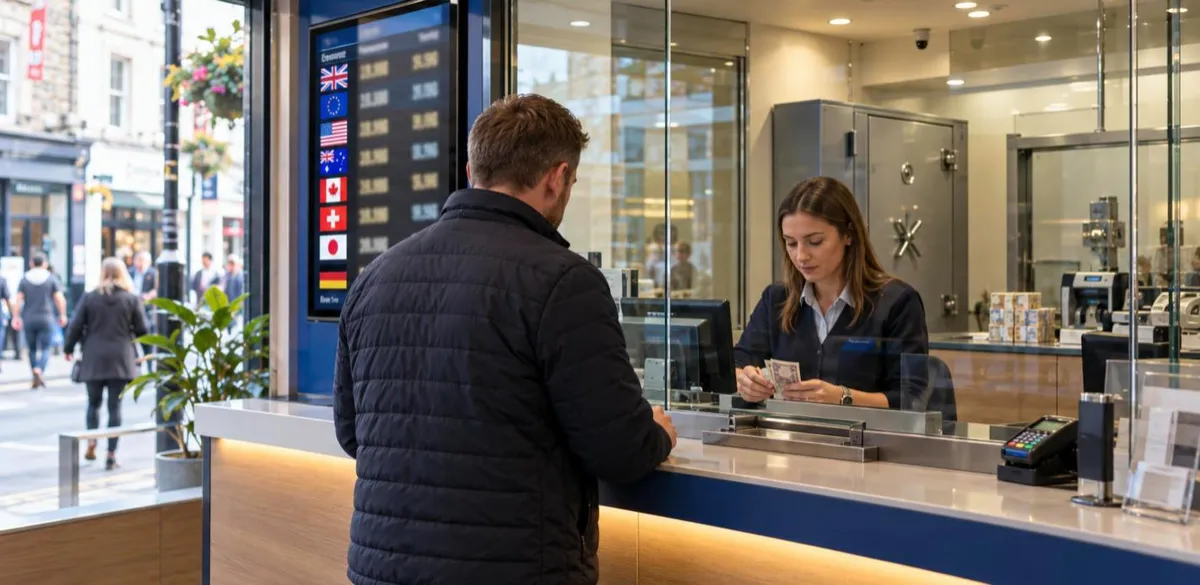
Bureau de Change Insurance UK | Cash, Crime & Fidelity
Bureau de change insurance protects independent currency exchange and money transfer shops. The most important cover is money and crime cover for cash and currency held in tills, safes and in transit to and from the bank, because a single robbery or theft can wipe out months of profit. You also need cover for the premises and fit-out, business interruption, public and employers' liability, and fidelity cover for staff dishonesty. Many shops add cyber cover for customer data and payment systems. Standard shop insurers rarely accept bureaux because of the cash held, so cover comes from specialist markets. Insurers look at your HMRC money service business registration, peak cash levels, safe ratings, alarm and CCTV, cash-in-transit arrangements, staffing and anti-money laundering controls.
Key facts at a glance
- Cash and currency are the main risk. Money cover should match your real peak holdings in tills, safes and transit.
- Safe ratings set your limits. Insurers link overnight cash limits to the grade of your safe and alarm.
- Staff dishonesty is a real exposure. Fidelity cover protects you if an employee steals cash or currency.
- Registration matters. Bureaux must be registered with HMRC as a money service business, and insurers ask for your details.
- Robbery affects staff too. Employers' liability and personal assault cover protect staff injured in a robbery.
What insurance does a bureau de change need?
A bureau de change usually needs money and crime cover, fidelity cover, premises and contents cover, business interruption, public and employers' liability, and personal assault cover for staff. Cyber cover is increasingly important for payment and customer data.
| Cover | What it protects | Watch out for |
|---|---|---|
| Money | Cash and currency in tills, safes and transit | Limits for peak holidays and transit runs |
| Fidelity | Theft by your own employees | Cover for all staff, including part-timers |
| Premises and contents | Fit-out, counters, screens and equipment | Security screens and shutters |
| Business interruption | Lost profit after robbery, fire or damage | Closure after a crime scene investigation |
| Personal assault | Benefits for staff injured in a robbery | Separate from employers' liability |
| Cyber | Data breaches and payment system attacks | Social engineering and payment diversion |
Why is a bureau de change hard to insure?
Bureaux hold large amounts of cash and foreign currency in small high street units, often with long opening hours and one or two staff. That combination is outside the appetite of most standard shop insurers.
Insurers also worry about money laundering, because poor controls can lead to criminal investigations and closure. A bureau that can show strong anti-money laundering checks, good record keeping and trained staff is a better risk. Similar issues affect pawnbrokers and second-hand shops, which also hold cash and high-value goods.
Moving cash and currency to and from the bank is one of the riskiest moments. Insurers usually set lower limits for transit and may require two people or a professional cash-in-transit firm above a set amount.
What do insurers ask about a bureau de change?
Insurers ask about your registration, cash and currency levels, security, transit arrangements, staffing, controls and any previous losses.
- Registration. HMRC money service business registration and, for money transfer, your FCA payment services registration
- Cash. Normal and peak holdings, and how often you bank or replenish
- Security. Safe grade, alarm, CCTV, counter screens and time locks
- Transit. Who moves cash, how often and how much
- Staff. Numbers, vetting and lone working
- Controls. Anti-money laundering checks and record keeping
After a robbery or theft
A bureau that has been robbed can still get cover. Insurers will want to see what you have changed since the loss.
Higher-grade safes, time locks, counter screens and lower cash holdings all help. Our guides to insurance for businesses refused cover and business insurance with a claims history explain how we present a risk after losses.
How do you set up bureau de change insurance?
- Confirm your registrations. HMRC and, where relevant, FCA details.
- Work out your peak cash. Including school holidays and busy periods.
- Document your security. Safe certificate, alarm and CCTV.
- Describe your transit. Amounts, frequency and who carries cash.
- List your staff. Numbers, vetting and training.
- Review your limits. Whenever your cash levels change.
Frequently asked questions
Yes. Standard shop policies rarely accept the cash and currency a bureau holds, so cover comes from specialist markets.
It can be, but it must be declared. Make sure your money limits include the sterling value of currency you hold.
Only under fidelity cover, which protects you against dishonesty by your employees.
Yes, under money cover, but transit limits are usually lower and may require two people or a cash-in-transit company.
Mostly yes, with extra focus on cyber, payment fraud and fidelity cover.
Yes. Specialist insurers will look at the security improvements made since the robbery.
Related guides from Miller & Partner

Miller & Partner Limited (FRN 1029698) is an Appointed Representative of Gauntlet Risk Management Ltd (FRN 308081), which is authorised and regulated by the Financial Conduct Authority. Miller & Partner Limited is registered in England and Wales (company number 16206282) and trades from Vivian House, Roman Bridge Close, Mumbles, Swansea SA3 5BG. This article is general information, not a personal recommendation or an offer of cover. Cover is subject to insurer acceptance and the full terms, conditions and exclusions of the policy issued.






Instagram
LinkedIn