


Public Liability Insurance for High-Risk Trades UK | Declined?
Why do high-risk trades struggle to get public liability cover?
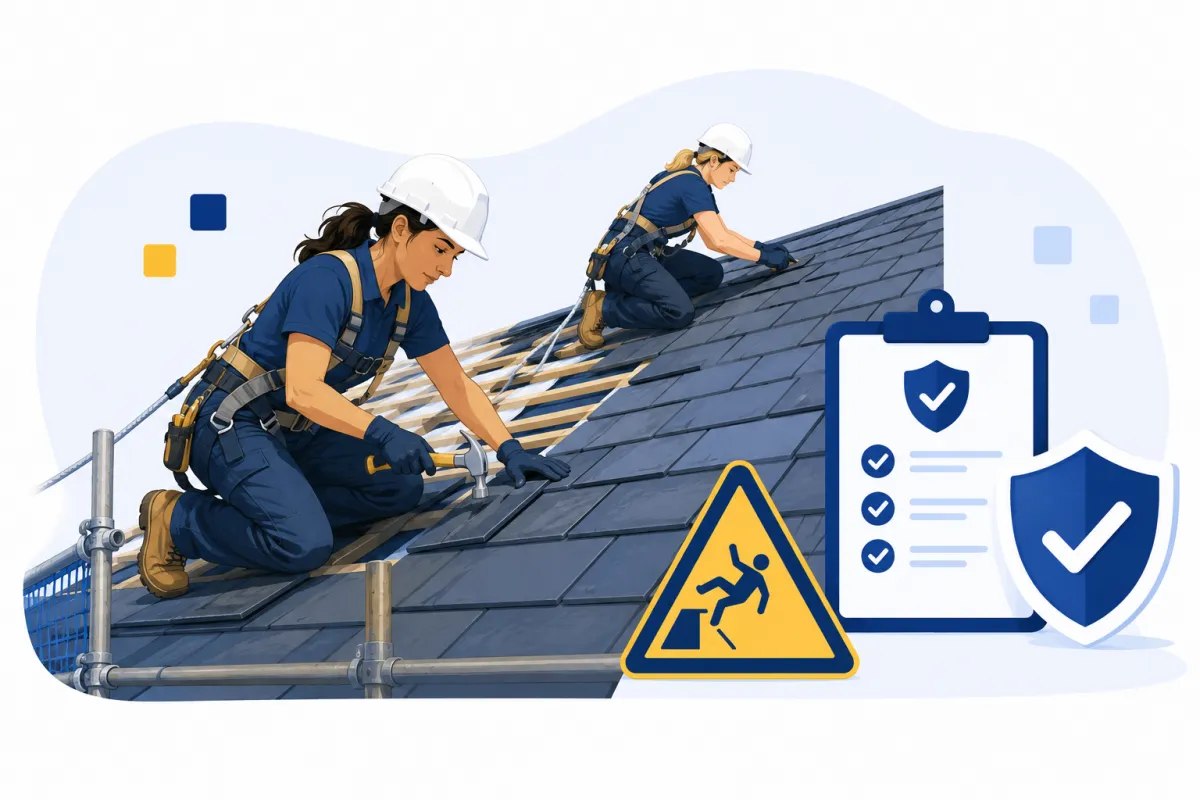
If you run a roofing firm, a scaffolding business, a demolition contractor, a tree surgery, or any trade that works at height, with heat, or in hazardous conditions, you've probably hit the wall: the online quote engines either refuse you, exclude the very work you do, or load your premium so heavily it stops making sense. That isn't because your business is uninsurable — it's because standard, automated markets are built for low-risk, tick-box trades, and they simply switch off when they see a hazardous occupation.
The good news: high-risk doesn't mean uninsurable. It means you need the right market and the right presentation. Specialist insurers and Lloyd's syndicates underwrite exactly these trades every day — they just aren't the names that pop up first on a comparison site. Placing difficult, declined and hard-to-place risks is what we do at Miller & Partner, alongside our wider business liability work. This guide explains why high-risk trades get refused or loaded, the exclusions that catch them out, and how to actually get covered. Where the refusal has a financial rather than an operational cause, see business insurance after insolvency — a director-level search will stop a quote regardless of how safely the trade is run. And if your work puts you in publicly accessible venues or events, terrorism insurance covers the non-damage denial of access exposure that standard liability and business interruption policies exclude.
Key facts: public liability for high-risk trades
- "Declined" usually means "wrong market" — high-risk trades are routinely refused by automated insurers but readily placed by specialist and Lloyd's markets.
- Non-disclosure can void your cover — failing to declare hot works, working at height, asbestos or hazardous activities can lead to a claim being refused under the Insurance Act 2015.
- Hidden exclusions are the real danger — height limits, depth limits, heat/hot-works clauses, and hazardous-location or asbestos exclusions can strip out the cover you most need.
- PL is rarely a legal must, but usually contractually required — clients, principal contractors, landlords and local authorities almost always demand it before you can work.
- Cover usually runs £1m–£10m — many contracts specify £5m or even £10m for high-risk or public-sector work.
- Accurate presentation lowers your premium — how a specialist broker presents your risk, method statements and safety record directly affects the terms insurers offer.
How does The Insurability Framework™ help hard-to-place trades?
A declined or loaded high-risk trade is the definition of a difficult risk — and placing exactly these is what the Insurability Framework was built for, through four pillars.
Underwriter Intelligence
We know what makes a PL underwriter nervous about a high-risk trade — height, heat, hazardous materials, claims history — and how to present your method statements, training and safety record so insurers price you fairly instead of refusing.
Difficult Risk Expertise
Specialist placement for trades automated markets reject. We access Lloyd's syndicates and specialist MGAs that underwrite roofing, scaffolding, demolition, tree surgery and other hazardous trades as a matter of routine.
Risk Assessment
We identify the hidden exposures — the height or heat exclusion, the undisclosed activity, the contract limit you don't meet — that quietly leave a high-risk trade uninsured until a claim exposes them.
Claims Advocacy
Real support from real people when a serious injury or property-damage claim lands — exactly the kind high-risk trades face — not a call centre. We argue your corner through to resolution.
Why can non-disclosure void your cover?
This is the single most important point in this guide — and the one that turns a cheap policy into a worthless one. When you take out public liability cover, the law requires you to make a "fair presentation of the risk" under the Insurance Act 2015. In plain terms: you must tell the insurer about the things that actually make your work risky. If you don't — if you describe yourself as a "general builder" when you also do roofing at height, or you skip the fact that you carry out hot works — the insurer can reduce a claim payment, or in serious cases avoid the policy entirely, leaving you with nothing exactly when you need it.
This is why the cheapest online quote is so often a trap for high-risk trades. The quote engine never asks the right questions, so you end up "covered" for a watered-down version of your business that doesn't reflect what you really do. The first time anyone notices the gap is at claim time — the worst possible moment. Getting your activities fully and accurately disclosed, and the cover built around them, is the whole point of using a specialist.
A roofer buys "tradesman PL" online, ticks the generic boxes, and never declares that 70% of the work is above two storeys. A fall-related claim lands — and the insurer points to the undisclosed height work and declines it. The policy was cheap because it never really covered the actual business. Full disclosure, properly presented, is what makes cover real.
"The trades that come to me frustrated have almost always been let down by an automated system that either bounced them or quietly excluded their core work. A scaffolder told 'computer says no', a tree surgeon loaded to the point of giving up. Nine times out of ten the business is perfectly insurable — it just needs presenting to an underwriter who actually understands the trade, with the method statements and safety record to back it up. That's the job."
Which trades do insurers treat as high-risk?
There's no single official list, but certain activities reliably trigger caution — or outright refusal — from standard markets. If your work involves any of the following, you're likely to be steered toward specialist placement.
| Risk factor | Typical trades affected |
|---|---|
| Working at height | Roofers, scaffolders, gutter/cladding, steeplejacks, window cleaners (high-rise) |
| Heat / hot works | Welders, roofers (torch-on), plumbers, demolition, metalworkers |
| Demolition & structural | Demolition contractors, groundworkers, structural alterations |
| Hazardous materials | Asbestos removal, spray foam, chemical handling |
| Heavy plant / machinery | Tree surgery, forestry, plant operators, excavation |
| Public-facing hazard | Events, fairgrounds, activity providers, high-footfall sites |
| Adverse history | Any trade with prior claims, a CCJ, or a previous refusal |
What exclusions catch high-risk trades out?
Even when a high-risk trade does get a policy, the danger often hides in the wording. Standard PL policies frequently bake in restrictions that quietly remove cover for the exact activities that define your work. The ones to watch for:
Height limits
Cover capped at a certain working height (often 3–10m). Work above the limit — common for roofers and scaffolders — falls outside the policy.
Check carefullyHeat / hot-works clauses
Conditions requiring strict hot-works procedures, or excluding heat-related work entirely. Miss the conditions and a fire claim can be refused.
Check carefullyDepth limits
Excavation and groundwork capped at a maximum depth — deeper work is excluded, a real issue for groundworkers and drainage.
Check carefullyHazardous-location exclusions
Work at certain sites — airports, railways, petrochemical, high-rise — excluded unless specifically added back in.
Check carefullyAsbestos exclusions
Almost universal in standard wordings. Any asbestos exposure needs specialist cover — never assume it's included.
Check carefullyActivity / trade mismatch
Cover written for a narrower trade than you actually perform. If your stated trade doesn't match your real work, claims can be challenged.
Check carefullyWhat does "declined or loaded" actually mean?
If an insurer has declined you, it has refused to offer cover at all — usually because the automated system can't price your trade, or a prior claim or refusal flags the risk. If you've been loaded, you've been offered cover but at an inflated premium, or with a high excess, or with the key activities excluded or sub-limited. Both are common for high-risk trades, and neither means you're uninsurable.
What it does mean is that you've reached the limit of what automated, standard markets will do — and you need a different route. A specialist broker takes your risk to underwriters who actually understand it, presents your safety controls and history properly, and negotiates terms a quote engine never could. A refusal from one insurer is a starting point for placement, not a verdict on your business.
What cover should a high-risk trade carry?
Public liability is the headline, but a properly built programme for a high-risk trade usually combines several covers so there are no gaps — especially around the hazardous activities that define the work.
Public liability
Covers injury to third parties or damage to their property from your work — the core cover, sized to your contracts and the hazards you carry.
EssentialEmployers' liability
Legally required if you have staff (minimum £5m). High-risk trades carry real injury exposure for their own workers, so this is rarely optional.
Legally requiredProducts liability
For trades supplying or installing products — covers injury or damage caused by what you fit or supply, under the Consumer Protection Act 1987.
RecommendedTools & equipment
Cover for the kit your trade depends on against theft and damage, on site and in transit — critical for keeping a high-risk trade working after a loss.
RecommendedContract works (CAR)
For ongoing site work — covers the works in progress, plant and materials against damage before completion.
RecommendedProfessional indemnity
Where you also advise, design or specify, PI covers claims of negligent advice — increasingly relevant for design-and-build trades.
ConsiderHow much public liability cover do you need?
There's no legal minimum for public liability, but the figure is usually set by your contracts rather than choice. Many private clients accept £1m–£2m; principal contractors and commercial work commonly require £5m; and public-sector, infrastructure or high-risk contracts frequently demand £10m. Because high-risk trades can cause severe injury or major property damage, higher limits make sense — and the incremental cost of moving from £1m to £2m is often modest. The right limit balances your contractual requirements with the genuine severity of what could go wrong on your sites. We cover how limits feed into pricing in the pricing section below.
This guide is general information, not advice. Cover requirements, exclusions and disclosure duties vary by trade and circumstance, and the Insurance Act 2015 is a legal framework you should understand. Confirm your specific position with a qualified adviser — then let us build cover around an accurately presented risk.
Declined vs placeable: what changes the outcome?
The difference between a flat refusal and a workable quote is rarely the business itself — it's the market and the presentation. This is where a specialist broker changes the result.
| Factor | Likely declined | Placeable with a specialist |
|---|---|---|
| Market | Automated / comparison only | Lloyd's & specialist MGAs |
| Activity disclosure | Vague / understated | Full & accurate |
| Safety evidence | Not presented | Method statements & record |
| Prior claim/refusal | Auto-rejected | Explained & contextualised |
| Exclusions | Hidden in wording | Reviewed & negotiated |
| Limit vs contract | Generic default | Matched to contracts |
🛡️ Cover Checker: what does your trade need?
Answer three quick questions for an instant, indicative starting point. Guidance only — not a quote or advice.
✅ Disclosure checklist: is your cover watertight?
Tick what applies. A self-check prompt, not advice — confirm specifics with your broker.
📊 Risk Assessor: how hard is your trade to place?
A rough indicator of how standard markets are likely to view you. Indicative only.
Keep reading ↓ for how high-risk public liability is priced in 2026, real-world claim scenarios, how to manage a claim, a full glossary, and detailed FAQs.

How is high-risk public liability priced in 2026?
There's no flat rate for high-risk public liability — pricing reflects the hazard of your work, your claims history, the limit you need, and crucially how well the risk is presented. Two roofers with identical turnover can get very different terms depending on whether the underwriter sees a documented, safety-conscious operation or a bare online form. Because standard markets treat these trades cautiously, the spread of terms is wide — which is exactly where specialist placement earns its keep. The main factors:
Trade & activities
The specific hazards — height, heat, demolition, hazardous materials — and the proportion of work that involves them.
Claims history
A clean record keeps premiums down; prior injury or property-damage claims weigh heavily and need explaining.
Limit of indemnity
£1m, £5m or £10m — driven by your contracts. Higher limits cost more, but often less than expected.
Safety evidence
Method statements, risk assessments, training and certifications all reduce the underwriter's concern.
Turnover & size
Larger operations and higher turnover mean more exposure, which feeds into the premium.
Market & presentation
Whether the risk goes to an automated engine or is presented properly to a specialist or Lloyd's underwriter.
To show how the variables stack up rather than quote a figure, here are illustrative risk tiers. These are indicative bands to explain the drivers — not quotes.
| Profile | Typical characteristics | Premium pressure |
|---|---|---|
| Lower | Limited height/heat, clean history, strong safety evidence | Most competitive |
| Moderate | Regular height or heat work, clean-ish history, mid limit | Mid-range / some loading |
| Higher | High hazard (roofing, demolition, hazmat) and/or prior claim or refusal | Specialist placement needed |
The costliest mistake high-risk trades make is buying the cheapest online quote — one that understates the trade and quietly excludes the core work, so it's worthless at claim time. The second is giving up after a decline. Presenting your activities, safety controls and history properly to a specialist underwriter routinely turns a refusal or a heavy loading into workable, genuinely useful cover.
What do real high-risk PL claims look like?
These illustrative scenarios show how the gaps in this guide play out. They are composite examples for explanation, not specific clients.
The undisclosed height work
A roofer bought "tradesman PL" online, described as a general builder, and never declared that most jobs involved work above two storeys. A tile fell and seriously injured a passer-by.
The hot-works fire
A contractor carrying out torch-on roofing started a fire that spread to the building. The policy had a hot-works condition requiring specific precautions that hadn't been followed.
The declined scaffolder who got covered
A scaffolding firm was refused by three online insurers and a prior claim flagged on every system. Rather than give up, they worked with a broker who presented their training records, method statements and the context of the earlier claim to a specialist market.
How should you manage a claim if one arises?
High-risk trades face the most serious claims — injury and major property damage. How you handle the first hours shapes the outcome. These are the steps we guide clients through.
Make people safe first
Deal with any injury and make the site safe. Nothing matters more, and it's also the right first step for any later claim.
Notify your broker and insurer immediately
Report the incident as soon as possible — even before a formal claim arrives. Early notification protects your position.
Don't admit liability
Be cooperative and factual, but make no admissions of fault before your insurer and any appointed solicitors are involved.
Preserve the evidence
Photograph the scene, keep your method statements, risk assessments and site records — these are central to defending a high-risk claim.
Gather witnesses
Note who was present and secure contact details while memories are fresh — witness accounts often decide injury claims.
Let us advocate for you
We manage the insurer and loss adjuster, push back on any unfair denial, and argue your corner through what can be a serious, drawn-out claim.
Glossary of key terms
- Public liability (PL)
- Cover for claims by third parties — members of the public, clients, bystanders — for injury or property damage caused by your business activities.
- High-risk trade
- A trade whose activities (height, heat, demolition, hazardous materials, heavy plant) lead standard insurers to load, restrict or decline cover.
- Declined
- An insurer's refusal to offer cover at all, often because an automated system can't price the trade or an adverse history flags the risk.
- Loaded
- Cover offered but at an increased premium, higher excess, or with key activities excluded or sub-limited.
- Fair presentation of risk
- The duty under the Insurance Act 2015 to disclose the material facts about your risk. Failing to do so can reduce a claim or void the policy.
- Non-disclosure
- Failing to tell the insurer about a material fact — such as height work or hot works — which can invalidate cover.
- Height / depth limit
- A policy restriction capping the working height or excavation depth covered. Work outside the limit is excluded.
- Hot-works clause
- A condition governing heat-using work (welding, torch-on roofing), often requiring specific fire precautions to be followed for cover to apply.
- Asbestos exclusion
- A near-universal exclusion in standard wordings removing cover for asbestos-related claims; specialist cover is needed for any exposure.
- Employers' liability (EL)
- Legally required cover (min £5m) for claims by your own staff for work-related injury or illness — separate from public liability.
- Products liability
- Cover for injury or damage caused by products you supply or install, under the strict-liability regime of the Consumer Protection Act 1987.
High-risk public liability FAQs
Why have I been declined for public liability insurance?
Usually because your trade is high-risk and the automated market you applied to can't price it — or a prior claim, CCJ or earlier refusal has flagged the risk. A decline almost always means "wrong market", not "uninsurable". A specialist broker can take the same risk to insurers who underwrite hazardous trades routinely.
Can a high-risk trade still get affordable cover?
Often yes. The premium reflects the hazard, but how the risk is presented matters enormously. Documenting your method statements, training and safety record, and placing the risk with a specialist rather than a quote engine, frequently produces far better terms than an automated loading.
What happens if I don't declare all my activities?
It's dangerous. Under the Insurance Act 2015 you must make a fair presentation of the risk. If you understate your trade — describing yourself as a general builder when you roof at height, for example — the insurer can reduce a claim payment or void the policy entirely. Full, accurate disclosure is what makes cover real.
Which trades are considered high-risk?
Anything involving working at height (roofing, scaffolding), heat or hot works (welding, torch-on roofing), demolition and groundworks, hazardous materials (asbestos, spray foam), or heavy plant (tree surgery, forestry). Trades with a prior claim, CCJ or refusal are also treated as harder to place.
How much public liability cover do I need?
There's no legal minimum, but contracts usually set it. Private clients may accept £1m–£2m, principal contractors often require £5m, and public-sector or infrastructure work frequently demands £10m. Given the severity of high-risk work, higher limits are sensible — and stepping up a limit often costs less than expected.
What exclusions should I watch out for?
Height limits, depth limits, heat/hot-works conditions, hazardous-location exclusions and asbestos exclusions are the big ones. Any of these can quietly remove cover for the exact work that defines your trade, so the wording must be checked — ideally by a broker who knows what to look for.
Is public liability insurance a legal requirement?
Public liability itself isn't legally required for most trades, but it's almost always demanded by clients, principal contractors, landlords or local authorities before you can work. Employers' liability, by contrast, is a legal requirement if you have staff.
How can a specialist broker help if I've been declined?
We approach every placement through The Insurability Framework — identifying why you were declined, helping you evidence your safety controls, and presenting the risk to Lloyd's syndicates and specialist markets beyond the insurer that said no. The fastest start is to request a quote and tell us about your trade.








Instagram
LinkedIn