


Solar Farm Business Interruption Insurance | UK Guide
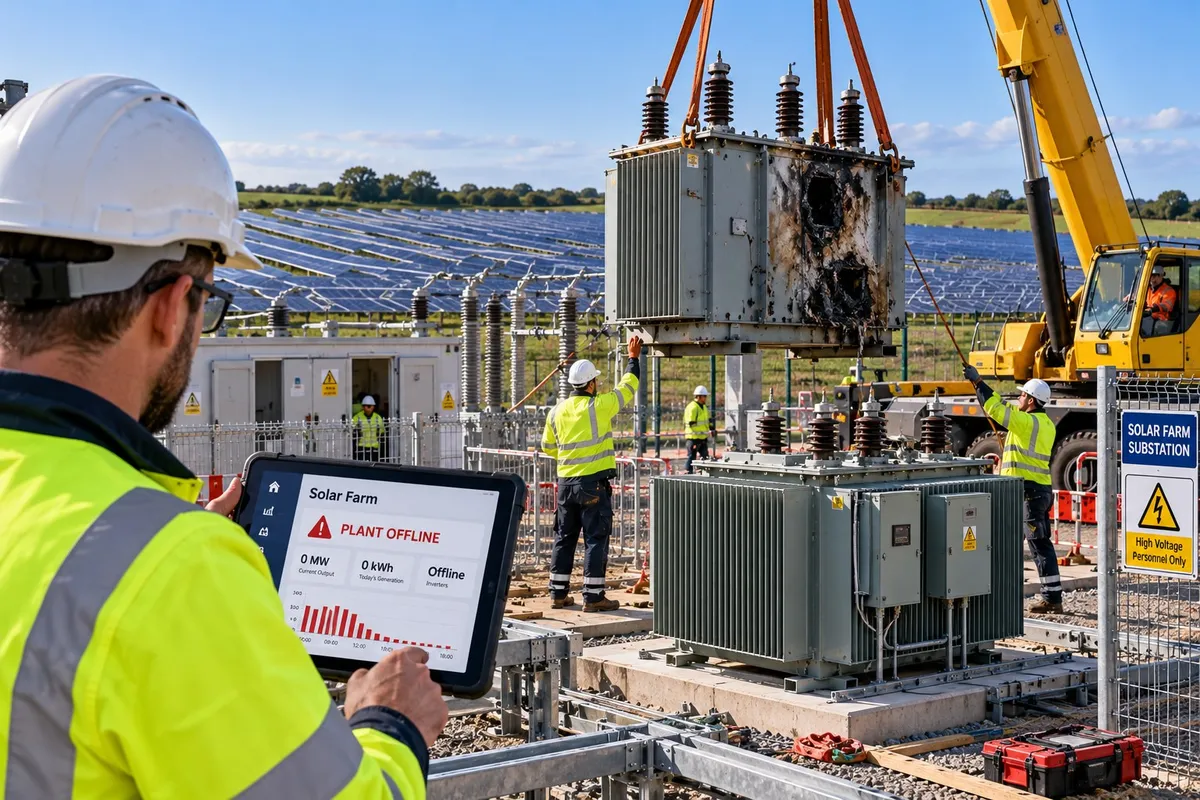
Solar farm business interruption insurance protects the generation revenue a site loses after insured damage or equipment breakdown. Revenue is the reason a solar farm exists, so this is often the most important part of the programme. The key decisions are the indemnity period, which must reflect real equipment lead times; the basis for calculating lost revenue; and whether cover extends to machinery breakdown, theft and specified third-party infrastructure.
Key facts at a glance
- Revenue is the core asset. Business interruption protects the income the site generates.
- Lead times set the indemnity period. Transformers can take many months to replace.
- Weather is not insured. Low output from less sunshine is a commercial risk.
- Breakdown BI matters. Inverter and transformer failures are common causes of downtime.
- Grid problems are usually excluded. Off-site outages need specific extensions.
How does business interruption work for a solar farm?
After an insured event such as fire, storm, theft or breakdown, part or all of the site stops exporting. Business interruption pays the lost revenue, usually calculated from expected generation and the price under your power purchase agreement, Contract for Difference or market sales, for the length of the indemnity period. It can also pay additional costs to restore generation faster, such as hiring temporary equipment. Our main solar farm insurance page explains how this sits alongside property cover.
Setting the right indemnity period
| Equipment | Why it matters | What to consider |
|---|---|---|
| Grid transformer | Single point of failure for the whole site | Manufacturing lead time can run to many months |
| Central inverters | Large sections of the site go offline | Availability of replacements and spares |
| Panels | Hail or fire can damage large areas | Matching replacements for older models |
| Cabling | Theft or fire takes strings offline | Speed of repair and access to the site |
| Substation and switchgear | Export stops entirely | Network operator involvement in reconnection |
What business interruption does not cover
Lower generation because of cloud cover, panel degradation or curtailment by the network operator is not insured damage, so it falls outside business interruption. Loss of export caused by a fault on the wider grid is usually excluded too, although some policies offer limited extensions for damage to specified third-party infrastructure. For a general explanation of how business interruption works, see our business interruption insurance guide.
- Map your critical equipment. Identify the items with the longest replacement times.
- Get current lead times. Ask suppliers how long replacements would really take.
- Agree the revenue basis. Set out how lost revenue will be calculated before a claim.
- Extend to breakdown and theft. Make sure the most common causes of downtime are covered.
- Consider spares. Holding critical spares can shorten outages and improve terms.
Construction, theft and co-located storage
During construction, the equivalent revenue protection is delay in start-up, covered in our solar farm construction insurance guide. Theft is a frequent cause of downtime; see our cable theft insurance guide. Sites with battery storage have their own business interruption considerations, explained in battery storage facility insurance. Landowners should read our landowner lease guide.
Frequently asked questions
It covers the generation revenue lost after insured damage or breakdown stops the site exporting, for the length of the indemnity period. It can also cover increased costs to restore generation more quickly.
Long enough to replace the equipment with the longest lead time, often a transformer or central inverter, plus time for installation and reconnection. Many sites need more than 12 months.
No. Business interruption responds to insured damage or breakdown, not to lower generation caused by weather, degradation or grid curtailment.
Standard cover usually excludes loss of export caused by problems on the grid outside your site. Some policies offer limited extensions for damage to specific third-party infrastructure. Check the wording carefully.
Usually from expected generation and the price you would have received under your PPA, CfD or market sales, adjusted for seasonal output. The basis should be agreed in the policy so claims are straightforward.
Not always. Machinery breakdown cover may be property only unless business interruption is extended to it. Inverter and transformer failures are common, so this extension is important.
Related guides from Miller & Partner







Instagram
LinkedIn