



Biodiversity Net Gain Insurance UK | PI & Delivery Cover
Why does Biodiversity Net Gain create a new insurance need?
Biodiversity Net Gain (BNG) turned a planning aspiration into a hard legal obligation. Under the regime, most developments in England must deliver a measurable uplift in biodiversity — and the habitats created or enhanced to achieve it must be secured and maintained for a minimum of 30 years. That single number changes everything from an insurance point of view: a profession's advice, and a landowner's delivery promise, now carry a liability tail measured in decades, not the usual six years.
For the people in the chain — ecological consultants, developers, landowners and the new breed of habitat bank operators — this is unfamiliar risk. A miscalculated biodiversity metric, an over-optimistic habitat plan, or a habitat that fails to establish can trigger planning refusals, enforcement, remediation costs and professional negligence claims. Yet most generic professional indemnity policies were never designed around a 30-year monitoring obligation, and many standard markets are wary of the exposure. That makes BNG a genuinely specialist placement.
This guide explains what BNG insurance covers, who needs it, and how underwriters assess the risk — whether you are an ecologist signing off a metric, a developer relying on that advice, or an operator running a habitat bank. It sits alongside our guidance on PI run-off cover and sustainability business insurance.
How we place BNG risk: The Insurability Framework™
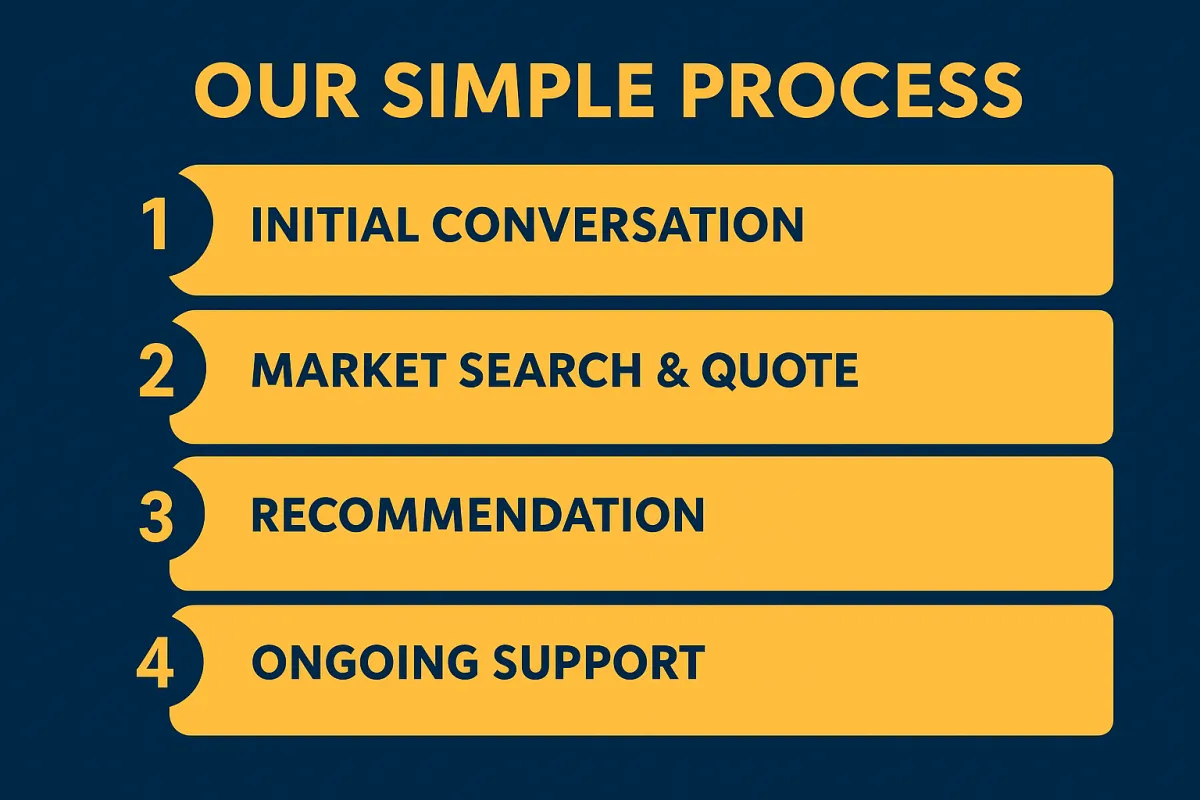
BNG is a textbook difficult risk — a new statutory regime, a 30-year liability tail and markets still feeling their way. We approach every placement through four pillars rather than firing your details at a panel and hoping.
Underwriter Intelligence
We know what makes an insurer nervous about BNG — uncosted 30-year plans, ambitious habitat types, thin competency evidence — and how to present the controls that turn hesitation into a quote.
Difficult Risk Expertise
When standard PI markets shy away from the long-tail and delivery exposures BNG creates, we place them through specialist environmental and Lloyd's-backed facilities built for novel risk.
Risk Assessment
We surface the hidden exposures that sink applications: retroactive-date gaps, metric-version errors, reliance creep, and the difference between advisory liability and delivery liability.
Claims Advocacy
If a negligence claim or a delivery-failure dispute lands years later, you deal with real people who fight your corner — coordinating insurers, defence solicitors and expert ecologists.
Key facts at a glance
- Habitats created or enhanced for BNG must be legally secured and maintained for a minimum of 30 years — a liability tail far longer than standard PI contemplates.
- Most developments must deliver at least a 10% biodiversity net gain, measured using DEFRA's statutory biodiversity metric.
- Breach the 30-year obligation and parties can face an injunction; the local authority may deliver the BNG itself and recover the costs.
- From 2 November 2026, BNG becomes mandatory for all Nationally Significant Infrastructure Projects, sharply increasing demand on the off-site unit market.
- Ecologists are in heavy demand amid a shortage of skilled ecological workers — raising the risk of stretched, error-prone assessments.
- An over-ambitious habitat — a wetland on dry soil, for example — may fail within a few years, not last the full 30, exposing the operator.
- Standard PI rarely fits the regime cleanly, so BNG cover is usually arranged through specialist markets — a broker's job, not a comparison site's.
What this guide covers
- Why does Biodiversity Net Gain create a new insurance need?
- What does Biodiversity Net Gain insurance actually cover?
- What does the BNG regime legally require?
- Who needs cover — ecologist, developer or habitat bank?
- Is your BNG exposure under control?
- How risky is your BNG role to an underwriter?
- How does the 30-year liability change professional indemnity?
- What are the risks for ecological consultants?
- What are the risks for habitat banks and landowners?
- What drives the cost of Biodiversity Net Gain insurance?
- What do real BNG claims look like?
- How should you handle a BNG-related claim?
- Glossary of key terms
- Biodiversity Net Gain insurance FAQs
- Related guides
What does Biodiversity Net Gain insurance actually cover?
There is no single "BNG policy". Cover is assembled from several lines depending on your role in the chain. The mistake we see most is an ecological consultancy assuming its existing PI automatically extends to BNG advice with a 30-year tail — it often does not. Here is how the relevant covers fit together.
| Cover | What it protects against | Who it matters most for |
|---|---|---|
| Professional Indemnity | Negligent survey, metric calculation or habitat advice causing loss | Ecologists & consultants. The core cover — but the retroactive date and tail must match BNG's longevity. |
| Delivery / Maintenance Liability | Failure to deliver or sustain the agreed habitat over 30 years | Habitat banks & landowners. The defining BNG exposure. |
| Environmental / Pollution Liability | Contamination or environmental damage on the habitat site | Operators & developers. Links to land-condition exposures — see ground engineering cover. |
| Public Liability | Third-party injury or damage on the habitat or development site | All site operators. Standard for any land-based activity. |
| Employers' Liability | Injury or illness to staff | Legally required if you employ anyone (£5m minimum). |
| Management Liability / D&O | Claims against directors over governance of long-term obligations | Habitat bank companies. Long-dated commitments mean long-dated director exposure. |
What does the BNG regime legally require?
BNG was introduced through the Environment Act 2021 and operates within the planning system under the Town and Country Planning Act 1990. In short: most new development must achieve a minimum 10% measurable gain in biodiversity, calculated with DEFRA's statutory biodiversity metric, and significant on-site and all off-site gains must be secured for at least 30 years through a planning obligation (section 106) or a conservation covenant. A qualified ecologist's input is expected, and a local planning authority may request a competency statement where it is unsure of the assessor's expertise. From 2 November 2026 the regime extends to Nationally Significant Infrastructure Projects. None of this is "insurance law" — but every requirement is a potential point of failure that an insurer prices for.
The exposure that catches people out is time. An ecologist signs off a metric in 2026; the habitat is meant to thrive until 2056. If it underperforms in year eight and someone alleges the original assessment was flawed, a claim can land long after the consultancy thought it had moved on — sometimes after it has been sold or wound up. Without the right retroactive date and run-off arrangements, that decades-old advice is uninsured. Getting the tail right at the outset is the whole game.
Who needs cover — ecologist, developer or habitat bank?
Your exposure depends entirely on your role. Select the closest match to see the cover stack we would build — and where the BNG-specific gap usually sits. For tailored terms, start a Biodiversity Net Gain quote.
Cover Checker
Ecological consultant / ecologist
Habitat bank operator
Landowner delivering BNG on-site
Property developer / housebuilder
Multi-disciplinary consultancy (planning + ecology)
BNG unit broker / trader
Is your BNG exposure under control?
With a regime this new, your governance is your underwriting case. Tick the controls you already have — each strengthens your application; each red flag is a question an insurer will raise before quoting.
BNG insurability & risk checklist
- ✓Ecologists hold recognised competency (e.g. CIEEM membership) with competency statements on file.Red flag if missing
- ✓The correct, version-controlled DEFRA statutory biodiversity metric is used for every assessment.Red flag if missing
- ✓Baseline surveys are properly scoped, seasonally timed and documented.
- ✓A 30-year management & monitoring plan is in place and realistically costed.Red flag if missing
- ✓Habitat is legally secured via section 106 or a conservation covenant.
- ✓Your PI has a retroactive date and run-off matched to the long BNG tail.
- ✓Delivery funding / financial security is arranged where required.
- ✓Scope-of-service and reliance terms are clear and in writing with every client.
How risky is your BNG role to an underwriter?
This assessor mirrors how a specialist underwriter triages BNG exposure. Choose your role and your governance maturity for an indicative risk tier.
Risk Assessor

How does the 30-year liability change professional indemnity?
Standard professional indemnity is written on a claims-made basis and usually assumes that claims will surface within the ordinary limitation period — broadly six years for contract. BNG breaks that assumption. A habitat is meant to perform for 30 years, and a defect in the original survey, metric or management plan can come to light a decade or more after the work was done. For the cover to respond, two things must line up: the policy in force when the claim is made must still cover you, and its retroactive date must reach back to when you did the original work.
That is why we treat the retroactive date and run-off cover as the heart of any BNG PI placement. If a consultancy closes, merges or stops doing BNG work, run-off keeps it protected for those long-tail claims — and without it, decades-old advice becomes a personal, uninsured exposure for the principals. Getting this structure right at the outset is far cheaper than discovering the gap when a claim arrives.
What are the risks for ecological consultants?
For ecologists, the exposure is overwhelmingly advisory. The classic flashpoints are a flawed baseline survey (missing a habitat or species, or surveying out of season), an error in the statutory metric (wrong habitat condition, distinctiveness or version of the tool), or a habitat-creation recommendation that proves unachievable on the site. Any of these can cause a developer real loss — a planning refusal, a redesign, the cost of buying additional units, or a delivery shortfall years later — and lead to a professional negligence claim. The well-documented shortage of skilled ecologists adds pressure: stretched teams working at pace are more prone to the errors insurers worry about. Robust competency evidence, peer review of metric calculations, and clear scope-and-reliance terms are the controls that both reduce the risk and reassure an underwriter. This is the same professional-negligence logic that runs through our architects' PI guidance.
What are the risks for habitat banks and landowners?
For habitat bank operators and landowners, the exposure is mainly delivery. They have committed — through a section 106 agreement or conservation covenant — to create and maintain a specified habitat for 30 years, and they carry the legal responsibility for that outcome. The risk is that the habitat simply does not establish or sustain as planned: a wetland created on unsuitable ground, a grassland that fails to reach the target condition, or management that lapses. If the obligation is breached, the consequences are serious — the local planning authority can seek an injunction, and may even deliver the habitat itself and recover the cost from the responsible party. Long-dated commitments also create long-dated governance exposure for the directors of habitat bank companies. The mitigations are realistic, costed 30-year management plans, appropriate financial security or bonding, and cover that responds to delivery shortfalls — a very different package from an ecologist's PI, and one many standard markets will not write, which is where a specialist adverse-risk broker earns their place.
What drives the cost of Biodiversity Net Gain insurance?
There is no flat rate — premiums are built from your role and risk profile. These are the factors that move the figure most, with the practical steps that bring it down. Because few standard markets write the regime cleanly, the real question is "placeable on good terms" versus "hard to place".
| Rating factor | Why it affects your premium | How to mitigate it |
|---|---|---|
| Your role in the chain | Delivery liability rates far higher than advice-only. | Be clear where advice ends and delivery begins; cover each correctly. |
| PI retroactive date & tail | A short tail leaves long-dated claims uninsured. | Match the retroactive date and run-off to the 30-year obligation. |
| Ecologist competency | Thin competency evidence raises negligence concern. | Hold recognised membership and competency statements on file. |
| Metric accuracy & version | Metric errors are a leading claims cause. | Use the correct version with peer review of calculations. |
| Habitat ambition | Hard-to-create habitats (e.g. wetland) carry higher failure risk. | Match habitat type to site conditions; avoid over-promising. |
| 30-year management plan | Uncosted or vague plans are a delivery red flag. | Produce a realistic, costed long-term management plan. |
| Financial security / bonding | No funding behind the obligation worries insurers. | Arrange appropriate financial security for delivery. |
| Claims history | Prior claims raise pricing across the board. | Disclose fully and evidence remediation — see our claims-history guide. |
| PI limit of indemnity | Higher limits cost more but contracts often demand them. | Right-size limits to project values and client requirements. |
| Project scale (NSIP vs minor) | Larger schemes carry larger exposures. | Reflect scale in limits as NSIP duties begin in November 2026. |
| Scope & reliance terms | Loose terms widen who can claim against you. | Use clear written scope-of-service and reliance wording. |
| Number of sites / units | More obligations aggregate the exposure. | Structure cover with adequate aggregate limits. |
| Governance & records | Poor documentation weakens every defence. | Keep auditable surveys, metric files and monitoring records. |
What do real BNG claims look like?
These fictionalised but realistic examples show how BNG claims unfold — and what made the difference between a defensible position and an expensive one.
The mis-calculated metric
An ecological consultancy under-counted the baseline value of an existing grassland and applied an outdated version of the metric. The developer proceeded on the figure, then had to buy a tranche of off-site units at short notice when the planning authority spotted the error — and claimed the additional cost and delay back from the consultancy.
The wetland that failed
A habitat bank committed to a wetland on a site whose hydrology could not sustain it. By year four the habitat had not reached target condition, putting the 30-year obligation in breach. The local planning authority pressed for remediation, and a substantial replanting and re-engineering programme was needed to get back on track.
The claim that arrived after closure
A small consultancy wound up two years after delivering a BNG assessment. Six years later, as the habitat underperformed, a claim was brought alleging the original baseline survey had been negligent. With no run-off cover in place, the former principals faced the claim personally.
How should you handle a BNG-related claim?
If a BNG issue surfaces — whether an advisory error or a delivery shortfall — the first steps shape everything that follows. This is the order we walk clients through.
- Identify the trigger. Work out whether the issue is advisory (a metric or survey error) or delivery (a habitat underperforming) — they engage different cover.
- Notify your insurer immediately. PI is claims-made, so report the claim or circumstance at once; late notification can void cover.
- Do not admit liability. Avoid admissions about the original advice or the habitat plan until insurers and solicitors advise.
- Preserve the technical record. Secure the baseline survey, the metric file and version, the management plan, the s106 or covenant and all client communications.
- Engage the planning authority carefully. Coordinate any LPA or enforcement correspondence with insurer-appointed solicitors.
- Instruct expert ecological evidence. Appoint, with insurers, an independent ecologist to assess causation and the habitat's actual condition.
- Cooperate with the defence. Support the appointed solicitors and experts to build the defence and quantify the claim.
- Review your tail and governance. Once resolved, confirm your retroactive date, run-off and 30-year monitoring controls are adequate going forward.

John Miller
John has 13+ years' specialist commercial insurance experience, with direct access to the Lloyd's market and specialist environmental and PI facilities. He places difficult and emerging risks — including Biodiversity Net Gain exposures for ecological consultants, developers and habitat bank operators — where standard markets hesitate. Read more about John.
Glossary of key terms
- Biodiversity Net Gain (BNG)
- The requirement for most developments in England to leave biodiversity measurably better than before, by a minimum of 10%.
- Statutory biodiversity metric
- DEFRA's standard tool for calculating biodiversity units from habitat type, size, quality and location.
- Biodiversity unit
- The standardised measure of biodiversity value produced by the metric.
- Baseline survey
- The assessment of a site's existing habitat value before development — the foundation of any BNG calculation.
- Habitat bank
- Land managed to generate off-site biodiversity units, typically under a long-term lease and 30-year obligation.
- Off-site units
- Biodiversity gains delivered away from the development site and allocated to it on the public register.
- 30-year obligation
- The minimum period for which significant on-site and off-site habitats must be maintained.
- Section 106 agreement
- A planning obligation used to legally secure BNG delivery.
- Conservation covenant
- A private legal agreement that secures long-term land management for conservation.
- Competency statement
- Evidence of an assessor's qualifications and experience, which a planning authority may request.
- CIEEM
- The Chartered Institute of Ecology and Environmental Management — the UK professional body for ecologists.
- Professional indemnity (PI)
- Cover for negligent professional advice or services causing a client loss.
- Retroactive date
- The date from which a claims-made PI policy covers past work — critical for BNG's long tail.
- Run-off cover
- Continued claims-made cover after a business or activity ceases, protecting past advice.
- Delivery liability
- Responsibility for actually creating and sustaining the agreed habitat over time.
- NSIP
- Nationally Significant Infrastructure Project — brought within BNG from 2 November 2026.






Instagram
LinkedIn