


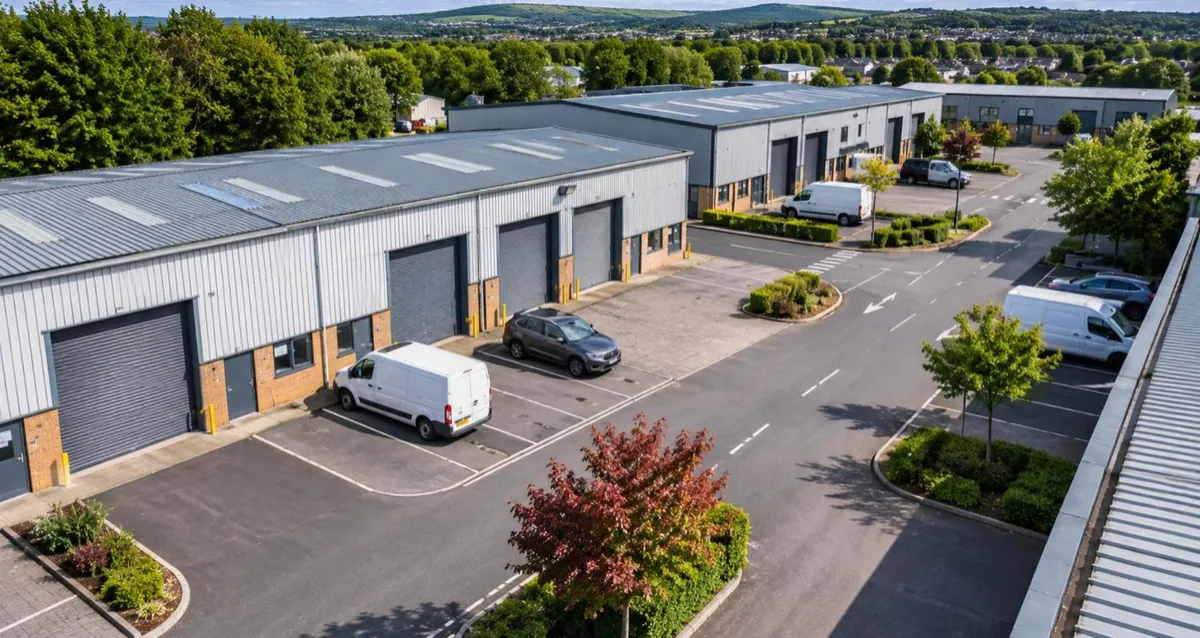
Multi-Let Industrial Estate Insurance UK for Landlords
Multi-let industrial estate insurance covers owners of industrial and trade estates, business parks and terraces of small units let to several tenants. The policy normally includes buildings, loss of rent for each unit, property owners' liability for the estate roads, car parks and common areas, and often terrorism and engineering inspection. The premium is driven by the tenants as much as the buildings. A single unit let to a woodworker, a vehicle repairer, a battery storage business or a waste operator can change the fire risk for the whole terrace, so insurers want a full tenancy schedule with each trade. Construction matters too, particularly composite panel walls and asbestos cement roofs, along with vacant units and flood exposure. A clear, up-to-date tenancy schedule is the single biggest thing a landlord can do to get better terms.
Key facts at a glance
- Tenants' trades drive the premium. One hazardous tenant can affect the price of a whole terrace.
- Insurers need a tenancy schedule. Unit by unit, with each tenant's trade, kept up to date.
- Construction is scrutinised. Composite panels, asbestos roofs and timber mezzanines all get questions.
- Rent cover should be per unit. Make sure loss of rent reflects the full rent roll and a realistic re-letting period.
- Vacant units need reporting. Empty units carry their own conditions and must be declared.
Who needs multi-let industrial estate insurance?
We insure owners of commercial estates of all sizes, from a single terrace of starter units to a business park with dozens of tenants.
- Private investors. Owners of one or two estates bought as long-term income.
- Family property companies. Portfolios built up over generations, often with older buildings.
- Funds and REITs. Larger estates with institutional lease terms.
- Farm diversification. Former agricultural buildings converted to workshop units.
- Councils. Starter unit schemes and enterprise centres.
- Owner-occupiers. Businesses that use one unit and let the rest.
What does the policy cover?
A well-built estate policy covers the buildings, the income and the landlord's liability for the common parts.
| Cover | What it protects | Watch out for |
|---|---|---|
| Buildings | Units, offices, gates, fences and estate lighting | Reinstatement values that are years out of date |
| Loss of rent | Rent lost from units damaged by an insured event | Indemnity periods too short to rebuild and re-let |
| Property owners' liability | Injury on estate roads, car parks and yards | Gaps where tenants share yard space |
| Terrorism | Damage from an act of terrorism | Often a lease requirement, see terrorism insurance |
| Engineering inspection | Statutory inspection of lifts, boilers and pressure plant | Goods lifts and hoists in common areas |
| Service charge | Loss of service charge income after damage | Often missed altogether |
Why do tenants' trades matter so much?
Industrial units are usually built in terraces under one roof. A fire in one unit rarely stays there.
An insurer rating an estate is really rating its worst tenant. A unit used for storing flat-pack furniture is a modest risk. Put a spray booth, a woodworking shop or a lithium battery business next door and the risk to every unit in that terrace goes up. That's why insurers ask for each tenant's trade, and why a schedule that says "light industrial" against every unit is often met with a high price or a decline.
Some trades are accepted with conditions, such as separation, fire suppression or limits on stock. Others, such as waste and recycling or tyre storage, can make a terrace very hard to place. If you're letting to a higher-risk business, talk to us before the lease is signed, not after.
Most estate leases make the landlord insure and recover the cost. Make sure the policy covers everything the lease promises, including terrorism and loss of rent, or the tenant may challenge the insurance rent.
What do insurers ask?
- Tenancy schedule: unit, tenant, trade, rent and lease expiry
- Construction of each building, including wall and roof materials
- Any composite panels, and whether they are fire-rated
- Asbestos surveys and management plans
- Vacant units and how they are secured
- Estate security: gates, lighting and CCTV
- Flood history and nearby watercourses
- Solar panels or EV chargers on the estate
- Claims in the last five years
If the roofs carry a solar array leased to an energy company, see our guide to insurance for landowners leasing to solar developers for the lease points that also apply to rooftop schemes.
How do you get the best terms?
- Keep the tenancy schedule current. Update it every time a unit changes hands.
- Get a reinstatement valuation. Rebuild costs have risen sharply in recent years.
- Vet new tenants' trades. Check with us before letting to a higher-risk business.
- Manage vacant units. Secure them, inspect them and clear rubbish.
- Look after the yards. Pallets and waste stacked against walls are a common fire cause.
- Use a broker with property markets. Estate risks are best placed with insurers who write them every day.
Frequently asked questions
It is a type of commercial property insurance, built around several units and tenants on one estate.
Yes, if the trade is different. A change of trade can change the risk.
Yes, though cover depends on the panel type and the trades inside. See our guide to composite panel building insurance.
It can affect the units in the same terrace, and sometimes the whole policy.
No. It pays only when insured damage stops a unit being let.
Most institutional leases require it, and many lenders expect it.
They usually carry security and inspection conditions, and some perils may be restricted.
Usually, if the lease allows. The policy must match what the lease says you will insure.
If the estate has lifts, boilers or pressure systems you are responsible for, yes.
Related guides from Miller & Partner

Miller & Partner Limited (FRN 1029698) is an Appointed Representative of Gauntlet Risk Management Ltd (FRN 308081), which is authorised and regulated by the Financial Conduct Authority. Miller & Partner Limited is registered in England and Wales (company number 16206282) and trades from Vivian House, Roman Bridge Close, Mumbles, Swansea SA3 5BG. This article is general information, not a personal recommendation or an offer of cover. Cover is subject to insurer acceptance and the full terms, conditions and exclusions of the policy issued.







Instagram
LinkedIn