


Self Storage Facility Insurance UK: Indoor & Container
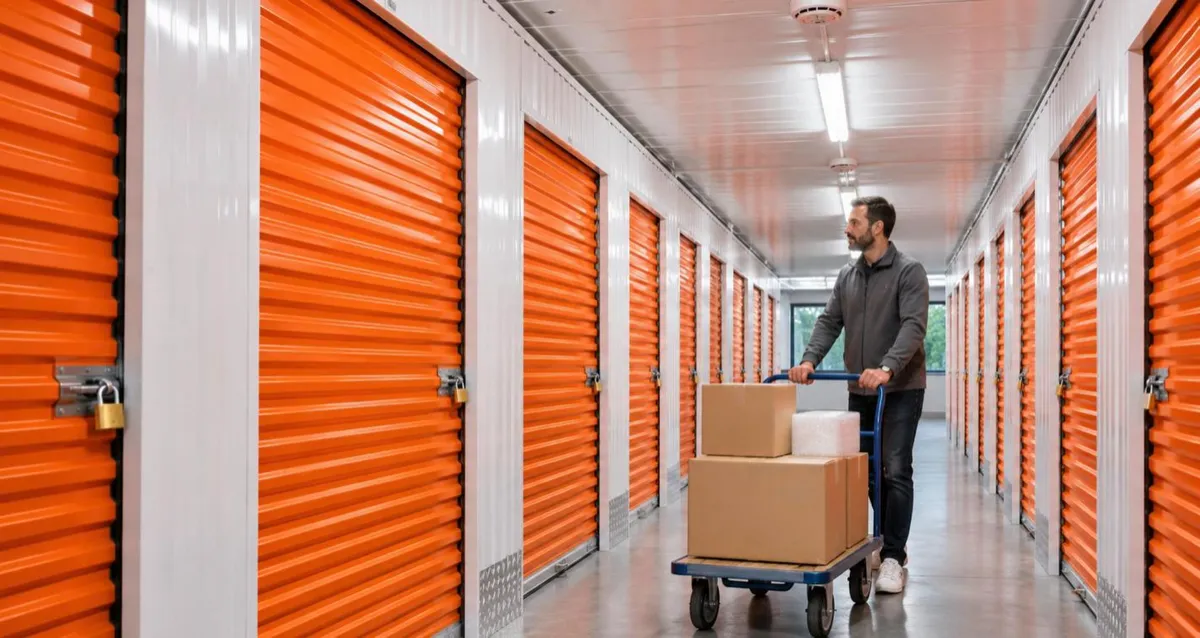
Self storage facility insurance covers operators of indoor self storage buildings and outdoor container sites. The core covers are buildings or container cover, business interruption to protect rental income, public and employers' liability, and legal liability for customers' goods where the operator could be held responsible for loss. Most operators also offer customers a goods protection scheme, which must be set up correctly so it is clear who is insuring what. Insurers focus on fire, because a storage building can hold almost anything a customer brings in, including batteries, fuel and chemicals. They look at your terms on prohibited goods, fire detection, compartmentation, access control, CCTV and how you deal with abandoned units. Container sites add theft, flood and ground conditions. A clear storage agreement and a well-run site make a big difference to the price.
Key facts at a glance
- You don't know what is stored. Insurers rely on your prohibited goods terms and how you enforce them.
- Fire is the main risk. Detection, compartmentation and keeping aisles clear all matter.
- Customers' goods need clarity. Your agreement must say who insures what, and limit your liability.
- Income cover protects the business. A fire can close a site for months, and customers may not return.
- Container sites have their own risks. Theft, flooding and ground conditions are examined closely.
Who needs self storage insurance?
We insure storage operators from single container yards to purpose-built multi-storey stores.
- Indoor self storage. Converted warehouses and purpose-built stores with internal units.
- Container storage. Shipping containers let on yards, farms and industrial land.
- Drive-up units. Single-storey units with roller doors.
- Business storage. Archive, document and stock storage for local firms.
- Farm diversification. Containers or barns let for storage.
- Landlords. Owners leasing a building or yard to a storage operator.
What does self storage insurance cover?
| Cover | What it protects | Watch out for |
|---|---|---|
| Buildings and containers | The store, partitions, doors and containers | Containers valued below replacement cost |
| Business interruption | Rental income lost after insured damage | Indemnity periods too short to rebuild and refill |
| Legal liability for customers' goods | Claims that you caused loss to stored goods | Terms that don't limit your liability clearly |
| Public liability | Injury to customers and visitors on site | Forklifts, trolleys and loading areas |
| Employers' liability | Injury to staff | A legal requirement once you employ anyone |
| Customer goods protection | Cover the customer buys through you | Must be arranged and sold within the rules |
Why do insurers worry about fire in storage?
A storage building is full of other people's belongings, packed tightly into units nobody inspects every day.
Most self storage fires start in a unit, often from something that shouldn't be there: a lithium battery pack, a can of fuel, a gas bottle or paint. Large indoor stores also use a lot of lightweight partitioning, and older conversions may have composite panel walls. Once a fire takes hold, it can spread quickly and be hard to reach.
Insurers price this by looking at the building and how you run it. Automatic fire detection linked to a monitoring centre, compartment walls, sprinklers in larger stores and a clear policy on prohibited goods all count. So does your record of dealing with abandoned units and units that smell or leak.
Your customer terms decide how much of a loss lands on you. A well-drafted agreement limits your liability, sets out prohibited goods and makes it clear that customers must insure their own goods.
What do insurers ask about a storage site?
- Indoor, drive-up or container, and the number of units
- Building construction, including any composite panels
- Fire detection, sprinklers and compartmentation
- Prohibited goods terms and how they are enforced
- Access control, CCTV and alarm monitoring
- Staffed hours and out-of-hours access
- How customer goods are insured
- Flood risk, especially on container yards
- Claims and any thefts in the last five years
How do you get the best terms?
- Tighten prohibited goods terms. And remind customers when they sign.
- Invest in detection. Monitored fire and intruder alarms are worth it.
- Keep aisles and yards clear. No storage outside units.
- Deal with abandoned units. Have a clear process for clearing them.
- Value containers properly. At replacement cost, including delivery.
- Use a broker who knows storage. Few mainstream insurers write it well.
Frequently asked questions
Not usually, if your agreement is drafted properly. You can still be liable if a loss is your fault, which is what legal liability cover is for.
Many operators do, through a goods protection scheme. It must be set up correctly within the rules.
Yes. Containers can be covered for damage and theft at replacement cost.
Typically fuels, gas cylinders, chemicals, fireworks, explosives and other hazardous items. Lithium batteries are a growing concern.
Not always, but insurers may expect them in larger indoor stores.
Long enough to rebuild and refill the store. That is often 18 to 24 months for a large site.
It can, depending on construction and fire separation.
Yes. Your lease will say who insures the land and any buildings.
Related guides from Miller & Partner

Miller & Partner Limited (FRN 1029698) is an Appointed Representative of Gauntlet Risk Management Ltd (FRN 308081), which is authorised and regulated by the Financial Conduct Authority. Miller & Partner Limited is registered in England and Wales (company number 16206282) and trades from Vivian House, Roman Bridge Close, Mumbles, Swansea SA3 5BG. This article is general information, not a personal recommendation or an offer of cover. Cover is subject to insurer acceptance and the full terms, conditions and exclusions of the policy issued.






Instagram
LinkedIn