


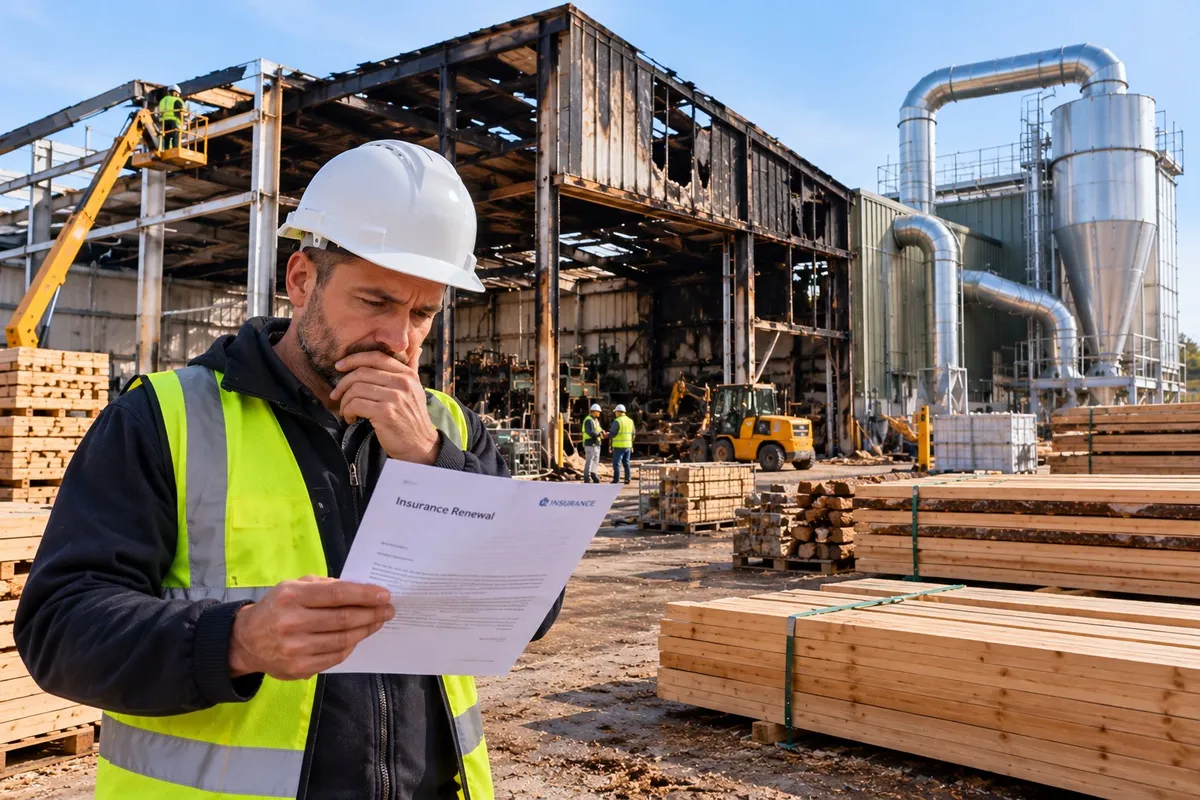
Sawmill Insurance Refused or After a Fire? | UK Specialists
If your sawmill has been refused cover, non-renewed or heavily loaded, it is usually still insurable. Mainstream insurers decline sawmills because of appetite, sector limits, survey findings or a recent fire. Specialist and Lloyd's markets write these risks when they are presented properly: an honest account of the loss or concern, evidence of the improvements made and clear information about dust control, fire protection and site management. The quality of that presentation is often what turns a decline into a quote.
Key facts at a glance
- Many declines are about appetite. The insurer may simply have left the sector.
- A fire is not the end. Cause, changes and controls matter more than the loss itself.
- Disclosure is essential. Previous refusals and losses must be presented fairly.
- Improvements need evidence. Photographs, reports and records carry weight.
- Terms can improve. A clean record and good surveys reopen wider markets.
Why are sawmills refused cover?
| Reason | What it usually means | How to respond |
|---|---|---|
| Appetite | The insurer no longer writes timber processing | Go to markets that actively write the sector |
| Capacity | The insurer has reached its limit for sawmills or the area | Approach other specialist or Lloyd's markets |
| Survey findings | Housekeeping, dust, electrics or separation concerns | Complete the improvements and evidence them |
| Claims history | A fire, large loss or frequent smaller claims | Explain the cause and what has changed |
| Missing information | The underwriter could not assess the risk | Provide a full, organised presentation |
Our main sawmill and timber yard insurance page explains how these risks are underwritten in general. If you have been refused more widely, see insurance after being refused cover.
How do you insure a sawmill after a fire?
- Gather the facts. Fire service and loss adjuster reports, photographs and the final claim value.
- Identify the cause. Insurers want to know whether it was a saw, a kiln, a boiler, electrics, hot work or arson.
- Show what has changed. New spark detection, rebuilt extraction, better separation or new cleaning routines.
- Provide current evidence. LEV reports, electrical and thermographic surveys, and cleaning records.
- Present it through a specialist. A broker who knows which markets write sawmills will target the right underwriters.
The dust controls insurers expect are set out in our guide to wood dust, extraction and fire conditions. For property claims more generally, see property insurance after a claim.
What terms should you expect?
Insurers writing a sawmill after a decline commonly add a higher fire excess, conditions on dust and housekeeping, and a list of risk improvements with deadlines. Some will cap stock values in the open or require spark detection within a set period. Read every requirement carefully and diarise the deadlines. Completing them on time and sending proof to your broker builds the case for better terms at the next renewal.
Firewood producers and timber merchants
The same approach works for wood fuel producers and timber yards that have been declined. See our guides to firewood and kiln-dried log insurance and timber merchant insurance, and read about our approach to difficult risks in the Insurability Framework.
Frequently asked questions
Common reasons are that the insurer no longer writes woodworking or timber processing, has reached its limit for the sector, or is unhappy with the fire risk, survey findings or claims history. Many declines are about appetite rather than the quality of your site.
Often, yes. Specialist and Lloyd's markets will consider a sawmill after a fire if you can show the cause, the improvements made and how the site is now managed. A clear, honest presentation is essential.
You must make a fair presentation of the risk, which usually includes previous refusals, cancellations and special terms if the proposal asks or they would influence an underwriter. Failing to disclose can give an insurer grounds to reduce or refuse a claim later.
They are actions an insurer asks you to complete, often after a survey, such as fitting spark detection, improving housekeeping or separating stock. Some must be done before cover starts and others within a set time. Missing a deadline can affect cover.
It can. A clean claims record, completed improvements and good survey reports give grounds to approach more markets at renewal. Many sawmills move from a restricted market back to broader cover within a few years.
Act quickly, as you may be uninsured from the cancellation date. Gather the cancellation letter, survey reports and claims details and contact a specialist broker straight away.
Related guides from Miller & Partner







Instagram
LinkedIn