


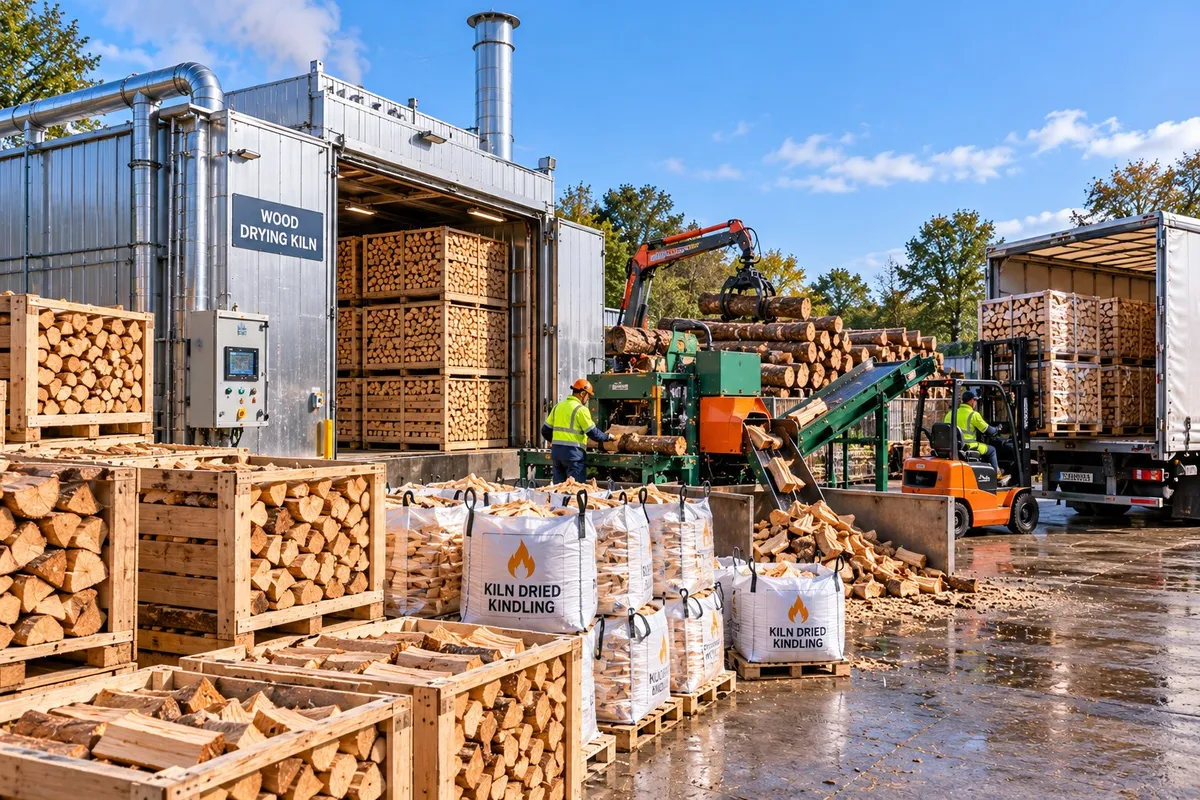
Firewood & Kiln-Dried Log Producer Insurance | UK
Firewood and kiln-dried log producers need cover built around kilns, seasonal stock and products sold to the public. The main risks are fire in kilns, boilers and log stacks, injuries on processors and splitters, and liability for the fuel you supply. Many standard insurers decline wood fuel producers because of the fire load, so cover is usually placed with specialist markets that understand drying, storage and delivery. Getting the stock sum insured and the kiln controls right are the two things that make the biggest difference.
Key facts at a glance
- Kilns are the main fire risk. Controls, alarms and separation are closely examined.
- Biomass boilers need care. Fuel stores, burn-back protection and ash handling matter.
- Stock is seasonal. The sum insured must cover your autumn peak, not an annual average.
- You sell a product. Products liability is essential for trade and domestic sales.
- Machinery injuries are common. Processors and splitters drive employers' liability.
Who is this cover for?
Many producers started as a sideline to forestry, farming or tree surgery and grew into a business with kilns, a yard and delivery vehicles. At that point a farm or general business policy often stops being suitable. Insurers want to understand the drying process, the volume of stock and how the site is laid out. If you also run a primary sawmill, our sawmill and timber yard insurance page explains how the wider operation is underwritten.
What risks do insurers look at?
| Risk | Why it matters | What helps |
|---|---|---|
| Kilns | Long heating cycles next to dry timber; overheating starts fires inside the chamber | Temperature controls, high-temperature cut-outs, alarms and cleaning |
| Biomass boilers | Flame and hot ash close to dry fuel and dust | Separate boiler house, burn-back protection and ash bins |
| Log stacks | Large volumes of dry fuel in the open; arson risk | Stack size limits, separation from buildings and site security |
| Processors and splitters | Serious hand and limb injuries | Guarding, training, maintenance and supervision records |
| Products sold | Claims from trade and domestic customers | Clear labelling, quality control and drying records |
| Deliveries | Loads damaged, stolen or causing damage when tipped | Goods in transit cover and careful delivery procedures |
How should kilns and boilers be presented?
Tell your broker what each kiln is built from, how it is heated, how temperature is controlled and what happens if a control fails. Explain how far the kilns and boiler are from stock and other buildings, and how often heaters, fans and chambers are cleaned of bark and debris. Remote monitoring and alarms, especially for kilns left running overnight, are viewed positively. The dust principles in our guide to wood dust, extraction and fire conditions apply equally to log processing and kindling lines.
Getting the stock sum insured right
If your stock sum insured is based on a quiet month, a fire in October could leave you badly underinsured, and the condition of average could reduce the claim further. A seasonal increase clause or a declaration-linked arrangement solves this. Our guide to underinsurance and the condition of average explains how the shortfall is calculated. Consider business interruption too: losing kilns at the start of the season can wipe out a year's trading, so read our guide to business interruption insurance.
Products, Ready to Burn and liability
Products liability protects you if a customer alleges injury or damage from something you supplied, from bagged kindling to bulk loads. In England, wood fuel sold in units under two cubic metres must be certified as Ready to Burn, which requires a low moisture content. That is a regulatory obligation rather than an insurance condition, but consistent drying records help show a controlled process and support your defence if a product complaint arises.
- Document your drying process. Keep moisture readings and kiln cycle records.
- Separate the fire risks. Keep kilns, boilers, stock and waste apart.
- Protect the machinery. Guard processors and splitters and record training.
- Secure the yard. Fencing, lighting and CCTV deter arson and theft.
- Review sums insured each summer. Adjust before your stock peaks.
Refused cover or had a kiln fire?
Our guide to sawmill insurance after a refusal or fire explains how to present a past loss. If you sell timber products more widely, see also timber merchant insurance.
Frequently asked questions
Kilns run hot for long periods next to dry fuel, often heated by a biomass boiler burning offcuts. Overheating, control failures and dust or debris on heaters can start fires inside the chamber, which can spread to stock and buildings nearby.
Stock usually peaks in late summer and autumn before the heating season. A seasonal increase or declaration-linked arrangement lets the sum insured rise when stock is highest, avoiding underinsurance at the time you are most exposed.
Yes. You sell a product to trade and domestic customers, so products liability protects you against claims for injury or damage allegedly caused by what you supplied. It also covers bagged kindling and other wood fuel products.
Ready to Burn is a regulatory requirement in England for wood sold in units under two cubic metres, not an insurance condition. However, insurers see compliance as a sign of a well-run business, and your records help show your drying process is controlled.
Machinery such as log processors, splitters and saw benches can be covered under plant and machinery or engineering sections. Injuries on this equipment are a key employers' liability risk, so guarding, training and maintenance records matter.
Vehicles need their own motor policy. Goods in transit cover protects the logs and wood fuel you carry. Liability for loading and unloading at a customer's premises should be checked under your public liability cover.
Related guides from Miller & Partner








Instagram
LinkedIn