


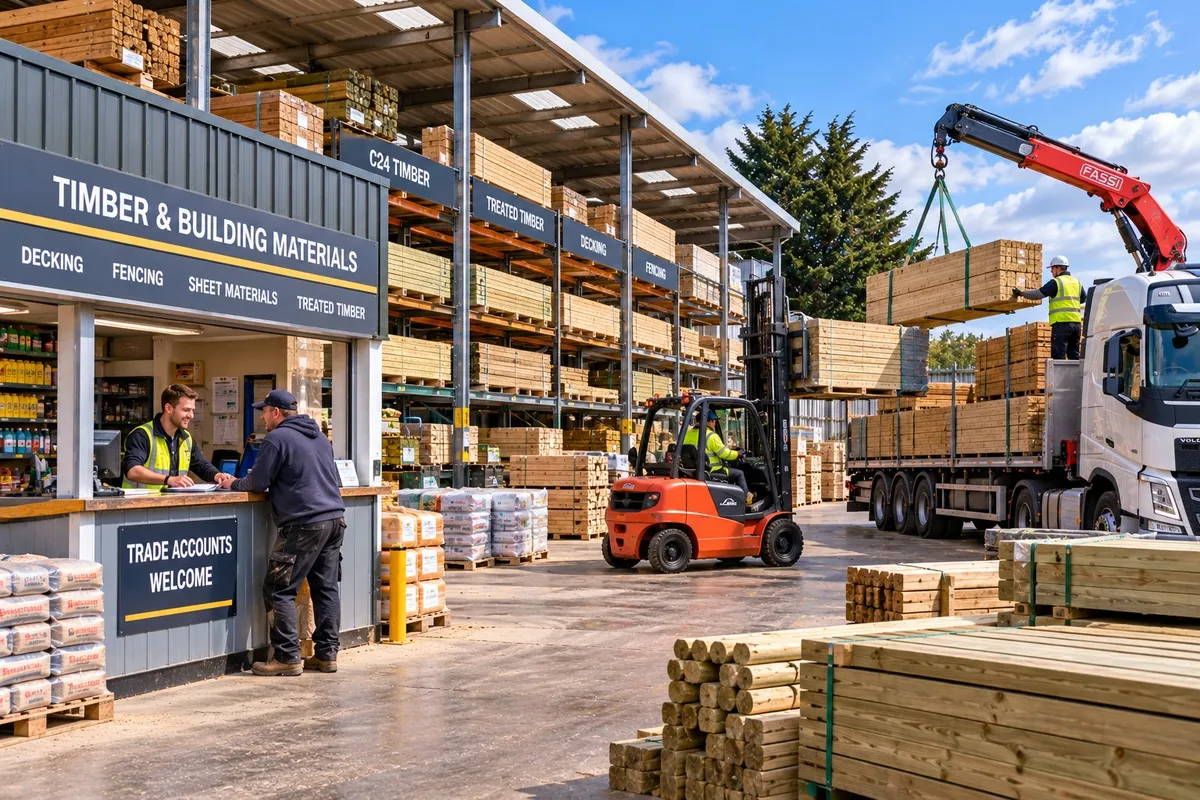
Timber Merchant Insurance UK | Yards, Stock & Liability
Timber merchant insurance protects businesses that buy, store, cut and sell timber to trade and the public. It typically combines property and stock cover for sheds and open yards, business interruption, employers' and public liability, products liability, goods in transit and engineering inspection. Insurers focus on fire load, open storage, cutting services, forklift and customer safety, and the timber products you sell. Many mainstream insurers are cautious about large timber stocks, so specialist markets often offer better terms.
Key facts at a glance
- Stock is the biggest asset. Insure peak values in sheds and open yards.
- Cutting adds risk. Panel and cross-cut saws bring dust and machinery hazards.
- Customers are on site. Pedestrian and forklift separation is closely examined.
- You sell graded products. Products liability matters for structural and treated timber.
- Lifting equipment needs inspection. Forklifts and lorry cranes fall under LOLER.
What makes timber merchants different?
A merchant may hold sawn and treated softwood, hardwoods, sheet materials, fencing and landscaping products, much of it in open racking or yard stacks. Trade customers walk the yard while forklifts move loads, and delivery lorries with cranes come and go. Some merchants also run cutting and machining services. Each element is insurable, but it needs presenting properly. For primary processors, see our sawmill and timber yard insurance page.
Which covers does a timber merchant need?
| Cover | What it protects | Watch out for |
|---|---|---|
| Buildings | Sheds, racking structures, offices and trade counter | Reinstatement values; consider day one reinstatement |
| Stock | Timber and materials in sheds and open yard | Seasonal peaks and terms for open storage |
| Business interruption | Lost gross profit after a fire or major loss | Indemnity period long enough to rebuild and restock |
| Employers' liability | Staff injuries, including on saws and forklifts | Training and guarding records |
| Public and products liability | Customer injuries and claims about products sold | Grading and treatment certificates from suppliers |
| Goods in transit | Stock on your delivery vehicles | Limits per vehicle and unattended vehicle conditions |
| Engineering inspection | LOLER examinations for forklifts and lorry cranes | Inspection reports kept up to date |
How do insurers assess the yard?
Stacks close to buildings or boundaries can spread fire and are vulnerable to arson, so separation and security carry weight. Fencing, gates, lighting and monitored CCTV all help. Inside, insurers want to see orderly racking, controlled smoking areas, a hot work permit system and inspected electrics. Where you cut timber or panels, they will ask about dust extraction; our guide to wood dust, extraction and fire conditions explains what good looks like.
- Mark pedestrian routes. Keep customers away from forklift and loading areas.
- Limit stack sizes. Keep clear gaps from buildings, boundaries and each other.
- Secure the site out of hours. Lock gates, light the yard and monitor CCTV.
- Maintain cutting equipment. Guard saws, maintain extraction and record training.
- Keep certificates on file. Grading, treatment and LOLER records support any claim defence.
Products liability for graded and treated timber
Strength-graded timber and preservative-treated products are sold for specific uses. If a batch fails, builders and their insurers may look to the merchant as well as the manufacturer. Keep supplier certificates, store treated and untreated stock separately and make sure your products liability limit reflects the contracts you supply. If you also insure timber buildings, see our timber frame building insurance page, and for general property cover see commercial property insurance.
Refused or facing a big increase?
Large timber stocks and a fire or theft claim can push mainstream insurers away. Our guide to sawmill insurance after a refusal or fire covers how we present difficult wood processing and timber risks. If you also sell firewood, read our firewood and kiln-dried log insurance guide.
Frequently asked questions
Usually buildings, stock in sheds and open yards, business interruption, employers' and public liability, products liability, goods in transit, money and engineering inspection for forklifts and crane-mounted lorries. The exact mix depends on how you trade.
It can be, but insurers often apply different terms to stock in the open, for example for storm, theft and malicious damage. Make sure the policy states where stock is kept and that the sum insured covers both covered and open storage.
Yes. Panel saws and cross-cut saws create dust and machinery injury risks similar to a small sawmill. Tell your insurer, keep extraction maintained and record staff training.
You can be. If you sell strength-graded or treated timber and it is not as described, you may face a products liability claim. Keep supplier certificates and grading records, and make sure products liability is included at a suitable limit.
Public liability covers injury to customers and visitors, but insurers will ask how you keep pedestrians and forklifts apart. Clear routes, signage and supervised loading reduce both accidents and premium.
Crane-mounted lorries need thorough examination under LOLER, which is usually arranged through an engineering inspection policy. Liability while unloading at a customer's site should also be confirmed with your insurer.
Related guides from Miller & Partner








Instagram
LinkedIn