


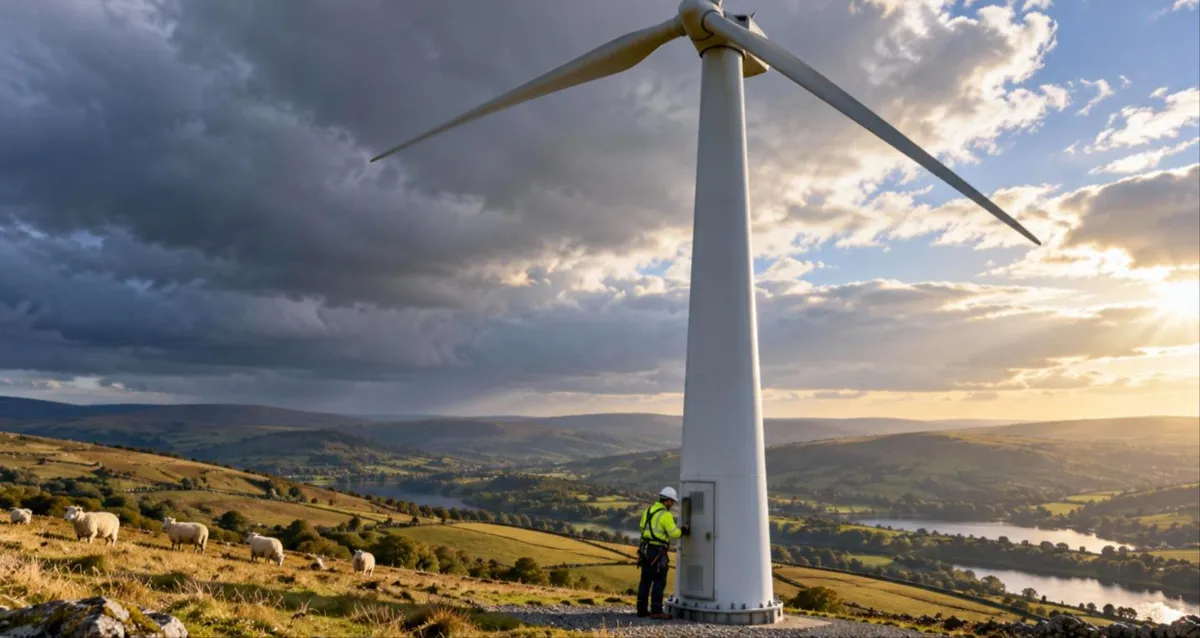
Small Wind Turbine Insurance UK | Farm & Business Turbines
Small wind turbine insurance covers single turbines and small groups owned by farms, estates, businesses and community groups, along with the income they earn. The core covers are material damage for the turbine, tower, foundations and electrical equipment, machinery breakdown for the gearbox, generator and controls, and business interruption for lost generation income. Lightning, storm and component failure cause most claims. Public liability is essential because a turbine failure can injure people or damage property nearby, and insurers will ask about distances to roads, footpaths and buildings. Many owners also need cover for the turbine while it is being installed or refurbished. Insurers look at the make and model, its age, the servicing contract, condition monitoring and how quickly parts can be obtained, because some older turbine makes are no longer supported.
Key facts at a glance
- Breakdown is the most common claim. Gearboxes, generators, blades and control systems fail, and machinery breakdown cover pays for repair or replacement.
- Lightning and storm are the main perils. Turbines are tall and exposed, so lightning protection and storm history affect the terms.
- Parts availability matters. Some older small turbine makes are no longer supported, which can stretch repair times and limit cover.
- Income loss needs its own cover. Business interruption replaces lost feed-in tariff and export income after insured damage or breakdown.
- Liability is not optional. A falling component or ice throw can injure people or damage property, so public liability limits should reflect what is nearby.
What insurance does a small wind turbine need?
Most small wind turbines need material damage, machinery breakdown, business interruption for lost generation income, and public liability. Owners with staff need employers' liability, and turbines being installed need contract works cover.
| Cover | What it protects |
|---|---|
| Material damage | Turbine, blades, tower, foundations, transformer and cabling |
| Machinery breakdown | Sudden failure of the gearbox, generator, pitch and yaw systems and controls |
| Business interruption | Lost generation and export income after insured damage or breakdown |
| Public liability | Injury or damage caused by component failure, blade throw or ice throw |
| Contract works | The turbine during installation, repowering or major repair |
Small wind is often insured alongside solar and storage on the same site. See our solar farm insurance page for how larger arrays are covered.
Why the turbine's make and servicing matter
Insurers price small wind on the turbine's track record. Well-supported makes with regular servicing and remote monitoring get the best terms. Turbines whose manufacturer has stopped trading can be harder to insure because parts may not be available.
If your turbine is an orphaned make, show insurers how you would source parts, such as a specialist service company, a stock of critical spares or a plan to repower. That evidence can make the difference between a quote and a decline.
Servicing records also support claims. A gearbox failure on a turbine with a full service history is far easier to settle than one with gaps in maintenance.
Breakdown cover responds to sudden failure, not gradual wear. Regular servicing is what keeps a claim in the first category.
What do insurers look for?
Insurers look at the turbine's make, model, capacity and age, the servicing contract, condition monitoring, lightning protection, distances to roads and buildings, claims history, and the income it earns.
- Turbine. Make, model, capacity, hub height and year installed
- Servicing. Who services it, how often and what the contract includes
- Monitoring. Remote monitoring and vibration or condition alerts
- Location. Distances to footpaths, roads and buildings
- Spares. Availability of blades, gearboxes and controllers
- Income. Tariffs, export agreements and annual generation
Many farms combine wind with solar and batteries. Our guide to farm and agricultural battery storage insurance covers storage on farm sites.
How do you set up wind turbine insurance?
- Describe the turbine. Make, model, capacity, age and location.
- Value the asset. Replacement cost including installation and grid connection.
- Confirm the income. Annual generation and tariff or export rates.
- Gather records. Service history, monitoring reports and any past claims.
- Set the indemnity period. Allow for realistic lead times on blades and gearboxes.
- Review each year. Update values after repowering or major repair.
Turbines on community and estate land
Turbines owned by community energy groups need cover for the group as well as the asset. Turbines on estates often sit alongside hydro schemes and other renewables.
See our guides to community energy group insurance and hydro power scheme insurance for how those ownership models are insured.
Frequently asked questions
Sometimes, but often only for basic damage. Breakdown and lost income usually need a specialist policy, so check your farm policy wording.
Yes, under machinery breakdown cover, provided the failure is sudden and the turbine has been maintained.
Often yes, but insurers will want to see how you would obtain parts. A specialist service company or spares stock helps.
Yes, under business interruption, when generation stops because of insured damage or breakdown.
Many owners hold £5 million, but the right limit depends on what is near the turbine, such as roads, footpaths and buildings.
Yes. We present the claim and the repairs or improvements made to specialist renewable energy insurers.
Related guides from Miller & Partner

Miller & Partner Limited (FRN 1029698) is an Appointed Representative of Gauntlet Risk Management Ltd (FRN 308081), which is authorised and regulated by the Financial Conduct Authority. Miller & Partner Limited is registered in England and Wales (company number 16206282) and trades from Vivian House, Roman Bridge Close, Mumbles, Swansea SA3 5BG. This article is general information, not a personal recommendation or an offer of cover. Cover is subject to insurer acceptance and the full terms, conditions and exclusions of the policy issued.







Instagram
LinkedIn