


Solar Farm O&M Contractor Insurance UK | Specialist Cover
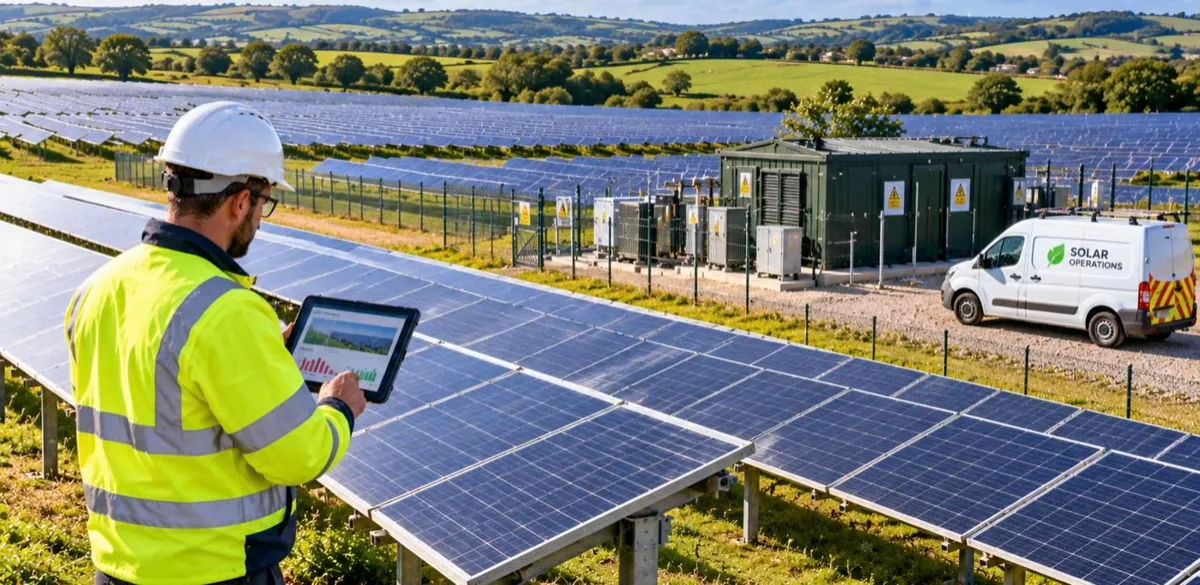
Solar farm O&M contractor insurance protects the businesses that operate and maintain ground-mounted solar sites: the teams who clean panels, manage vegetation, test inverters, repair cabling and respond to faults. The core covers are public liability, employers' liability, contractors' tools and plant, and professional indemnity where the contractor gives technical advice or monitors performance remotely. Many site owners also expect the contractor to cover damage to the solar equipment it is working on, and to accept liability for lost generation if its work causes an outage. Contracts with asset owners and their lenders usually set minimum limits and wording, so the policy needs to be checked against each contract, not bought off the shelf.
Key facts at a glance
- Contracts set the limits. Asset owners and their lenders commonly require public liability of £5m to £10m and specific indemnity wording.
- Damage to the client's equipment is a key gap. Standard public liability may exclude damage to property you are working on, which is exactly where an O&M claim is likely.
- Lost generation claims are real. If your work causes an outage, the owner may claim for lost revenue, so check how your policy treats financial loss.
- Remote monitoring brings advice risk. Performance monitoring and reporting can create professional indemnity exposure that liability cover does not pick up.
- Plant and tools travel between sites. Mowers, vehicles, testing kit and spares need cover in transit and on unattended remote sites.
What insurance does a solar farm O&M contractor need?
Most solar O&M contractors need public liability, employers' liability, cover for tools and plant, and professional indemnity if they give technical advice or performance reporting. Many also need cover for damage to the client's equipment they are working on and for financial loss caused by outages.
| Cover | Why an O&M contractor needs it |
|---|---|
| Public liability | Injury to others or damage to third-party property arising from your work on site |
| Employers' liability | A legal requirement once you employ staff, including technicians working alone on remote sites |
| Contract works / damage to property worked on | Damage to panels, inverters or cabling caused while you are working on them |
| Tools and plant and machinery | Mowers, testing equipment and spares on site and in transit |
| Professional indemnity | Mistakes in design changes, performance reporting or remote monitoring advice |
| Financial loss extension | Owner claims for lost generation revenue after an outage you caused |
The site owner's own policy covers the asset itself. Our main solar farm insurance page explains what owners buy, and why they look closely at their contractors' insurance.
Why do asset owners scrutinise their O&M contractor's insurance?
Because the O&M contractor is on site more than anyone else, its work is the most likely cause of a loss. Owners and their lenders want to know that a claim caused by the contractor will be paid by the contractor's insurer, not by the owner's own policy.
O&M contracts for utility-scale solar usually include an indemnity from the contractor to the owner, minimum insurance limits, and a requirement to name the owner as an additional insured or to waive subrogation. Some also require evidence of cover before the contractor can start work, and again at each renewal.
- Indemnity clauses. Check whether you are agreeing to cover losses beyond what your insurer will pay, such as all lost revenue.
- Limits. Make sure your public liability limit meets the highest limit across all your contracts.
- Additional insured status. Insurers will often agree this, but it must be requested and endorsed.
- Caps on liability. A well-drafted contract caps your liability, often linked to the contract value or your insurance limit.
An uncapped indemnity for lost generation can expose you to claims far above any normal liability policy. Have your broker review the insurance and indemnity clauses before you sign a new contract.
Which risks lead to the most O&M claims?
The most common O&M claims come from damage during vegetation management, faults introduced during electrical testing or repairs, injuries to staff working alone or near live equipment, and theft of tools and spares from remote sites.
- Vegetation management. Mowers and strimmers throwing stones that crack panels, or damaging cabling.
- Electrical work. Faults introduced during inverter or string repairs that cause fires or outages.
- Lone working. Injuries on large, remote sites where help is slow to arrive.
- Theft. Copper cable and equipment theft is a serious problem on solar sites. Our guide to solar farm cable theft insurance covers what owners require.
- Grazing and livestock. Where sheep graze the site, gates left open and damage to fencing can lead to claims.
How do you set up the right O&M insurance?
- List your contracts. Gather the insurance and indemnity clauses from every O&M agreement you hold.
- Set limits to the highest requirement. One programme that meets your toughest contract is simpler than many.
- Close the gaps. Add cover for damage to property worked on, financial loss and professional indemnity where needed.
- Insure plant and tools properly. Include cover in transit and on unattended sites, with security conditions you can meet.
- Issue certificates. Provide owners with evidence of cover and endorsements before work starts.
- Review at each new contract. New clients often bring new requirements.
Can you get O&M insurance after a claim or a refusal?
Yes. Contractors with a claims history, or those refused because of electrical or high-voltage work, can usually be placed with specialist insurers once the work and the controls are explained properly.
We use the Insurability Framework™ to work out what is driving a refusal and how to present it. That might be evidence of training and permits to work, or a clearer description of what voltage work you carry out. If you also install systems, see our guide to renewable energy installer insurance.
Frequently asked questions
If you give technical advice, change designs, or report on performance from remote monitoring, professional indemnity is strongly recommended. Liability cover does not pay for financial loss caused by advice.
It varies by contract, but £5m to £10m is common for utility-scale sites. Check every contract and set your limit to the highest requirement.
Not always. Many public liability policies exclude damage to property being worked on, so you may need a specific extension or contract works cover.
Yes, if your work caused the outage and your contract allows it. Check your policy's financial loss cover and the liability cap in your contract.
Only if the policy includes it and you meet the security conditions, such as locked storage. Theft from unattended sites is a common exclusion.
Yes. We place contractors with claims or high-voltage work through specialist insurers that understand renewable energy.
Related guides from Miller & Partner

Miller & Partner Limited (FRN 1029698) is an Appointed Representative of Gauntlet Risk Management Ltd (FRN 308081), which is authorised and regulated by the Financial Conduct Authority. Miller & Partner Limited is registered in England and Wales (company number 16206282) and trades from Vivian House, Roman Bridge Close, Mumbles, Swansea SA3 5BG. This article is general information, not a personal recommendation or an offer of cover. Cover is subject to insurer acceptance and the full terms, conditions and exclusions of the policy issued.






Instagram
LinkedIn