


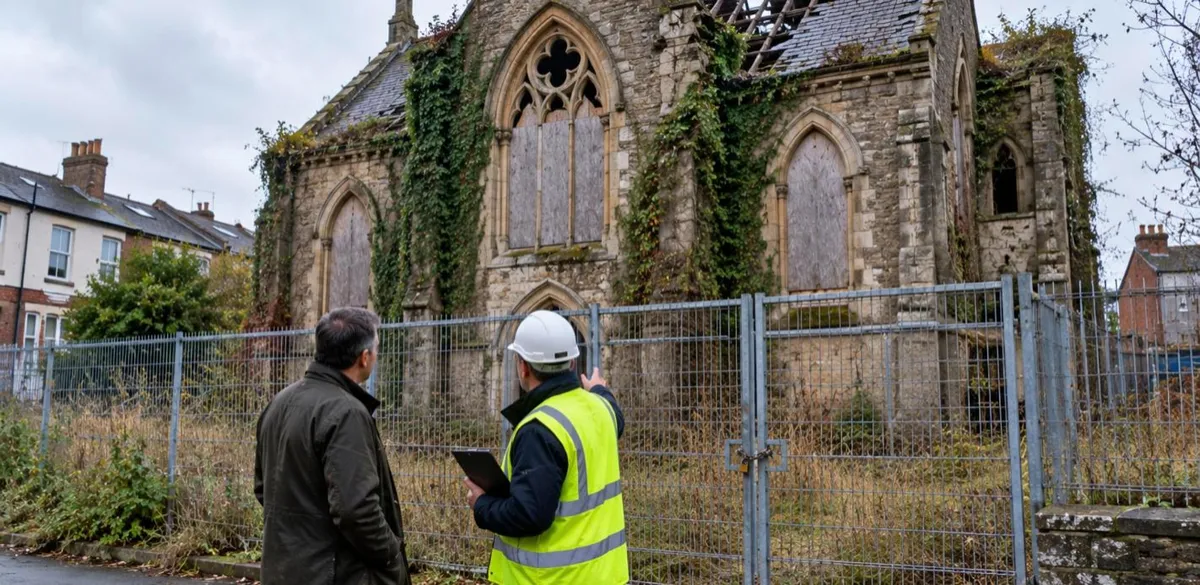
Derelict Building Insurance UK | Empty & Dilapidated Property
Derelict building insurance covers owners of empty, damaged or dilapidated buildings, from former pubs and chapels to old mills and commercial units awaiting redevelopment. The most important cover is property owners' liability, because you can be liable for injuries to visitors and, in some circumstances, trespassers, and for damage caused if the building collapses or debris falls. Many derelict buildings can only get limited property cover, such as fire, lightning, explosion and aircraft, rather than full cover, because theft, vandalism and escape of water are so likely. Lenders and councils may require cover before purchase or works. Insurers look at the building's condition, construction, location, security, inspection frequency, plans for the site and whether anyone has access.
Key facts at a glance
- Liability is the priority. You can be liable for injuries on or near the building, including from falling debris.
- Property cover is often limited. Many insurers will only offer fire, lightning, explosion and aircraft cover on derelict buildings.
- Security reduces cost. Boarding, fencing, removing combustibles and regular inspections are usually conditions of cover.
- Trespassers create risk. Owners can owe a duty of care to trespassers in some circumstances.
- Your plans matter. Insurers want to know if the building will be demolished, sold or refurbished, and when.
What insurance does a derelict building need?
A derelict building usually needs property owners' liability, property cover for at least fire and related perils, and, where works are planned, contract works and contractors' liability.
| Cover | What it protects | Watch out for |
|---|---|---|
| Property owners' liability | Injury to people and damage to neighbouring property | Falling debris and partial collapse |
| Fire and limited perils | Fire, lightning, explosion and aircraft | Arson conditions and reinstatement basis |
| Wider property cover | Storm, flood and malicious damage where available | Often unavailable until the building is secured |
| Demolition or debris removal | Cost of making the site safe after damage | Separate limits |
| Legal expenses | Disputes with neighbours and contractors | Optional |
Derelict buildings follow the same principles as other empty property. Our guide to unoccupied property insurance covers the conditions insurers apply in more detail.
Your liability for a derelict building
Owners and occupiers owe a duty of care to visitors, and the Occupiers' Liability Act 1984 can extend a duty to trespassers where you know of a danger and that people may come near it.
A derelict building with broken floors, open shafts or loose masonry is a real hazard, particularly to children. Fencing, boarding, warning signs and regular inspections both reduce the risk of injury and show insurers you are managing it. If parts of the building must come down, see our guide to demolition contractor insurance for the cover your contractor should hold.
Older derelict buildings often contain asbestos. Fire or vandalism can disturb it, increasing clean-up costs. Insurers may ask for an asbestos survey before quoting.
What do insurers ask about a derelict building?
Insurers ask about the building's history and condition, construction, location, security, inspection regime, services and future plans.
- History. Former use and how long it has been empty
- Condition. Roof, floors, structure and any listed status
- Construction. Including timber, thatch or non-standard methods
- Security. Fencing, boarding, alarms and removal of combustibles
- Inspections. Frequency and records
- Plans. Sale, demolition, refurbishment or conversion, with timescales
Listed derelict buildings need particular care because reinstatement must follow conservation rules. See our guide to listed building insurance.
Moving from derelict to refurbishment
When works start, the insurance needs to change. Contract works cover and contractors' liability come into play, and the existing structure must still be insured.
Plan the switch before your contractor arrives on site. Our main guide to property refurbishment insurance explains how cover changes as a project moves from empty building to finished property.
How do you insure a derelict building?
- Secure the site. Fence, board and remove combustibles.
- Arrange inspections. Weekly is common, and keep records.
- Gather information. Photos, surveys and any asbestos report.
- Explain your plans. With realistic timescales.
- Check lender requirements. If the purchase is financed.
- Update cover when works start. Before contractors arrive.
Frequently asked questions
Yes. Specialist insurers will usually offer liability cover and at least fire cover, and wider cover once the building is secured.
Possibly. The Occupiers' Liability Act 1984 can create a duty to trespassers where you know of a danger, so fencing and inspections matter.
Theft, vandalism and water damage are so likely on derelict buildings that many insurers restrict cover until the risk is improved.
Lenders usually require it, and the risk generally passes to you on exchange of contracts, so arrange cover by then.
Clean-up of asbestos disturbed by an insured event may be covered, but insurers may ask for a survey first.
You need contract works and contractors' liability, alongside cover for the existing building.
Related guides from Miller & Partner

Miller & Partner Limited (FRN 1029698) is an Appointed Representative of Gauntlet Risk Management Ltd (FRN 308081), which is authorised and regulated by the Financial Conduct Authority. Miller & Partner Limited is registered in England and Wales (company number 16206282) and trades from Vivian House, Roman Bridge Close, Mumbles, Swansea SA3 5BG. This article is general information, not a personal recommendation or an offer of cover. Cover is subject to insurer acceptance and the full terms, conditions and exclusions of the policy issued.







Instagram
LinkedIn