


AI Liability Insurance UK: Tech E&O for AI & Agent Firms
Why does AI — especially autonomous AI agents — create a new liability gap?
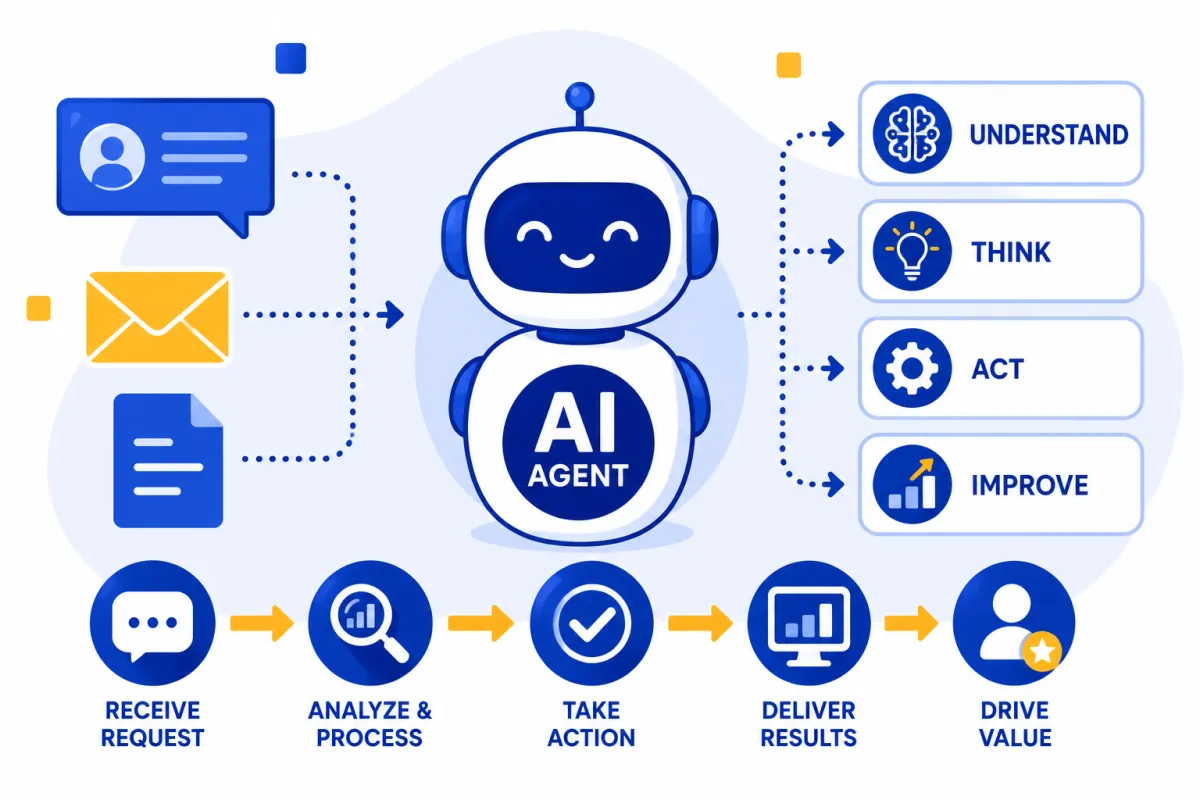
AI used to advise. Increasingly, it acts. The shift from chatbots that suggest to autonomous AI agents that take real actions — booking, buying, sending, deciding, executing — has moved AI from an information risk to an action risk. When an agent with system access does the wrong thing at machine speed, the loss is no longer hypothetical, and the question of who pays lands squarely on the business that built or deployed it.
The insurance market has noticed. As of 2026, many standard policies are being rewritten against AI: insurers have begun adding broad AI exclusions to cyber and management liability wordings, and most off-the-shelf technology errors & omissions (Tech E&O) policies were never designed to cover algorithmic outputs or autonomous decisions at all. The result is a widening gap — businesses assume they are covered for AI failures when, increasingly, they are not. Closing that gap with purpose-built cover is now a specialist exercise, not a box-ticking renewal.
This guide explains what AI liability insurance actually covers, why insurers are excluding AI, and how underwriters assess the risk — whether you build AI agents, ship a generative-AI product, or simply deploy third-party AI in your business. It sits alongside our guidance on AI consultancy insurance and cyber insurance.
How we place AI risk: The Insurability Framework™
AI liability is a textbook difficult risk — a fast-moving exposure, a market actively writing exclusions, and a regulatory regime still settling. We approach every placement through four pillars rather than firing your details at a panel and hoping.
Underwriter Intelligence
We know what makes an insurer nervous about AI — no human oversight, no bias testing, undocumented training data — and how to evidence the governance that turns an exclusion into cover.
Difficult Risk Expertise
When standard markets exclude algorithmic and autonomous-agent exposures, we place them through specialist technology and Lloyd's-backed facilities built for emerging risk.
Risk Assessment
We surface the hidden gaps that bite at claim time: Tech E&O wordings that quietly exclude AI outputs, cyber policies that drop deepfake fraud, and IP exposure from training data.
Claims Advocacy
If an AI hallucination, an agent's rogue action or an IP claim lands, you deal with real people who fight your corner — coordinating insurers, defence solicitors and technical experts.
Key facts at a glance
- Most off-the-shelf Tech E&O policies exclude algorithmic decisions and AI outputs — a generic policy bought to satisfy a procurement checklist may not respond when an AI claim lands.
- From early 2026, major carriers began adding broad AI exclusions to cyber and management liability wordings, and excluding AI deepfake fraud from standard cyber cover.
- The EU AI Act's most impactful deadline — high-risk AI system obligations — takes full effect on 2 August 2026, with penalties up to €35m or 7% of global turnover.
- Autonomous AI agents change the risk from bad advice to wrong action — executed at machine speed, with system access, before a human can intervene.
- A correctly built AI programme usually layers Tech E&O, cyber, IP/media and D&O — no single policy covers everything.
- AI governance is now an underwriting requirement — insurers ask for human oversight, bias testing and documentation, and price (or decline) accordingly.
- If your AI controls physical systems (robotics, vehicles, medical devices), product and bodily-injury exposures come into play too.
What this guide covers
- Why does AI — especially autonomous AI agents — create a new liability gap?
- What does AI liability insurance actually cover?
- Why are insurers now excluding AI from standard policies?
- What cover does your AI business need?
- Is your AI governance insurable?
- How risky is your AI deployment to an underwriter?
- How does the EU AI Act change your exposure, even in the UK?
- What are the risks specific to autonomous AI agents?
- What drives the cost of AI liability insurance?
- What do real AI liability claims look like?
- How should you handle an AI liability claim?
- Glossary of key terms
- AI liability insurance FAQs
- Related guides
What does AI liability insurance actually cover?
There is no single "AI insurance" policy. Cover is layered from several lines, because an AI failure can cause loss in very different ways — a wrong output, a data breach, an IP infringement, a governance failure. The mistake we see most is a business assuming its existing Tech E&O or cyber policy automatically extends to AI. Here is how the layers fit together.
| Cover | What it protects against | Why an AI business needs it |
|---|---|---|
| Technology E&O | Faulty output, model error, bad advice causing client loss | Core. But it must explicitly cover AI/algorithmic outputs — many wordings exclude them. |
| Cyber Liability | Data breach, system failure, ransomware, breach response | Essential. AI businesses process large, often sensitive datasets. See cyber insurance. |
| IP / Media Liability | Training-data copyright claims, infringement, defamation | Essential. Training-data provenance is a fast-growing claim source. |
| Directors & Officers | Governance and securities claims over AI decisions | Recommended. Especially if venture-backed — see D&O cover. |
| Product / Casualty | Bodily injury or property damage from AI in physical systems | Situational. Vital if your AI drives robotics, vehicles or devices. |
| Employers' Liability | Injury or illness to staff | Legally required if you employ anyone (£5m minimum). |
Why are insurers now excluding AI from standard policies?
Because the loss potential is large, novel and hard to model — so insurers are protecting themselves while the picture clarifies. Across 2026, several major carriers sought clearance for, or began applying, broad AI exclusions on management liability, and many cyber policies stopped responding to AI-driven deepfake fraud. Some exclusion language is sweeping enough to remove cover for any claim "arising out of the use, deployment or development of artificial intelligence" — which can strip protection from securities, regulatory and governance claims if AI played any role.
The practical effect is that doing nothing at renewal is now risky: a policy that covered you last year may exclude AI this year, often through a quietly added questionnaire and a new exclusion. The route through is affirmative, purpose-built AI cover plus demonstrable governance — which is exactly where a business that has been refused or excluded needs a specialist broker.
What worries founders most is finding the gap at the worst possible moment. A team ships an AI agent, renews the same cyber and E&O they always had, and only when a claim arrives discovers a new "algorithmic decisions" exclusion was slipped in at the last renewal. By then the position is hard to fix. The businesses that stay covered are the ones that treat AI cover — and the governance behind it — as a live design decision, not a renewal afterthought.
What cover does your AI business need?
Your stack depends on what your AI does and how autonomously it does it. Select the closest match to see the cover we would build — and where the AI-specific gap usually sits. For tailored terms, start an AI liability quote.
Cover Checker
AI agent developer / vendor
Generative AI / LLM product company
AI consultancy / integrator
Business deploying third-party AI
AI in physical systems (robotics / vehicles / devices)
AI-driven decisioning (hiring / credit / biometric)
Is your AI governance insurable?
AI governance is now an underwriting requirement, not a nice-to-have. Tick the controls you already have — each strengthens your application; each red flag is a question an insurer will raise before quoting (or a reason they exclude).
AI insurability & governance checklist
- ✓Human-in-the-loop oversight applies to consequential or autonomous decisions.Red flag if missing
- ✓Bias and fairness testing is carried out and documented.Red flag if missing
- ✓Audit trails and model documentation are maintained.
- ✓Your AI systems have been risk-classified against the EU AI Act.
- ✓Your Tech E&O affirmatively covers AI/algorithmic outputs (not excluded).Red flag if missing
- ✓Training-data provenance and licensing are documented.
- ✓Cyber cover reflects AI/deepfake-aware wording.
- ✓Contractual liability caps and clear client terms are in place.
How risky is your AI deployment to an underwriter?
This assessor mirrors how a specialist underwriter triages AI risk. Choose how autonomously your AI acts and how mature your governance is for an indicative risk tier.
Risk Assessor
How does the EU AI Act change your exposure, even in the UK?
The UK has taken a lighter-touch, principles-based approach to AI regulation than the EU, but the EU AI Act reaches UK businesses that place AI systems on the EU market or whose outputs are used there. Its rollout is phased: prohibited practices were banned from February 2025, general-purpose AI rules applied from August 2025, and the headline deadline — full obligations for high-risk AI systems — takes effect on 2 August 2026. Penalties are severe, reaching up to €35 million or 7% of global annual turnover for the most serious breaches.
For insurers, the Act sets the governance bar. High-risk categories — including AI used in hiring, credit scoring, biometric identification and critical infrastructure — attract the closest scrutiny, and underwriters increasingly expect to see risk-classification, documentation, human oversight and bias testing before they will write affirmative AI cover. Data-protection duties under the Data Protection Act 2018 and UK GDPR sit alongside this, and the ICO's AI guidance is a useful reference. Where regulatory exposure is high, cover is a specialist placement.
What are the risks specific to autonomous AI agents?
Autonomous agents are where AI liability gets sharpest, because the agent does not just produce an output a human chooses to use — it takes the action itself. Give an agent access to systems, payments, communications or production data, and a flawed instruction, a hallucinated step or an unforeseen edge case can cause loss at scale before anyone notices. The European position is hardening too: regulators have signalled that a developer cannot claim immunity from civil liability simply because the software acted autonomously, and that the burden may shift toward providers to show their system followed its safety protocols.
That combination — autonomous action plus a tightening liability backdrop — is exactly what standard Tech E&O was not written for. The controls that matter are human-in-the-loop checkpoints for consequential actions, hard limits on what an agent can execute, full action logging, and cover wordings that affirmatively name autonomous-agent actions rather than leaving them to be argued. It is the same difficult-risk logic we apply across experimental technology placements, where the exposure is real but the market is still finding its feet.
What drives the cost of AI liability insurance?
There is no flat rate — premiums are built from what your AI does and how well it is governed. These are the factors that move the figure most, with the practical steps that bring it down. Because the market is actively excluding AI, the real question is "affirmatively covered" versus "silently excluded".
| Rating factor | Why it affects your premium | How to mitigate it |
|---|---|---|
| Autonomy level | Autonomous action rates far higher than advisory output. | Add human-in-the-loop checkpoints for consequential actions. |
| Decision consequence | AI touching money, safety or rights raises exposure sharply. | Limit what the AI can execute without review. |
| EU AI Act risk class | High-risk categories attract the closest scrutiny. | Classify your systems and evidence compliance steps. |
| Human oversight | No oversight is a leading reason for AI exclusions. | Document oversight for consequential decisions. |
| Bias & safety testing | Untested models worry underwriters. | Carry out and document bias and safety testing. |
| Training-data provenance | Unclear data licensing drives IP claims. | Document data sources and licensing. |
| Tech E&O wording | Excluded AI outputs leave you exposed. | Insist on affirmative AI/algorithmic cover. |
| Data volume & sensitivity | Large or sensitive datasets raise cyber exposure. | Hold cyber cover with strong data controls. |
| Physical-systems exposure | AI in robotics/vehicles adds bodily-injury risk. | Add product/casualty cover where relevant. |
| EU / global market reach | EU exposure brings the AI Act into play. | Reflect jurisdictions in cover and compliance. |
| Contractual liability caps | Uncapped contracts widen your exposure. | Use clear liability caps and reliance terms. |
| Funding stage / D&O | Venture-backed firms carry governance exposure. | Hold D&O with AI-aware wording. |
| Claims history | Prior claims raise pricing. | Disclose fully — see our claims-history guide. |
What do real AI liability claims look like?
These fictionalised but realistic examples reflect the claim types insurers are now seeing — and what made the difference.
The fabricated output
A legal-research AI confidently produced a citation to a case that did not exist. A client firm relied on it in a filing, was sanctioned, and brought a claim against the AI provider for the resulting loss and reputational damage. The provider's standard Tech E&O initially disputed cover on an "algorithmic decisions" exclusion.
The agent that acted at scale
An AI agent with access to a client's communications and pricing systems misread an instruction and actioned a batch of incorrect updates and messages before anyone intervened. Unwinding the errors and compensating affected customers ran to a significant sum, and the agent's vendor faced a claim for the loss.
The copyrighted training set
A publisher alleged that an AI company's model had been trained on its copyrighted works without a licence and sought damages. The claim engaged the company's IP/media liability cover for both defence and settlement, and prompted a full review of training-data provenance.
How should you handle an AI liability claim?
If an AI failure causes loss — a hallucination relied upon, an agent's rogue action, an IP claim — the first steps shape everything. This is the order we walk clients through.
- Contain the AI system. Pause or constrain the agent or model involved to stop ongoing harm, and preserve its current state.
- Notify your insurer immediately. Technology and cyber policies are claims-made and time-sensitive — report the claim or circumstance at once.
- Do not admit liability. Avoid admissions about the model, the output or the agent's action until insurers and solicitors advise.
- Preserve the technical record. Secure logs, prompts, model version, training-data records, audit trails and the agent's action history.
- Assess the regulatory dimension. Consider data-protection and EU AI Act obligations, and coordinate any regulator contact with appointed solicitors.
- Instruct technical expert evidence. Appoint, with insurers, independent experts to assess causation and the model's behaviour.
- Cooperate with the defence. Support the appointed solicitors and experts to build the defence and quantify the claim.
- Close the governance gap. Once resolved, strengthen oversight, documentation and wordings so the exposure cannot recur uninsured.

John Miller
John has 13+ years' specialist commercial insurance experience, with direct access to the Lloyd's market and specialist technology facilities. He places difficult and emerging technology risks — including AI agent vendors, generative-AI products and businesses deploying autonomous AI — where standard markets are adding exclusions. Read more about John.
Glossary of key terms
- AI agent
- An AI system that takes actions autonomously toward a goal, often with access to tools, systems or data.
- Agentic AI
- AI designed to act, not just advise — planning and executing multi-step tasks with limited human input.
- Technology E&O
- Errors & omissions cover for technology products and services, including faulty outputs and failures to perform.
- Affirmative AI cover
- Policy wording that explicitly includes AI and algorithmic outputs, rather than silently excluding them.
- AI exclusion
- Wording that removes cover for claims arising from the use, development or deployment of AI.
- Hallucination
- A confident but false or fabricated AI output.
- Cyber liability
- Cover for data breaches, system failure, ransomware and breach-response costs.
- IP / media liability
- Cover for intellectual-property infringement, including training-data copyright claims.
- Training-data provenance
- The documented origin and licensing of the data used to train a model.
- Human-in-the-loop
- A control requiring human review or approval before an AI action takes effect.
- High-risk AI system
- An EU AI Act category (e.g. hiring, credit, biometrics) subject to the strictest obligations.
- EU AI Act
- The EU's risk-based AI regulation, with high-risk obligations in force from 2 August 2026.
- Directors & Officers (D&O)
- Cover for governance and securities claims against company leadership.
- Bias testing
- Assessing a model for unfair or discriminatory outcomes.
- Claims-made basis
- A policy that responds to claims made during its period, making prompt notification essential.







Instagram
LinkedIn