


EPS v PIR v Mineral Wool Panels | Insurance Guide UK
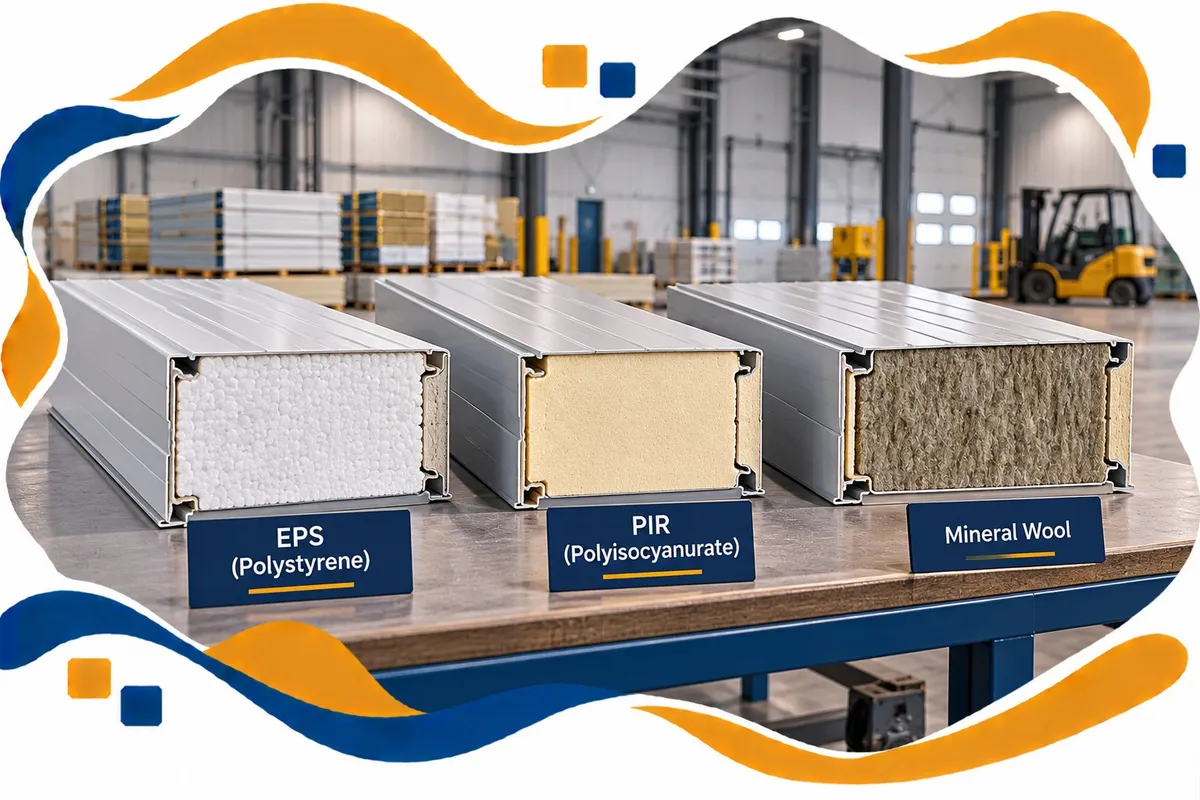
EPS, PIR and mineral wool are the three insulating cores you will find in most composite panels, and insurers treat them very differently. Expanded polystyrene (EPS) melts and burns, and is viewed as the highest risk; older polyurethane (PUR) is also combustible; polyisocyanurate (PIR) chars rather than melting and performs better, particularly when the panel system is certified to LPCB LPS 1181 or FM Approvals standards; and mineral or stone wool is non-combustible and close to standard construction for insurance purposes. If you cannot show which core your building has, most underwriters will assume EPS. Knowing your panel type, and being able to prove it, is the single biggest factor in what you pay for property insurance on a panel building.
Key facts at a glance
- EPS is the hardest to insure. It melts, drips and feeds fire inside the panel skins.
- PUR is better than EPS but still combustible. It is common in older buildings.
- PIR is the modern standard. Certified PIR systems are viewed much more favourably.
- Mineral wool is non-combustible. It is often used for fire walls and high-hazard areas.
- Certification counts as much as core type. LPS 1181 and FM approvals show how the whole system behaves in a fire.
- No evidence means worst case. Unidentified panels are usually rated as EPS.
What is a composite panel?
Composite panels are used for external walls and roofs on industrial and commercial buildings, and for internal walls and ceilings, especially in food production and cold storage where hygienic, easily cleaned surfaces are needed. They are quick to install, lightweight and thermally efficient, which is why they became so widespread. The problem for insurers is that panels look much the same from outside, whatever the core. Our main guide to composite panel building insurance explains the wider insurance picture; this guide focuses on the panel types themselves.
How do EPS, PUR, PIR and mineral wool panels compare?
| Core | Fire behaviour | Typical insurer view |
|---|---|---|
| EPS (expanded polystyrene) | Melts and drips at relatively low temperatures, then burns; can create hidden fire spread and flaming droplets. | Highest risk. Often declined, or accepted only with heavy loadings, high excesses and strict conditions. |
| PUR (polyurethane) | Combustible foam; contributes to fire and smoke. | Treated as combustible; terms depend on occupancy and protection. |
| PIR (polyisocyanurate) | Forms a protective char layer that slows fire spread; performance varies by product and system. | Much better accepted, especially if the system is LPCB or FM certified. |
| Mineral / stone wool | Non-combustible core; does not add fuel to a fire. | Generally treated close to standard construction. |
Why does certification matter as much as the core?
The Loss Prevention Certification Board's LPS 1181 standard covers external cladding and panel systems (Part 1) and internal construction (Part 2), using large-scale fire tests. FM Approvals runs comparable tests for panel systems. Many insurers ask specifically whether panels are certified to one of these standards. A building with certified PIR panels may be priced close to standard construction, while the same building with uncertified or unidentified panels may struggle to get cover at all.
Euroclass reaction-to-fire ratings (from A1, non-combustible, down to F) are also useful evidence, but on their own they say less about how a whole panel system behaves in a real building fire.
Where do insurers worry most about each panel type?
- Food production — ovens, fryers and smokehouses near EPS or PUR partitions. See our guide to food factory and cold store panel insurance.
- Cold storage — large areas of insulated panels around refrigeration plant and electrical equipment.
- Battery charging — forklift and equipment charging areas close to panel walls.
- Hot work — cutting and welding during maintenance or alterations.
- Electrical cabling — cables run through or fixed directly to panels without protection.
How do you find out which panels you have?
- Look at the records. Drawings, specifications, O&M manuals and building control files often name the panel manufacturer and product.
- Check the panels. Labels or stamps on panel edges, and visible cores at cut edges or penetrations, can identify the type.
- Ask the original contractor or manufacturer. Product names and dates can often be matched to certification records.
- Commission a survey. A building surveyor can identify panel types and map them across the site.
- Record the results. Mark panel types on a site plan and keep it with your insurance file.
Our guide to composite panel surveys and cutting insurance loadings explains what a good survey and panel management plan should cover.
What if your building has a mix of panels?
A factory might have PIR external walls from a recent re-cladding but original EPS internal partitions in the production area. That matters because internal partitions are often where heat sources are. Mapping each area separately lets an underwriter price the building accurately, and helps you prioritise which panels to replace first. If panels have been refused or loaded, see composite panel buildings refused or loaded by insurers.
Frequently asked questions
Mineral wool is non-combustible and generally treated closest to standard construction. Certified PIR panels are also viewed favourably. EPS is the hardest core to insure.
EPS melts and burns at relatively low temperatures, can spread fire hidden inside the panel skins and can produce burning droplets. Large losses involving EPS panels, especially in food buildings, have made insurers cautious.
No. Both are foam insulations, but PIR forms a protective char in a fire and generally performs better than PUR. Insurers treat them differently, so it helps to know which you have.
It is a Loss Prevention Certification Board standard for panel and cladding systems, based on large-scale fire tests. Part 1 covers external envelopes and Part 2 internal construction. Insurers often ask whether panels meet it.
Not reliably from the outside. Cut edges, penetrations, labels and building records are better guides. A survey is the most reliable way if records are missing.
It can. Replacing EPS or PUR with mineral wool or certified PIR, particularly around heat sources, is one of the strongest improvements you can make.
Often more. Internal partitions and ceilings in food and cold storage buildings tend to be close to heat and electrical equipment, which is where many panel fires start.
Most insurers will assume the worst, usually EPS. Being open about it and working towards identification gives the best chance of fair terms.
Related guides from Miller & Partner








Instagram
LinkedIn