


Lock-Up Garage Block Insurance UK for Investors
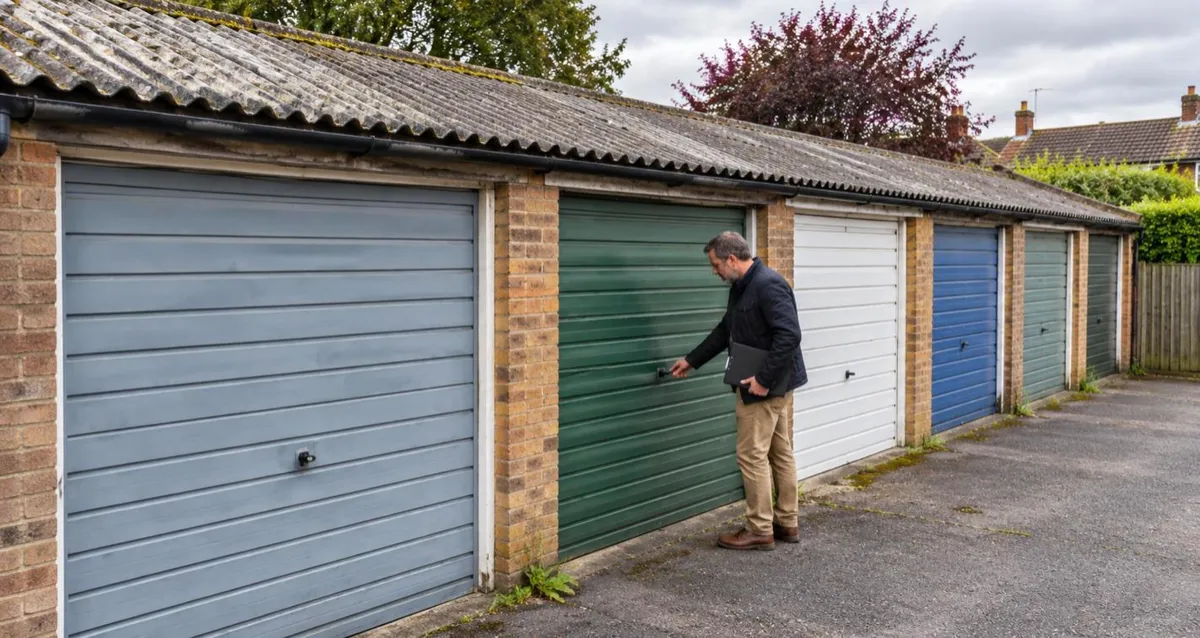
Lock-up garage block insurance covers investors and landlords who own rows of garages let to local residents and businesses. The policy usually includes buildings cover for the garages, property owners' liability for the forecourt and access road, and loss of rent if garages can't be let after damage. Garage blocks can be awkward to insure because they are often unmanned, built with asbestos cement roofs, prone to fly-tipping and arson, and let to people who may store vehicles, fuel or business stock. Many standard landlord policies won't cover them, or treat them as unoccupied. Insurers want to know the number of garages, construction, what the licence or tenancy says about use, how the site is secured and how often it is visited. Blocks bought from councils often come with repairs and roof issues that need to be explained up front.
Key facts at a glance
- Standard landlord policies often exclude garages. Many only cover garages that belong to a house.
- Asbestos roofs are common. Insurers ask about condition and any survey.
- Arson and fly-tipping drive claims. Security and regular visits make a difference.
- What is stored matters. Vehicles, fuel and business stock raise the fire risk.
- Liability is easily overlooked. Forecourts and access roads can cause injury claims.
Who needs garage block insurance?
We insure owners of garage sites from a single row of six to portfolios spread across several towns.
- Private investors. Buyers of garage blocks at auction or from councils.
- Portfolio owners. Investors with several garage sites.
- Developers. Garage sites held for future housing development.
- Freeholders. Blocks of flats with separate garage courts.
- Housing associations. Garage courts on housing estates.
What does garage block insurance cover?
| Cover | What it protects | Watch out for |
|---|---|---|
| Buildings | The garages, doors, roofs and walls | Asbestos removal costs after a claim |
| Property owners' liability | Injury on the forecourt, access road and land | Unlit or potholed access roads |
| Loss of rent | Rent lost after insured damage | Not always offered on low-value blocks |
| Malicious damage | Vandalism to doors and roofs | Higher excesses on unmanned sites |
| Debris removal | Clearing the site after a fire | Limits too low if asbestos is involved |
If the garages sit on land you plan to develop, or the block is already empty, read our guides to derelict building insurance and auction property insurance.
Why are garage blocks harder to insure than they look?
A row of garages looks like a simple risk. Insurers see an unmanned site, often with an old roof, full of things nobody has checked.
Most garage blocks were built in the 1960s and 1970s with asbestos cement roof sheets. They are generally safe if left alone, but a fire or storm turns them into a hazardous clean-up, and that pushes up the cost of even a small claim. Many insurers ask for an asbestos survey, and some limit cover until damaged sheets are replaced.
Use matters too. A garage holding a family car and a lawnmower is one thing. A garage used as a workshop, a store for a market trader's stock or a place to keep jerry cans is another. Your licence agreement should spell out what is allowed, and you should check from time to time that it is being followed.
Garages bought separately from a house, or let to people who don't live with you, are a commercial risk. A home or standard landlord policy is unlikely to cover them.
What do insurers ask?
- Number of garages and how many are let
- Wall and roof construction, and any asbestos survey
- Who the garages are let to and what for
- Whether any are used for business or vehicle repair
- Site security, lighting and gates
- How often the site is visited
- Fly-tipping and vandalism history
- Claims in the last five years
How do you get the best terms?
- Get an asbestos survey. And keep it with your insurance papers.
- Use a proper licence agreement. Set out what can and can't be stored.
- Visit regularly. Keep a short log of each visit.
- Clear rubbish quickly. Fly-tipped waste invites arson.
- Fix doors and roofs promptly. Damaged garages attract more damage.
- Insure the portfolio together. Several sites on one policy often costs less.
Frequently asked questions
Only if the policy specifically includes them. Many don't cover garages let separately.
They are common and insurable, but insurers will ask about condition and may want a survey.
Yes. Forecourts and access roads can cause trips and vehicle damage claims.
Only what your agreement allows. Fuel, gas and hazardous goods are usually prohibited.
Insurers may treat empty garages differently, so tell them how many are let.
Yes, and it is often cheaper than separate policies.
Usually. Business use and vehicle repair increase the fire risk.
Tell your insurer. Cover may need to change when demolition or building work starts.
Related guides from Miller & Partner

Miller & Partner Limited (FRN 1029698) is an Appointed Representative of Gauntlet Risk Management Ltd (FRN 308081), which is authorised and regulated by the Financial Conduct Authority. Miller & Partner Limited is registered in England and Wales (company number 16206282) and trades from Vivian House, Roman Bridge Close, Mumbles, Swansea SA3 5BG. This article is general information, not a personal recommendation or an offer of cover. Cover is subject to insurer acceptance and the full terms, conditions and exclusions of the policy issued.







Instagram
LinkedIn