

FS Register FRN 1029698

Five Star Rated on Google

13+ years specialist broking experience

General information, not advice. Written for general guidance and drawing on external sources as well as our own experience. It isn't a personal recommendation and doesn't take account of your circumstances — full disclaimer and sources.

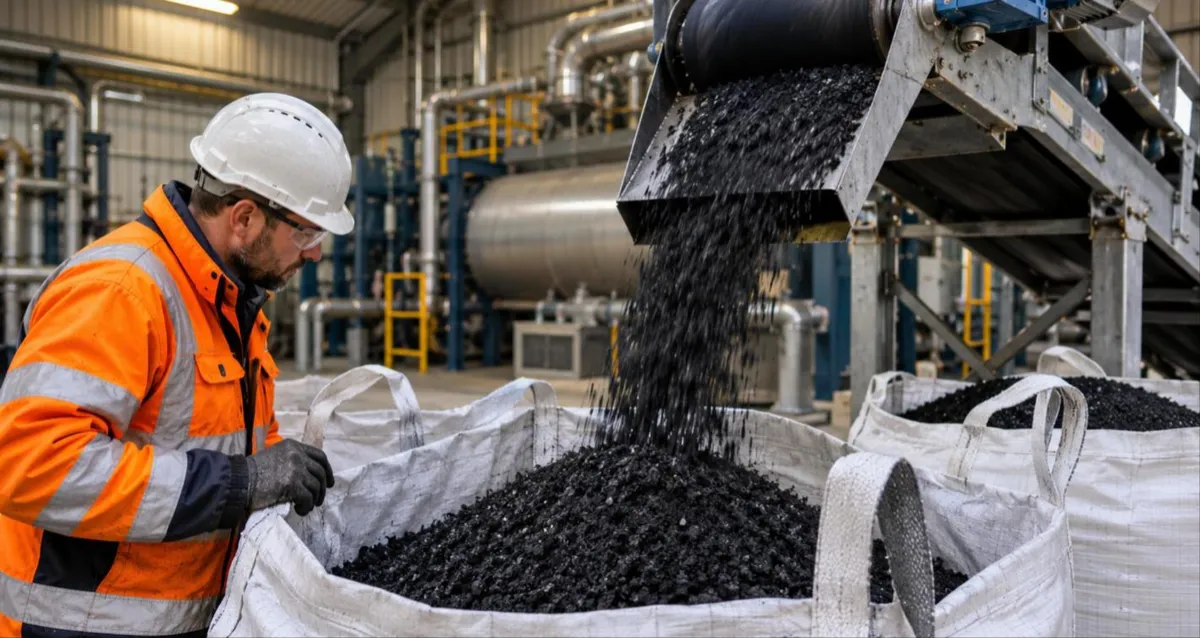
Conveyor filling bulk bags with biochar at a UK production plant

Biochar Production Plant Insurance UK

October 31, 2026

Published: 31 October 2026 | Reading time: 7 minutes | Category: Renewable Energy | Author: John Miller, Miller & Partner

Last reviewed by John Miller, Director & Principal Broker — 31 October 2026
FS Register FRN 102969813+ years specialist commercial brokingLloyd's & specialist MGA market accessIndependent UK broker

Biochar production plant insurance covers the buildings, reactors, stock and income of a business making biochar from biomass, together with its liabilities to staff, neighbours and customers. A typical plant needs property and machinery breakdown cover, business interruption that includes biochar, heat and carbon credit revenue, employers' and public liability, products liability for char sold to farms and growers, and environmental impairment cover. Insurers focus on the reactor technology, the feedstock, how char is cooled and stored, and fire and dust controls. Smaller farm-scale kilns and larger continuous plants are underwritten quite differently, so it helps to explain the scale and the business model clearly.

Running a biochar plant? We'll explain your process to insurers properly so you're not penalised for being new.

Key facts at a glance

  1. Scale changes the risk. Farm kilns and continuous industrial reactors are insured very differently.
  2. Several revenue streams. Biochar, heat and carbon credits may all need business interruption cover.
  3. Storage is a hotspot. Most char fires start in storage, not the reactor.
  4. Buyers rely on quality. Products liability matters when char goes into soil, feed or construction.
  5. Permits must be in place. Insurers check the environmental permit or exemption you rely on.

What insurance does a biochar plant need?

A biochar plant needs a mix of property, income, liability and environmental cover.

CoverWhy it matters
Buildings and plantReactors, dryers and buildings are costly to replace
StockFeedstock and finished biochar can be worth a lot
Machinery breakdownFailures of reactors, fans and controls stop production
Business interruptionCovers lost biochar, heat and credit income
Products liabilityProtects you if char sold causes damage or loss
Environmental impairmentCovers pollution clean-up and third-party claims
Employers' liabilityA legal requirement once you employ staff

For the full picture across the sector, see our biochar and carbon removal insurance page.

What makes biochar plants hard to place?

The industry is young, and many insurers have little loss data. Without good information, they assume the worst.

Reactors vary widely, from batch kilns on farms to continuous systems feeding heat into a network. Some technology suppliers have dozens of units running across Europe; others have one or two. Insurers want to know which they're dealing with. They will also ask about feedstock, because waste wood or sludge brings contamination and permit issues that clean forestry residue does not.

Prototype exclusions

Some machinery policies exclude prototype or unproven equipment. If your reactor is new, check whether breakdown cover applies, and ask the supplier for operating data to help.

Does biochar need products liability?

Yes. Biochar is sold into soil, compost, animal feed and even concrete. If a batch is contaminated or not as described, buyers may claim against you.

Insurers will ask about testing, certification and where the char ends up. Char used in animal feed or food production is likely to attract more questions than char sold for soil improvement. Keep test results and batch records, and be clear in your terms of sale about what the product is for.

How can a biochar plant improve its terms?

  1. Quench and cool char properly. Check temperature before storage.
  2. Control dust. Clean regularly and fit extraction where needed.
  3. Separate storage. Keep char and feedstock away from the reactor building.
  4. Fit detection. Heat and spark detection on conveyors and silos.
  5. Test every batch. Keep records for products claims.
  6. Train operators. Especially for start-up, shutdown and emergencies.

Frequently asked questions

It depends on the reactor, feedstock, values and fire protection. Each plant is quoted on its own details.

Yes. Smaller units can sometimes be added to a farm policy, with the insurer's agreement.

It can be included in business interruption cover if declared.

Yes, if you sell or give away biochar.

Waste wood, sludge and anything that might be contaminated.

Often, though prototype units may face restrictions.

It is strongly recommended for any thermal process plant.

Lost heat income can be included in business interruption cover.

Detection, suppression, dust control and safe char storage.

Usually within a few weeks for a new plant.

Related guides from Miller & Partner

Need cover for your biochar plant? Send us your reactor details, feedstock and revenue mix, and we'll come back with terms.

John Miller, Director and Principal Broker at Miller & Partner
Written and reviewed by John Miller Director & Principal Broker, Miller & Partner Over 13 years of specialist commercial insurance experience, formerly with Brown & Brown and AXA. Places renewable energy, waste and process risks through Lloyd's syndicates and specialist MGAs, including new technologies that mainstream insurers are still learning to underwrite.
Our regulatory status

Miller & Partner Limited (FRN 1029698) is an Appointed Representative of Gauntlet Risk Management Ltd (FRN 308081), which is authorised and regulated by the Financial Conduct Authority. Miller & Partner Limited is registered in England and Wales (company number 16206282) and trades from Vivian House, Roman Bridge Close, Mumbles, Swansea SA3 5BG. This article is general information, not a personal recommendation or an offer of cover. Cover is subject to insurer acceptance and the full terms, conditions and exclusions of the policy issued.


Back to Blog
About this article General information, not advice. Published for general guidance and drawing on external sources as well as our own experience. It is not a personal recommendation, a quotation, or an offer of cover, and it doesn't take account of your circumstances. Read more + Close −

Where the information comes from

Our articles are compiled from a range of sources: regulators and public bodies such as the FCA, the Civil Aviation Authority, the Health and Safety Executive and Companies House; government publications and legislation; industry and trade bodies; insurer and market documentation; and published research and news reporting. Not everything stated originates from Miller & Partner. Where information comes from a third party we believe it to be accurate at the date of publication, but we haven't independently verified every external source and we don't warrant its accuracy or completeness. Where a point matters to a decision you're making, go to the original source and check it.

Figures, examples and case studies

Premium ranges, cost figures, limits and worked examples are illustrative only. They are not quotations, not offers of cover, and no cover is provided or implied on the basis of them. What you're actually charged depends on underwriting, and what you're actually covered for depends on the policy wording issued to you. Where an article includes a claim example, scenario or case study, it is illustrative unless we say otherwise — such examples are typically composites written to show how a policy section responds, and they don't describe an identifiable client, claim or settlement.

Interactive tools

Any calculators, cover checkers, risk assessors or similar tools on our site produce general guidance from the small number of answers you give them. They can't see your business, and their output is not a personal recommendation, an assessment of your actual risk, or a quotation.

Rules and market conditions change

Law, regulation, tax treatment, insurer appetite and policy wordings all change, sometimes at short notice. Content is accurate to the best of our knowledge on the date shown on the article and we don't undertake to update it as things move. An article you're reading some time after publication may be out of date.

Third parties and external links

References to insurers, underwriters, trade bodies, software, training providers or other organisations are for information only. They don't imply endorsement, recommendation, partnership or affiliation in either direction unless stated. We're not responsible for the content of external websites we link to.

Not legal, tax or accounting advice

Nothing here is legal, tax, accounting or regulatory advice. Where an article discusses statutory duties, contract terms or compliance obligations, take advice from an appropriately qualified professional on your own position before acting.

How we write these

We use AI tools in researching and drafting our published content. Every article is reviewed and signed off by a named, accountable person at Miller & Partner before it is published, and responsibility for what appears here rests with us.

Our regulatory status

Miller & Partner Ltd is an Appointed Representative of Gauntlet Risk Management Ltd, which is authorised and regulated by the Financial Conduct Authority (FRN 308081). Miller & Partner Ltd is entered on the FCA Register under reference 1029698. Registered in England and Wales, company number 16206282. Registered office: Vivian House, Roman Bridge Close, Mumbles, Swansea, SA3 5BG.

Spotted something wrong?

We'd rather know. Email [email protected] or call 01792 001350 and we'll review and correct it.

For advice on your own insurance arrangements, speak to us directly — that's when we can take your circumstances into account and give you a recommendation.

Ready to protect your business?
Get expert advice and a tailored commercial insurance quote today.

✔ Independent broker
✔ Access to leading UK insurers
✔ Fast turnaround

[Request a quote]

[[email protected]]
[Call 01792 001350]

Exclusive Offer

Free Insurance Review
& Zero Broker Fee

Let us review your current insurance and see if we can improve your cover while reducing the cost.

✓
Free no-obligation insurance review tailored to your business
£
Zero broker fee on all new policies
⚡
Fast response from a real insurance specialist

You're in 🎉

Thanks for requesting your free review. We'll be in touch shortly.

🔒 No spam, ever. Your details are safe with us.

We're an Appointed Representative of Gauntlet Risk Management Ltd, which is authorised and regulated by the FCA. You can check our entry on the FCA Register.

MEET THE Director

Hey, I'm John!

I started Miller & Partner with the aim to bring back personable, approachable broking to UK businesses who were tired of large corporate brokers and feeling like they were just another number.

I have built this brokerage up with no pushy sales techniques or big business tactics, just honest, approachable and professional relationships with my clients.

Over 13 years experience in business insurance

Client first approach

5* rated broker on Google

Office: Vivian House, Roman Bridge Close, Mumbles, Swansea, SA3 5BG

Miller & Partner Ltd is an Appointed Representative of Gauntlet Risk Management Ltd, which is authorised and regulated by the Financial Conduct Authority (FRN 308081). Miller & Partner Ltd is entered on the Financial Services Register under firm reference number 1029698. You may check this on the Financial Services Register by visiting the FCA website at https://www.fca.org.uk/firms/financial-services-register or by contacting the FCA on 0800 111 6768. Miller & Partner Ltd is registered in England & Wales, company number 16206282. Registered office: 20 Vivian House, Roman Bridge Close, Swansea, SA3 5BG.




