



Business Insurance After Director Disqualification UK
Yes, a business connected to a disqualified director can still be insured, but the disqualification has to be disclosed and the business has to be lawful. Most commercial proposal forms ask whether any director, partner or person involved in management has ever been disqualified. Insurers treat a disqualification order or undertaking as a serious material fact, and many decline automatically. Specialist insurers, Lloyd's syndicates and MGAs will consider these risks. They need to know why the disqualification was imposed, how long it runs, and who actually manages the business now. If you trade as a sole trader, hold leave of the court, or your ban has ended, cover is usually available on specialist terms. If a disqualified person is secretly running a company, no insurer will knowingly cover it, and the arrangement itself is a criminal offence.
Key facts at a glance
- Disqualification lasts 2 to 15 years. It can come from a court order or a disqualification undertaking, and both have the same effect.
- It must be disclosed. A disqualification is a material circumstance under the Insurance Act 2015, during the ban and often for years after it ends.
- It's on a public register. Companies House keeps a register of disqualified directors, so underwriters can check it in seconds.
- You can still trade as a sole trader. The ban covers companies and LLPs, not working for yourself, unless you are also bankrupt.
- Breaching a ban is a criminal offence. It can also make you personally liable for the company's debts.
- Specialist markets will consider it. We place these risks through Lloyd's and specialist MGAs that look at the full facts, not a single tick box.
Director disqualification usually follows an insolvency. When a company goes into liquidation or administration, the insolvency practitioner reports on every director's conduct to the Insolvency Service. If that report suggests a director is unfit, the Secretary of State can apply to court for a disqualification order, or the director can agree to a disqualification undertaking instead. Since 2021 the same process can also reach directors of companies that were simply dissolved.
A disqualified person still has to earn a living, and the businesses around them still need cover. That might be a sole-trader business, a company run by a spouse or business partner, a firm that employs the disqualified person, or a new company started once the ban ends. Each raises a different insurance question. This guide explains what insurers ask, what they will and won't cover, and how to get a properly disclosed policy in place.
In this guide
- What disqualification means
- Do you have to disclose it?
- Why insurers treat it so seriously
- The proposal form questions
- The Insurability Framework
- Who can be insured, and how
- The shadow director trap
- Directors' and officers' cover
- After the ban ends
- What drives the cost
- Illustrative case studies
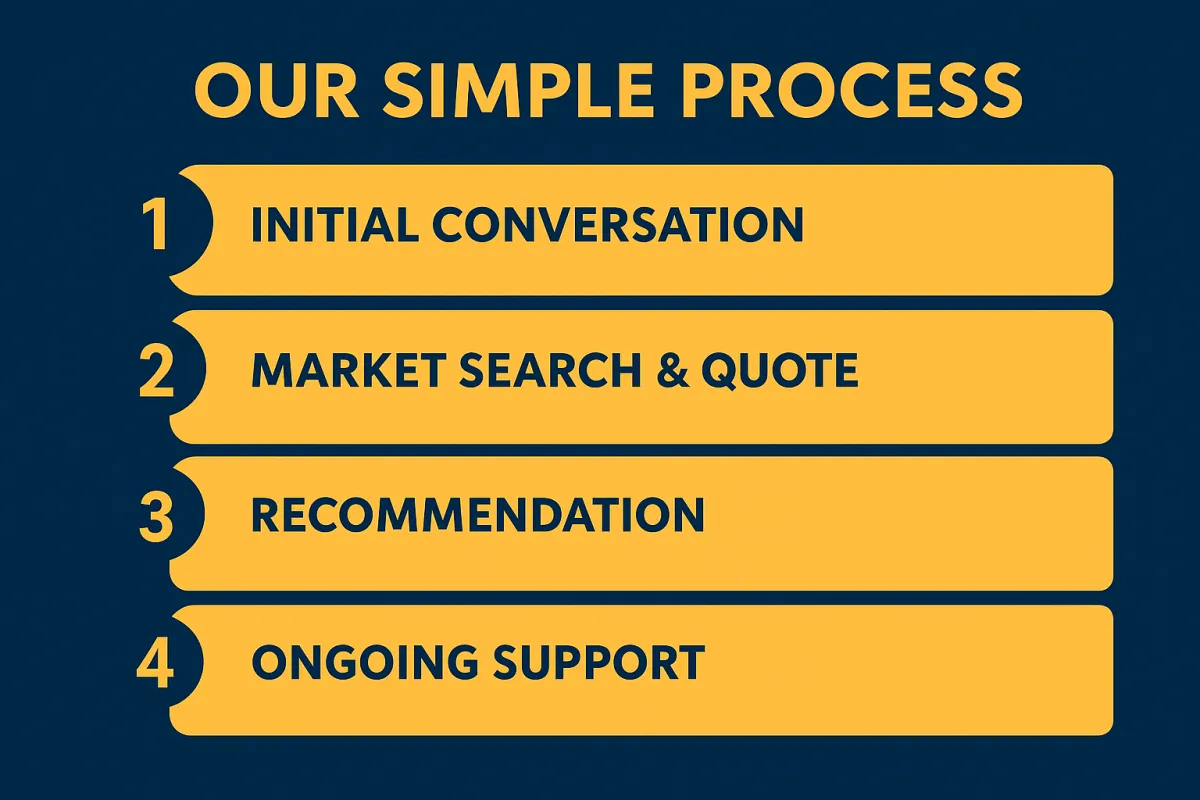
- How to get insured, step by step
- Glossary
- Frequently asked questions
What does director disqualification actually mean?
A disqualified person cannot be a director of a company or LLP, or take part in promoting, forming or managing one, directly or indirectly, without the court's permission. The ban lasts between 2 and 15 years. It doesn't stop you trading as a sole trader or being an ordinary employee, as long as you take no part in management.
Disqualification is governed by the Company Directors Disqualification Act 1986. Most cases arise because a court finds a director's conduct of an insolvent company makes them unfit. Typical grounds include trading while insolvent to the detriment of creditors, failing to pay tax, failing to keep proper accounting records, and taking money out of a failing company.
A disqualification undertaking is a voluntary agreement with the Insolvency Service that avoids court proceedings. Legally, it has the same effect as a court order. The court can also make a compensation order, requiring a disqualified director to pay money towards creditors' losses. Every order and undertaking appears on the register of disqualified directors.
Do you have to tell an insurer about a director disqualification?
Yes. A disqualification is one of the most clearly material facts an insurer can be told, and most proposal forms ask about it directly. Under the Insurance Act 2015, failing to disclose it can lead to a claim being cut, refused or the policy being treated as void,, and insurers can find it on a public register.
The Insurance Act 2015 requires a fair presentation of the risk. That covers the disqualified person themselves and any business where they are a director, partner, owner or involved in management. It also covers pending proceedings: if the Insolvency Service has written to you about disqualification, that is a material circumstance even before anything is decided.
Disqualification is a public record, which makes non-disclosure easy for an insurer to prove. A claim investigation will often include a Companies House search of everyone involved. If the insurer finds an undisclosed ban, the remedy depends on what it would have done had it known. For many insurers the honest answer is that it would have declined, which means no cover at all. See our guide on policies voided for non-disclosure.
Why do insurers treat disqualification so seriously?
Because a court or the Insolvency Service has formally found that the person's conduct as a director fell below acceptable standards. Underwriters read that as a direct signal about management quality, honesty and financial control, which are the same things that drive claims frequency, fraud risk and unpaid premiums on a commercial policy.
An insolvency on its own can happen to anyone. A disqualification adds a finding of fault. Underwriters therefore want to understand the specific grounds, because they vary widely in what they suggest about future risk:
- Unpaid Crown debts. The most common ground. It suggests poor financial control rather than dishonesty, and specialist markets usually see it as the most manageable.
- Poor records and late filing. Concerning, but often fixable with an accountant and proper systems.
- Trading to creditors' detriment. Raises questions about decision-making under pressure.
- Fraud, misuse of funds or abuse of support schemes. The hardest category to place, because it goes directly to moral hazard.
Which questions on a proposal form catch a disqualification?
Look for any question about disqualification, insolvency, criminal convictions or prosecutions. They usually apply to every director, partner and person involved in management. A disqualification order or undertaking means answering yes to the disqualification question, and often to the insolvency question as well.
| Typical question | Does disqualification count? | What to provide |
|---|---|---|
| Has any director ever been disqualified from acting as a director? | Yes, whether by order or undertaking, current or expired. | Dates, length, grounds, and the company it related to. |
| Has any director been involved with a company that went into liquidation or administration? | Usually yes, because most disqualifications follow an insolvency. | The company, the date and the insolvency practitioner. |
| Has anyone been convicted of, or charged with, any offence? | Not on its own. A disqualification is a civil matter unless a criminal case was also brought. | Answer accurately, and disclose any linked prosecution. |
| Are any proceedings pending against any director? | Yes, if the Insolvency Service has started action or offered an undertaking. | The correspondence and the current position. |
| Is there anything else that may affect this proposal? | Yes. This is the catch-all question. | A short written summary. |
Some forms ask only about the "proposer" or the business. If a disqualified person is involved in managing that business in any way, disclose it anyway. The duty of fair presentation goes wider than the questions on the form.
How does The Insurability Framework™ apply to a disqualified director?
The Insurability Framework is how we turn a hard history into a risk an underwriter can say yes to. For disqualification, that means setting out the grounds and length of the ban, showing how the business is lawfully structured and managed now, evidencing what has changed, and approaching only the markets that write this kind of risk.
A disqualification submission lives or dies on structure and honesty. The Insurability Framework builds it in four parts:
- Grounds. The order or undertaking, its length and the stated grounds, ideally with the schedule of unfit conduct.
- Structure. Who owns the business, who are its directors, and exactly what the disqualified person does and doesn't do.
- Change. An accountant, proper bookkeeping, tax paid on time, and controls that address the original grounds.
- Market. Placement with Lloyd's syndicates and MGAs that consider disqualified individuals, rather than collecting automatic declines.
Who can be insured, and how?
Most situations can be insured if the business is lawful and the disqualification is disclosed. A disqualified sole trader, a company run by others that employs the disqualified person, a director with leave of the court, and someone whose ban has ended can all usually find cover in the specialist market.
Which situation are you in?
Pick the closest match to see whether cover is realistic and what insurers will ask.
Choose an option above to see the result.
Usually insurable in the specialist market. A sole trader isn't a company, so the ban doesn't stop you trading, unless you are also an undischarged bankrupt. You'll need public liability, and employers' liability once you take anyone on. Disclose the disqualification on every form. Expect fewer insurers and some loading in the early years.
Insurable if your role is genuinely not management. The company's insurers need to know a disqualified person works there and what you do. If you are, in reality, directing the business, that is a breach of the ban, and no insurer will cover it knowingly. Make sure the directors run the company in practice, not just on paper.
Insurable, with the court order to hand. Leave of the court is usually granted for a named company, sometimes with conditions such as an independent director or regular accounts. Give the insurer a copy of the order and show those conditions are being met. D&O for the company is worth arranging from the start.
Cover improves with time, but disclosure continues. Many forms ask whether anyone has ever been disqualified, so keep disclosing after the ban ends. A clean record since, with good financial controls, opens up more of the market each year. See our guide to insurance after a CVL if a new company follows a liquidation.
What is the shadow director trap?
If a disqualified person runs a company through someone else, such as a spouse, a relative or a friend who is director in name only, they are still breaching the ban. That is a criminal offence, it can make them personally liable for the company's debts, and an insurer that discovers it will treat the policy as unreliable or void.
A shadow director is someone whose instructions the board usually follows. A de facto director is someone who acts as a director without being appointed. Both are caught by a disqualification. Breaching a ban can lead to up to two years' imprisonment, and the disqualified person becomes personally liable for company debts incurred while they were involved in management. The person who let them run the company can share that liability.
From an insurance point of view, this arrangement fails on two levels. The insurer isn't told who really manages the business, so the presentation is unfair from the start. And the arrangement is unlawful, so an insurer would not have written it had it known. If this describes your situation, take legal advice before you do anything about insurance.
Are you ready to present this to an underwriter?
Tick everything you can already provide. Each item makes the submission stronger and the market wider.
Whatever you have, we can work with it and help fill the gaps.
How does disqualification affect directors' and officers' cover?
Many D&O policies pay defence costs for disqualification proceedings, so check the old company's policy as soon as the Insolvency Service makes contact. Once disqualified, a person can't be an insured director, and a new company's D&O insurer will ask about any past disqualification for every board member.
Disqualification proceedings are expensive to defend, and many directors agree to an undertaking simply because they can't fund a defence. If the failed company had directors' and officers' insurance, the policy, or its run-off, may cover legal costs for disqualification proceedings. That depends on the wording, the policy period and when the circumstances were first notified. Notify early: a late notification can lose the cover altogether.
D&O policies don't pay compensation orders made against a disqualified director in most cases, and they exclude deliberate dishonesty. For a company with a board member whose ban has ended, D&O is still available, but expect underwriters to ask detailed questions and possibly to exclude claims connected with the earlier company.
What happens to your insurance after the ban ends?
You can act as a director again, but the disqualification stays relevant for insurance. Many forms ask whether anyone has ever been disqualified, and others look back five or ten years. Keep disclosing it, and build a record of clean trading and good financial control to widen the market over time.
The end of a ban is a good moment to reset the business's insurance properly: a full review of every policy, the disqualification disclosed consistently across all of them, and a clear account of what has changed since. Insurers respond far better to a director who raises the past openly than to one whose history turns up in a search.
If your new company follows a liquidation, the disclosure points in our guide to insurance after a CVL and our phoenix company guide apply too.
What drives the cost of insurance after a disqualification?
The trade sets the baseline. The disqualification then narrows the market and adds a loading depending on the grounds, the length of the ban, how long ago it was imposed, the person's role in the business, and the controls now in place. A short ban for unpaid tax costs far less to insure than a long one for misusing funds.
- Grounds. Financial-control failures are viewed far more favourably than dishonesty.
- Length. Bans at the bottom of the 2 to 15 year range suggest less serious conduct.
- Time elapsed. The further behind you the ban is, the more insurers will consider it.
- Role. A disqualified employee in a well-run company is very different from a sole trader carrying all the risk.
- Compensation orders. An unpaid compensation order raises questions about financial stability.
- Controls. An external accountant, timely filings and paid-up tax directly answer the original concern.
- Claims history. Claims in the failed company or since then will compound the loading.
How hard will your risk be to place?
Choose the description that fits best for an indication of where the risk sits in the market.
Choose a description above to see the indication.
Specialist market, increasingly open. Several specialist insurers will consider this with a clear account and a clean record since. Some mainstream insurers may too. Disclose it fully and expect terms close to standard over time.
Specialist market. Quote engines will decline. Lloyd's syndicates and MGAs will consider a sole trader with a short ban for tax debts, especially with an accountant in place. Expect a loading and closer questions in the first years.
Specialist market, with the structure proven. Insurers need comfort that the disqualified person isn't managing the business. An organisation chart, a written role description and active independent directors make the difference.
Hard to place. Very few markets will consider this, and those that do will restrict cover and charge more. Don't approach insurers one by one, because each decline must be disclosed on the next application. Use a specialist broker who knows which markets to approach first.
Illustrative case studies
These composite examples are illustrative only. They show common situations and how a placement typically comes together. They are not real clients, and names and details are invented.
Illustrative case 1
The electrician with a four-year ban
A former director of an electrical contracting company accepted a four-year disqualification undertaking after the company went into liquidation owing VAT and PAYE. He began trading as a sole trader and needed public liability to work for commercial clients. Every online quote ended at the disqualification question.
We presented the undertaking, the tax-debt grounds and the changes since: an external accountant, quarterly VAT handled by the accountant, and no claims history. A specialist MGA offered public liability with a moderate loading. The client renews through us each year, and the loading has come down as his clean record has grown.
Illustrative case 2
The husband who ran his wife's company
A disqualified director set up a new trading company with his wife as sole director. In practice, he ran everything: quoting, hiring and dealing with clients. The insurance proposal named only his wife and didn't mention him. After a serious injury to a subcontractor, the insurer's investigation found his disqualification and his real role in the business.
The insurer treated the policy as void for deliberate non-disclosure, and the claim fell on the company. The lesson is that the shadow director trap is a criminal issue first and an insurance issue second. No broker can insure an arrangement that breaches a disqualification.
Illustrative case 3
The managing director with leave of the court
A director disqualified for five years after a retail company's administration applied for leave to act as director of a new logistics business she had helped found. The court granted leave on conditions: an independent finance director, monthly management accounts and quarterly board meetings.
We disclosed the disqualification, provided the court order and evidenced each condition being met. A Lloyd's syndicate offered a commercial combined policy, and a specialist D&O market offered cover with an exclusion for matters connected with the earlier company.
How do you get insured after a director disqualification?
Confirm the business is lawfully structured, gather the disqualification paperwork, write a short account of the grounds and what has changed, disclose it consistently everywhere, and use a specialist broker rather than quote engines. Get compulsory and contract-critical cover in place before trading.
- Check the structure is lawful. Make sure the disqualified person isn't directing a company, openly or in practice, without leave of the court. Take legal advice if in any doubt.
- Gather the paperwork. The order or undertaking, the schedule of conduct, the dates and the related company.
- Write the explanation. One or two factual paragraphs on the grounds and what has changed.
- Document the controls. Accountant, bookkeeping, tax position and filings.
- Disclose consistently. The same facts on every proposal form and at every renewal.
- Avoid quote engines. Automatic declines add to what you have to disclose next time.
- Use a specialist broker. Someone with access to the Lloyd's and MGA markets that consider disqualified individuals.
- Review each year. Terms improve as time passes and your clean record grows.
Glossary
- Disqualification order
- A court order under the Company Directors Disqualification Act 1986 banning a person from acting as a director for 2 to 15 years.
- Disqualification undertaking
- A voluntary agreement with the Insolvency Service that has the same legal effect as a disqualification order.
- Unfit conduct
- The test the court applies when deciding whether to disqualify a director of an insolvent company.
- Schedule of unfit conduct
- The document setting out the specific conduct on which a disqualification is based.
- Leave of the court
- Permission from the court for a disqualified person to act as director of a named company, often with conditions.
- Compensation order
- A court order requiring a disqualified director to pay money towards losses their conduct caused creditors.
- Register of disqualified directors
- The public register at Companies House listing every current disqualification order and undertaking.
- Insolvency Service
- The government agency that investigates director conduct and brings disqualification proceedings.
- Directors' conduct report
- The insolvency practitioner's report on each director's conduct, which can lead to disqualification proceedings.
- Shadow director
- A person whose instructions the directors usually follow, even though they aren't appointed. Caught by a disqualification.
- De facto director
- Someone who acts as a director in practice without being formally appointed.
- Crown debts
- Debts owed to HMRC, such as VAT and PAYE. Non-payment is a common ground for disqualification.
- Fair presentation
- The duty under the Insurance Act 2015 to disclose every material circumstance to an insurer.
- Material circumstance
- Any fact that would influence an insurer's decision to offer cover or the terms it offers.
- Avoidance
- An insurer treating a policy as if it never existed, usually after deliberate or reckless non-disclosure.
- Directors' and officers' insurance
- Cover protecting directors personally against claims and investigations arising from their role.
- Managing general agent (MGA)
- A specialist underwriting agency with authority to write business for insurers, often in hard-to-place classes.
Frequently asked questions
Can I get business insurance if I'm a disqualified director?
Yes, for a lawful business. A disqualified person trading as a sole trader, or working in a company run by others, can usually find cover in the specialist market. The disqualification must be disclosed. Mainstream insurers and quote engines often decline, so a specialist broker is the most reliable route.
Do I have to disclose a disqualification that has ended?
Usually, yes. Many proposal forms ask whether anyone has ever been disqualified, and others look back five or ten years. Even where the question is time-limited, the duty of fair presentation may still require it. If in doubt, disclose it.
Can I trade as a sole trader while disqualified?
Generally yes. A disqualification bans you from companies and LLPs, not from working for yourself. The exception is if you are also an undischarged bankrupt, which brings its own restrictions. You will still need to disclose the disqualification to insurers.
Can my spouse run a company I work for?
Yes, if they genuinely run it and you take no part in management. If you are directing the business in reality, you are in breach of your disqualification. That is a criminal offence, and an insurer will not cover it knowingly. The company's insurers must also be told a disqualified person works there.
Is a disqualification undertaking treated differently from a court order?
Not by insurers. An undertaking has the same legal effect as a court order and appears on the same public register. It must be disclosed in exactly the same way.
Do I need to disclose disqualification proceedings that haven't finished?
Yes. If the Insolvency Service has written to you about disqualification, offered an undertaking or started court proceedings, that is a material circumstance. Disclose the current position, and update your insurer if it changes during the policy.
Will my D&O policy pay to defend disqualification proceedings?
Possibly. Many D&O policies include defence costs for disqualification proceedings, but it depends on the wording and when the circumstances were notified. Check the failed company's policy and any run-off period, and notify the insurer as early as possible.
Can insurers find out about my disqualification?
Yes, easily. Every disqualification order and undertaking appears on the public register at Companies House. Insurers often search it when underwriting and almost always when investigating a significant claim.
Will my premium be higher because of the disqualification?
Usually, at least for a few years. How much depends on the grounds, the length of the ban, your role in the business and the controls now in place. A short ban for tax debts with an accountant in place typically attracts a far smaller loading than one involving dishonesty.
What if I breach my disqualification?
Breaching a disqualification is a criminal offence, punishable by up to two years in prison. You can also become personally liable for the company's debts incurred while you were involved. Any insurance arranged without disclosing the breach is unlikely to respond. Take legal advice immediately.
Can I get leave of the court to act as a director?
Yes, you can apply for leave to act as director of a specific company. The court weighs the need for you to act against the protection of the public, and often attaches conditions. If leave is granted, give your insurer a copy of the order and show that its conditions are being met.
Do you place cover for disqualified directors?
Yes. We place cover for sole traders, companies and directors affected by disqualification through Lloyd's syndicates and specialist MGAs. We present the full facts, the current structure and the controls in place, so underwriters can make a considered decision rather than an automatic decline.
Related guides
About this guide. This guide is general information about insurance for businesses affected by director disqualification in the UK. It is not legal, insolvency or financial advice, and it is not a quotation or an offer of cover. Whether cover is available, and on what terms, depends on each insurer's underwriting and the policy wording.
For advice on disqualification proceedings, leave of the court or whether a business structure breaches a ban, speak to a solicitor. The case studies are illustrative composites, not real clients.
Miller & Partner Limited is an Appointed Representative of Gauntlet Risk Management Ltd, which is authorised and regulated by the Financial Conduct Authority. Miller & Partner Limited is registered in England and Wales and trades from Vivian House, Roman Bridge Close, Mumbles, Swansea SA3 5BG. Contact us at enquiries@millerandpartner.co.uk.







Instagram
LinkedIn