


CLT & Mass Timber Building Insurance UK | Specialist Cover
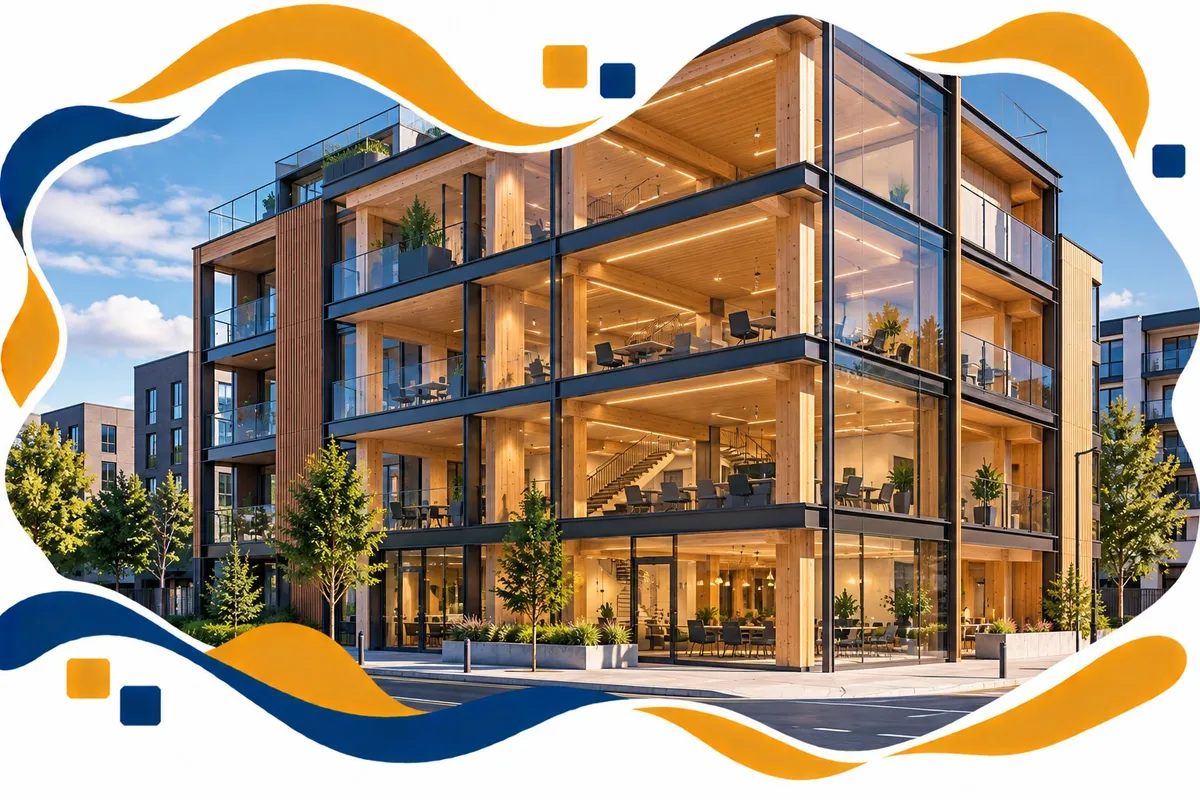
CLT and mass timber building insurance is property cover for buildings whose primary structure is engineered timber — cross-laminated timber (CLT) panels, glulam beams and columns, or a hybrid of timber on a concrete or steel podium. It is the hardest part of the UK timber market to place: several insurers have withdrawn from mass timber altogether, and many of those still writing it price on the assumption that a serious fire or water escape will write the building off. Cover is still available. It comes from specialist and Lloyd's markets that assess the actual building — its fire strategy, how much timber is exposed, compartmentation, sprinklers and water management — rather than rejecting the construction type. A properly placed policy covers reinstatement, loss of rent or business interruption over a realistic indemnity period, and property owners' liability. Miller & Partner arranges cover for CLT and mass timber buildings, including those refused or non-renewed elsewhere.
Key facts at a glance
- Mass timber is a narrow but real market. Several insurers decline it outright; specialist and Lloyd's capacity remains for well-documented buildings.
- The pricing problem is the total-loss assumption. Underwriters often model a CLT building as a write-off after fire, so evidence that limits damage is what moves the price.
- Exposed timber matters more than timber. How much CLT is left visible versus encapsulated behind fire-rated boards is one of the first questions asked.
- Water is as big a concern as fire. CLT is slow to dry and costly to repair after a leak, so water detection and isolation feature heavily in terms.
- Sprinklers change the conversation. Suppression directly attacks the total-loss assumption and routinely brings more insurers to the table.
- The rules are still moving. Proposals to cap the height of exposed structural timber in England keep underwriters cautious, so design evidence carries real weight.
What makes CLT and mass timber different from ordinary timber frame?
Cross-laminated timber is made by gluing layers of timber boards at right angles into large structural panels. Glulam is laminated timber formed into beams and columns. Together they can carry multi-storey offices, schools, student accommodation and blocks of flats — buildings that would otherwise be concrete or steel. Developers choose them for speed of construction, lower embodied carbon and the look of exposed timber.
Insurers see the same building differently. Solid timber chars at a predictable rate in a fire, which is why it can carry load for a defined period, but an exposed timber surface can also contribute fuel to the fire. A leak that would run off a concrete slab soaks into a CLT panel. Those two facts drive almost every underwriting question. Our timber frame and mass timber building insurance page covers the wider timber market; this guide focuses on engineered mass timber specifically.
Why do insurers refuse or load mass timber buildings?
- The total-loss model. Where a concrete building might be repaired floor by floor after a fire, underwriters often treat a CLT building as a full write-off. The premium reflects that worst case.
- Limited claims history. There are relatively few large mass timber buildings in the UK and fewer major losses, so insurers have little data to price from and default to caution.
- Escape of water. Moisture in CLT means long drying times, possible delamination concerns and expensive opening-up. Water claims are a bigger practical worry than fire for many underwriters.
- Withdrawn capacity. When several insurers decline a class, the remainder can name their price. That is a market problem, not a building problem, and it is solved by reaching the right markets.
- Regulatory flux. Since the post-Grenfell restrictions on combustible materials, the rules around structural timber have kept moving — most recently with proposals to cap exposed structural timber at 11 metres in English buildings. Uncertainty makes underwriters conservative.
What do underwriters look at on a CLT building?
| Factor | What underwriters ask | Why it matters |
|---|---|---|
| Exposed vs encapsulated timber | What share of CLT walls and soffits is left visible, and what protection covers the rest? | Exposed surfaces can add fuel to a fire; encapsulation delays involvement of the structure. |
| Compartmentation | How is the building divided into fire compartments, and how are cavities and service penetrations sealed? | Good compartmentation limits a fire to one area instead of the whole building. |
| Suppression | Is the building sprinklered or fitted with a misting system, and to what standard? | Suppression is the single biggest lever against the total-loss assumption. |
| Detection | What fire alarm category is installed, and is it monitored? | Early detection shortens the time a fire has to grow. |
| Water management | Are there leak detection sensors, automatic shut-off valves and drained risers? | Escape of water is the most common and costly damage in timber structures. |
| Height and use | How many storeys, and is there a residential, sleeping or mixed-use element? | Taller and residential buildings attract the most scrutiny and the narrowest market. |
| Design evidence | Is there a fire engineer's strategy, char-rate design and third-party certification? | Documented design turns an unknown into a measured risk. |
What cover does a completed mass timber building need?
- Buildings at full reinstatement value, costed for engineered timber, not a generic rate. Specialist panels, design fees and longer lead times all add cost. Get it wrong and the condition of average reduces every claim.
- Loss of rent or business interruption with an indemnity period that covers redesign, panel manufacture and rebuild. For mass timber, 24 months is often too short. See our business interruption guide.
- Day one reinstatement to protect the sum insured against cost inflation during a long rebuild. See day one reinstatement explained.
- Escape of water with an agreed excess and conditions that match the building's leak detection, rather than a blanket exclusion.
- Property owners' liability for injury or damage arising from the building.
- Terrorism cover where lenders or tenants require it — see terrorism insurance.
What about the construction phase?
During construction, CLT panels can sit exposed to weather, hot works may be happening near unprotected timber, and the permanent fire systems are not yet commissioned. Contractors and developers need contract works cover written for that risk, with clear site controls: weather protection and moisture monitoring for panels, a strict hot works permit regime, temporary detection, and security against arson. If completion is delayed by an insured loss, developers should consider delay in start-up insurance to protect funding and rental income. Our contractors all risks guide explains how contract works cover operates.
Who needs CLT and mass timber building insurance?
- Commercial landlords and investors holding CLT offices, retail and mixed-use buildings. See commercial property insurance.
- Freeholders and residents' management companies of CLT and hybrid blocks of flats, where leaseholders and lenders rely on the cover. See block of flats insurance and mixed-use block insurance.
- Developers holding completed stock before sale or letting, often with unoccupied units. See our unoccupied property guide.
- Education, leisure and community owners whose buildings use CLT or glulam halls and roofs.
- Owners of modular and offsite buildings built with timber panels. See modular construction insurance.
Refused or non-renewed because the building is mass timber?
This is where the Insurability Framework™ does its work. We document the structure precisely, gather the fire strategy and water management evidence, address the reason for any previous decline head-on, and make one organised presentation to underwriters who write engineered timber. Repeated online applications create a trail of declines you must disclose; one strong submission avoids that. If you have been refused outright, read insurance for businesses refused cover. If the construction was recorded wrongly on an existing policy, correct it now — our guide to policies voided for non-disclosure explains why.
How do you set up insurance for a mass timber building?
- Gather the design evidence. Fire engineer's strategy, char-rate design, encapsulation details, compartmentation drawings and any third-party certification.
- Document the protection. Sprinkler or misting specification, alarm category, leak detection and automatic shut-off valves.
- Cost the rebuild properly. A reinstatement cost assessment for engineered timber, with an indemnity period that covers redesign and panel manufacture.
- Disclose everything once. Construction, height, use, claims and any past declines or loadings, in one complete presentation.
- Start early. For a new building, begin the property placement well before practical completion so there is no gap after contract works cover ends.
Frequently asked questions
Yes. Several mainstream insurers decline cross-laminated timber, but specialist and Lloyd's markets write it when the building is properly documented. The fire strategy, exposed timber, compartmentation, sprinklers and water management decide the terms.
Insurers often price a CLT building as if a serious fire or water escape would destroy it, and with fewer insurers writing the class there is little competition. Evidence that limits the likely damage — sprinklers, encapsulation, compartmentation and leak detection — is what brings the price down.
Usually, yes. Exposed timber surfaces can contribute to a fire, so underwriters ask what proportion of walls and ceilings is visible and how the rest is protected. Buildings with more encapsulated timber, or with sprinklers protecting exposed areas, are easier to place.
They are the single biggest lever. Sprinklers or misting systems directly challenge the total-loss assumption behind mass timber pricing, and they routinely bring insurers to the table who would otherwise decline, improving both premium and excess.
In practice it is often the more frequent and costly claim. Water soaks into CLT panels, which take a long time to dry and can need opening-up and specialist repair. Leak detection and automatic shut-off valves carry real weight with underwriters.
Yes, although residential mass timber blocks face the narrowest market. Height, sprinkler provision, compartmentation and the fire strategy drive the outcome, and we place these alongside our wider block of flats work so freeholders, lenders and leaseholders are properly protected.
Proposals to cap exposed structural timber at 11 metres in English buildings add uncertainty, which makes underwriters cautious about taller mass timber. They do not make a compliant building uninsurable, but they make design evidence and a documented fire strategy even more important.
A refusal based on construction type narrows the market but does not close it. We take the declined risk, gather the fire and water evidence, address the refusal directly and present it to specialist underwriters who write engineered timber deliberately.
Related guides from Miller & Partner







Instagram
LinkedIn