


Second-Life Battery Repurposing Insurance UK | Specialist
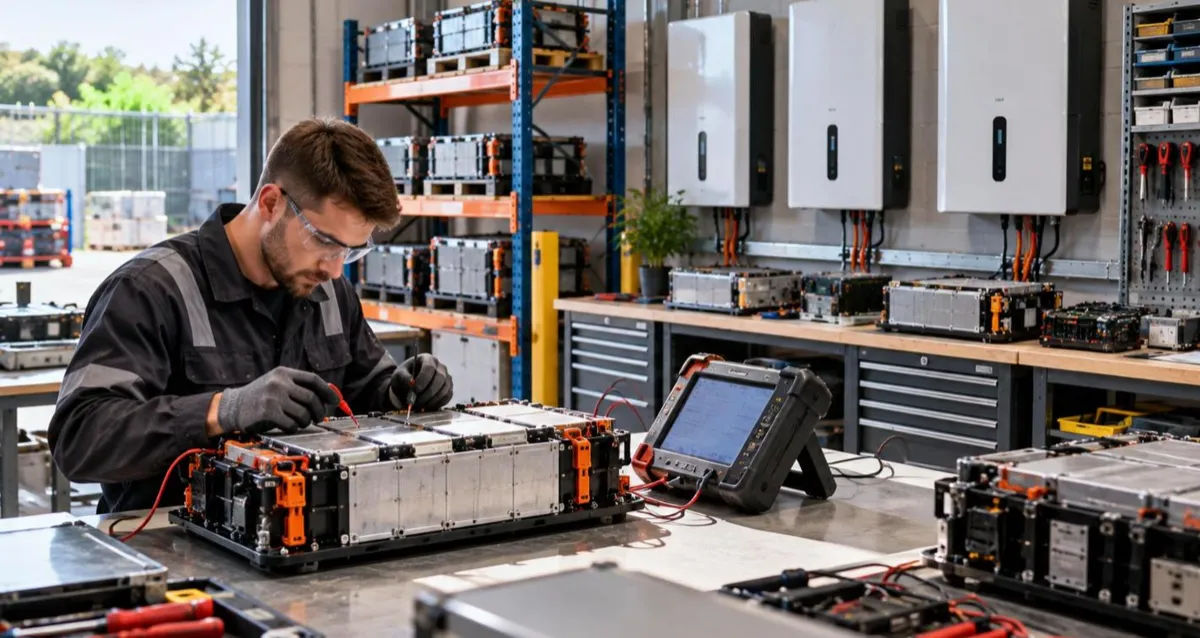
Second-life battery repurposing insurance covers businesses that take used batteries, usually from electric vehicles, test and grade them, and rebuild them into energy storage systems, power packs or other products. The main covers are property damage for the workshop, test equipment and battery stock, business interruption, employers' and public liability, and, most importantly, products liability for the repurposed batteries you sell or install. Many repurposers also need professional indemnity for system design and advice, and goods in transit for collecting and delivering batteries. Insurers focus on how incoming batteries are tested and graded, how damaged units are handled and stored, the safety design of the finished product, and the warranties and certifications you give customers. Because the products go into homes, farms and businesses, the products liability tail can last for years.
Key facts at a glance
- Products liability is the big exposure. A repurposed battery that fails in a customer's building can lead to a large fire claim years later.
- Grading is what insurers want to see. How you test and sort incoming cells is the main sign of a well-run business.
- Stored batteries are a fire risk. Incoming stock, including damaged packs, needs safe storage and separation.
- Certification matters. Products that meet recognised safety standards are much easier to insure.
- Design advice needs PI. If you design systems for customers, professional indemnity covers errors in that advice.
What insurance does a second-life battery business need?
A repurposing business usually needs property, business interruption, products and public liability, employers' liability, professional indemnity and goods in transit cover.
| Cover | What it protects | Watch out for |
|---|---|---|
| Property damage | Workshop, test rigs, tools and battery stock | Storage limits and lithium-ion conditions |
| Products liability | Injury or damage caused by batteries you sell or install | Exclusions for products sold overseas or to certain uses |
| Public liability | Injury or damage during installation or site visits | Work at customers' premises |
| Professional indemnity | Errors in system design and advice | Not covered by liability policies |
| Business interruption | Lost income after a fire at your premises | Time to rebuild and re-stock |
| Product recall | Costs of recalling a faulty batch | Not included in products liability |
Businesses that recycle batteries at end of life face a different set of issues, covered in our guide to lithium battery recycling insurance.
Why is products liability the main concern?
A second-life battery goes on to a new owner, often inside a building. If it fails and causes a fire, the claim can run to hundreds of thousands of pounds, and it may come years after the sale.
Insurers want confidence that what leaves your workshop is safe. They'll ask how you test state of health, how you match cells and modules, what battery management system you fit, and whether the finished product has been tested to recognised standards. They'll also ask where the products go: a battery in a farm building is a different risk from one in a home or a school.
Your terms and conditions matter too. Clear warranties, installation requirements and limits of liability in your contracts help manage the exposure, and insurers will often ask to see them.
If your products are sold or used outside the UK, especially in the USA or Canada, many products liability policies won't respond. Declare every market you sell into.
What do insurers ask about a repurposing business?
Insurers look at the incoming batteries, the process, the products and the customers.
- Sources. Where batteries come from and in what condition
- Testing. State of health testing, grading and rejection rates
- Storage. How incoming, damaged and finished stock is stored
- Products. What you make, the battery management system and certifications
- Customers. Homes, farms, businesses, export or installers
- Installation. Whether you install, or sell to others who do
- Contracts. Warranties, terms and limits of liability
Battery storage installed at customers' sites raises similar questions to those in our battery energy storage insurance guide.
How can you make your business easier to insure?
- Document your grading. Show every test and the criteria for rejecting a cell.
- Certify your products. Independent testing to recognised standards carries real weight.
- Store safely. Separate incoming, damaged and finished stock.
- Tighten your contracts. Clear warranties and installation conditions.
- Keep traceability. Know which cells went into which product, in case of a recall.
Frequently asked questions
A battery, usually from an electric vehicle, that's no longer suitable for its first use but still has enough capacity for another, such as energy storage.
Rarely. Most standard insurers exclude or won't rate lithium-ion battery manufacturing and repurposing.
Yes. It covers injury or damage caused by the batteries you sell, which is the biggest risk in this business.
It's worth considering. Recall costs aren't covered by products liability.
If you design systems or advise customers on what to buy, yes.
Only if declared. Many policies exclude the USA and Canada unless agreed.
Yes, under property cover, subject to storage conditions and declared values.
Yes, with a clear process, safety testing and experienced people.
It can, and it often decides whether an insurer will quote at all.
Yes. Installers need public liability, products liability and often PI.
Related guides from Miller & Partner

Miller & Partner Limited (FRN 1029698) is an Appointed Representative of Gauntlet Risk Management Ltd (FRN 308081), which is authorised and regulated by the Financial Conduct Authority. Miller & Partner Limited is registered in England and Wales (company number 16206282) and trades from Vivian House, Roman Bridge Close, Mumbles, Swansea SA3 5BG. This article is general information, not a personal recommendation or an offer of cover. Cover is subject to insurer acceptance and the full terms, conditions and exclusions of the policy issued.







Instagram
LinkedIn