


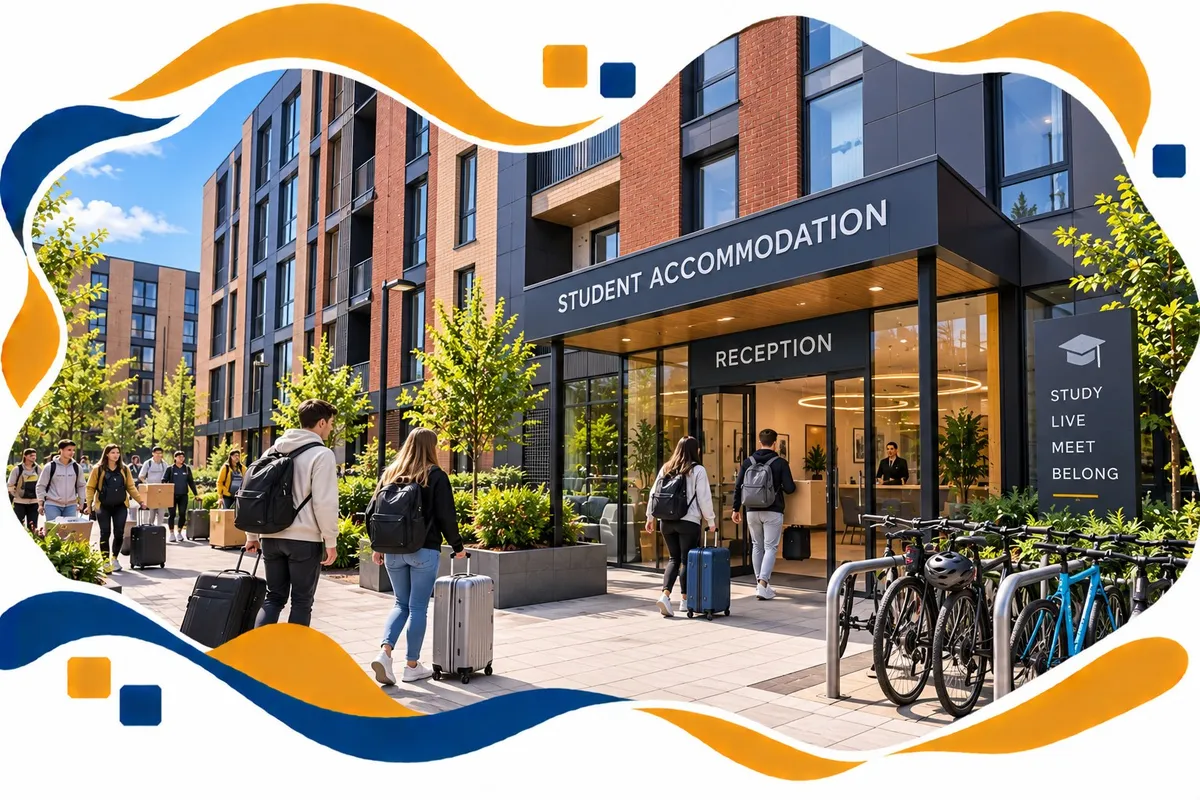
Student Accommodation Insurance UK | PBSA Specialist Cover
Student accommodation insurance covers purpose-built student accommodation (PBSA) and large student lets for the owners and operators who run them. A typical programme combines buildings insurance, loss of rent, property owners' liability, landlord's contents for furnished rooms and communal areas, and employers' liability for on-site staff. Student blocks bring risks that ordinary residential cover does not price well: cooking fires in shared kitchens, frequent false fire alarms, heavy wear and malicious damage, and a rent roll tied to the academic year, where a loss that misses the September intake can wipe out a whole year's income. Miller & Partner places student accommodation for investors, developers, operators and university partners, from single blocks to national portfolios.
Key facts at a glance
- The academic year drives the rent. Missing the start of term can mean losing a full year of bookings, not just a few months.
- Kitchens are the main fire risk. Shared cooking areas cause most fires and many false alarms.
- Furnished rooms add value. Beds, desks, appliances and communal fit-out need insuring as landlord's contents.
- Summer use changes the risk. Holiday lets, conference guests and summer schools need declaring.
- Building safety is scrutinised. Many blocks are tall enough to be higher-risk buildings, and cladding remains a key question.
- Management quality shows. Insurers reward on-site staff, good inspections and quick incident response.
Why is student accommodation insured differently?
Purpose-built student accommodation houses large numbers of young people, often living independently for the first time, in cluster flats or studios with shared kitchens and social spaces. The owner typically lets on a room-by-room basis for the academic year, sometimes under a nomination agreement with a university. That combination creates a particular risk profile:
- Higher frequency of small claims. Accidental and malicious damage, broken fittings and water leaks from misuse.
- Fire from cooking. Unattended pans and grills in shared kitchens are the classic cause of student block fires.
- False alarms. Repeated activations disrupt residents and can lead to complacency when a real fire happens.
- Concentrated income. Rent is earned over a fixed letting season, so timing of a loss matters as much as its size.
For general block cover, see our main block of flats insurance page; for blocks let on longer residential tenancies, see build-to-rent insurance.
What cover does a student accommodation block need?
| Cover | What it does | Student accommodation point to watch |
|---|---|---|
| Buildings | Repairs or rebuilds the block after fire, flood, escape of water, storm and other damage. | Use a reinstatement valuation that includes communal spaces, plant and external works. |
| Loss of rent | Replaces rent lost while rooms cannot be let after damage. | Set the indemnity period so a loss can roll into the next academic year without leaving a gap. |
| Landlord's contents | Covers furniture, white goods and fit-out supplied to students. | Count every room and communal area; furnished blocks carry significant contents value. |
| Property owners' liability | Covers injury to students, visitors and the public arising from the building. | Gyms, cinema rooms, roof terraces and events spaces need declaring. |
| Employers' liability | Compulsory if you employ reception, security, cleaning or maintenance staff. | Confirm whether staff are employed by the owner or an operator. |
| Malicious damage | Covers deliberate damage to the building and contents. | Often subject to an excess or conditions for damage by residents. |
How should loss of rent work for student accommodation?
Student rent is usually booked months in advance for a fixed letting period. A fire in spring that keeps the building closed into the autumn does not just cost the summer; it can cost the next full academic year because students will book elsewhere. Set the loss of rent sum insured on the full annual rent roll, including any summer income, and choose an indemnity period long enough to cover reinstatement plus the time to re-let for the next intake. 24 months is a sensible starting point for larger blocks.
If you have a nomination agreement with a university, check what it says about compensation if rooms are unavailable, and make sure the policy responds to the income you would actually lose. Our business interruption guide explains how income cover is calculated.
What about summer lets and vacancies?
Many operators fill rooms over the summer with short-stay guests, language schools or event visitors. That is valuable income but changes the risk: higher turnover, guests unfamiliar with the building and a different liability exposure. Tell the insurer how the block is used out of term. If parts of the building sit empty over summer, agree inspection routines so unoccupancy conditions do not catch you out; see vacant and mixed occupancy blocks and unoccupied property insurance.
What do insurers ask about student blocks?
- Construction and external walls. Frame type, cladding materials and number of storeys. Blocks with combustible cladding narrow the market; see our cladding and EWS1 guide. Timber-framed blocks are covered in our timber frame block of flats guide.
- Fire safety. Fire risk assessment, alarm system and monitoring, sprinklers or misting, fire doors, and how false alarms are managed.
- Kitchen controls. Heat detection rather than smoke detection in kitchens, hob timers or automatic shut-off, and resident fire safety briefings.
- Management and security. On-site staff hours, CCTV and access control, inspection routines and how damage is recharged to residents.
- Water controls. Leak detection and shut-off valves, especially in bathroom pods and upper-floor kitchens.
- Ground-floor uses. Shops, cafes or gyms open to the public; see mixed-use block insurance.
Can you insure a student block that others have declined?
Through the Insurability Framework™ we gather the building safety and fire information, the management and claims data, and any previous declines, then present the block once to markets that write student accommodation deliberately. A high claims frequency can often be addressed by showing what has changed: better kitchen controls, tighter inspections or a revised recharge policy. See block of flats insurance after a claim and insurance after being refused cover.
How do you set up student accommodation insurance?
- Value the building and contents. A reinstatement valuation plus a room-by-room contents figure.
- Set the rent figures around the academic year. Full annual rent including summer income, with an indemnity period that covers missing an intake.
- Prepare the safety pack. Fire risk assessment, alarm and kitchen controls, building safety information and cladding details.
- Describe the operation. Staffing, security, nomination agreements and summer use.
- Review before each academic year. Update room numbers, rents and any new amenities before September.
Frequently asked questions
It is a property insurance package for purpose-built student accommodation and large student lets. It usually combines buildings, loss of rent, landlord's contents, property owners' liability and employers' liability.
Because rent is tied to the academic year. If a loss means the block is not ready for the start of term, students book elsewhere and a full year's income can be lost.
Not by the landlord's policy. Landlord's contents covers what you supply. Some operators arrange separate contents cover for residents or include it in the rent, which needs its own policy.
It can, but policies often apply an excess or restrictions to damage caused by residents. Most operators recharge minor damage to students and insure against larger losses.
Yes. Holiday guests, conference visitors and summer schools are a different use from term-time students and need declaring so the policy responds.
Kitchens cause most fires in student blocks. Heat detection, hob timers or automatic shut-off and good fire safety briefings reduce both fire risk and false alarms, which insurers reward.
Yes. A portfolio policy gives consistent terms across sites and one renewal date, and can be more cost-effective than insuring each block separately.
Yes. Cladding narrows the market and affects terms, but specialist markets will consider blocks with a clear remediation plan and good interim fire safety measures.
Related guides from Miller & Partner








Instagram
LinkedIn