


BESS Insurance Requirements: What Lenders and Insurers Expect
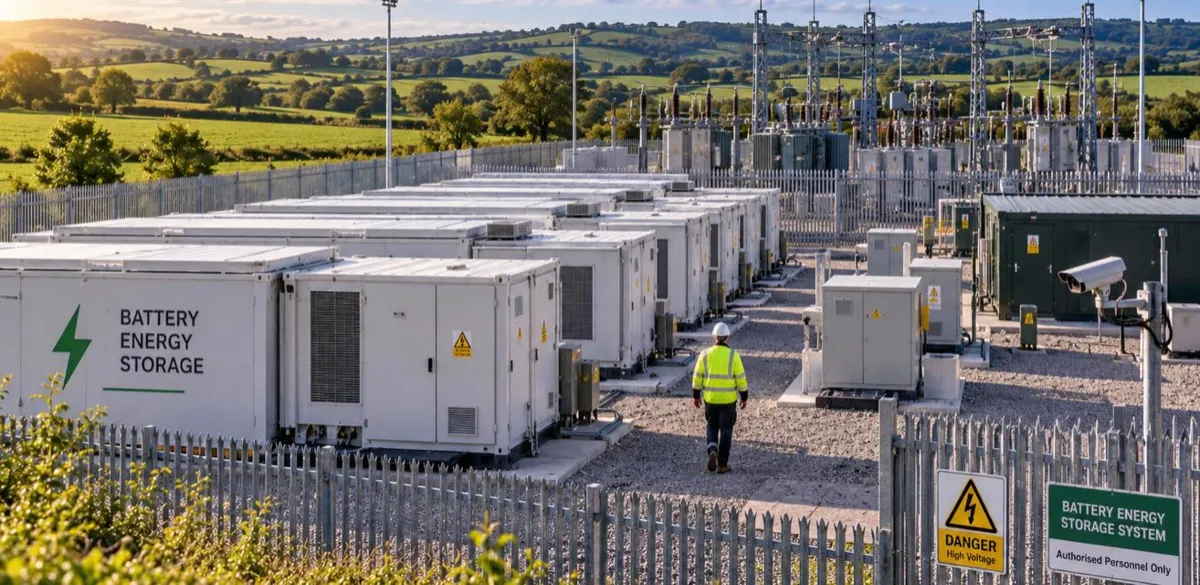
BESS insurance requirements are the covers and conditions that lenders, investors and insurers expect a battery energy storage project to meet before they will fund or insure it. During construction that means contractors' all risks and delay in start-up cover. Once the site is running it means operational all risks, business interruption with a long enough indemnity period, and public liability. Lenders add their own terms on top: their interest noted on the policy, loss payee and non-vitiation clauses, minimum limits and often an independent insurance adviser's sign-off. Insurers, in turn, want fire testing data, separation distances, detection and suppression, and evidence that the site follows recognised fire service guidance. Getting both sets of requirements right early avoids delays at financial close.
Key facts at a glance
- Lenders set the minimum programme. The facility agreement usually fixes the covers, limits, indemnity periods and policy clauses the borrower must hold.
- Business interruption is the pressure point. Long lead times for transformers and battery modules mean indemnity periods of 12 months are often too short.
- Fire evidence drives insurer appetite. Large-scale fire testing such as UL 9540A data, spacing between units and the site's fire strategy decide whether insurers quote.
- Policy clauses matter as much as limits. Loss payee, non-vitiation and waiver of subrogation clauses protect the lender's security and must be in the wording.
- Construction and operation need different cover. Contractors' all risks and delay in start-up hand over to operational all risks and business interruption at commissioning.
What insurance do lenders require for a BESS project?
Lenders typically require contractors' all risks and delay in start-up cover during construction, then operational all risks, business interruption and third-party liability once the site is commissioned. The facility agreement sets the limits, indemnity periods and the clauses that protect the lender's interest.
Battery storage projects are usually financed against their future revenue, whether that comes from capacity market contracts, balancing services or trading. If the site is damaged and stops earning, the lender's security is at risk. So the insurance programme is written into the finance documents as a condition of drawdown, and checked again at every renewal.
The typical programme looks like this:
| Phase | Cover | What lenders look for |
|---|---|---|
| Construction | Contractors' all risks | Full contract value, including equipment in transit and in storage |
| Construction | Delay in start-up | Lost revenue if commissioning is delayed by insured damage |
| Construction | Marine cargo | Battery modules and transformers shipped from overseas |
| Operation | Operational all risks | Reinstatement value of the whole site, including grid equipment |
| Operation | Business interruption | Indemnity period matched to realistic replacement lead times |
| Both | Third-party liability | Limits often £5m to £10m, sometimes higher near homes or roads |
Our main guide to battery energy storage insurance explains each cover in more detail.
Which policy clauses do lenders insist on?
Lenders usually insist on being named as a co-insured or loss payee, a non-vitiation clause so one party's breach does not void cover for the lender, a waiver of subrogation, and notice before the policy can be cancelled or changed. These are standard requests, but they need to be agreed with insurers before close.
- Loss payee. Claim payments above an agreed figure go to the lender or a controlled account, not straight to the borrower.
- Co-insured status. The lender is named on the policy so it has its own rights under it.
- Non-vitiation. If the borrower breaches a condition, the lender's cover still stands.
- Waiver of subrogation. Insurers agree not to pursue the lender or other named parties after paying a claim.
- Cancellation notice. Insurers must give the lender notice, often 30 days, before cancelling or reducing cover.
- Insurance adviser sign-off. Many lenders appoint an independent adviser to review the programme against the term sheet.
Insurers agree lender clauses case by case. Asking for them in the week before financial close is one of the most common causes of delay, so share the term sheet with your broker as early as possible.
How long should the business interruption indemnity period be?
Long enough to replace the most expensive, slowest-to-source equipment on site and bring it back into service. For many BESS projects that points to 18 to 24 months, because large transformers and battery modules can take a year or more to arrive.
The indemnity period is the length of time business interruption cover pays out after damage. A short period may look cheaper, but if a fire destroys a substation transformer with a long lead time, revenue can be lost for well over a year. Lenders know this, and many set a minimum period in the facility agreement.
When setting the period, work through the replacement timeline for the critical items: battery enclosures, power conversion systems, transformers and switchgear. Add time for site clearance, investigation and recommissioning. Our guide to underinsurance explains what happens when sums or periods are set too low.
What do insurers need to see before they will cover a BESS site?
Insurers want to see the battery chemistry and supplier, large-scale fire test data, the spacing between units, detection and suppression systems, the site's fire strategy and emergency response plan, and how the site is monitored. Without this evidence, many insurers will not quote at all.
Thermal runaway is the risk every BESS underwriter focuses on. A fire in one unit can spread to its neighbours, and battery fires are hard to extinguish. Insurers therefore look closely at how the site is designed to stop a single failure becoming a total loss.
- Cell chemistry, manufacturer and the track record of the integrator
- Large-scale fire test results, such as UL 9540A data
- Separation distances between enclosures and to site boundaries
- Gas detection, fire detection and any suppression or deflagration venting
- A fire strategy written with reference to recognised fire service guidance for grid-scale BESS
- Remote monitoring, battery management system alarms and response times
- Access for the fire service and water supply on site
- Operation and maintenance contracts and spares held
Sites that share a grid connection with a solar farm also need the generation side insured properly. See our solar farm insurance page.
How do you get a BESS insurance programme ready for financial close?
- Share the term sheet early. Give your broker the insurance schedule from the facility agreement as soon as it exists.
- Build the risk pack. Chemistry, supplier, fire test data, layout drawings, fire strategy and construction programme.
- Set values and indemnity periods. Use replacement costs and realistic equipment lead times, not budget figures.
- Agree lender clauses with insurers. Loss payee, non-vitiation, waiver of subrogation and cancellation notice.
- Brief the insurance adviser. Provide the draft programme and wording for review before close.
- Plan the handover. Make sure operational cover starts the moment construction cover ends at commissioning.
What if insurers have declined your battery storage site?
A decline usually comes down to fire evidence, spacing, chemistry or the integrator's track record. Filling the evidence gap, or presenting the site to specialist energy underwriters at Lloyd's, often reopens the market.
We place hard-to-place energy risks using the Insurability Framework™, which identifies exactly what is driving the decline and how to present it. For co-located sites, that may also mean looking again at the battery storage facility cover and the solar or farm side together.
Frequently asked questions
Employers' liability is a legal requirement if you employ staff. Most other BESS covers are not required by law, but lenders, landowners and grid agreements usually make them a condition.
It depends on the facility agreement, but many lenders expect 18 to 24 months because transformers and battery modules can take a long time to replace.
It protects the lender's cover if the borrower breaches a policy condition, so the lender can still recover even if the borrower's own claim is reduced or refused.
Many insurers ask for large-scale fire test data such as UL 9540A results. Without it, the number of insurers willing to quote is much smaller.
No. Contractors' all risks normally ends at handover, so operational all risks and business interruption must start at the same moment to avoid a gap.
Often, yes. We find out what is driving the decline and present the site to specialist energy underwriters with the evidence they need.
Related guides from Miller & Partner

Miller & Partner Limited (FRN 1029698) is an Appointed Representative of Gauntlet Risk Management Ltd (FRN 308081), which is authorised and regulated by the Financial Conduct Authority. Miller & Partner Limited is registered in England and Wales (company number 16206282) and trades from Vivian House, Roman Bridge Close, Mumbles, Swansea SA3 5BG. This article is general information, not a personal recommendation or an offer of cover. Cover is subject to insurer acceptance and the full terms, conditions and exclusions of the policy issued.







Instagram
LinkedIn