


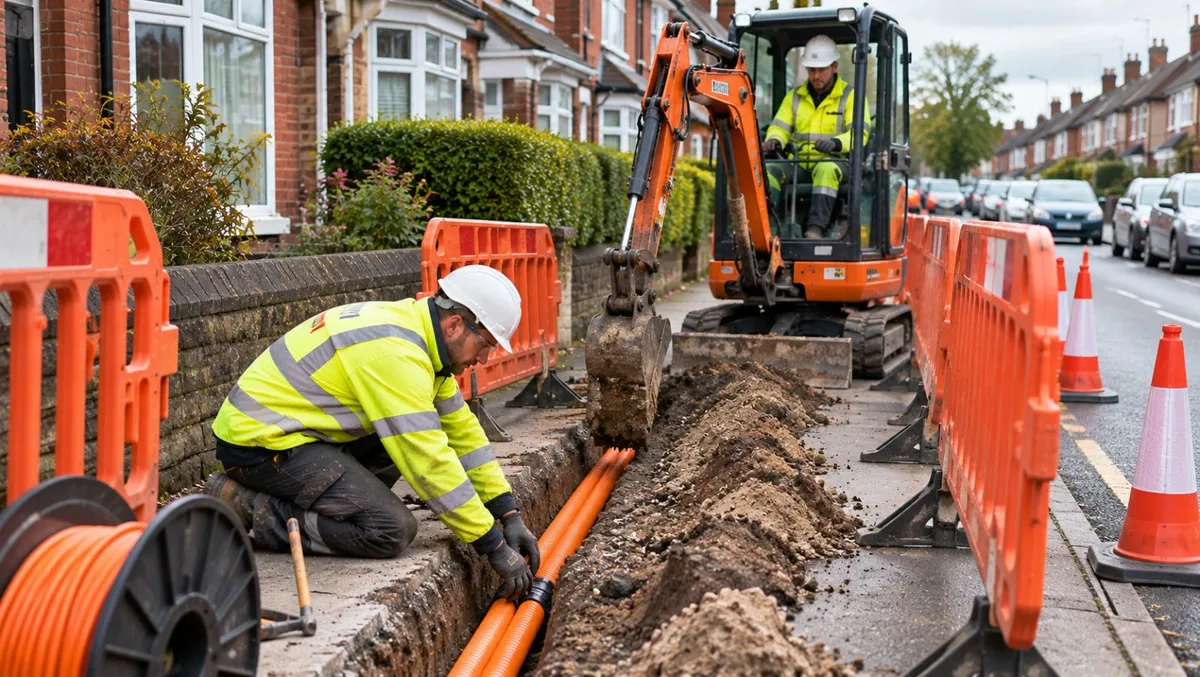
Street Works & Civils Insurance for Fibre Rollout UK
Fibre rollout civils contractors need public liability with an underground services extension, employers' liability, contract works and plant cover, arranged with a market that understands excavation in the public highway. Digging footways and carriageways to lay duct and build chambers exposes you to strikes on gas, water, power and other telecoms apparatus, trips and falls by the public, reinstatement failures and damage to private driveways during drop installs. Many standard contractor policies restrict or heavily excess underground services damage, so the wording matters as much as the limit. Insurers will ask about your NRSWA-accredited operatives and supervisors, how you locate services before digging, who provides Chapter 8 traffic management, whether operatives enter chambers, and how much work you sublet, including any labour-only gangs who may count as employees for employers' liability. Main contractors on full-fibre programmes will check your cover before you start, so it pays to have the right policy in place first.
Need insurance for fibre street works?
Cover for duct, chamber and reinstatement crews. Get a quote online or speak to a specialist broker directly.
Key facts at a glance
- Underground services is the big exposure. Check for exclusions, sub-limits or high excesses on service strikes.
- NRSWA cards matter. Insurers and clients expect accredited operatives and supervisors on site.
- Reinstatement can come back. Defects may surface months after you leave the street.
- Plant needs its own section. Liability does not cover damage to your own or hired-in machines.
- Contracts set your limits. Main contractors and network operators commonly set minimum liability limits in their subcontract terms.
What does street works insurance for fibre rollout cover?
For the wider sector, see our fibre and telecoms contractor insurance page.
| Cover | Why it matters in street works |
|---|---|
| Public liability | Service strikes, trips into excavations, damage to drives and walls |
| Employers' liability | Injury to operatives, including labour-only gangs |
| Contract works | Duct, chambers and materials damaged before handover |
| Own and hired-in plant | Mini diggers, saws, compactors and road plates |
Do NRSWA accreditation and Chapter 8 affect insurance?
Keep card numbers and expiry dates on file. Where operatives enter chambers or deep joint boxes, insurers may also ask how you manage the Confined Spaces Regulations 1997, so have your entry procedure and gas monitoring records ready. If traffic management is sublet, check the specialist's own liability cover and keep a copy, because a poorly guarded site can bring the claim back to you.
Who pays for reinstatement defects?
Photograph finished reinstatements and keep inspection records. Good evidence is often what defends a trip claim on an old excavation.
What if a crew damages an underground service?
Strike costs can include repair, the utility's charges and claims from businesses left without supply. Read the underground services clause before you sign, and if you have already had a strike, our guide to telecoms contractor insurance after a cable strike claim explains how to approach renewal.
Are trips, falls and driveway damage covered?
Underwriters look for:
- Barriers, plates and lighting kept in place overnight
- Pre-start photos of drives and frontages on drop installs
- A clear process for logging and responding to complaints
- Records showing who inspected each site and when
How should plant and contract works be insured?
See our guides to hired-in plant insurance and contractors' all risks. If your teams also climb poles, our pole and overhead line worker guide covers the height side.
Frequently asked questions
Possibly, but check the underground services wording. Many policies exclude strikes where safe digging practice was not followed, or apply a sub-limit or higher excess.
Most will ask whether your operatives and supervisors hold street works accreditation where the work requires it. Clients usually require it too, so keep records current.
Accidental physical damage is usually covered under public liability, subject to the excess. Pre-start photos help separate new damage from existing wear.
Usually not. Rectifying your own workmanship is a business cost. Liability cover may respond to injury or damage the defect causes to others.
Very likely. Labour-only subcontractors under your direction are often treated as employees. Bona fide subcontractors should hold their own cover, and you should keep evidence of it.
Usually, through specialist and Lloyd's markets. Expect questions on what caused each strike and what you have changed, and possibly a higher excess.
Related guides from Miller & Partner








Instagram
LinkedIn