


Medical Cannabis Cultivation Insurance UK | Broker
Why does medical cannabis cultivation need specialist insurance treatment?
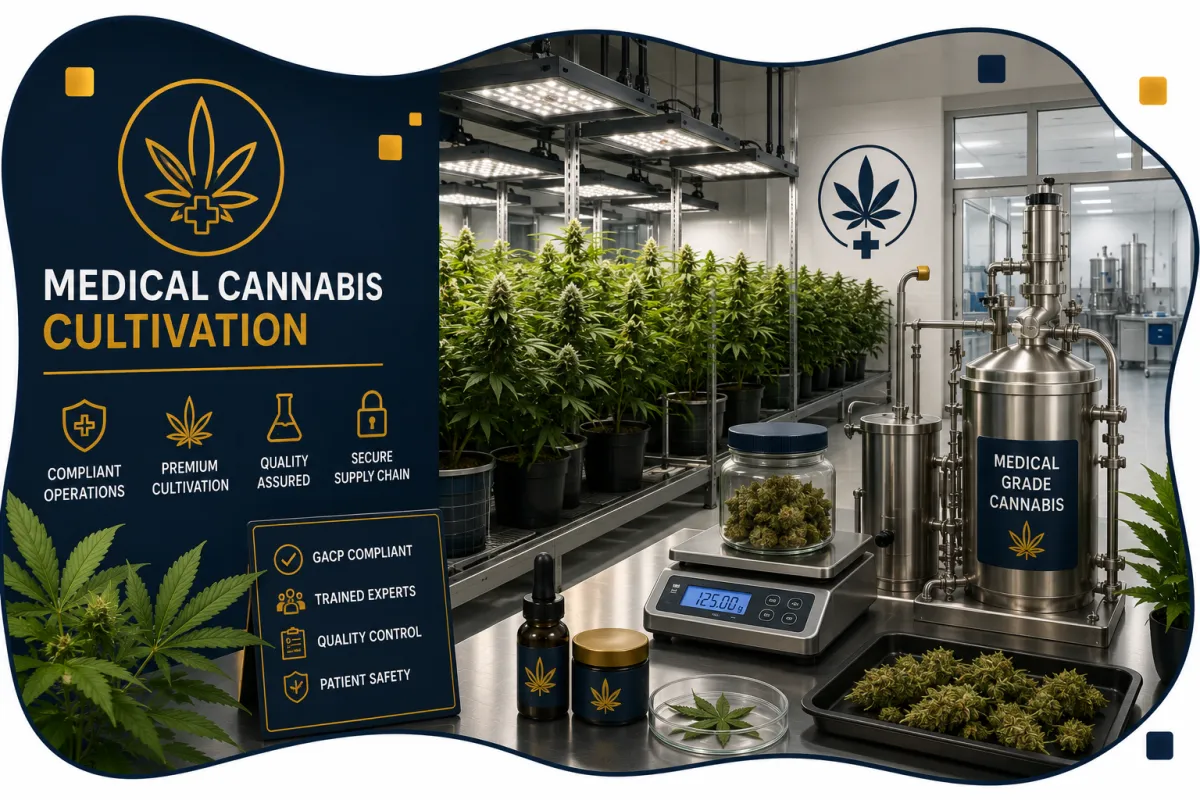
Growing medical cannabis in the UK is entirely legal — and one of the hardest businesses in the country to insure. Since medical cannabis became prescribable in November 2018, a licensed cultivation sector has grown up around it: commercial producers operating high-security, pharmaceutical-grade growing facilities under Home Office licence, often backed by significant investment. Yet many of these businesses find that the same insurers who will happily cover a tomato grower or a conventional pharmaceutical plant simply won't engage the moment the word "cannabis" appears — despite the operation being fully licensed, traceable and regulated. Legal, but market-shunned, is exactly the position that makes a specialist broker essential.
This is the core of what Miller & Partner does. As a specialist broker for adverse and hard-to-place risks, we place cover for licensed cannabis cultivation, production and processing operations that generalist insurers decline — including businesses refused or underserved elsewhere. This guide explains why the Home Office licence is the exposure that defines a grower, why crop security and theft are the underwriting crux, how the high-value crop is so easily underinsured, and how to present a cultivation business so specialist underwriters engage. It's the production-side companion to our guide to medical cannabis clinic insurance (the prescribing side) and sits alongside our CBD retail insurance guide.
How does The Insurability Framework™ apply to cannabis growers?
Underwriter Intelligence
We know the small number of specialist and Lloyd's markets that will write licensed cannabis cultivation, and what shapes their terms — Home Office licensing, crop security, facility controls and product liability. We present that evidence before the underwriter has to ask.
Difficult Risk Expertise
Cannabis is the definition of a risk generalists decline on sight, however well-run and lawful. Our specialist scheme and Lloyd's access reaches the underwriters who understand licensed cultivation and will engage with a properly presented grower.
Risk Assessment
We audit the business the way the Home Office and an underwriter would: licence conditions, physical security, crop valuation, facility fire and climate controls, and product liability — the things that decide both terms and whether cover exists at all.
Claims Advocacy
A grower's claim — a break-in, a lost crop, a licence issue — can threaten the whole operation. When it happens you deal with a named broker who understands licensed cultivation and fights your corner, not a call centre that flinches at the word.
Key facts at a glance
- Cultivating any cannabis in the UK — whatever the THC content or purpose — requires a Home Office Controlled Drugs licence; doing so without one is a criminal offence.
- The crop is a high-value controlled drug, so security and theft are the defining underwriting concern — the Home Office inspects facility security before granting a licence.
- Insurance is effectively part of the licensing and investment process — growers are expected to hold adequate cover across crops, facilities, product and personnel.
- Medical cannabis is legal but market-shunned — many insurers decline on sight despite the operation being fully licensed and regulated.
- A licensed grow is effectively a "cannabis factory" — intensive lighting, climate control and power, with real fire and machinery-breakdown exposure.
- Pharmaceutical-grade production also requires MHRA authorisation and GMP compliance, adding product-liability and quality exposure.
- A lost crop or a suspended licence can't be recovered in weeks, so business interruption must reflect a full growing cycle.
What must a grower's policy include that a standard policy won't?
Licensed cannabis cultivation is sometimes squeezed into a standard horticultural, agricultural or commercial policy, and it never fits — assuming a mainstream insurer will even write it. A standard policy is built for ordinary crops and premises, not for a high-value controlled drug grown under a Home Office licence in a high-security facility, with the theft, diversion, licensing and product exposures that come with it. The gaps show up exactly where a grower is most exposed: the crop's value, physical security, licence dependency and product liability. The comparison below shows where a standard policy falls short. Our guide to high-risk public liability covers the liability backdrop.
| Exposure | Standard commercial / horticultural policy | Specialist cannabis cultivation programme |
|---|---|---|
| Cannabis as a risk | Declined on sight by most insurers | Written by specialist & Lloyd's markets that understand it |
| The crop | Low-value produce assumptions | High-value controlled-drug crop, properly valued |
| Security & theft | Standard theft cover, ordinary limits | Theft & diversion cover geared to a controlled drug |
| Licence dependency | Not contemplated | Cover reflecting Home Office licence conditions |
| Facility fire & power | Generic property cover | Rated for lighting, climate control and high power load |
| Product liability | Standard product limits | Products & contamination for a medicinal product |
| Business interruption | Short indemnity period | Extended period reflecting a growing cycle and licence |
Why is the Home Office licence the exposure that defines a grower?
Everything about a cannabis cultivation business flows from its Home Office licence. Cultivating any cannabis plant in the UK — regardless of THC content or medicinal purpose — is an offence under the Misuse of Drugs Act 1971 unless carried out under a Home Office Controlled Drugs licence, issued under the Misuse of Drugs Regulations 2001. Before granting one, the Home Office inspects the site to be satisfied that appropriate procedures and facilities are in place for the security of the controlled substance, that the crop is completely traceable, and that everyone named on the licence holds an enhanced DBS check. The licence is the business's licence to exist.
That creates a defining insurance reality that runs in both directions. On one side, the licence conditions — security, traceability, record-keeping, reporting of any theft or loss — shape exactly what an underwriter needs to see, and a breach of those conditions can jeopardise both the licence and a claim. On the other, adequate insurance is itself part of the licensing and investment picture: growers are expected to demonstrate proper cover across crops, facilities, product and personnel, and investors rarely commit without it. A grower who treats licensing and insurance as one joined-up exercise — evidencing security and controls to both the Home Office and the underwriter — is in the strongest possible position.
Why is crop security and theft the underwriting crux?
If one exposure decides whether a grower gets cover and on what terms, it is security. A cannabis crop is a high-value controlled drug, which makes a licensed facility a target for theft and diversion in a way an ordinary greenhouse never is. The Home Office already treats physical security as central to the licence; underwriters treat it as central to the risk. Perimeter security, access control, alarms, CCTV, secure storage, vetted staff and robust stock reconciliation are not just compliance boxes — they are the difference between an insurable grow and an uninsurable one, and between a claim paid and a claim contested.
This is why security requirements often become policy warranties: specific conditions the grower must maintain for cover to respond. A theft claim where the alarm was not set, or CCTV not maintained, or stock not reconciled, can be reduced or declined on the strength of a breached warranty — the same discipline that governs high-value stock in any sector, but with far higher stakes because the stock is a controlled drug. A grower who can evidence a genuinely robust, Home-Office-grade security regime is protecting both its crop and its cover, and turning the sector's hardest exposure into its strongest selling point to a specialist underwriter.
From recent placement conversations
The most common thing I hear from growers is disbelief that a fully licensed, Home-Office-inspected, investor-backed business keeps being told "we don't cover cannabis." It's demoralising, and it's usually a reflection of where they've been asking rather than of their risk. Once we reframe the conversation around the specialist and Lloyd's markets that do understand licensed cultivation, and present the operation properly — licence, security regime, crop valuation, facility controls — the picture changes completely. The word that makes a generalist flinch is the word a specialist underwriter is comfortable pricing.
The growers we place best treat their security and their licence file as the pitch. A Home-Office-grade security regime with documented access control, CCTV and stock reconciliation; a current, properly valued crop and stock position; sound facility fire and climate controls; and clean licence compliance — hand a specialist underwriter that package and a risk most of the market refuses on sight becomes one they'll write, and write well. In this sector more than any other, the evidence you can put in front of the right underwriter is the whole game.
Why is the high-value crop so easy to underinsure?
A licensed cannabis crop is a genuinely high-value asset, and its value changes through the growing cycle — from young plants, through flowering, to harvested and processed product awaiting sale. That makes it easy to underinsure in two ways: setting a sum insured that reflects input cost rather than the true value of a mature crop, and failing to keep pace as value builds through the cycle. Because the condition of average reduces a claim proportionately when a crop is underinsured, a loss at peak value against a cost-based sum insured can expose a devastating gap.
The protection is to value the crop and stock at what they are genuinely worth at each stage, review it as the crop matures, and agree the basis of settlement with the insurer in advance — the same discipline that protects high-value stock in any specialist sector. There is also a distinctive twist in this industry: during GMP validation, crops that don't yet meet batch-consistency standards may have to be destroyed under supervision, and how the policy treats crop value, waste and destruction should be understood, not assumed. A grower who presents a clear, current crop valuation with an agreed settlement basis is both properly protected and a far stronger, more credible risk.
What are the production risks inside the growing facility?
A modern licensed grow is, in insurance terms, a factory. Indoor cultivation runs on intensive artificial lighting, HVAC and climate control, irrigation and a heavy electrical load — all running continuously to hold the precise environment a consistent pharmaceutical-grade crop demands. That concentration of power and equipment brings real, conventional risks: fire (electrical faults and lighting are a recognised hazard in intensive grows), machinery and equipment breakdown, and — critically — the loss that follows when climate control or power fails and a crop is spoiled. These are the same property and engineering exposures any high-tech production facility carries, sized for a continuous, high-value operation.
Managing them is both good practice and good underwriting. Proper electrical installation and maintenance, fire detection and suppression, resilient power and climate control with monitoring and backup, and maintained plant and machinery, all reduce the chance of a catastrophic loss and materially strengthen the risk an underwriter is asked to price. A grower who can evidence a well-engineered, well-maintained facility — not just a secure one — is protecting the crop, the building and the business, and presenting exactly the picture a specialist market wants to see.
What insurance does a cannabis cultivation business need?
A grower's programme is genuinely combined, and the covers must be structured together so a single event doesn't fall between the crop, the facility, the product and the licence. The core structure looks like this:
Crop & stock cover
The core asset: the growing crop and harvested stock as a high-value controlled drug, valued through the cycle with an agreed settlement basis to avoid underinsurance.
Theft, security & property
Theft and diversion cover geared to a controlled drug, plus buildings and high-value plant — lighting, HVAC, climate control — with fire and breakdown cover.
Product & public liability
Public and products liability for a medicinal product, including contamination and recall where GMP-grade product is supplied on.
Employers' liability & directors'
Legally required for staff, with vetting and controlled-drug handling; plus directors' & officers' cover for an investor-backed, heavily regulated business.
Business interruption
Lost income after a fire, theft, crop loss or licence issue — with an indemnity period reflecting a full growing cycle. See business interruption insurance.
Cover checker: what does your grow operation need?
Select the profile closest to your operation. Tags show what's legally required, essential, or worth considering. Every grow should be built individually — this checker maps the starting point. Our guide to business interruption covers the continuity core.
- CRITICALTheft & diversion cover for a high-value controlled drug.
- CRITICALCrop & stock cover valued through the growing cycle.
- LEGALEmployers' liability for vetted staff.
- ESSENTIALFacility fire & machinery breakdown.
- RECOMMENDEDSecurity warranties understood and maintained.
- CRITICALHome Office licence conditions reflected in cover.
- ESSENTIALCrop cover for frost, disease and pests.
- LEGALEmployers' liability incl. seasonal labour.
- ESSENTIALFarm machinery & public liability.
- CONSIDERProcessing / retting exposures on site.
- CRITICALProducts & contamination liability for a medicinal product.
- CRITICALMHRA / GMP compliance reflected in the programme.
- LEGALEmployers' liability (£10m).
- ESSENTIALRecall for batches supplied on.
- ESSENTIALTheft, facility & crop cover.
- CRITICALExtraction / solvent fire risk reflected in cover.
- ESSENTIALProducts & contamination liability.
- LEGALEmployers' liability (£10m).
- ESSENTIALHigh-value stock in process cover.
- CONSIDERDSEAR / flammable-atmosphere controls.
- CRITICALGoods in transit & storage for a controlled drug.
- ESSENTIALHome Office import/export licence conditions.
- LEGALEmployers' liability (£10m).
- ESSENTIALProducts liability & recall.
- CONSIDERSecure warehousing warranties.
- CRITICALCover to satisfy licence & investors — often a prerequisite.
- CRITICALD&O for a pre-revenue, investor-backed venture.
- LEGALEmployers' liability once you employ.
- ESSENTIALConstruction / fit-out cover for the facility build.
- CONSIDERSmall-business structure — see small business insurance.
Why do GMP, MHRA and product liability matter to a grower?
Where a grower is producing cannabis for medicinal use, the operation crosses from horticulture into the pharmaceutical industry — and picks up that industry's obligations. Producing cannabis-based products for medicinal use, or the active ingredients for them, generally requires authorisation from the Medicines and Healthcare products Regulatory Agency (MHRA) and compliance with Good Manufacturing Practice (GMP), on top of the Home Office licence. GMP demands demonstrable batch consistency — product tested to a tight tolerance every harvest — which is why validation crops that don't yet meet the standard may have to be destroyed under supervision before approval.
For insurance, this adds a product-liability and quality dimension to what might otherwise look like a growing business. A medicinal product carries the exposure that any pharmaceutical does: if a batch is contaminated — with pesticides, heavy metals or microbial contamination — or otherwise fails to meet specification, the consequences include recall, liability and regulatory action. Products and contamination liability, sized for a medicinal product, is therefore a core cover for any GMP-grade grower, not an afterthought — and evidencing robust quality systems is central to both compliance and insurability.
Why must business interruption reflect a lost crop and licence?
Business interruption is where growers are most often under-protected, because a cannabis cultivation business cannot simply restart after a loss. A crop grows on a cycle measured in months; a serious fire, a climate-control failure or a theft can wipe out a crop that took a full cycle to grow, and rebuilding a specialist high-security facility takes time. Worse, if an incident calls the operation's licence compliance into question, a licence suspension could halt the entire business while it is resolved. A standard 12-month indemnity period rarely fits any of this.
A properly structured programme addresses this with an indemnity period geared to the real recovery time — long enough to regrow a lost crop, rebuild or refit the facility, and work through any licensing consequences. It should reflect the growing cycle, the lead time on specialist equipment, and the dependency on the Home Office licence. Getting the indemnity period right is one of the most consequential decisions in the whole programme, and one a generic policy almost never gets right for a grower. Our guide to business interruption insurance explains how indemnity periods and sums insured should be set.
Red-flag checklist: would an underwriter worry about your grow?
Tap each statement that is currently true of your business. These are the things that make a specialist underwriter cautious — the more that light up, the harder your placement becomes. The first two are, on their own, potentially decisive.
Risk assessor: how will an underwriter score your grow operation?
What regulations apply to cannabis cultivation?
A licensed cannabis grower sits across drugs law, medicines regulation and conventional health-and-safety, and each strand shapes both compliance and how the risk is underwritten.
Misuse of Drugs law & Home Office licensing
Cultivating any cannabis plant is an offence under the Misuse of Drugs Act 1971 unless under a Home Office Controlled Drugs licence issued under the Misuse of Drugs Regulations 2001 — with security, traceability and DBS conditions.
Home Office controlled-drug licensing
The Home Office drug licensing regime governs cultivation, possession, supply and import/export of cannabis, with site inspection, thefts-and-losses reporting and periodic compliance visits.
MHRA & Good Manufacturing Practice
Producing cannabis-based products for medicinal use generally requires MHRA authorisation and GMP compliance, with inspection for facility, staff, quality systems and batch consistency.
Health & safety
As a production facility, a grow must meet HSE duties — electrical safety, work at height, COSHH for nutrients and agrochemicals, and machinery safety across an intensive indoor operation.
What drives the cost of cannabis cultivation insurance?
There is no meaningful "average premium" for a licensed grower — a small hemp operation and a large GMP pharmaceutical facility are entirely different risks. What every business can do is understand the rating factors and work the ones within their control:
| Rating factor | Why it moves your premium | Mitigation |
|---|---|---|
| Physical security | The defining exposure for a controlled drug | Home-Office-grade access control, CCTV, alarms, secure storage |
| Crop value & basis | High-value crop, easily underinsured | Current valuation with a pre-agreed settlement basis |
| Licence compliance | The business depends on its licence | Clean compliance; documented conditions and reporting |
| Facility fire risk | Intensive lighting and power raise fire risk | Electrical maintenance, detection, suppression |
| Climate control & power | A failure spoils a crop | Monitoring, backup power, maintained plant |
| Product / GMP exposure | Medicinal product carries recall & liability | Quality systems, GMP compliance, contamination control |
| Staff vetting | Insider diversion is a real risk | DBS checks, controlled-drug handling procedures |
| Stock reconciliation | Traceability underpins theft cover | Rigorous reconciliation and record-keeping |
| BI indemnity period | Recovery spans a growing cycle | Extended period reflecting crop & licence recovery |
| Market access | Few insurers write the class at all | A specialist broker with Lloyd's & MGA access |
| Claims history | Prior theft/fire reprices cover | Evidence remediation; see our claims-history guide |
| Continuity of cover | Gaps and declines are red flags | Start renewal early; never let cover lapse |
What do real cannabis-grower claims look like?
These three fictionalised but market-realistic case studies show how cultivation losses actually unfold — and where the decisions made at placement decided the outcome.
Case study 1: The break-in — £320,000 theft & business interruption claim
A licensed grower suffered an overnight break-in in which intruders defeated a section of the perimeter and made off with a quantity of near-harvest crop. Because the alarm and CCTV were fully operational and the incident was reported to the Home Office promptly, the security warranties held and the claim responded.
The numbers: around £320,000 across the stolen crop and the business interruption while the affected room was secured and reset, met in full because the security regime satisfied the policy warranties and the crop was valued at its true near-harvest worth.
The lesson: theft is the defining exposure, and it's the warranties that decide the claim. A Home-Office-grade security regime, properly maintained and evidenced, was the difference between a paid claim and a contested one — and prompt thefts-and-losses reporting protected the licence too.
Case study 2: The climate-control failure — £240,000 crop-loss claim
An HVAC and climate-control failure over a weekend, compounded by a delayed alarm response, allowed temperature and humidity to swing far outside range in a flowering room. Mould and stress ruined the crop in that room, which was weeks from harvest.
The numbers: around £240,000 across the lost crop and the business interruption, met under machinery-breakdown and crop cover because the grower had insured the crop at its true maturing value with an agreed settlement basis — rather than at input cost, which would have left a large shortfall.
The lesson: a grow is a factory, and a climate-control failure can destroy a crop as surely as a fire. Machinery-breakdown cover, resilient monitored plant, and a crop valued to its true worth turned an equipment failure into a recoverable loss.
Case study 3: The contaminated batch — £400,000 product liability & recall claim
A batch of GMP-grade product later tested positive for a pesticide residue above permitted limits after it had already been supplied on. The batch had to be recalled, and a liability claim followed alongside the regulatory and reputational fallout.
The numbers: around £400,000 across the recall, defence and liability costs, met under products and recall cover structured for a medicinal product — cover a generic growing policy would never have carried.
The lesson: once you produce a medicinal product, you carry pharmaceutical product liability. Rigorous quality and contamination control is the first defence, but properly structured products and recall cover, sized for a GMP-grade medicinal output, is what stops a contamination event from becoming an existential one.
What if your grow business has been refused cover?
Being refused, non-renewed or simply told "we don't cover cannabis" is the norm in this sector rather than the exception — and it reflects where you've been asking, not whether a lawful, licensed grow can be insured. It's far more workable than growers fear, provided it's handled correctly. Every future proposal asks whether you've been refused cover, and the duty of fair presentation makes that answer permanent, so collecting declines from generalists who were never going to engage is the worst approach. The workable path is the one we set out in our guides to insurance for businesses refused cover and business insurance refused elsewhere: present the whole operation clearly — Home Office licence, security regime, crop valuation, facility controls and product liability — through a broker who understands licensed cultivation and can reach the specialist and Lloyd's markets that do have appetite. If a prior theft or fire claim is the issue, our guide to business insurance with a claims history explains how competitive terms are rebuilt — present the claim and what changed, once, properly. Even smaller and licence-stage ventures have options; see our guide to small business insurance prices.
How do you manage a serious incident at a grow facility?
A serious incident at a licensed grow — a break-in, a fire, a climate-control failure or a contamination — is managed, and claims are won or lost, in the first hours and days. This is the sequence we run with clients:
- Ensure safety first. For a fire, evacuate and call the emergency services; for a break-in, do not confront intruders — call the police and make the site safe. People before crop, always.
- Secure the site and the controlled drug. Once safe, restore security, account for the crop and stock, and prevent any further loss or diversion — the controlled substance must be secured and reconciled.
- Report to the Home Office promptly. Any theft or unaccounted loss of a controlled drug must be reported to the Home Office using the thefts-and-losses process — prompt reporting protects both your licence and your claim.
- Document everything. Photograph and record the damage or loss, preserve CCTV and alarm data, and keep security, maintenance and stock-reconciliation records — evidence underpins the claim and the licence position.
- Notify your broker as soon as possible. Late notification breaches policy conditions. Your broker triggers notification across theft, property, crop, business interruption and liability as relevant, and brings in a loss adjuster who understands the sector.
- Preserve crop and valuation evidence. For a crop loss, preserve records of what was lost — stage, volumes, valuations — so the agreed settlement basis can be applied accurately.
- For contamination, act on product safety. If product safety or quality is in question, follow MHRA and quality procedures, quarantine affected batches, and consider recall — protecting patients and your brand comes first.
- Review and strengthen. Whatever the incident reveals — a security weakness, a fire or electrical issue, a climate-control gap — correct it, document the change, and evidence it to both the Home Office and your underwriter at renewal.

About the author — John Miller
John Miller is Director & Principal Broker at Miller & Partner Limited (FS Register FRN 1029698), with over 13 years' specialist commercial insurance experience and direct access to the Lloyd's Market and specialist MGA schemes. John places cover for licensed cannabis cultivation, production and processing operations — crop and stock, security and theft, facility, product liability and business interruption — reaching the specialist markets that write a legal but market-shunned sector, including growers refused or underserved elsewhere. He was previously the #1 Account Executive at Brown & Brown and #1 Salesperson at AXA.
Read more about John · Office: Vivian House, Roman Bridge Close, Mumbles, Swansea SA3 5BG · 01792 001350
Glossary of cannabis cultivation insurance terms
- Controlled Drugs (CD) licence
- The Home Office licence required to cultivate, possess, produce, supply or import/export cannabis in the UK.
- Misuse of Drugs Act 1971
- The primary legislation making it an offence to cultivate cannabis except under a Home Office licence.
- Misuse of Drugs Regulations 2001
- The regulations under which cultivation and handling licences are issued, and which schedule controlled drugs.
- Schedule 2
- The controlled-drug schedule covering cannabis-based products for medicinal use — therapeutic value but strict controls.
- Diversion
- The loss of a controlled drug from the legitimate supply chain into illicit use — the risk security controls are designed to prevent.
- Security warranty
- A policy condition requiring specified security measures to be maintained; a breach can reduce or defeat a claim.
- Crop & stock cover
- Cover for the growing crop and harvested product as a high-value asset, ideally valued through the cycle.
- Basis of settlement
- The agreed method for valuing a crop or stock loss — best fixed with insurers at placement.
- GMP
- Good Manufacturing Practice — the pharmaceutical quality standard, requiring demonstrable batch consistency, for medicinal production.
- MHRA
- The Medicines and Healthcare products Regulatory Agency, which authorises and inspects medicinal cannabis manufacture.
- CBPM
- Cannabis-Based Product for Medicinal use — the regulated category of medicinal cannabis products.
- Products liability
- Cover for injury or illness caused by a medicinal product, including contamination and specification failure.
- Machinery breakdown
- Cover for the failure of plant such as lighting, HVAC and climate-control systems — a failure that can spoil a crop.
- Business interruption
- Cover for lost income after an insured event, with an indemnity period that for a grower must reflect a growing cycle and the licence.
- Fair presentation
- The duty under the Insurance Act 2015 to disclose every material circumstance — licence, security, crop, losses and refused cover.






Instagram
LinkedIn